Thithi Ceremony (Devasam) | Annual Shraddha & Pinda Dhanam
₹3,000.00 ₹11,800.00Price range: ₹3,000.00 through ₹11,800.00
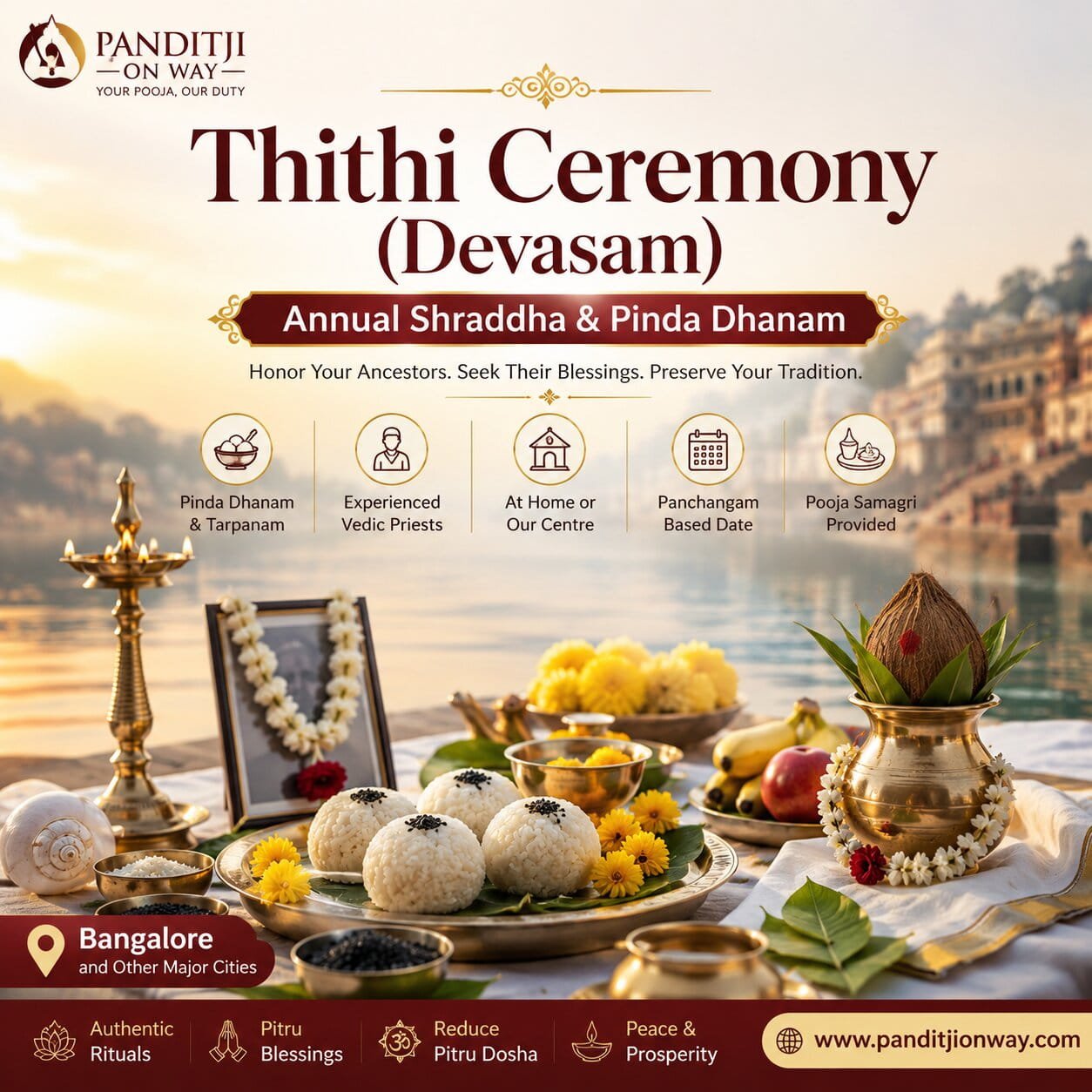
Honor your ancestors with a traditional Thithi Ceremony (Devasam) performed by experienced Vedic priests. This sacred annual ritual includes Pinda Dhanam, Tarpanam, and Shraddha procedures conducted according to your Gotra, community traditions, and Panchangam-prescribed Tithi. PanditJi On Way provides qualified priests, complete pooja materials, and hassle-free arrangements at your home or designated ritual venue across India. Seek Pitru blessings, reduce Pitru Dosha, and preserve your family’s spiritual heritage through an authentic and professionally organized Thithi Ceremony.
Description
Thithi Ceremony (Devasam) – Complete Guide to Annual Shraddha, Pinda Dhanam, Benefits, Procedure & Booking in India
Learn everything about Thithi Ceremony (Devasam), Shraddha, Pinda Dhanam, benefits, procedure, costs, and online booking with expert priests across India.
Thithi Ceremony (Devasam): Meaning, Importance, Procedure, Benefits and Online Booking
The Thithi Ceremony (Devasam) is one of the most sacred rituals prescribed in Hindu Dharma for honoring departed ancestors. This annual ceremony is performed on the same lunar day (Tithi) on which a person attained moksha or departed from the earthly world.
The ritual involves offering Pindam (rice balls), Tarpanam, food offerings, and prayers to ancestors (Pitru Devatas) to ensure peace, satisfaction, and spiritual elevation of their souls.
According to Hindu scriptures, performing the annual Thithi helps descendants receive the blessings of their ancestors, removes Pitru Dosha, and promotes prosperity, health, and family harmony.
At PanditJi On Way, experienced Vedic priests conduct authentic Thithi ceremonies at homes, temples, sacred rivers, and dedicated ritual centers across India.
What is a Thithi Ceremony (Devasam)?
A Thithi Ceremony, also known as:
- Devasam
- Shraddham
- Pinda Dhanam
- Annual Death Anniversary Ritual
- Pitru Karma
- Tithi Shraddha
is a sacred Hindu ancestral ritual performed annually after completing the first-year ceremony known as Varushabdigam.
The ceremony is conducted on the exact lunar date (Tithi) and Paksha (Pirai) corresponding to the ancestor’s death anniversary.
Its primary purpose is to:
- Satisfy departed souls (Pitru Devatas)
- Seek ancestral blessings
- Reduce Pitru Dosha
- Ensure family prosperity
- Fulfill religious obligations
Why is Thithi Ceremony Important?
According to the Garuda Purana, Manusmriti, and other Hindu scriptures, ancestors continue to bless their descendants when remembered through Shraddha and Thithi rituals.
Importance of Annual Thithi
| Purpose | Significance |
|---|---|
| Ancestor Satisfaction | Provides spiritual nourishment to departed souls |
| Pitru Blessings | Invokes blessings for family growth |
| Pitru Dosha Relief | Helps reduce ancestral karmic obstacles |
| Family Prosperity | Supports success and harmony |
| Religious Duty | Fulfills Dharma prescribed in Hindu tradition |
| Spiritual Merit | Generates positive karma |
When Should Thithi Ceremony Be Performed?
The Thithi Ceremony must be performed every year on:
- The same lunar day (Tithi) of the ancestor’s passing.
- The same Paksha (Waxing or Waning Moon).
- Based on the Hindu Panchangam.
After the first-year ceremony (Varushabdigam), annual Thithi becomes mandatory according to traditional customs followed across South India and many other Hindu communities.
Who Should Perform Thithi?
Generally, the ritual is performed by:
- Son
- Eldest Son
- Grandson
- Male descendant
- Legal heir
In certain traditions, daughters may also participate according to family customs and regional practices.
Complete Thithi Ceremony Procedure
The Thithi ritual may vary slightly based on community, Veda Shakha, and family traditions.
Step 1: Sankalpam
The devotee takes a sacred vow stating:
- Name of ancestor
- Gotra
- Tithi
- Purpose of ritual
Step 2: Ganapathi Pooja
Lord Ganesha is worshipped for obstacle removal.
Step 3: Punyaha Vachanam
Purification of the venue and participants.
Step 4: Pitru Avahanam
Invocation of ancestors through Vedic mantras.
Step 5: Pinda Dhanam
Rice balls mixed with sesame seeds are offered.
Step 6: Tarpanam
Water mixed with black sesame seeds is offered to ancestors.
Step 7: Brahmana Bhojanam
Feeding priests as representatives of Pitru Devatas.
Step 8: Dakshina and Blessings
Offerings are made to priests and blessings are received.
Pinda Dhanam: The Core Ritual of Thithi
Pinda Dhanam is the most important aspect of Thithi.
The rice offerings symbolize:
- Nourishment for departed souls
- Gratitude toward ancestors
- Continuity of family lineage
- Spiritual elevation
Hindu scriptures consider Pinda Dhanam a powerful medium of connecting with one’s ancestral lineage.
Benefits of Performing Thithi Ceremony
Spiritual Benefits
- Peace for departed souls
- Spiritual merit for descendants
- Ancestor satisfaction
Astrological Benefits
- Reduction in Pitru Dosha
- Improved planetary influences
- Relief from ancestral karmic burdens
Family Benefits
- Harmony among family members
- Better health and prosperity
- Success in personal and professional life
Emotional Benefits
- Opportunity to honor loved ones
- Preservation of family traditions
- Strengthening cultural heritage
Places Where Thithi Can Be Performed
PanditJi On Way arranges authentic Thithi ceremonies at:
| Location | Availability |
|---|---|
| Home | Available |
| Temple | Available |
| Dedicated Ritual Centers | Available |
| River Banks | Available |
| Holy Pilgrimage Sites | Available |
| Community Halls | Available |
Major Cities Served by PanditJi On Way
We provide qualified priests and complete ritual arrangements in:
- Bangalore
- Chennai
- Hyderabad
- Mumbai
- Pune
- Delhi NCR
- Kolkata
- Ahmedabad
- Coimbatore
- Mysore
- Kochi
- Vijayawada
- Visakhapatnam
and many other cities across India.
Materials Required for Thithi Ceremony
PanditJi On Way provides all required materials.
Typical items include:
- Rice
- Black Sesame Seeds
- Darbha Grass
- Fruits
- Flowers
- Betel Leaves
- Betel Nuts
- Ghee
- Kalasha
- Vastram
- Pooja Accessories
Why Choose PanditJi On Way for Thithi Ceremony?
Certified Vedic Priests
Experienced scholars trained in Vedic traditions.
Complete Pooja Arrangements
Materials, priest coordination, and ritual guidance.
Language Preference
Priests available in:
- Tamil
- Telugu
- Kannada
- Hindi
- Sanskrit
- Marathi
- Malayalam
Panchangam-Based Scheduling
Accurate Tithi calculations as per Vedic Panchangam.
Transparent Pricing
Packages suitable for different budgets.
Pan India Availability
Online booking and doorstep priest services.

Thithi Ceremony Cost in India
The cost depends on:
- Location
- Type of ritual
- Number of priests
- Homa requirements
- Food arrangements
- Community-specific customs
| Package Type | Approximate Range |
|---|---|
| Basic Thithi | ₹2,700 – ₹4,500 |
| Standard Thithi | ₹4,500 – ₹7,500 |
| Premium Thithi with Homa | ₹7,500 – ₹11,800+ |
Contact PanditJi On Way for exact pricing.
Thithi vs Shraddha vs Tarpanam
| Ritual | Purpose | Frequency |
|---|---|---|
| Thithi | Annual ancestor ritual | Once a year |
| Shraddha | Broader ancestral worship | Various occasions |
| Tarpanam | Water offering to ancestors | Multiple times yearly |
For additional information about Hindu ancestral rituals and Vedic traditions, refer to:
Frequently Asked Questions (FAQ) About Thithi Ceremony (Devasam)
1. What is a Thithi Ceremony (Devasam)?
A Thithi Ceremony (Devasam) is an annual Hindu ancestral ritual performed on the lunar death anniversary (Tithi) of a departed family member. The ceremony includes Pinda Dhanam, Tarpanam, prayers, and food offerings to seek blessings from ancestors and ensure peace for their souls.
2. Why is Thithi Ceremony important in Hinduism?
Thithi Ceremony is considered an essential duty toward ancestors. According to Hindu traditions, performing this ritual helps satisfy Pitru Devatas (ancestors), reduces ancestral karmic burdens, and brings prosperity, health, and harmony to the family.
3. When should Thithi be performed?
The ceremony should be performed every year on the exact lunar date (Tithi) and Paksha (Pirai) corresponding to the ancestor’s death anniversary, as determined by the Hindu Panchangam.
4. What is Pinda Dhanam in Thithi Ceremony?
Pinda Dhanam is the offering of rice balls mixed with sesame seeds and other sacred ingredients to departed ancestors. It symbolizes nourishment, gratitude, remembrance, and spiritual support for the soul’s journey.
5. Can Thithi Ceremony be performed at home?
Yes. Thithi Ceremony can be performed at home under the guidance of qualified Vedic priests. Many families prefer conducting the ritual at home to maintain family traditions and offer prayers in a familiar environment.
6. What are the benefits of performing Thithi every year?
Annual Thithi helps receive ancestral blessings, promotes family well-being, reduces Pitru Dosha, removes obstacles in life, improves spiritual growth, and fulfills one’s religious responsibilities toward departed family members.
7. How long does a Thithi Ceremony take?
The duration typically ranges from 30 minutes to 1.5 hours depending on the community traditions, rituals included, number of priests involved, and whether additional homas or ceremonies are performed.
8. What materials are required for Thithi Ceremony?
Common materials include rice, black sesame seeds, darbha grass, flowers, fruits, pooja vessels, betel leaves, betel nuts, ghee, vastram, and other ritual items. Professional service providers often arrange all required materials.
9. What is the difference between Thithi, Shraddha, and Tarpanam?
Thithi is an annual death anniversary ritual. Shraddha is a broader category of ancestral worship rituals. Tarpanam refers specifically to water offerings made to ancestors. Thithi often includes both Shraddha and Tarpanam procedures.
10. Can Thithi be performed online or through priest booking services?
Yes. With online priest booking services, devotees can arrange experienced priests, pooja materials, Panchangam-based scheduling, and complete ritual support at home across major cities in India.
11. What happens if a Thithi Ceremony is missed?
Missing a Thithi Ceremony does not mean the opportunity to honor ancestors is permanently lost. Hindu scriptures and traditional practices provide alternative dates and remedial procedures that can be performed under the guidance of a qualified priest. If the annual Tithi is accidentally missed due to travel, health issues, or unavoidable circumstances, families can perform a compensatory Shraddha or Pitru-related ritual on a suitable date recommended through Panchangam consultation. Regular observance of ancestral rituals helps maintain spiritual continuity, family traditions, and ancestral blessings.
12. How does Thithi Ceremony help reduce Pitru Dosha?
Pitru Dosha is believed to arise when ancestral obligations remain unfulfilled or when ancestors are not properly remembered through prescribed rituals. Performing Thithi Ceremony with proper Sankalpam, Pinda Dhanam, and Tarpanam is considered one of the most effective remedies for reducing the effects of Pitru Dosha. Devotees often perform annual Thithi to seek ancestral blessings, remove obstacles related to career, marriage, finances, education, and family harmony. While spiritual outcomes vary according to individual beliefs and traditions, regular Pitru worship remains a highly respected practice in Hindu Dharma.
13. Why is Pinda Dhanam considered the most important part of Thithi?
Pinda Dhanam is regarded as the heart of the Thithi Ceremony because it symbolizes nourishment, remembrance, and gratitude toward departed ancestors. The sacred rice offerings represent a connection between generations and serve as an expression of devotion toward those who contributed to the family lineage. Ancient Hindu texts describe Pinda Dhanam as a meaningful act that supports ancestral satisfaction and spiritual upliftment. By performing this ritual annually, descendants fulfill an important religious duty while preserving cultural and family traditions passed down through generations.
14. Can Thithi Ceremony be performed for parents, grandparents, and other ancestors?
Yes. Thithi Ceremony can be performed for parents, grandparents, great-grandparents, and other departed family members according to family traditions and priestly guidance. The ritual is commonly conducted for immediate ancestors whose death anniversary is observed annually. Some families also perform collective ancestral worship during Mahalaya Paksha or Pitru Paksha in addition to individual Thithi ceremonies. Observing these rituals demonstrates gratitude, respect, and remembrance toward the entire ancestral lineage while seeking blessings for future generations.
15. Why should families book a professional Thithi Ceremony service?
Booking a professional Thithi Ceremony service ensures that the ritual is performed accurately according to Vedic traditions, community customs, Gotra requirements, and Panchangam calculations. Professional services provide experienced priests, complete pooja materials, ritual guidance, scheduling assistance, and end-to-end support, making the process convenient for families. This is especially beneficial for devotees living in metropolitan cities, nuclear families, senior citizens, and individuals who may not be familiar with detailed ritual procedures. A professionally organized ceremony helps preserve authenticity while ensuring a smooth and spiritually fulfilling experience.
Conclusion
The Thithi Ceremony (Devasam) is a sacred expression of gratitude, remembrance, and spiritual responsibility toward one’s ancestors. Regular observance of annual Thithi helps maintain family traditions, seek Pitru blessings, reduce ancestral karmic obstacles, and promote peace and prosperity.
PanditJi On Way provides authentic, Vedic, and hassle-free Thithi Ceremony services with experienced priests, complete ritual arrangements, Panchangam-based scheduling, and support across major cities in India.
Additional information
| Package | Economy : ( 1 Vadhyar + All Pooja Materials ), Premium : (1 Vadhyar + 5 Brahmins & All Pooja Materials), Standard : (1 Vadhyar + 2 Brahmins & All Pooja Materials) |
|---|
Related products
-
- Pitru Pujas
Brahmins for Bhojan | Authentic Brahmin Bhojan Services Across India
- ₹1,100.00 ₹14,300.00Price range: ₹1,100.00 through ₹14,300.00
- Select options This product has multiple variants. The options may be chosen on the product page
-
- Pitru Pujas
Shradh Ceremony by Expert Pandits | Pandit For Shradh
- ₹4,000.00 ₹6,700.00Price range: ₹4,000.00 through ₹6,700.00
- Select options This product has multiple variants. The options may be chosen on the product page
-
- Pitru Pujas
Amavasya Tarpan 2025 | Pandit For Amavasya Tarpan
- ₹1,500.00 ₹6,000.00Price range: ₹1,500.00 through ₹6,000.00
- Select options This product has multiple variants. The options may be chosen on the product page


