
Goddess Ushas: The Vedic Goddess of Dawn, Light, Consciousness and New Beginnings
Discover Goddess Ushas, the Vedic Goddess of Dawn. Explore her Rigveda references, symbolism, family, significance, worship, and spiritual meaning.
Goddess Ushas is the Vedic goddess of dawn, celebrated mainly in the Rigveda. She represents the arrival of light, awakening, renewal, prosperity, and the transition from darkness to a new day. Ushas is traditionally associated with Dyaus Pita, Ratri, and Surya.
Goddess Ushas: The Vedic Goddess of Dawn, Light and New Beginnings
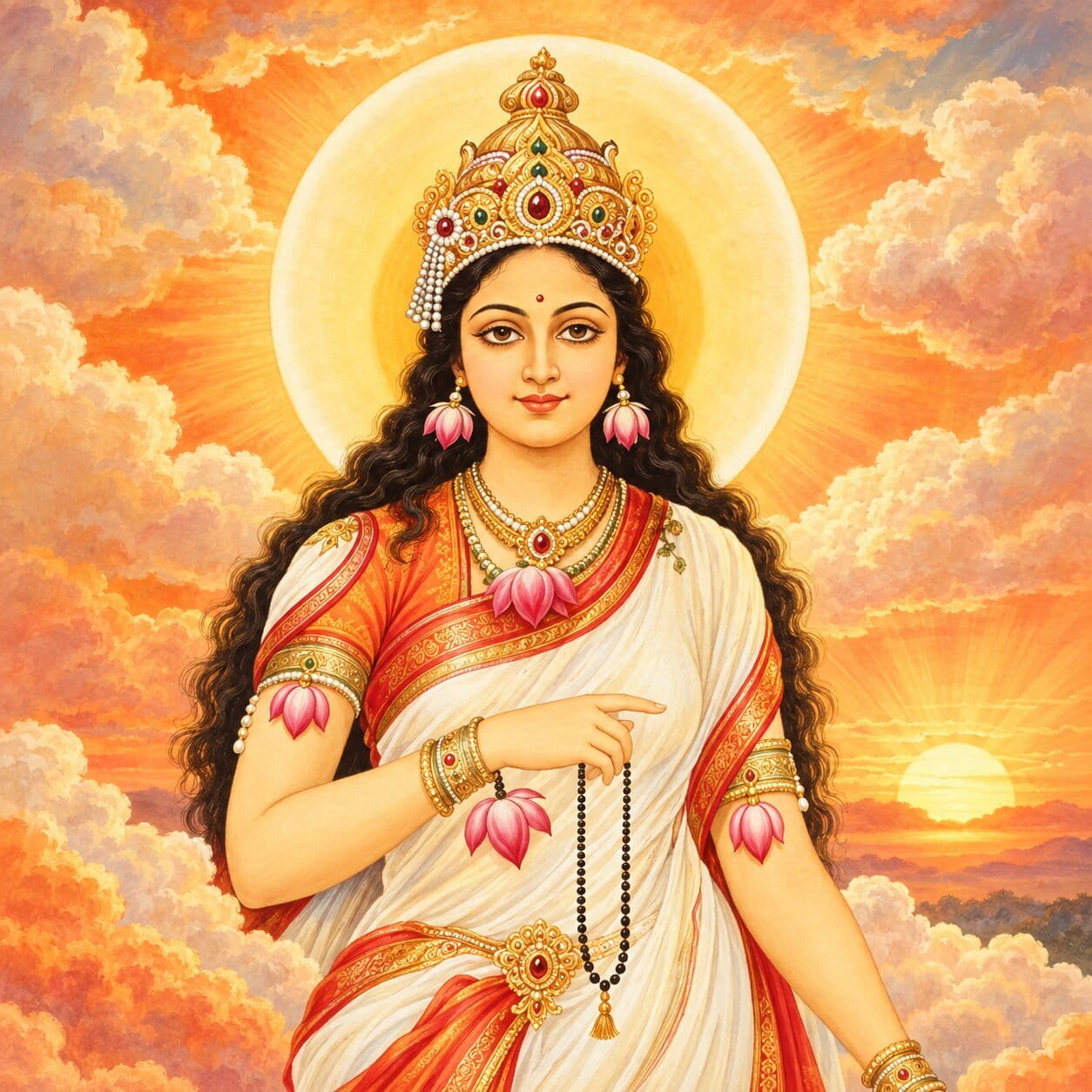
Goddess Ushas, also known as Usha Devi, is the revered Vedic goddess who personifies the dawn. In the hymns of the Rigveda, she represents the arrival of light after darkness, the awakening of life, and the beginning of a new day.
More than a natural phenomenon, Ushas symbolizes hope, awareness, vitality, order, and the renewal of consciousness. Her appearance marks the transition from night to day, encouraging living beings to rise, act, and fulfill their responsibilities.
Among the many deities praised in Vedic literature, Ushas holds a distinctive position as one of the most extensively celebrated female divinities. Her hymns reveal the Vedic understanding of dawn as a sacred force that brings illumination to both the outer world and the human mind.
Quick Answer: Goddess Ushas is the Vedic personification of dawn and the first light of the day. In the Rigveda, she is associated with awakening, renewal, prosperity, truth, and the dispelling of darkness.

Who Is Goddess Ushas?
Ushas is the Vedic Goddess of Dawn, celebrated primarily in the Rigveda. Her name is derived from the Sanskrit word uṣas, meaning dawn or daybreak.
She is described as a radiant divine presence who arrives before the Sun, revealing the world through her light. Her coming awakens people, animals, and nature, restoring activity after the stillness of night.
Unlike deities whose identities are primarily connected with a particular natural force or ritual function, Ushas is praised for the broad blessings associated with the dawn:
- Awakening of living beings
- Dispelling of darkness
- Renewal of life and energy
- Encouragement of daily work and responsibility
- Protection from disorder and negativity
- Blessings of prosperity and well-being
- Illumination of the mind and consciousness
The Vedic poets portray her as both beautiful and powerful—a goddess whose arrival is gentle yet transformative.
Goddess Ushas in the Four Vedas
The Vedas are among the foundational sacred texts of Hinduism and are traditionally divided into four collections: the Rigveda, Yajurveda, Samaveda, and Atharvaveda.
| Veda | Primary Character | Connection with Ushas |
|---|---|---|
| Rigveda | Collection of hymns and praises | Ushas is especially prominent and receives numerous dedicated hymns. |
| Yajurveda | Ritual formulas and sacrificial instructions | Dawn-related invocations and ritual contexts reflect the importance of morning worship. |
| Samaveda | Melodic chants derived largely from Rigvedic verses | Vedic dawn imagery forms part of the broader sacred chanting tradition. |
| Atharvaveda | Prayers concerning daily life, healing, protection, and well-being | Dawn symbolism connects with renewal, protection, and auspicious beginnings. |
Important distinction: Ushas is most prominently and directly celebrated in the Rigveda, which is the principal textual source for understanding her character, symbolism, and role.
Ushas in the Rigveda: The Dawn Goddess
The Rigveda contains a substantial body of hymns dedicated to Ushas. Traditional counts commonly identify around 20 dedicated hymns, while additional references to her appear elsewhere in the text. Some popular articles cite higher numbers depending on how associated passages are counted.
The Rigvedic hymns describe Ushas as:
- Radiant and beautiful
- A bringer of light
- A revealer of the world
- An awakener of human beings
- A companion or forerunner of the Sun
- A force that restores movement and activity
- A goddess associated with wealth, vitality, and auspiciousness
Her arrival is not merely the appearance of light in the sky. It is the moment when the world becomes visible, duties resume, and life begins another cycle.
What Does Ushas Represent in the Rigveda?
| Symbolism | Meaning |
|---|---|
| Dawn | The transition from darkness to light |
| Awakening | The beginning of daily activity and awareness |
| Radiance | Knowledge, clarity, and divine illumination |
| Renewal | A fresh opportunity to live and act |
| Prosperity | Blessings of abundance and well-being |
| Cosmic Order | The recurring rhythm of night and day |
| Hope | The promise of a new beginning |
Appearance and Symbolism of Goddess Ushas
Vedic poetry uses vivid imagery to describe Ushas. She is often portrayed as a radiant young woman arriving in a chariot across the sky. Her brilliance is associated with the reddish and golden colors of the dawn.
Major Symbols Associated with Ushas
| Symbol | Significance |
|---|---|
| Golden or radiant chariot | The movement of dawn across the heavens |
| Reddish-golden light | The colors visible before sunrise |
| Horses | Speed, movement, and the advancing day |
| Chariot across the sky | The arrival of light and the progression of time |
| Open pathways | The removal of darkness and obstacles |
| Sunrise | Illumination, vitality, and awakening |
Some Rigvedic descriptions use poetic imagery involving cows, horses, and radiant colors. These images should be understood within the symbolic and poetic language of Vedic hymns rather than treated as literal iconographic rules.
Ushas and the Sun: Relationship with Surya
Ushas is closely associated with Surya, the Vedic Sun deity. She appears before the Sun and prepares the world for his arrival.
The relationship between Ushas and Surya can be understood symbolically:
- Ushas arrives first, announcing the coming day.
- Darkness begins to recede as dawn spreads across the sky.
- Surya follows, bringing stronger daylight, warmth, and visibility.
- Life becomes active, and daily duties begin.
This imagery makes Ushas the herald of the Sun and a divine representation of the transition between night and day.
Read more about the solar deity: Lord Surya: Significance, Symbols and Spiritual Importance
Ushas as the Goddess of Light and Consciousness
One of the most meaningful interpretations of Ushas is her association with the awakening of consciousness.
Night represents rest, stillness, and the temporary withdrawal of activity. Dawn represents the return of perception, movement, thought, and purpose. In this sense, Ushas can be understood as a metaphor for the moment when awareness emerges from darkness.
Spiritual Meaning of Ushas
| Spiritual Concept | Connection with Ushas |
|---|---|
| Awareness | The awakening of the mind |
| Knowledge | Light as a symbol of understanding |
| Clarity | The removal of confusion and obscurity |
| Hope | The promise of a fresh beginning |
| Discipline | Rising and performing one’s duties |
| Inner transformation | Moving from ignorance toward awareness |
This symbolism does not mean that every Rigvedic hymn presents Ushas exclusively as an abstract goddess of consciousness. Rather, the spiritual interpretation develops naturally from her Vedic role as the bringer of dawn, visibility, and awakening.
Ushas and Rta: The Eternal Rhythm of Nature
In Vedic thought, Rta (Ṛta) refers to the principle of cosmic order, truth, and the regular functioning of the universe.
The recurring sequence of night followed by dawn reflects this order. Ushas arrives in accordance with the rhythm of nature, demonstrating that the universe operates through continuity, balance, and regularity.
How Ushas Reflects Rta
- Night gives way to dawn.
- Dawn leads to sunrise.
- Light restores visibility.
- Living beings resume their activities.
- The cycle repeats in accordance with cosmic order.
Ushas therefore represents not only beauty but also the dependable rhythm that sustains life.
Ushas as the Daughter of Dyaus Pita
In Vedic mythology, Ushas is traditionally described as the daughter of Dyaus Pita, the sky father. She is also associated with Ratri, the goddess who personifies night.
The relationship between Ushas and Ratri reflects the complementary nature of darkness and light.
| Deity | Representation |
|---|---|
| Dyaus Pita | The sky father |
| Ushas | Dawn and the arrival of light |
| Ratri | Night, rest, and darkness |
| Surya | The Sun and daylight |
Ushas and Ratri are not necessarily opposing forces in a conflict. Their relationship expresses a natural cycle of succession, in which night provides rest and dawn restores activity.
Ushas and Ratri: Dawn and Night
Ratri is associated with the protective stillness of night, while Ushas marks the return of light. Together, they represent the balance between:
- Rest and activity
- Darkness and illumination
- Stillness and movement
- Withdrawal and renewal
This cyclical relationship is one of the most beautiful ways to understand Vedic nature symbolism.
Is Ushas the Same as Usha Devi?
Yes. Ushas and Usha are closely related names. “Ushas” is the commonly used transliteration of the Sanskrit Vedic name Uṣas, while “Usha” or “Usha Devi” is a widely used form in Indian languages and devotional contexts.
However, it is useful to distinguish between:
- Vedic Ushas: The dawn goddess praised in the Rigveda.
- Later devotional associations: Regional and sectarian traditions may connect the name Usha with other narratives or divine figures.
When discussing the Rigvedic deity, Ushas is the most precise scholarly transliteration.
Ushas as a Goddess of Awakening and Activity
The arrival of dawn signals the beginning of work and movement. In the Rigvedic imagination, Ushas awakens people from sleep and restores the world to activity.
Her influence is therefore connected with:
- Farmers beginning their daily work
- Travelers setting out
- Householders performing duties
- Priests preparing morning rituals
- Animals becoming active
- Nature responding to daylight
She is a goddess who makes the world active again.
This aspect makes Ushas especially relevant to modern spiritual reflection: every dawn offers an opportunity to begin again, correct past mistakes, and approach life with renewed awareness.
Ushas and Prosperity
Vedic hymns often praise Ushas for bringing blessings, wealth, and well-being. Her light reveals the resources of the world and creates favorable conditions for human activity.
Her connection with prosperity is broader than material wealth alone. It can include:
- Good health
- Vitality
- Abundance
- Opportunities
- Household well-being
- Social harmony
- A productive day
The dawn is seen as auspicious because it marks the return of order and the possibility of fruitful action.
Ushas and the Ashvins
The Ashvins, also called the Ashvin Kumaras, are twin Vedic deities associated with healing, rescue, vitality, and the transition of dawn.
Ushas frequently appears in the same broader Vedic imagery as the Ashvins. Their association reinforces the idea of dawn as a time of:
- Healing
- Renewal
- Movement
- Restoration
- Divine assistance
However, descriptions of Ushas as the “mother of the Ashvins” should be treated carefully because Vedic genealogies and relationships can vary across texts and interpretive traditions. It is more accurate to emphasize their recurring association in Vedic dawn imagery rather than present one genealogy as universally fixed.
How Is Goddess Ushas Worshipped?
Ushas is primarily known through Vedic hymns and dawn invocations. Unlike some later Hindu deities with extensive temple traditions and standardized puja procedures, worship of Ushas is especially connected with the sacred appreciation of dawn and Vedic recitation.
A respectful modern devotional practice may include:
- Wake before sunrise, if practical and suitable for your routine.
- Sit in a clean, peaceful place facing the early morning light.
- Offer a simple prayer expressing gratitude for a new day.
- Recite a suitable Vedic dawn hymn under the guidance of a qualified teacher, or read a reliable translation.
- Practice meditation, pranayama, or quiet reflection.
- Resolve to use the day with truthfulness, discipline, compassion, and awareness.
Simple Prayer to Goddess Ushas
O Divine Ushas, radiant Goddess of Dawn,
May your light dispel darkness and confusion.
Awaken within us clarity, wisdom, strength, and hope.
May this new day bring peace, purpose, and righteous action.
Note: This is a contemporary devotional prayer inspired by the symbolism of Ushas, not a direct quotation from a Vedic hymn.
Ushas Worship During Chhath Puja: A Clarification
Some modern articles state that Goddess Ushas is worshipped during Chhath Puja in India and Nepal. Chhath is a major festival dedicated primarily to Surya, the Sun God, and Chhathi Maiya, with rituals involving offerings to the setting and rising Sun.
Because dawn and sunrise are central to Chhath observances, Ushas may be discussed in connection with the broader symbolism of dawn and solar worship. However, it is important not to claim that Chhath Puja is universally or exclusively a festival dedicated to the Rigvedic goddess Ushas.
Accurate Understanding
| Topic | Explanation |
|---|---|
| Primary deity of Chhath | Surya, along with Chhathi Maiya |
| Connection with Ushas | Dawn and sunrise symbolism |
| Morning arghya | Offering made to the rising Sun |
| Regional traditions | Practices and interpretations may vary |
Ushas in Comparison with Other Vedic Deities
The Vedic pantheon includes many deities connected with natural forces, cosmic principles, and spiritual ideas. Ushas occupies a unique position among them.
| Vedic Deity | Main Association | Distinctive Role |
|---|---|---|
| Ushas | Dawn | Awakens the world and brings light |
| Surya | Sun | Represents solar radiance and vitality |
| Agni | Fire | Mediates offerings and divine communication |
| Indra | Storms, rain, power | Warrior deity and destroyer of obstacles |
| Varuna | Cosmic order and waters | Associated with moral and cosmic law |
| Vayu | Wind | Represents air and movement |
| Ratri | Night | Personifies darkness and nocturnal protection |
| Soma | Sacred offering and divine inspiration | Connected with ritual and spiritual vitality |
Ushas is particularly notable because she is a female deity with a substantial and independent presence in the Rigveda.
Why Is Goddess Ushas Important in Vedic Philosophy?
Goddess Ushas offers several important philosophical insights:
1. Every Day Is a New Beginning
Dawn reminds us that life is renewed through cycles. Each morning creates an opportunity for fresh effort and meaningful action.
2. Light Represents Awareness
The movement from darkness to light can be understood as a metaphor for the movement from confusion to understanding.
3. Nature Follows Order
The predictable return of dawn reflects the Vedic idea that the universe operates through an underlying rhythm and order.
4. Activity Requires Awakening
Ushas symbolizes the transition from passive rest to purposeful living.
5. Beauty and Power Can Coexist
Vedic descriptions portray Ushas as graceful and radiant, yet her arrival transforms the entire world. Her gentleness does not diminish her power.
Frequently Asked Questions About Goddess Ushas
1. Who is Goddess Ushas?
Goddess Ushas is the Vedic goddess of dawn, praised especially in the Rigveda. She represents the arrival of light, awakening, renewal, and the beginning of a new day.
2. What is Ushas the goddess of?
Ushas is primarily the goddess of dawn. She is also associated with light, awakening, vitality, prosperity, hope, and the restoration of daily activity.
3. In which Veda is Goddess Ushas mentioned?
Ushas is most prominently mentioned in the Rigveda, where numerous hymns are dedicated to her.
4. Is Ushas the same as Usha Devi?
Ushas and Usha are closely related forms of the same Sanskrit name. Ushas is the commonly used transliteration for the Vedic dawn goddess.
5. Who is the father of Goddess Ushas?
In Vedic tradition, Ushas is described as the daughter of Dyaus Pita, the sky father.
6. Who is the sister of Ushas?
Ushas is associated with Ratri, the personification of night. Their relationship represents the natural succession of night and dawn.
7. What does Goddess Ushas symbolize?
Ushas symbolizes dawn, light, awareness, renewal, hope, prosperity, and the cosmic rhythm of nature.
8. Is Ushas associated with Surya?
Yes. Ushas is closely associated with Surya because dawn precedes and announces the arrival of the Sun.
9. How can devotees worship Goddess Ushas?
Devotees can honor Ushas by observing dawn mindfully, offering prayers of gratitude, studying Rigvedic hymns, meditating, and beginning the day with positive and righteous intentions.
10. Is Ushas worshipped during Chhath Puja?
Chhath Puja is primarily dedicated to Surya and Chhathi Maiya. Ushas may be discussed in relation to the festival’s dawn and sunrise symbolism, but it should not be described as the sole or universal deity of Chhath.
11. What is the spiritual meaning of dawn in Vedic tradition?
Dawn represents the transition from darkness to light, awakening, clarity, renewal, and the restoration of cosmic and human activity.
12. Why is Ushas important among Vedic goddesses?
Ushas is one of the most prominently celebrated female deities in the Rigveda, with a distinct identity and numerous dedicated hymns.
Key Facts About Goddess Ushas
| Question | Answer |
|---|---|
| Name | Ushas / Uṣas / Usha Devi |
| Tradition | Vedic Hinduism |
| Primary Role | Goddess of Dawn |
| Main Textual Source | Rigveda |
| Associated With | Light, awakening, renewal, prosperity |
| Father | Dyaus Pita, according to Vedic tradition |
| Associated Sister | Ratri, goddess of night |
| Associated Deity | Surya |
| Primary Symbol | Dawn light |
| Spiritual Meaning | Awakening of awareness and renewal |
| Best Time for Reflection | Dawn or early morning |
References and Recommended Further Reading
Authoritative External Sources
- Rigveda translations and primary text resources
Internet Sacred Text Archive – Hinduism - Encyclopaedia Britannica – Hinduism and Indian religious traditions
Britannica - Oxford Reference – Religion and mythology resources
Oxford Reference - Internet Archive – Historical Vedic translations and publications
Internet Archive - GRETIL – Göttingen Register of Electronic Texts in Indian Languages
GRETIL
Since Panditji on Way is a pooja booking and Hindu spiritual services platform, internal links should connect this educational article with relevant devotional and service pages.
Panditji on way

Panditji on Way is a leading online pooja booking platform that helps devotees connect with qualified pandits for Hindu rituals, pujas, and spiritual ceremonies. Through its online services, devotees can explore traditional worship practices and arrange religious ceremonies from the comfort of their homes.