

Kundalini Awakening: Meaning, Chakras, Process, Benefits, Risks & Authentic Guidance
Discover The True Meaning of Kundalini Awakening, 7 chakras, process, benefits, risks & authentic guidance. Complete spiritual guide by Panditji On Way.
Quick Answer
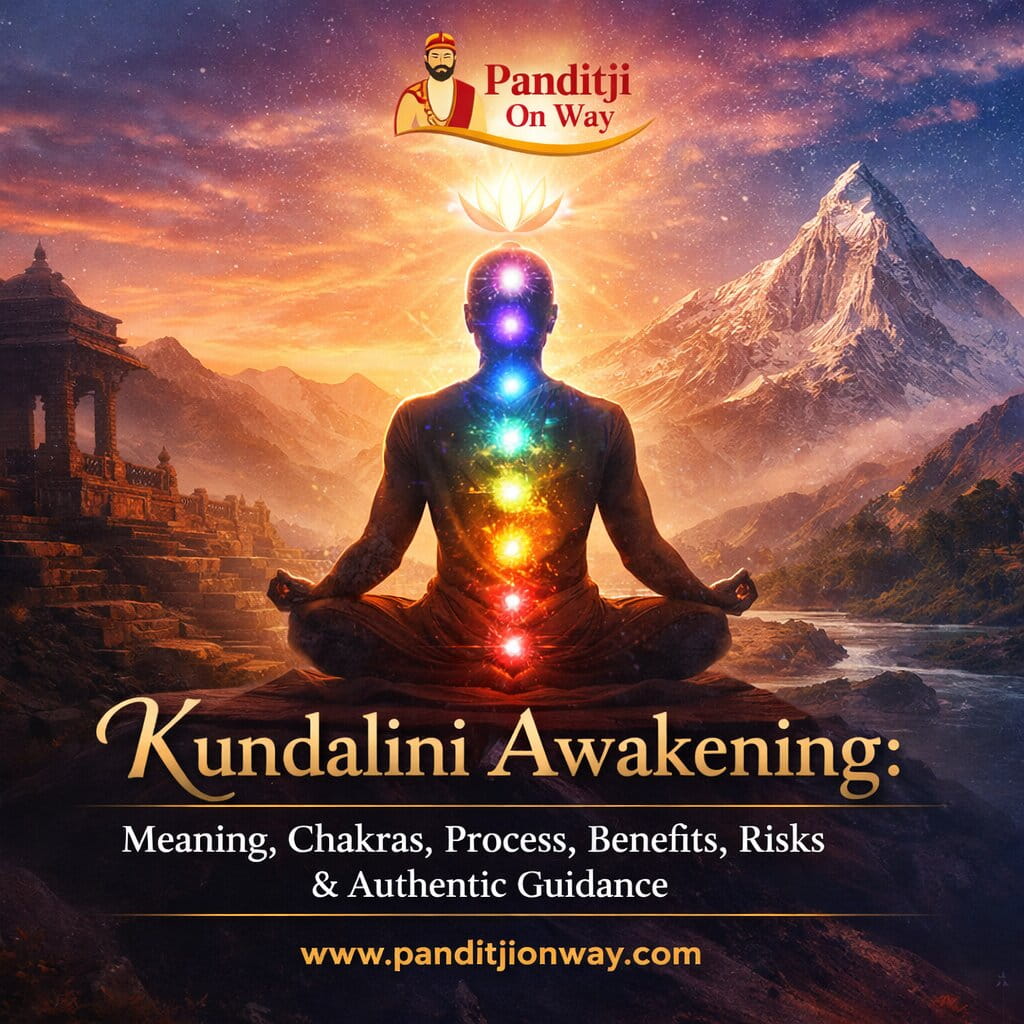
Kundalini Awakening is the spiritual process of activating the dormant energy believed to reside at the base of the spine (Muladhara Chakra). In yogic and tantric traditions, this energy rises through the seven chakras via the Sushumna Nadi and ultimately unites with the Sahasrara Chakra (crown), leading to heightened awareness, transformation, and spiritual realization.
Table of Contents
- What is Kundalini?
- Kundalini in Hindu Dharma
- Seven Chakras Explained
- Ida, Pingala & Sushumna Nadis (Traditional Indian Medicine View)
- What Happens After Kundalini Awakening?
- Process of Kundalini Awakening
- Risks & Misconceptions
- Scientific & Yogic Perspective
- Who Should Attempt Kundalini Awakening?
- Frequently Asked Questions (FAQ)

What is Kundalini?
The word Kundalini comes from the Sanskrit word “Kundal”, meaning “coiled.” It symbolizes a coiled serpent-like energy resting at the base of the spine in the Muladhara Chakra.
In yogic philosophy:
- Kundalini is a latent spiritual force
- It is visualized as a sleeping feminine energy (Shakti)
- Its awakening represents the union of Shakti (energy) with Shiva (pure consciousness)
This concept is deeply rooted in ancient yogic scriptures and tantric traditions.
Authoritative reference:
For traditional yogic foundations, refer to classical yoga philosophy resources such as the Yoga Sutras and spiritual commentaries available through high-authority educational sources like:
https://www.britannica.com/topic/kundalini (educational reference)
Kundalini Awakening as per Hindu Dharma
According to Hindu spiritual texts:
- The human body contains seven primary chakras
- These chakras regulate emotional, physical, and spiritual energies
- Kundalini resides in the Muladhara Chakra
- Awakening means guiding this energy upward to Sahasrara Chakra
Energy Flow Direction:
Muladhara → Swadhisthana → Manipura → Anahata → Vishuddha → Ajna → Sahasrara
When Kundalini reaches Sahasrara, it symbolizes spiritual enlightenment.
Seven Chakra Points in Human Body (Table)
| Chakra Name | Location | Element | Associated Qualities | Spiritual Function |
|---|---|---|---|---|
| Muladhara | Base of Spine | Earth | Stability, survival | Root of Kundalini |
| Swadhisthana | Lower Abdomen | Water | Creativity, pleasure | Emotional balance |
| Manipura | Navel | Fire | Confidence, power | Personal strength |
| Anahata | Heart | Air | Love, compassion | Emotional purity |
| Vishuddha | Throat | Ether | Communication | Truth expression |
| Ajna | Between Eyebrows | Mind | Intuition | Inner vision |
| Sahasrara | Crown | Consciousness | Enlightenment | Divine union |
This structured table improves Google discoverability and AI overview compatibility.
Awakening of Kundalini as per Traditional Indian Medicine
Traditional Indian spiritual science describes three major energy channels in the vertebral column:
1. Ida Nadi
- Left channel
- Associated with lunar energy
- Cooling, intuitive, feminine
2. Pingala Nadi
- Right channel
- Associated with solar energy
- Active, logical, masculine
3. Sushumna Nadi
- Central channel
- Pathway for Kundalini ascent
- Spiritual awakening occurs only when energy enters Sushumna
There are said to be 72,000 Nadis distributing pranic energy throughout the body.
When Kundalini awakens:
- It stimulates the base spiral energy
- Activates Sushumna
- Energy rises upward toward Sahasrara


What Happens After Kundalini Awakening?
Different traditions describe similar transformations:
Reported Spiritual Changes:
- Heightened awareness
- Deep meditative states
- Reduced dependency on physical needs
- Emotional detachment
- Profound inner clarity
- Experience of unity consciousness
Important Clarification
Extreme supernatural claims like:
- Traveling the cosmos physically
- Surviving without food indefinitely
are largely symbolic in spiritual literature and not scientifically validated.
Authentic awakening focuses on:
- Self-realization
- Mind mastery
- Inner transformation
- Higher consciousness
Process of Kundalini Awakening
Kundalini awakening is not a one-day ritual. It requires disciplined practice under guidance.
Core Practices
- Meditation (Dhyana)
- Pranayama (Breath Control)
- Asanas (Yoga Postures)
- Mantra Chanting
- Yogic Lifestyle & Discipline
- Guru Guidance
Why Guru Guidance is Important?
Traditional texts emphasize:
- Self-practice without guidance may lead to psychological imbalance
- A realized guru stabilizes the disciple’s experience
For authentic Vedic rituals, spiritual guidance, and traditional puja services, you can explore:
https://www.panditjionway.com/
(India’s leading online pandit booking platform)
Risks & Misconceptions About Kundalini Awakening
Many people attempt forced awakening through:
- Extreme breathing
- Psychedelic shortcuts
- Unverified online techniques
Possible risks include:
- Anxiety
- Emotional imbalance
- Insomnia
- Psychological disturbances
Spiritual traditions clearly advise gradual practice.
Scientific Perspective on Kundalini
Modern science does not officially validate Kundalini as measurable energy, but research in meditation suggests:
- Improved brain function
- Enhanced emotional regulation
- Reduced stress
- Neuroplasticity changes
Meditation research reference (Authority Source):
https://www.ncbi.nlm.nih.gov/pmc/articles/PMC1361002/
Who Should Attempt Kundalini Awakening?
Not everyone needs to awaken Kundalini.
It is recommended for individuals who:
- Have stable mental health
- Follow disciplined lifestyle
- Practice yoga regularly
- Have guidance from experienced teacher
For most people, simple meditation and devotional practices provide sufficient spiritual growth.
Frequently Asked Questions About Kundalini Awakening
1. What is Kundalini Awakening?
Kundalini Awakening is the activation of dormant spiritual energy located at the base of the spine in the Muladhara Chakra. When awakened through meditation, pranayama, and disciplined yoga practice, this energy rises through the seven chakras, leading to higher consciousness and spiritual transformation.
2. Where is Kundalini energy located in the body?
Kundalini energy is believed to reside in the Muladhara Chakra at the base of the spine. It is symbolically described as a coiled serpent resting in a dormant state until activated through spiritual practices like meditation and Kundalini Yoga.
3. What are the signs of Kundalini Awakening?
Common signs of Kundalini Awakening include heightened awareness, intense meditation experiences, sensations of energy rising along the spine, emotional purification, vivid dreams, and deep inner peace. Experiences vary from person to person and should be guided by an experienced spiritual teacher.
4. Is Kundalini Awakening dangerous?
Kundalini Awakening can cause emotional or psychological imbalance if forced without proper guidance. Traditional yogic texts recommend gradual practice under a qualified guru to ensure safe and stable spiritual development.
5. How long does it take to awaken Kundalini?
Kundalini Awakening is not instant. It may take years of disciplined meditation, pranayama, mantra chanting, and ethical living. The timeline varies depending on individual dedication, mental stability, and spiritual guidance.
6. What happens when Kundalini reaches Sahasrara Chakra?
When Kundalini energy reaches the Sahasrara Chakra (crown chakra), it symbolizes spiritual enlightenment and the union of Shakti (energy) with Shiva (pure consciousness). Practitioners often describe this as a state of expanded awareness and divine realization.
7. Can anyone awaken Kundalini energy?
In theory, every human possesses Kundalini energy. However, awakening it requires mental stability, disciplined spiritual practice, and proper guidance. It is not recommended for individuals with unmanaged psychological conditions.
8. What is the role of Ida, Pingala, and Sushumna in Kundalini Awakening?
Ida and Pingala are the left and right energy channels associated with lunar and solar energies. Kundalini Awakening occurs when energy enters the central channel called Sushumna Nadi and rises upward through the chakras.
9. Does Kundalini Awakening give supernatural powers?
Some ancient texts mention Siddhis (spiritual powers), but modern spiritual teachers emphasize that the true goal of Kundalini Awakening is self-realization and inner transformation, not supernatural abilities.
10. What is the safest way to awaken Kundalini?
The safest method includes regular meditation, balanced pranayama, mantra chanting, yogic discipline, and guidance from a realized guru. Forced techniques or shortcuts are strongly discouraged in authentic spiritual traditions.
11. Is Kundalini Awakening scientifically proven?
While Kundalini as spiritual energy is not scientifically measurable, research on meditation shows benefits such as improved brain function, stress reduction, and emotional balance. Scientific validation focuses on meditation effects rather than mystical interpretations.
Conclusion
Kundalini Awakening is not a trend or shortcut to power. It is a profound spiritual transformation rooted in ancient Indian wisdom. It requires patience, discipline, humility, and guidance.
Rather than chasing mystical experiences, one should focus on:
- Emotional purification
- Consistent meditation
- Ethical living
- Devotion and self-awareness
True awakening is less about becoming superior and more about becoming conscious.