

Sindoor Daan in a Bengali Wedding: Importance of Sindoor Daan in Bengali Wedding
Sindoor Daan in a Bengali Wedding:– Want to know the purpose and process of Sindoor Daan? Understand its spiritual and cultural importance. Read the full guide now! A Bengali wedding is a graceful blend of colour, devotion, family emotions, and ancient traditions. Every ritual performed during the wedding carries a deeper cultural and spiritual meaning. Among all these sacred ceremonies, Sindoor Daan holds a central and emotionally powerful place.
Sindoor Daan is not just a ritual—it marks the true beginning of married life for the bride. This sacred moment symbolises love, commitment, protection, and lifelong companionship. Understanding its meaning helps you appreciate the beauty of a Bengali marriage at a deeper level.
This comprehensive guide explains Sindoor Daan, its cultural importance, step-by-step ritual process, related Bengali wedding ceremonies, and frequently asked questions.


What Is Sindoor Daan in a Bengali Wedding?
Sindoor Daan is a sacred rite in a traditional Bengali Hindu marriage where the groom gently applies sindoor (vermilion) to the parting of the bride’s hair (maang).
This act officially transforms the bride into a married woman and signifies:
- Acceptance of each other as life partners
- A vow of protection, respect, and responsibility
- The beginning of a sacred marital journey
The ritual is performed towards the concluding phase of the wedding, after ceremonies such as Saat Paak, Subho Drishti, Mala Badal, and Saptapadi.
During Sindoor Daan:
- The bride sits with her head lowered
- Her face is partially covered with her saree pallu
- The groom uses his right hand to apply sindoor carefully
- Family members shower blessings
This moment is often the most emotional and visually powerful part of the wedding.

Spiritual and Cultural Importance of Sindoor in Bengali Tradition
Sindoor holds immense cultural value in Bengali Hindu society.
Symbolism of Sindoor
| Aspect | Meaning |
|---|---|
| Marital Status | Identifies a woman as married |
| Protection | Believed to protect the husband’s life |
| Prosperity | Symbol of wealth and happiness |
| Divine Energy | Represents Shakti and sacred power |
| Commitment | Visible sign of lifelong vows |
According to Hindu scriptures, sindoor represents energy, devotion, and unity. Bengali women traditionally wear sindoor daily as a reminder of their marital bond and divine blessings.
In Bengal, sindoor is not merely cosmetic—it is emotion, identity, and dharma.


Pre-Wedding Rituals in a Bengali Marriage: Detailed & Informative Guide
The pre-wedding rituals in a Bengali marriage lay the emotional, spiritual, and cultural foundation of the wedding. These ceremonies are deeply rooted in tradition and symbolise blessings, purification, ancestral connection, and preparation for married life. Unlike a single-day event, a Bengali wedding unfolds gradually, allowing families and the couple to transition mindfully into the sacred bond of marriage.
1. Ashirbaad – The Formal Blessing Ceremony
Ashirbaad is the official beginning of a Bengali wedding.
How the Ritual Is Performed
- Elders from both families gather at the bride’s and groom’s homes
- Durba grass (symbol of longevity) and husked rice are placed on their heads
- Gold ornaments or coins are gifted as blessings
- Elders whisper prayers for prosperity and harmony
Cultural & Spiritual Significance
Ashirbaad represents family approval and divine consent. It marks the couple’s formal acceptance into each other’s families and signifies the start of wedding preparations.
2. Aiburobhaat – The Last Feast Before Marriage
Aiburobhaat is an emotional and celebratory ritual marking the last meal of the bride or groom as an unmarried person.
Ritual Details
- Hosted separately by the bride’s and groom’s families
- Includes traditional Bengali dishes like rice, fish curry, vegetables, chutney, and sweets
- Close friends and relatives attend
Symbolic Meaning
This ritual represents the transition from childhood to adulthood. It is a moment of nostalgia, joy, and emotional bonding with the family before the responsibilities of marriage begin.
3. Dodhi Mangal – The Sacred Morning Ritual
Dodhi Mangal is performed at dawn on the wedding day and is considered highly auspicious.
How It Is Performed
- The bride and groom eat a simple meal of flattened rice, milk, curd, and jaggery
- This is their last meal until the wedding rituals conclude
- After eating, they bathe and prepare for the ceremony
Spiritual Importance
Dodhi Mangal symbolises purity, discipline, and self-control. It prepares the couple mentally and spiritually for the sacred rites ahead.
4. Nandi Mukh – Remembering and Invoking Ancestors
Nandi Mukh is an ancestral worship ritual connecting past generations to the present wedding.
Ritual Process
- A priest chants Vedic mantras
- Offerings are made to ancestral spirits
- Families seek blessings for harmony and continuity
Cultural Meaning
This ritual acknowledges that marriage is not just a union of two individuals but of lineages. It reflects gratitude, respect, and continuity of family heritage.
5. Gaye Holud – The Turmeric Ceremony
Gaye Holud is the most vibrant and joyful of all Bengali pre-wedding rituals.
How the Ceremony Takes Place
- Turmeric paste is applied to the groom first
- The same paste is carried to the bride’s house along with sarees, sweets, and gifts
- Family members apply turmeric to the bride’s face, hands, and feet
- Conch shells are blown, and ululation fills the air
Symbolism
Turmeric symbolises purification, beauty, health, and prosperity. It is believed to ward off negative energy and bless the couple with glowing skin and happiness.
6. Shankha & Pola – The Sacred Bangle Ceremony
Shankha (white conch shell bangles) and Pola (red coral bangles) are sacred symbols for married Bengali women.
Ritual Details
- The bride’s mother or a senior married woman adorns her wrists
- The bride must wear these bangles continuously after marriage
Cultural Significance
These bangles symbolise marital bliss, fertility, protection, and lifelong commitment. For a Bengali bride, Shankha and Pola represent her new identity as a married woman.
7. Bridal Adornments & Alta Ritual
Before the wedding, the bride’s hands and feet are decorated with alta, a red dye.
Meaning
Alta represents auspiciousness, prosperity, and feminine energy. The intricate patterns enhance the bride’s beauty and signify readiness for marriage.
8. Preparing the Sacred Space
Before the wedding day rituals begin:
- The mandap is purified
- Sacred items are arranged
- Mantras are chanted
This preparation ensures a spiritually charged and auspicious environment.
Why Pre-Wedding Rituals Are Essential in Bengali Marriages
Pre-wedding rituals:
- Prepare the couple emotionally and spiritually
- Strengthen family bonds
- Preserve cultural heritage
- Invoke divine and ancestral blessings
They ensure the marriage begins with harmony, discipline, and positivity.
Summary Table: Bengali Pre-Wedding Rituals
| Ritual | Purpose | Symbolism |
|---|---|---|
| Ashirbaad | Blessings | Family approval |
| Aiburobhaat | Farewell feast | Transition to adulthood |
| Dodhi Mangal | Purification | Self-control |
| Nandi Mukh | Ancestor worship | Lineage continuity |
| Gaye Holud | Cleansing & joy | Prosperity |
| Shankha & Pola | Bridal identity | Marital bliss |
The pre-wedding rituals in a Bengali marriage are not merely ceremonial—they are deeply meaningful traditions that prepare the couple for a sacred lifelong journey. Each ritual carries emotional depth, spiritual power, and cultural wisdom passed down through generations.
By understanding these rituals, families and couples can experience the wedding not just as an event, but as a spiritual transformation rooted in Bengali heritage.
Bengali Wedding Day Rituals: Complete Step-by-Step Guide with Meanings
The Bengali wedding day is the heart of the entire marriage ceremony. It is deeply spiritual, emotionally charged, and rich in symbolism. Every ritual performed on this day follows centuries-old traditions rooted in Hindu scriptures and Bengali cultural values. Together, these rituals transform two individuals into lifelong partners, supported by family, society, and divine blessings.
1. Bor Boron – Welcoming the Groom
Bor Boron is the ceremonial welcome of the groom at the wedding venue, usually the bride’s home or marriage hall.
How the Ritual Is Performed
-
The groom arrives in a decorated car or traditional procession
-
The bride’s mother welcomes him at the entrance
-
She performs aarti using a lamp and applies tilak on his forehead
-
Rice, sweets, and durba grass are offered to ward off negative energies
Spiritual Significance
Bor Boron symbolises acceptance of the groom into the bride’s family. It represents respect, hospitality, and the formal beginning of the wedding rituals.
2. Subho Drishti – The Auspicious First Look
Subho Drishti is one of the most iconic and visually powerful moments of a Bengali wedding.
How the Ritual Is Performed
-
The bride sits on a low wooden stool called a pidi
-
Her face is covered with betel leaves
-
She is lifted by her brothers or male relatives
-
Amid conch shell sounds and ululation, the bride lowers the leaves
-
The bride and groom exchange their first direct glance
Symbolic Meaning
Subho Drishti represents mutual acceptance and the awakening of love, respect, and companionship between the couple.
3. Mala Badal – Exchange of Garlands
Mala Badal is the joyful exchange of flower garlands between the bride and groom.
Ritual Details
-
The garlands are exchanged three times
-
Family members often lift the bride playfully
-
The groom attempts to place the garland amid laughter
Cultural Significance
This ritual symbolises mutual respect, equality, and acceptance. The playful nature also helps ease nervousness and brings joy to the ceremony.
4. Sampradan – Giving Away the Bride
Sampradan is one of the most emotional rituals of the wedding.
How It Is Performed
-
The bride’s father or maternal uncle places her hand into the groom’s
-
The priest chants sacred mantras
-
The sacred fire (Agni) is lit as a divine witness
Meaning
Sampradan signifies the formal transfer of responsibility from the bride’s family to the groom. It reflects trust, love, and emotional surrender.
5. Yagna – Sacred Fire Ritual
The sacred fire is central to all Hindu weddings, including Bengali marriages.
Importance of Yagna
-
Agni is considered a divine witness
-
Offerings are made while chanting Vedic mantras
-
The fire purifies the union
This ritual ensures that the marriage is spiritually sanctioned and divinely protected.
6. Saat Paak – The Sacred Circles
Saat Paak is a uniquely Bengali ritual similar to Saptapadi.
How It Is Done
-
The bride circles the groom seven times while seated on a pidi
-
Family members assist her during the ritual
Symbolism
Each circle represents a sacred vow—love, respect, trust, prosperity, loyalty, family, and spiritual unity.
7. Saptapadi – The Seven Sacred Vows
In some Bengali households, both bride and groom walk together around the fire.
Meaning of the Seven Steps
Each step represents a promise related to:
-
Nourishment
-
Strength
-
Prosperity
-
Happiness
-
Family
-
Friendship
-
Lifelong unity
This ritual establishes the spiritual foundation of marriage.
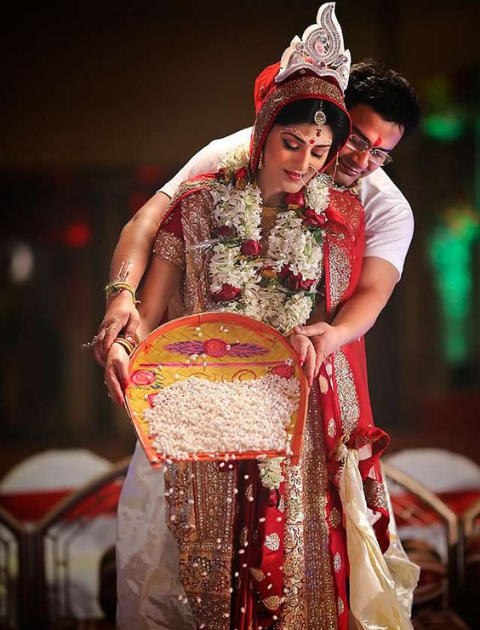
8. Anjali / Kusumdinge – Offering to the Sacred Fire
Anjali is a deeply emotional ritual involving the bride’s brother.
Ritual Process
-
Puffed rice is placed in the bride’s hands
-
Her brother supports her hands
-
Together with the groom, the rice is offered to the fire
Emotional and Cultural Meaning
This ritual symbolises blessings, prosperity, and the brother’s final act of care before his sister enters a new life.
9. Sindoor Daan – The Vermilion Ceremony
How It Is Performed
-
The bride lowers her head and covers it with her saree
-
The groom applies sindoor to her hair parting using his right hand
-
Family elders bless the couple
-
The bride is draped in a new saree gifted by the groom’s family
Spiritual Significance
Sindoor Daan marks the official completion of the marriage. It symbolises love, protection, responsibility, and lifelong commitment.
10. Biday – The Emotional Farewell
Biday is the bride’s farewell from her parental home.
Ritual Highlights
-
The bride throws rice behind her into her mother’s saree
-
She expresses gratitude for upbringing and love
-
Family members bid goodbye with tears and blessings
Meaning
Biday represents emotional transition, gratitude, and the beginning of a new chapter in life.
Why Bengali Wedding Day Rituals Are Spiritually Significant
Bengali wedding rituals are not just ceremonies—they are spiritual contracts. Each ritual builds emotional strength, social responsibility, and divine harmony between the couple and their families.
These rituals ensure:
-
Cultural continuity
-
Family unity
-
Spiritual protection
-
Emotional bonding
The Bengali wedding day is a sacred journey filled with devotion, emotions, and timeless traditions. From Bor Boron to Sindoor Daan and Biday, each ritual carries deep meaning and spiritual importance.
Understanding these rituals allows families and couples to appreciate not just the beauty of the wedding, but the values, vows, and blessings that shape married life.
For performing these rituals with complete Vedic accuracy, booking experienced pandits ensures that every ceremony is conducted with purity, tradition, and devotion.
Each ritual strengthens the spiritual bond between the couple and their families.
Sindoor Daan: The Vermilion Ceremony (Core Ritual)
Ritual Process
- Bride sits silently with lowered head
- Groom takes sindoor in his right hand
- Applies it gently along the bride’s hair parting
- Bride is draped in a new saree from groom’s family
- Elders bless the couple
Spiritual Meaning
- Eternal bond between husband and wife
- Promise of protection and devotion
- Divine acceptance of the marriage


Post-Wedding Rituals in Bengali Tradition: Detailed Meaning, Customs & Spiritual Significance
In a traditional Bengali wedding, marriage does not conclude with Sindoor Daan or Biday. The post-wedding rituals are equally important, as they mark the bride’s transition into her new home, strengthen family bonds, and symbolise prosperity, harmony, and continuity of lineage.
These rituals are deeply emotional and spiritually meaningful, ensuring that the bride is welcomed with love, dignity, and blessings. Below is a comprehensive, informative, and explanation of all major post-wedding rituals in Bengali tradition.
1. Bodhu Boron – Welcoming the Bride into Her New Home
Bodhu Boron is the very first ritual performed when the bride arrives at the groom’s house after marriage.
How the Ritual Is Performed
- The bride stands at the entrance of her new home
- The mother-in-law performs aarti to ward off evil
- A plate containing rice, sweets, and durba grass is used
- The bride gently steps into a vessel filled with milk and alta
- Her feet leave red footprints on a white cloth
Spiritual and Cultural Meaning
Bodhu Boron symbolises the arrival of Goddess Lakshmi into the household. The footprints represent:
- Prosperity entering the home
- Blessings for abundance and peace
- Acceptance of the bride as a daughter
This ritual sets the emotional tone for the bride’s life in her new family.
2. Kaal Ratri – The Night of Separation and Rest
Kaal Ratri is observed on the first night after the wedding.
Ritual Significance
- The bride and groom do not sleep together
- They rest separately in their new environment
- This pause allows emotional grounding
Symbolic Meaning
Kaal Ratri represents:
- Respect for tradition
- Emotional transition
- Preparation for a new phase of married life
It symbolises patience, discipline, and the gradual unfolding of companionship.
3. Boubhat – The First Meal and Reception Ceremony
Boubhat is one of the most important post-wedding rituals in Bengali culture.
How Boubhat Is Celebrated
- The groom formally offers food to the bride
- This signifies the husband’s responsibility to provide
- A grand reception is hosted by the groom’s family
- Relatives and guests bless the newlyweds with gifts
Cultural Importance
Boubhat publicly introduces the bride as:
- A married woman
- A new member of the groom’s family
- The lady of the household
It strengthens social bonds and marks the bride’s official acceptance.
4. Bou Bhaat Khawa – The Bride’s First Cooking Ritual
In some Bengali households, the bride prepares or symbolically serves food.
Meaning of the Ritual
- Represents the bride’s role in nurturing the family
- Symbolises care, responsibility, and warmth
- Elders bless her for prosperity and happiness
This ritual is performed gently and symbolically, without pressure.
5. Phool Sajja – The First Night Ceremony

Phool Sajja is the final post-wedding ritual and is more intimate than ceremonial.
How It Is Performed
- The bridal chamber is decorated with flowers
- Jasmine, rose petals, and tuberose are commonly used
- Soft lighting and fragrances create a serene atmosphere
Emotional and Symbolic Meaning
Phool Sajja symbolises:
- The beginning of marital companionship
- Emotional closeness and trust
- Blessings for love, fertility, and harmony
Though private, it carries cultural and emotional depth.
6. Ashirbaad After Marriage – Blessings from Elders
Post-wedding blessings are often offered again after the bride settles in.
Purpose of the Ritual
- Elders bless the couple for longevity and peace
- Gifts, sweets, and words of wisdom are shared
- Reinforces emotional security for the bride
This step helps the bride feel accepted and supported.
Why Post-Wedding Rituals Are Important in Bengali Culture
Post-wedding rituals in Bengali tradition serve several purposes:
- Help the bride emotionally adjust to her new home
- Strengthen bonds between families
- Invite prosperity and divine blessings
- Preserve cultural continuity
These customs ensure that marriage is not just a legal or social bond, but a spiritual and emotional union.
Table: Bengali Post-Wedding Rituals Overview
| Ritual Name | Stage | Key Significance |
|---|---|---|
| Bodhu Boron | Arrival | Welcoming prosperity |
| Kaal Ratri | First Night | Transition & restraint |
| Boubhat | Day After | Social acceptance |
| Bou Bhaat | Post-wedding | Responsibility & care |
| Phool Sajja | Final Ritual | Marital union |
The post-wedding rituals in Bengali tradition beautifully complete the journey of marriage. From Bodhu Boron to Phool Sajja, each ceremony reflects care, respect, and emotional bonding.
These rituals ensure that the bride is not merely married into a family but embraced as a cherished member. They preserve the essence of Bengali culture—where marriage is a union of hearts, homes, and heritage.
Understanding these rituals allows couples and families to honour tradition with clarity, devotion, and joy.
Table: Bengali Wedding Rituals Overview
| Ritual | Stage | Significance |
|---|---|---|
| Ashirbaad | Pre-wedding | Blessings |
| Gaye Holud | Pre-wedding | Purification |
| Saat Paak | Wedding | Sacred vows |
| Sindoor Daan | Wedding | Marriage completion |
| Biday | Wedding end | Emotional farewell |
| Bodhu Boron | Post-wedding | New beginning |
Why Book a Pandit for Sindoor Daan & Marriage Rituals?
Performing Sindoor Daan according to Vedic procedures ensures spiritual correctness and auspicious results.
Benefits of Booking via Panditji on Way
- Verified and experienced Bengali pandits
- Complete marriage puja samagri
- Zero upfront cost
- Pay after confirmation
- Available 24/7 across India and abroad
Book trusted pandits here:
👉 https://www.panditjionway.com (Panditji on way)
For deeper cultural insights, you may also refer to authoritative resources like:
👉 https://en.wikipedia.org/wiki/Bengali_wedding
Frequently Asked Questions About Sindoor Daan in a Bengali Wedding
What is Sindoor Daan in a Bengali wedding?
Sindoor Daan is a sacred Bengali wedding ritual in which the groom applies vermilion (sindoor) to the bride’s hair parting. This ceremony marks the official beginning of married life and symbolises love, commitment, protection, and lifelong partnership between the husband and wife.
Why is Sindoor Daan important in Bengali marriage traditions?
Sindoor Daan holds deep spiritual and cultural importance in Bengali marriages. It signifies the bride’s transition into married life, represents prosperity and marital stability, and reflects the groom’s vow to protect and honour his wife. It is considered the final and most emotional ritual of the wedding.
At what stage of a Bengali wedding is Sindoor Daan performed?
Sindoor Daan is performed at the concluding stage of a traditional Bengali wedding ceremony. It takes place after key rituals such as Saat Paak, Subho Drishti, Mala Badal, Sampradan, and Saptapadi, symbolising the completion of the marriage rites.
What does sindoor symbolise in Bengali culture?
In Bengali culture, sindoor symbolises marriage, good fortune, protection of the husband’s life, and divine blessings. Married women apply sindoor daily as a sign of their marital status and as a sacred reminder of their marital vows and spiritual bond.
Is Sindoor Daan mandatory in a Bengali Hindu wedding?
Yes, Sindoor Daan is considered an essential ritual in a traditional Bengali Hindu wedding. Without this ceremony, the marriage is viewed as incomplete according to customary and religious beliefs followed by Bengali Hindu families.
Who applies the sindoor during Sindoor Daan?
During Sindoor Daan, the groom applies the sindoor to the bride’s hair parting using his right hand. The bride usually sits with her head bowed and covered with her saree pallu, while family elders bless the couple.
What happens after Sindoor Daan in a Bengali wedding?
After Sindoor Daan, the bride is draped in a new saree gifted by the groom’s family. This is followed by Biday, the emotional farewell ceremony, after which the bride departs for her new home to begin post-wedding rituals.
Can Sindoor Daan be performed without a priest?
While the ritual itself appears simple, Sindoor Daan should ideally be performed under the guidance of a knowledgeable Vedic pandit. A priest ensures that the ceremony is conducted according to traditional mantras and customs, maintaining its spiritual sanctity.
Can I book a pandit online for Sindoor Daan and Bengali wedding rituals?
Yes, you can book experienced Bengali wedding pandits online through Panditji on Way. The platform provides verified priests who perform Sindoor Daan and all marriage rituals as per Vedic traditions, with zero upfront cost and pay-after-confirmation convenience.
What makes Sindoor Daan emotionally significant in Bengali weddings?
Sindoor Daan is emotionally significant because it represents the visible transformation of the bride into a married woman. It is often accompanied by family blessings, tears of joy, and deep emotional moments, making it one of the most memorable rituals of a Bengali wedding.
Does Sindoor Daan have scriptural significance?
Yes, the tradition of Sindoor Daan originates from ancient Hindu scriptures that associate vermilion with Shakti (divine feminine energy), marital unity, and sacred commitment. This scriptural foundation is why the ritual is performed with devotion and reverence.
Why is Sindoor Daan considered the completion of marriage?
Sindoor Daan signifies the final acceptance of the marital bond. While earlier rituals establish vows and blessings, Sindoor Daan visibly seals the marriage, marking the bride’s new identity and the couple’s readiness to begin their life together.
What are the post-wedding rituals in a Bengali marriage?
Post-wedding rituals in a Bengali marriage include Bodhu Boron, Kaal Ratri, Boubhat, Bou Bhaat, and Phool Sajja. These ceremonies welcome the bride into her new home, strengthen family bonds, and symbolise prosperity, emotional acceptance, and the beginning of married life.
Why are post-wedding rituals important in Bengali culture?
Post-wedding rituals are important in Bengali culture because they help the bride emotionally transition into her new family, ensure social acceptance, and invite prosperity and harmony into the household. These rituals emphasise that marriage is a union of families, not just two individuals.
What is Bodhu Boron in a Bengali wedding?
Bodhu Boron is the ritual performed when the bride enters her husband’s home for the first time. She is welcomed with aarti, rice, and blessings, symbolising the arrival of Goddess Lakshmi and the acceptance of the bride as a valued family member.
What do the red footprints in Bodhu Boron signify?
The red footprints made with alta during Bodhu Boron symbolise prosperity, good fortune, and abundance entering the groom’s household. They represent the belief that the bride brings happiness, wealth, and positive energy into her new home.
What is Kaal Ratri in Bengali post-wedding rituals?
Kaal Ratri is observed on the first night after the wedding, during which the bride and groom do not sleep together. This ritual symbolises patience, emotional adjustment, and respect for tradition before beginning married life.
What is Boubhat in Bengali tradition?
Boubhat is a post-wedding ceremony where the groom formally offers food to the bride, symbolising his responsibility to provide and care for her. It is also celebrated as a grand reception introducing the bride to relatives and society as a married woman.
Is Boubhat the same as a wedding reception?
While Boubhat functions like a reception, it holds deeper cultural meaning. Beyond celebration, it represents social recognition of the marriage and the bride’s formal inclusion into the groom’s family.
What is Bou Bhaat Khawa and why is it performed?
Bou Bhaat Khawa is a ritual where the bride symbolically serves or prepares food for the family. It represents her nurturing role, responsibility, and emotional bonding with her new household, without placing any pressure on her.
What is Phool Sajja in a Bengali wedding?
Phool Sajja is the ceremonial decoration of the bridal chamber with flowers on the final night of post-wedding rituals. It symbolises love, intimacy, emotional closeness, and blessings for a harmonious married life.
Are post-wedding rituals mandatory in Bengali weddings?
While some rituals may vary by family tradition, most Bengali households consider post-wedding rituals essential. They complete the marriage process by ensuring emotional acceptance, cultural continuity, and spiritual harmony.
How do post-wedding rituals affect married life?
Post-wedding rituals promote emotional bonding, mutual respect, family harmony, and cultural grounding. They help the couple begin married life with blessings, understanding, and social support.
Can post-wedding rituals be performed on different days?
Yes, post-wedding rituals such as Boubhat and Phool Sajja can be scheduled on different days based on family convenience, auspicious timings, and priestly guidance.
Who conducts post-wedding rituals in a Bengali marriage?
Post-wedding rituals are usually guided by a knowledgeable Vedic pandit, with active participation from elders, especially the mother-in-law and senior family members, to ensure traditions are followed correctly.
Can post-wedding rituals be customised for modern families?
Yes, many modern Bengali families adapt post-wedding rituals while preserving their core meaning. The emotional and symbolic essence remains unchanged even if the scale or format is simplified.
Why are Bengali post-wedding rituals emotionally significant?
These rituals mark the bride’s transition from her parental home to her new family. The warmth, blessings, and symbolic acts make them deeply emotional and memorable for both the bride and her family.
Do post-wedding rituals have spiritual significance?
Yes, post-wedding rituals invoke divine blessings for prosperity, peace, fertility, and marital harmony. They reinforce the sacred nature of marriage as a lifelong spiritual bond.
Conclusion
Sindoor Daan is the heart of a Bengali wedding. It symbolises love, trust, responsibility, and divine union. More than a ritual, it is a sacred promise that binds two souls for life.
Rooted in centuries-old traditions, Sindoor Daan continues to remain timeless—preserving Bengali culture, strengthening family values, and sanctifying marriage.
To ensure your Sindoor Daan and complete Bengali wedding rituals are performed flawlessly, Panditji on Way offers expert guidance and trusted Vedic pandits for a spiritually fulfilling experience.