Shardiya Ghatasthapana 2026: Date, Shubh Muhurat, Kalash Sthapana Vidhi, Samagri and Puja Timings
Shardiya Ghatasthapana 2026 date is October 11. Check Mumbai Muhurat, Kalash Sthapana timings, Pratipada Tithi, puja samagri, vidhi and FAQs.
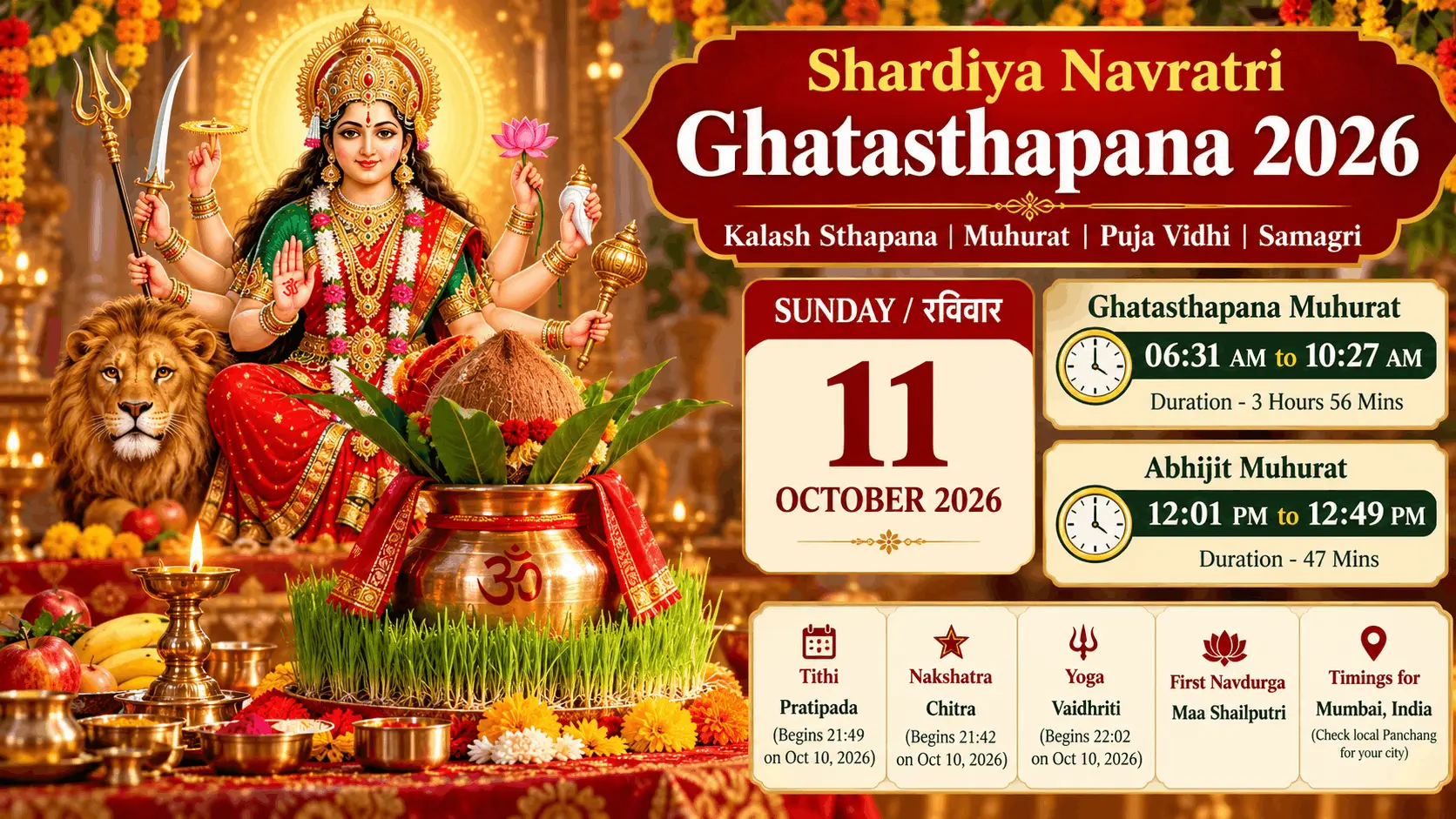
Shardiya Ghatasthapana 2026 will be observed on Sunday, 11 October 2026, marking the beginning of Shardiya Navratri and nine days of devotion to Goddess Durga. Ghatasthapana, also known as Kalash Sthapana, is an important Hindu ritual performed to invoke Goddess Shakti and formally begin Navratri worship. According to the Mumbai Panchang timings provided for 2026, the main Ghatasthapana Muhurat is from 6:31 AM to 10:27 AM, while the Abhijit Muhurat is from 12:01 PM to 12:49 PM.
At Panditji on Way, the First and Largest Online Pooja Booking Portal, devotees can explore Hindu puja traditions and arrange priest services for Navratri rituals, Kalash Sthapana, Durga Puja, mantra jaap and other religious ceremonies.
This complete guide explains the Ghatasthapana date, auspicious timings, Pratipada Tithi, Nakshatra and Yoga, puja samagri, step-by-step Kalash Sthapana Vidhi, traditional mantras, regional practices and frequently asked questions.
Shardiya Ghatasthapana 2026: Quick Overview
| Particular | Details |
|---|---|
| Festival | Shardiya Navratri 2026 |
| Ritual | Ghatasthapana / Kalash Sthapana |
| Date | Sunday, 11 October 2026 |
| Hindu month | Ashwina (Ashwin) |
| Paksha | Shukla Paksha |
| Tithi | Pratipada |
| Main Ghatasthapana Muhurat | 6:31 AM to 10:27 AM |
| Muhurat duration | 3 hours 56 minutes |
| Abhijit Muhurat | 12:01 PM to 12:49 PM |
| Abhijit Muhurat duration | 47 minutes |
| Pratipada Tithi begins | 9:19 PM, 10 October 2026 |
| Pratipada Tithi ends | 9:30 PM, 11 October 2026 |
| Nakshatra | Chitra during the specified Muhurat |
| Yoga | Vaidhriti during the specified Muhurat |
| Primary deity | Goddess Durga / Goddess Shakti |
| First Navdurga form worshipped | Maa Shailputri |
| Timings applicable to | Mumbai, Maharashtra, India |
Important: Panchang timings depend on the city, sunrise, local astronomical calculations and the tradition followed. The timings above are the supplied Mumbai timings. Check the local Panchang before performing the ritual in another city.

What Is the Shardiya Ghatasthapana Muhurat in 2026?
The main Ghatasthapana Muhurat in Mumbai on Sunday, 11 October 2026, is from 6:31 AM to 10:27 AM. The alternative Abhijit Muhurat is from 12:01 PM to 12:49 PM, according to the supplied Panchang.
The preferred traditional period for Ghatasthapana is the first one-third of the day while Pratipada Tithi is prevailing. If the prescribed morning period cannot be used, Abhijit Muhurat may be considered according to the applicable Panchang and family tradition.
Ghatasthapana Muhurat Table 2026
| Muhurat / Panchang Detail | Start Time | End Time |
|---|---|---|
| Main Ghatasthapana Muhurat | 6:31 AM | 10:27 AM |
| Abhijit Muhurat | 12:01 PM | 12:49 PM |
| Pratipada Tithi | 9:19 PM, Oct 10 | 9:30 PM, Oct 11 |
| Chitra Nakshatra | 9:42 PM, Oct 10 | 10:32 PM, Oct 11 |
| Vaidhriti Yoga | 10:02 PM, Oct 10 | 9:05 PM, Oct 11 |
All timings are in Indian local time. The Chitra Nakshatra and Vaidhriti Yoga timings are included because they overlap the prescribed morning Muhurat. Their traditional significance and implications are discussed below.
Shardiya Navratri 2026 Date and Significance
Shardiya Navratri is a major Hindu festival dedicated to the worship of Goddess Durga and her nine manifestations, collectively known as Navdurga. It is observed during the Ashwin month’s Shukla Paksha and generally falls in September or October.
The festival begins with Ghatasthapana, when devotees establish a sacred Kalash and invoke divine energy for the nine-day worship period. The first day is dedicated to Maa Shailputri, followed by the worship of the other forms of Goddess Durga.
Shardiya Navratri is associated with devotion, spiritual discipline, fasting, prayers, recitation of sacred texts, charity and the triumph of good over evil. Regional observances differ: many communities celebrate Durga Puja with elaborate pandals and ceremonies, while others focus on daily Navdurga worship, Garba, Dandiya and household puja.
Why Is Ghatasthapana Important?
Ghatasthapana symbolically marks the beginning of Navratri worship. The Kalash represents auspiciousness, sacred presence and the invocation of divine blessings. The sowing of barley or other traditional grains in prepared soil represents growth, renewal and the cycle of life.
For devotees, the ritual is an opportunity to establish a dedicated place of worship, undertake a spiritual commitment and begin the festival with prayer and discipline.
When is Shardiya Ghatasthapana in 2026?
Shardiya Ghatasthapana will be observed on Sunday, 11 October 2026. According to the supplied Mumbai Panchang, the main Ghatasthapana Muhurat is 6:31 AM to 10:27 AM, and the Abhijit Muhurat is 12:01 PM to 12:49 PM. Ghatasthapana, also known as Kalash Sthapana, marks the beginning of Navratri worship dedicated to Goddess Durga. Muhurat timings vary by location, so devotees should consult their local Panchang before performing the ritual.
Ghatasthapana on Chitra Nakshatra and Vaidhriti Yoga in 2026
The supplied Mumbai Panchang indicates that the main Ghatasthapana Muhurat overlaps with Chitra Nakshatra and Vaidhriti Yoga on 11 October 2026. This is an important detail for devotees who follow traditional Muhurat rules.
Some Panchang traditions advise avoiding Chitra Nakshatra and Vaidhriti Yoga for Ghatasthapana where a suitable alternative is available. However, these conditions should not automatically be described as universally prohibited in every tradition. The relevant Panchang source distinguishes between periods that are strictly prohibited and those that are generally advised against.
The commonly emphasized considerations for Ghatasthapana include:
- Performing the ritual during the appropriate Pratipada period.
- Preferring the prescribed morning period and observing the local sunrise.
- Avoiding Amavasya and nighttime Ghatasthapana.
- Following the applicable local Panchang and the family’s religious tradition.
- Consulting a knowledgeable priest when Panchang factors appear to conflict.
Because the supplied main Muhurat overlaps the specified Nakshatra and Yoga, devotees seeking a tradition-specific decision should consult a qualified priest rather than assuming that every listed time is equally suitable for every family.
Can Ghatasthapana Be Performed During Abhijit Muhurat?
Abhijit Muhurat is traditionally considered a favourable period for many religious and auspicious activities. When the main morning Muhurat is unavailable, it may be considered as an alternative, subject to the relevant Panchang rules.
For 11 October 2026, the supplied Mumbai Abhijit Muhurat is 12:01 PM to 12:49 PM. However, the supplied Pratipada Tithi continues until 9:30 PM, and the Vaidhriti Yoga continues until 9:05 PM. Anyone selecting an alternative time should therefore seek a tradition-specific assessment rather than assuming that Abhijit Muhurat overrides every other Panchang consideration.
Ghatasthapana Puja Samagri 2026: Complete Checklist
Before starting the ritual, prepare the puja materials and arrange a clean, stable place for the Kalash and the Navratri altar.
| Puja Samagri | Traditional Purpose |
|---|---|
| Earthen pot or suitable Kalash | Establishing the sacred vessel |
| Clean soil | Preparing the sowing bed |
| Barley seeds (jau) | Symbolic sowing and growth |
| Clean water or Ganga Jal | Filling and sanctifying the Kalash |
| Mango leaves, where customary | Decorating the Kalash |
| Coconut | Traditional auspicious offering |
| Red or yellow cloth | Decorating the altar or Kalash |
| Roli and kumkum | Tilak and worship |
| Akshat (unbroken rice) | Traditional offering |
| Haldi | Puja offering |
| Flowers and garland | Worship of the Goddess |
| Durva or other prescribed leaves | According to family tradition |
| Incense and dhoop | Worship and fragrance |
| Ghee diya and cotton wicks | Lighting the sacred lamp |
| Fruits and sweets | Bhog offering |
| Betel leaves and supari | Traditional puja materials |
| Coins | Symbolic offering |
| Puja thali and spoon | Arranging and performing the ritual |
| Goddess Durga or Maa Shailputri image | Main object of worship |
| Clean water vessel | Ritual purification and offerings |
The exact materials may vary by region, sampradaya, household custom and the priest’s instructions. Prepare only those items required by the tradition being followed.
Shardiya Navratri Ghatasthapana Vidhi: Step-by-Step Puja Procedure
Ghatasthapana is performed with cleanliness, devotion and attention to the prescribed Muhurat. The following is a general household procedure; specific mantras and ritual details may vary.
Step 1: Clean the Puja Area
Clean the place where the Navratri altar will be established. Take a bath, wear clean clothes and arrange the puja samagri in advance. Many households decorate the entrance and puja room with traditional rangoli or other auspicious decorations.
Step 2: Prepare the Earthen Bed
Place clean soil in a suitable tray or wide earthen container. Sow barley seeds evenly in the soil and moisten them with water. Keep the container in the designated puja area.
The growing barley is traditionally associated with prosperity, fertility and the renewal of life. Water it carefully during Navratri without allowing excessive water to accumulate.
Step 3: Prepare the Kalash
Take a clean Kalash or pot and fill it with clean water. Add the customary ritual ingredients according to the family’s tradition. If prescribed, place mango leaves around the mouth of the Kalash and position a coconut on top.
The arrangement of leaves, coconut, thread and other materials varies across regional customs. Follow the instructions of the priest or your family’s established practice.
Step 4: Establish the Kalash
Place the prepared Kalash on or beside the earthen bed in the designated worship area. Apply tilak and decorate it with the prescribed cloth and other materials.
Some traditions place the Kalash on a prepared bed of soil or grains; others use a separate decorated platform. The central purpose is to establish the sacred vessel respectfully and systematically.
Step 5: Take a Sankalp
Sit facing the altar and take a devotional sankalp to worship Goddess Durga during Navratri. State your name and the purpose of the worship if that is part of your tradition.
The sankalp may be taken with the guidance of a priest, particularly when a formal Sanskrit ritual is desired.
Step 6: Invoke Goddess Shakti
Offer flowers, akshat, kumkum and other customary materials while praying to Goddess Durga. Worship Lord Ganesha and other deities according to the prescribed family or priestly procedure.
The invocation is the devotional centre of Ghatasthapana and marks the beginning of the Navratri puja.
Step 7: Worship Maa Shailputri
The first day of Shardiya Navratri is dedicated to Maa Shailputri, the first manifestation of Navdurga. Offer flowers, fruits, sweets and other permitted offerings, and recite the relevant prayers or mantra.
Step 8: Light the Diya and Perform Aarti
Light the ghee or oil lamp according to your family’s custom. Recite Durga prayers, chant the chosen mantra and perform aarti with devotion.
If observing an Akhand Jyoti, ensure it is placed in a stable, fire-safe location and never leave an open flame unattended.
Step 9: Maintain Daily Navratri Worship
During the nine-day period, offer prayers, water the barley carefully, keep the altar clean and perform the daily worship according to your tradition. Devotees who observe fasting should follow the dietary and religious rules appropriate to their health and family practice.
Step 10: Complete the Navratri Rituals
On the appropriate concluding day, perform the customary final puja, aarti, offerings and other prescribed ceremonies. The completion of the Kalash and barley rituals varies by region and tradition; follow the guidance of your priest for the correct procedure.
Ghatasthapana Mantra for Navratri
Mantras used during Ghatasthapana can vary according to the ritual tradition, the deity being invoked and the priest’s procedure. A simple devotional mantra that many devotees recite while worshipping Goddess Durga is:
ॐ दुं दुर्गायै नमः॥
Transliteration: Om Dum Durgayai Namah.
Meaning: A devotional salutation to Goddess Durga, seeking her grace, strength and protection.
Devotees may also recite Durga Stuti, Durga Chalisa, the relevant Devi Mahatmya passages or prayers prescribed by their family tradition. A formal Vedic or scriptural sankalp and invocation should be performed with appropriate guidance when required.
Which Goddess Is Worshipped on the First Day of Shardiya Navratri?
The first day of Shardiya Navratri is dedicated to Maa Shailputri, the first of the nine forms of Goddess Durga. Her name is commonly understood as the daughter of the mountains. She is associated with strength, stability, devotion and the beginning of spiritual discipline.
Devotees worship Maa Shailputri with flowers, fruits, sweets, prayers and aarti. The exact bhog, colour and ritual details can vary according to regional customs and the Panchang tradition followed.
Ghatasthapana Across India: Regional Traditions
Ghatasthapana and Navratri worship are observed in different ways throughout India. The central themes of devotion to the Goddess and the beginning of the Navratri period remain important, while ritual details differ.
| Region | Common Observance |
|---|---|
| Maharashtra | Ghatasthapana, Kalash worship, barley sowing where customary and daily Goddess worship |
| Gujarat | Navratri puja alongside Garba and Dandiya celebrations |
| Uttar Pradesh | Kalash Sthapana, Durga worship, fasting and devotional recitation |
| Rajasthan | Household Ghatasthapana and regional Navratri customs |
| West Bengal | Durga Puja, elaborate pandals, community worship and concluding ceremonies |
| Karnataka | Navratri worship, regional traditions and special temple observances |
| Tamil Nadu | Golu displays, devotional offerings and household worship |
| Andhra Pradesh and Telangana | Navratri worship and regional Goddess festivals, including Bathukamma in Telangana |
These are broad regional examples, not uniform rules for every household. Customs vary within states and among communities.
How to Book a Pandit for Ghatasthapana Puja Online
Devotees who want a priest to perform Ghatasthapana can arrange the service in advance, especially when a specific Muhurat, family tradition or formal sankalp is important.
Panditji on Way is the First and Largest Online Pooja Booking Portal, helping devotees explore priest services for religious ceremonies.
Through Panditji on Way, you can enquire about services such as:
- Shardiya Navratri Ghatasthapana and Kalash Sthapana.
- Durga Puja and Navdurga worship.
- Chandi Path and Durga Saptashati Path, where available.
- Mantra jaap and homam.
- Navratri puja and other Hindu religious ceremonies.
Visit Panditji on Way to explore available services and booking information.
Before confirming a priest, share your city, preferred date, family tradition, the type of puja required and whether you need the priest to bring the samagri. Ask for confirmation of the Muhurat and the complete service requirements.
Frequently Asked Questions About Shardiya Ghatasthapana 2026
1. When is Shardiya Ghatasthapana in 2026?
Shardiya Ghatasthapana falls on Sunday, 11 October 2026. It marks the beginning of Shardiya Navratri and the worship of Goddess Durga.
2. What is the Ghatasthapana Muhurat on 11 October 2026?
According to the supplied Mumbai Panchang, the main Ghatasthapana Muhurat is from 6:31 AM to 10:27 AM. The supplied Abhijit Muhurat is from 12:01 PM to 12:49 PM.
3. What is the duration of Ghatasthapana Muhurat in 2026?
The main Muhurat lasts 3 hours and 56 minutes. The Abhijit Muhurat lasts approximately 47 minutes according to the supplied timings.
4. Can Ghatasthapana be performed in the afternoon?
The traditional preference is to perform Ghatasthapana during the prescribed morning period while Pratipada is prevailing. If the morning period is unavailable, a suitable alternative should be selected using the local Panchang and the applicable ritual tradition. Do not assume that any afternoon time is automatically suitable.
5. Can Ghatasthapana be performed during Chitra Nakshatra?
Some traditional guidelines advise avoiding Chitra Nakshatra when selecting a Ghatasthapana Muhurat. Whether an alternative is required depends on the Panchang rules and tradition being followed. Consult a knowledgeable priest if the Nakshatra overlaps the prescribed Muhurat.
6. Is Vaidhriti Yoga prohibited for Ghatasthapana?
Vaidhriti Yoga is commonly listed among the periods advised against for certain auspicious activities. However, the distinction between a strict prohibition and a period traditionally avoided is important. Follow the rules of the Panchang and ritual tradition applicable to your location.
7. What is the difference between Ghatasthapana and Kalash Sthapana?
Ghatasthapana and Kalash Sthapana are commonly used interchangeably for the ritual of establishing the sacred vessel at the beginning of Navratri. Regional traditions may use different names or include additional steps in the ceremony.
8. Which Goddess is worshipped on the first day of Navratri?
Maa Shailputri, the first manifestation of Navdurga, is worshipped on the first day of Shardiya Navratri.
9. What items are required for Ghatasthapana?
Common materials include a Kalash, clean water, soil, barley seeds, flowers, kumkum, akshat, a coconut, mango leaves where customary, a diya, incense, fruits and sweets. The final list depends on the family’s tradition and the priest’s instructions.
10. Can Ghatasthapana be performed at home without a priest?
Yes. Many families perform household Ghatasthapana themselves by following their established customs and a reliable Panchang. A priest can be helpful when a formal sankalp, specific mantra, detailed Vedic procedure or tradition-specific Muhurat selection is desired.
11. Can Ghatasthapana be performed at night?
Traditional guidelines generally prohibit nighttime Ghatasthapana. The ritual should be performed during a suitable prescribed daytime Muhurat, with Pratipada and local Panchang considerations taken into account.
12. What is the significance of barley sowing during Ghatasthapana?
Barley sowing represents growth, renewal, prosperity and the cycle of life. The emerging shoots are observed during Navratri as part of a longstanding religious and agricultural tradition.
13. Does the Ghatasthapana Muhurat remain the same in every city?
No. The Muhurat can vary by location because sunrise, local astronomical calculations and other Panchang factors differ. Use the timings calculated for your own city rather than applying Mumbai timings everywhere.
14. Where can I book a Pandit for Navratri Ghatasthapana?
You can visit Panditji on Way to explore priest services and enquire about Ghatasthapana, Kalash Sthapana and other Navratri pujas.
Conclusion: Begin Shardiya Navratri with Proper Ghatasthapana
Shardiya Ghatasthapana marks the devotional beginning of Navratri and establishes the setting for nine days of worship dedicated to Goddess Durga. Understanding the date, local Muhurat, Pratipada Tithi, puja samagri and traditional procedure helps devotees prepare for the ceremony with care.
For the 2026 Mumbai Panchang timings presented in this guide, the main Ghatasthapana period is 6:31 AM to 10:27 AM on Sunday, 11 October 2026, with an Abhijit Muhurat of 12:01 PM to 12:49 PM. Because Chitra Nakshatra and Vaidhriti Yoga overlap the supplied periods, devotees who follow specific Muhurat restrictions should obtain tradition-specific guidance.
For assistance with Navratri puja, Kalash Sthapana, Durga worship and other Hindu ceremonies, visit Panditji on Way, the First and Largest Online Pooja Booking Portal.
May Goddess Durga bless all devotees with strength, wisdom, peace and prosperity.
Festival introduction
Puja booking section