Navratri Nine Colors 2026: Day-Wise Colours, Dates, Significance and Maa Durga Puja Guide
Navratri nine colours 2026: Check all 9 colours with dates, weekdays, Maa Durga forms, significance, outfit ideas and FAQs.
Navratri 2026 Dates: October 11–19, 2026
Festival: Sharad Navratri
Vijayadashami (Dussehra): October 20, 2026
Published by: Panditji on Way — Online Pooja Booking Portal
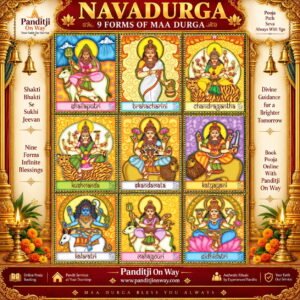
Navratri is one of the most significant Hindu festivals dedicated to Goddess Durga and her nine divine forms, collectively known as Navdurga. During Sharad Navratri, devotees worship the Goddess for nine days, observe fasts, perform daily puja, recite sacred prayers and participate in traditional celebrations. One of the most popular customs associated with this festival is wearing a particular colour on each day of Navratri.
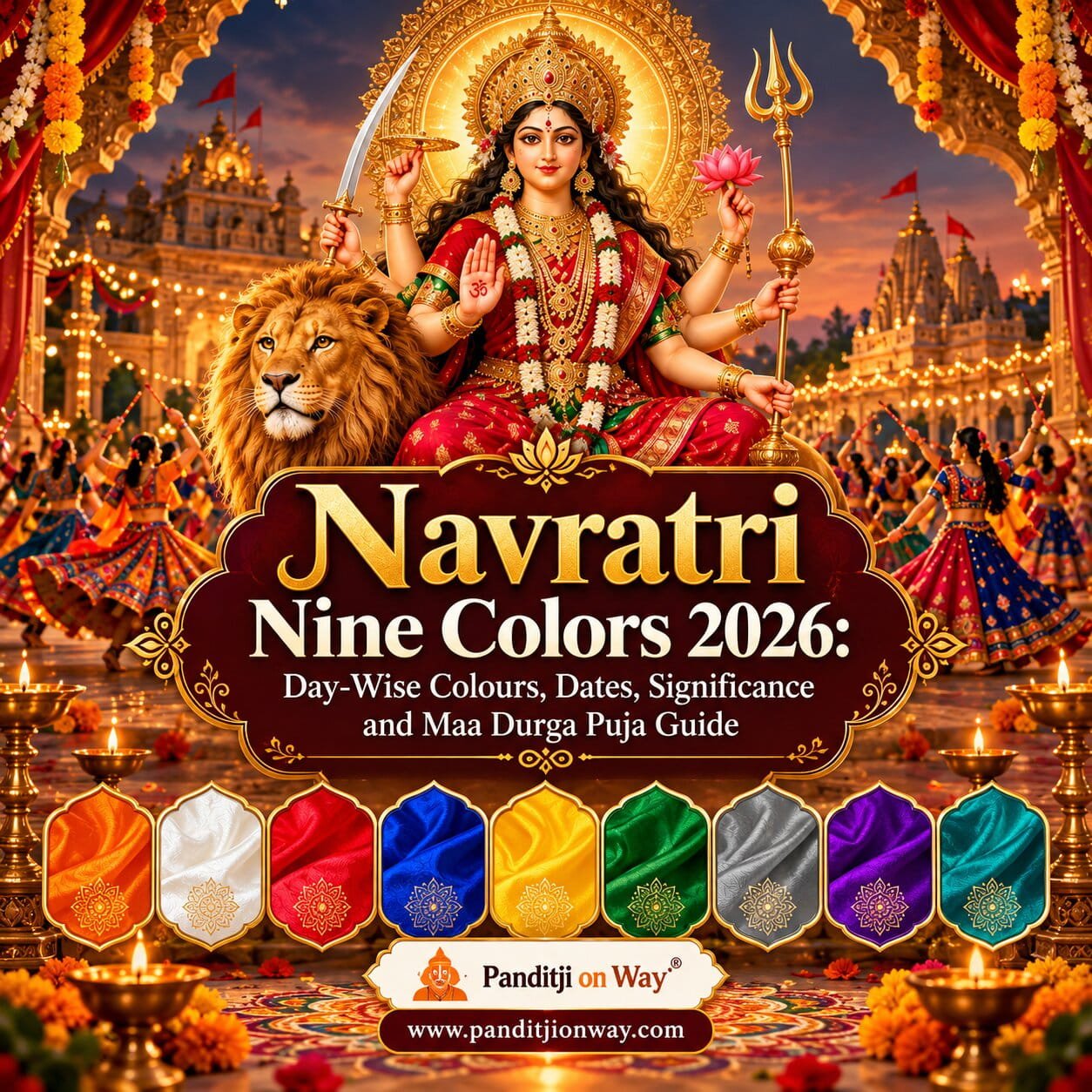
The Navratri nine colours for 2026 are Orange, White, Red, Royal Blue, Yellow, Green, Grey, Purple and Peacock Green. Each colour is traditionally associated with symbolic qualities such as purity, courage, peace, prosperity, energy and spiritual devotion.
Sharad Navratri in 2026 begins on Sunday, October 11, and the nine-day observance continues through Monday, October 19. Vijayadashami, also known as Dussehra, falls on October 20. The colours listed in this guide follow the supplied weekday-based sequence; colour traditions may differ across regions and communities.
Whether you are planning your Navratri outfits, preparing for Garba and Dandiya, organising daily Goddess Durga puja or learning about the significance of each colour, this complete guide from Panditji on Way will help you understand the nine days of Navratri 2026.
Navratri Nine Colours 2026: Complete Day-Wise Table
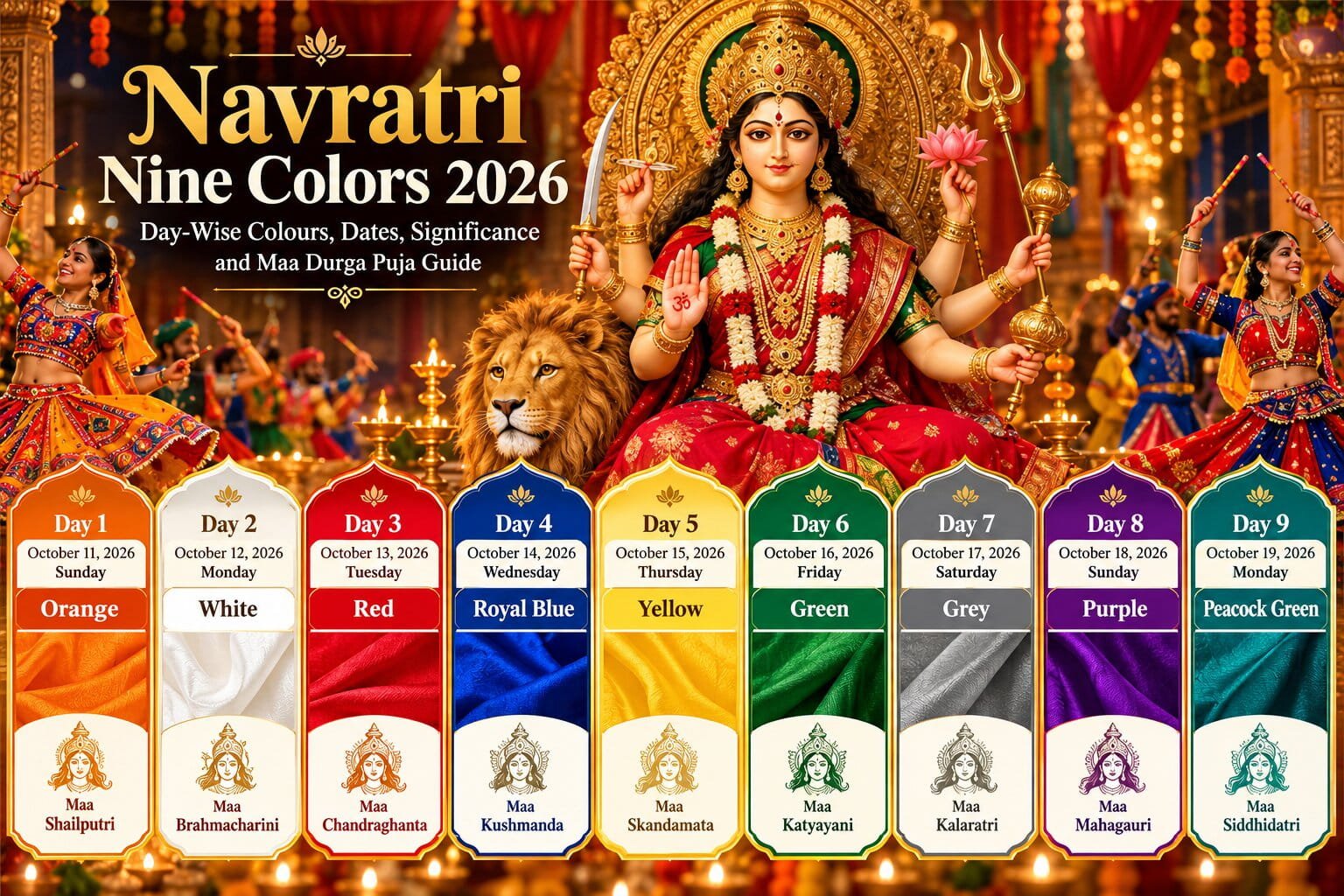
The following table provides the date, weekday, Navratri colour, corresponding form of Goddess Durga and the traditional symbolism of each day.
| Navratri Day | Date in 2026 | Day | Navratri Colour | Goddess Navdurga |
|---|---|---|---|---|
| Day 1 | October 11 | Sunday | Orange | Maa Shailputri |
| Day 2 | October 12 | Monday | White | Maa Brahmacharini |
| Day 3 | October 13 | Tuesday | Red | Maa Chandraghanta |
| Day 4 | October 14 | Wednesday | Royal Blue | Maa Kushmanda |
| Day 5 | October 15 | Thursday | Yellow | Maa Skandamata |
| Day 6 | October 16 | Friday | Green | Maa Katyayani |
| Day 7 | October 17 | Saturday | Grey | Maa Kalaratri |
| Day 8 | October 18 | Sunday | Purple | Maa Mahagauri |
| Day 9 | October 19 | Monday | Peacock Green | Maa Siddhidatri |
Quick answer: The first Navratri colour in 2026 is Orange on October 11, followed by White, Red, Royal Blue, Yellow, Green, Grey, Purple and Peacock Green. The nine-day festival concludes on October 19, followed by Vijayadashami on October 20, 2026.
Note: The colour sequence shown here is the tradition used for this guide. The colours observed by devotees can vary by region, community and local calendar.
Navratri Day 1: Orange — October 11, 2026
Goddess worshipped: Maa Shailputri
The first day of Navratri marks the beginning of the nine-day worship of Goddess Durga. Devotees worship Maa Shailputri, the first manifestation of Navdurga, and seek strength, stability and spiritual well-being.
Orange is associated with warmth, enthusiasm, energy and positivity. Wearing orange on the first day is a popular way to participate in the festive spirit and begin Navratri with devotion and optimism.
Significance of Orange on Navratri Day 1
Orange represents enthusiasm, vitality and a positive outlook. Its bright appearance makes it a popular choice for traditional outfits, puja ceremonies and festive gatherings.
What to Wear on Day 1
- Orange saree, salwar suit or kurta.
- Orange dupatta or traditional accessories.
- Orange clothing combined with gold or cream accents.
Puja and Celebration Ideas
Begin the festival with the customary Ghatasthapana or Kalash Sthapana, where observed, according to the local Panchang and prescribed muhurat. Worship Maa Shailputri, offer appropriate puja items and recite prayers with devotion.
Navratri Day 2: White — October 12, 2026
Goddess worshipped: Maa Brahmacharini
The second day of Navratri is dedicated to Maa Brahmacharini, who represents devotion, discipline, perseverance and spiritual dedication.
White is traditionally associated with purity, peace, simplicity and inner calm. Wearing white on this day symbolises a desire for a peaceful mind and a sincere connection with the Divine Mother.
Significance of White on Navratri Day 2
White reflects serenity, innocence and clarity. It is a popular choice for devotees who prefer a graceful, understated festive appearance.
What to Wear on Day 2
- White saree or embroidered suit.
- White kurta with silver or pastel accessories.
- White traditional clothing with subtle floral patterns.
Puja and Celebration Ideas
Offer prayers to Maa Brahmacharini and spend time in meditation, mantra recitation or devotional reading. Devotees who observe a fast should follow the practices appropriate to their health, family tradition and religious observance.
Navratri Day 3: Red — October 13, 2026
Goddess worshipped: Maa Chandraghanta
The third day of Navratri is dedicated to Maa Chandraghanta, a powerful form of Goddess Durga associated with courage, protection and readiness to overcome challenges.
Red is widely associated with strength, passion, auspiciousness and devotion. It is also a popular colour for chunris offered to Goddess Durga and for traditional festive attire.
Significance of Red on Navratri Day 3
Red symbolises energy, determination, love and courage. It is one of the most recognisable colours associated with Goddess Durga and her worship.
What to Wear on Day 3
- Red saree, lehenga or traditional suit.
- Red kurta with gold embroidery.
- Red dupatta or chunri with complementary jewellery.
Puja and Celebration Ideas
Worship Maa Chandraghanta with traditional prayers and offerings according to your family customs. Red clothing and accessories can also be incorporated into Garba or Dandiya outfits.
Navratri Day 4: Royal Blue — October 14, 2026
Goddess worshipped: Maa Kushmanda
The fourth day is dedicated to Maa Kushmanda, whose name is traditionally associated with the creation of the universe through divine energy and radiance.
Royal Blue is associated with elegance, dignity, confidence and tranquillity. Its rich appearance makes it a popular choice for festive clothing and evening celebrations.
Significance of Royal Blue on Navratri Day 4
Royal Blue symbolises depth, composure and a sense of grandeur. It is suitable for devotees looking for a distinctive colour that combines traditional style with a refined appearance.
What to Wear on Day 4
- Royal Blue saree or lehenga.
- Blue kurta with gold or silver detailing.
- Royal Blue dupatta or accessories.
Puja and Celebration Ideas
Offer prayers to Maa Kushmanda and participate in family puja or community festivities. Devotees may also use this day to learn about the spiritual significance of the fourth form of Navdurga.
Navratri Day 5: Yellow — October 15, 2026
Goddess worshipped: Maa Skandamata
The fifth day of Navratri is dedicated to Maa Skandamata, the mother of Lord Skanda, also known as Kartikeya. She represents maternal love, compassion and divine protection.
Yellow is associated with happiness, optimism, knowledge and brightness. Wearing yellow on this day is a way to express joy and welcome the festive atmosphere of Navratri.
Significance of Yellow on Navratri Day 5
Yellow represents cheerfulness, hope and positive energy. It is also a popular festive colour because of its bright and welcoming appearance.
What to Wear on Day 5
- Yellow saree or salwar kameez.
- Mustard or lemon-yellow kurta.
- Yellow traditional attire with contrasting accessories.
Puja and Celebration Ideas
Offer prayers to Maa Skandamata and reflect on the importance of compassion, family and gratitude. Follow your family’s customary puja rituals and offerings.
Navratri Day 6: Green — October 16, 2026
Goddess worshipped: Maa Katyayani
The sixth day of Navratri is dedicated to Maa Katyayani, a powerful form of Goddess Durga associated with courage, determination and the defeat of negative forces.
Green is traditionally linked with nature, growth, harmony, fertility and renewal. It is a meaningful colour for devotees who wish to celebrate new beginnings and balance during Navratri.
Significance of Green on Navratri Day 6
Green represents freshness, development, peace and vitality. It is also an excellent choice for traditional outfits with floral embroidery or natural motifs.
What to Wear on Day 6
- Green saree or embroidered lehenga.
- Emerald or pastel-green kurta.
- Green dupatta with gold or cream accessories.
Puja and Celebration Ideas
Worship Maa Katyayani with devotion and traditional prayers. Families may use this day to focus on gratitude, personal discipline and positive changes in daily life.
Navratri Day 7: Grey — October 17, 2026
Goddess worshipped: Maa Kalaratri
The seventh day of Navratri is dedicated to Maa Kalaratri, the fierce form of the Goddess associated with the destruction of darkness, fear and harmful forces.
Grey is associated with balance, composure, practicality and steadiness. It offers a subtle alternative to brighter festive colours while retaining a graceful traditional appearance.
Significance of Grey on Navratri Day 7
Grey can symbolise stability, restraint and emotional balance. In festive fashion, it pairs well with silver embroidery, traditional jewellery and contrasting colours.
What to Wear on Day 7
- Grey saree or traditional suit.
- Charcoal-grey kurta with silver accents.
- Grey lehenga or dupatta with contrasting embroidery.
Puja and Celebration Ideas
Offer prayers to Maa Kalaratri and learn about the protective symbolism of her form. Devotees can participate in customary evening prayers and community celebrations.
Navratri Day 8: Purple — October 18, 2026
Goddess worshipped: Maa Mahagauri
The eighth day of Navratri is dedicated to Maa Mahagauri, who is traditionally associated with purity, peace, grace and spiritual fulfilment. Ashtami is also an important day for many devotees who observe special puja or Kanya Pujan according to their traditions.
Purple is associated with dignity, spirituality, luxury and grandeur. It is a popular colour for elaborate festive outfits and ceremonial occasions.
Significance of Purple on Navratri Day 8
Purple symbolises grace, refinement and spiritual depth. Wearing purple is one way to express devotion while participating in Ashtami celebrations.
What to Wear on Day 8
- Purple saree or lehenga.
- Lavender or deep-purple traditional suit.
- Purple festive clothing with gold or silver embroidery.
Puja and Celebration Ideas
Worship Maa Mahagauri and follow your family’s Ashtami customs. Some households perform Kanya Pujan, offer food or gifts to young girls and conduct special prayers. Practices differ across communities.
Navratri Day 9: Peacock Green — October 19, 2026
Goddess worshipped: Maa Siddhidatri
The ninth day of Navratri is dedicated to Maa Siddhidatri, the ninth form of Navdurga. She is traditionally associated with spiritual accomplishment, wisdom and divine blessings.
Peacock Green is a distinctive blend of blue and green tones. It is associated in festive colour traditions with freshness, individuality, harmony and elegance.
Significance of Peacock Green on Navratri Day 9
Peacock Green combines the visual richness of blue with the natural associations of green. It is an attractive colour for the final day of Navratri and for devotees attending special puja or Maha Navami celebrations.
What to Wear on Day 9
- Peacock Green saree or lehenga.
- Teal or blue-green traditional suit.
- Peacock Green dupatta with gold accessories.
Puja and Celebration Ideas
Offer prayers to Maa Siddhidatri and conclude the nine-day observance according to your family or community tradition. Some devotees perform Navami Havan, Kanya Pujan or other concluding rituals.
Why Are Nine Colours Worn During Navratri?
The tradition of wearing a specific colour on each day of Navratri is a popular part of festive culture, particularly in Gujarat and Maharashtra. Devotees incorporate the daily colour into their clothing, jewellery, dupattas and other accessories as a way to participate in the festival.
Each colour carries a symbolic association. Orange is linked with energy, white with purity, red with courage, blue with composure, yellow with optimism, green with growth, grey with balance, purple with dignity and peacock green with freshness and individuality.
The colour sequence commonly followed in some traditions is based on the weekday on which Navratri begins, with the remaining colours following a prescribed sequence. However, this is not a universal rule for every Hindu community. Regional customs, local calendars and different published colour lists may vary.
Important: Wearing the prescribed colour is a cultural and devotional custom, not a compulsory religious requirement. Devotion, prayer and sincere participation are more important than following a particular dress code.
Navratri Colours in 2026: Regional Traditions and Celebrations
Navratri is celebrated across India in different ways. The significance of the festival remains rooted in devotion to the Divine Mother, but rituals, clothing traditions, music and community celebrations vary by region.
Gujarat: Garba and Dandiya Raas
Gujarat is particularly well known for Garba and Dandiya Raas during Navratri. People gather in traditional attire, participate in devotional dances and celebrate the festival with music and community events. Wearing the designated colour of the day is a popular practice at many celebrations.
Maharashtra: Daily Colours and Traditional Puja
In Maharashtra, many devotees follow the nine-colour tradition by wearing the colour associated with each day. Families also perform Goddess Durga puja and participate in local cultural and religious programmes.
West Bengal: Durga Puja
In West Bengal, the autumn festival season is strongly associated with Durga Puja, including elaborate pandals, cultural programmes and the worship of Goddess Durga. Clothing traditions and festival customs may differ from the weekday-based nine-colour sequence.
North India: Fasting and Navdurga Worship
In many parts of North India, devotees observe Navratri fasts, worship the nine forms of the Goddess, recite devotional texts and perform special rituals on Ashtami or Navami. The choice of clothing colours depends on individual and regional customs.
South India: Golu and Devotional Observances
In parts of South India, Navratri is celebrated with traditions such as Golu or Bommai Golu, in which dolls and figurines are arranged for the festival. Devotional music, prayers, family visits and offerings are important parts of the celebration.
How to Celebrate Navratri 2026 at Home
You can celebrate Navratri at home through simple devotional practices suited to your family tradition.
- Prepare the puja space: Clean the area and arrange the Goddess’s image or idol, flowers, a lamp and other customary puja materials.
- Perform Ghatasthapana where appropriate: Follow the local Panchang for the correct date and muhurat.
- Worship the daily form of Navdurga: Learn which form of the Goddess is traditionally worshipped on each day.
- Choose the daily colour if you wish: Wear the prescribed colour or incorporate it into a dupatta, scarf or accessory.
- Recite prayers and mantras: Follow a devotional practice appropriate to your tradition.
- Observe fasting according to your capacity: Fasting practices differ. Choose an approach suitable for your health and circumstances.
- Participate in community celebrations: Attend local Garba, Dandiya, Durga Puja or other religious events as appropriate.
- Conclude the observance according to tradition: Follow your household’s practices for Ashtami, Navami and Vijayadashami.
For rituals that require a specific muhurat, verify the timing for your city and local Panchang rather than relying on a general national time.
Frequently Asked Questions About Navratri Nine Colours 2026
1. What are the nine colours of Navratri 2026?
The nine colours listed for Navratri 2026 in this guide are Orange, White, Red, Royal Blue, Yellow, Green, Grey, Purple and Peacock Green. The corresponding dates run from October 11 to October 19, 2026.
2. What is the first colour of Navratri 2026?
The first colour is Orange, for Sunday, October 11, 2026, the first day of Sharad Navratri. The day is dedicated to Maa Shailputri.
3. What is the Navratri colour for October 12, 2026?
The Navratri colour for Monday, October 12, 2026, is White. The second day is dedicated to Maa Brahmacharini.
4. What is the Navratri colour for October 13, 2026?
The colour for Tuesday, October 13, 2026, is Red. Devotees worship Maa Chandraghanta on the third day.
5. What is the Navratri colour for October 14, 2026?
The colour for Wednesday, October 14, 2026, is Royal Blue. The fourth day is dedicated to Maa Kushmanda.
6. What is the Navratri colour for October 15, 2026?
The colour for Thursday, October 15, 2026, is Yellow. The fifth day is dedicated to Maa Skandamata.
7. What is the Navratri colour for October 16, 2026?
The colour for Friday, October 16, 2026, is Green. Devotees worship Maa Katyayani on the sixth day.
8. What is the Navratri colour for October 17, 2026?
The colour for Saturday, October 17, 2026, is Grey. The seventh day is dedicated to Maa Kalaratri.
9. What is the Navratri colour for October 18, 2026?
The colour for Sunday, October 18, 2026, is Purple. This is the eighth day of Navratri, dedicated to Maa Mahagauri.
10. What is the Navratri colour for October 19, 2026?
The colour for Monday, October 19, 2026, is Peacock Green. The ninth day is dedicated to Maa Siddhidatri.
11. Why do people wear different colours during Navratri?
People wear different colours as a devotional and cultural tradition. Each colour represents symbolic qualities such as purity, energy, courage, peace or prosperity. The practice is particularly popular in Gujarat and Maharashtra, although customs vary across India.
12. Is it compulsory to wear the Navratri colour of the day?
No. Wearing the prescribed colour is a popular custom rather than a universal religious requirement. Devotees can participate through prayer, puja and other practices even if they do not wear the designated colour.
13. Do Navratri colours change every year?
They can change in weekday-based traditions because the sequence may depend on the weekday on which Navratri begins. Other communities follow different regional customs, so there is no single colour sequence that applies universally to every Hindu tradition.
14. When does Sharad Navratri 2026 end?
The nine-day Navratri observance in this guide concludes on Monday, October 19, 2026. Vijayadashami or Dussehra follows on Tuesday, October 20, 2026.
15. Which colour should I wear for Garba during Navratri 2026?
You can choose the colour listed for the relevant day in your community’s tradition. For this guide, the sequence begins with Orange on October 11 and ends with Peacock Green on October 19. Comfortable traditional clothing is a practical choice for dancing.
16. Where can I check Navratri dates and puja timings?
Consult a reliable Hindu calendar or Panchang and verify the timings for your city. You can refer to Drik Panchang’s Navratri calendar for festival information and use a location-specific Panchang for muhurat details.
Plan Your Navratri Puja with Panditji on Way
Navratri is a time for devotion, reflection and the celebration of Goddess Durga’s nine divine forms. Understanding the daily colours and their symbolism can help devotees plan their outfits, prepare for family puja and participate in community festivities.
Panditji on Way is an online pooja booking portal that helps people explore religious services and puja arrangements. Visit the website to learn more about available services and booking options.
Visit: www.panditjionway.com
Celebrate Navratri 2026 with devotion, respect for your family’s traditions and a deeper understanding of the nine forms of Maa Durga. May this sacred festival inspire peace, strength, wisdom and well-being in your life.
Jai Mata Di!