Navratri Bhog for 9 Days: What Prasad to Offer to Each Form of Maa Durga
Navratri Bhog List 2026: Day-Wise Prasad, Nine Goddesses, Significance, Puja Vidhi and FAQs
Discover the Navratri bhog list for all 9 days, including offerings for Maa Shailputri to Maa Siddhidatri, their significance, puja vidhi and FAQs.
Navratri is one of the most sacred Hindu festivals dedicated to Goddess Durga and her nine divine manifestations, collectively known as Navdurga. During these nine days, devotees worship a different form of Maa Durga each day and offer traditional bhog or prasadam as an expression of devotion, gratitude and faith.
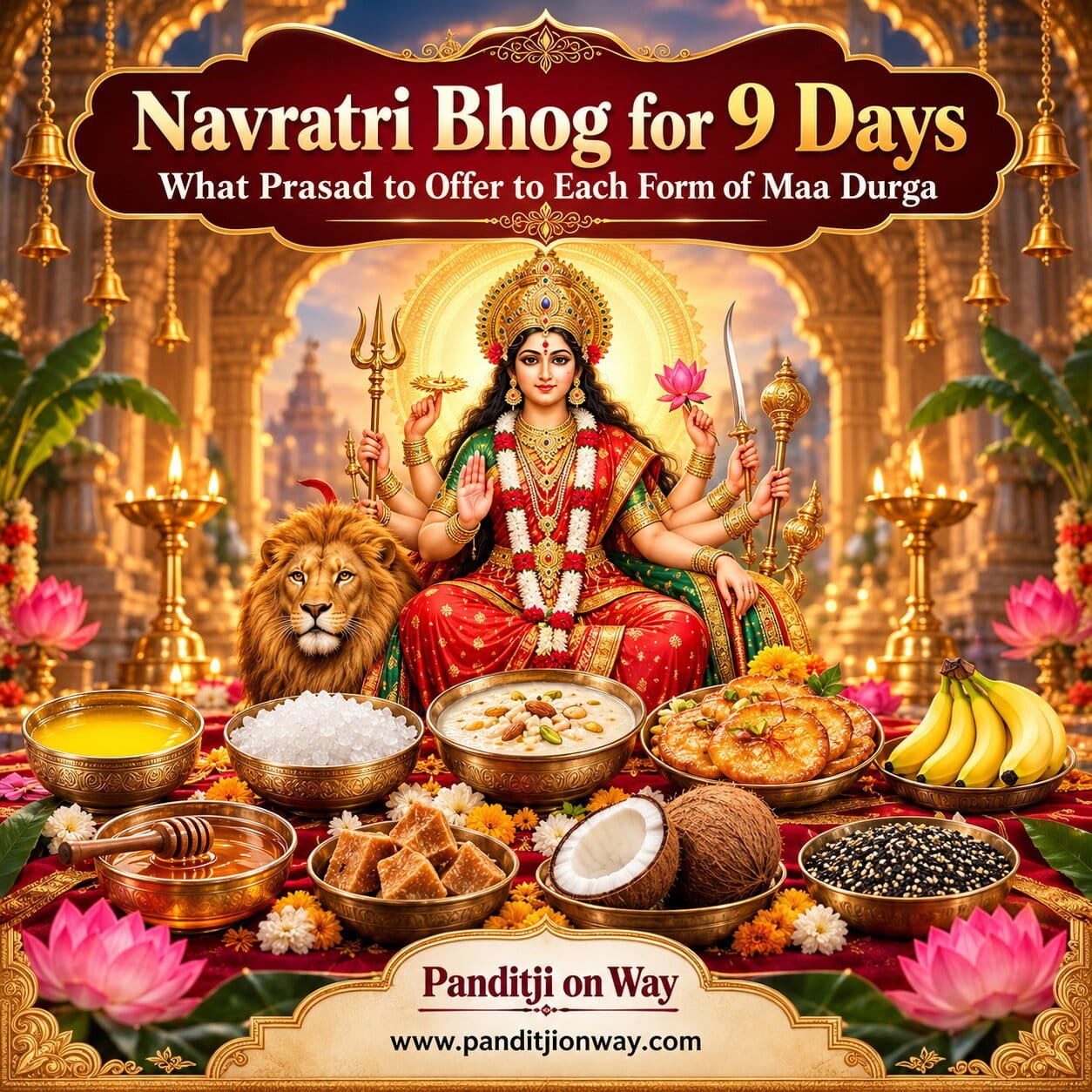
The traditional Navratri bhog list for nine days includes desi ghee, sugar, kheer, malpua, bananas, honey, jaggery, coconut and sesame seeds. Each offering is associated with a particular form of the Goddess and carries spiritual significance in commonly followed Hindu traditions.
Whether you are observing Navratri vrat at home, performing daily Durga Puja, arranging a temple offering or preparing for Kanya Pujan, this guide by Panditji on Way, India’s Trusted online pooja booking portal, explains what to offer to Maa Durga on each day of Navratri.
Quick Answer: What Bhog Is Offered on Each Day of Navratri?
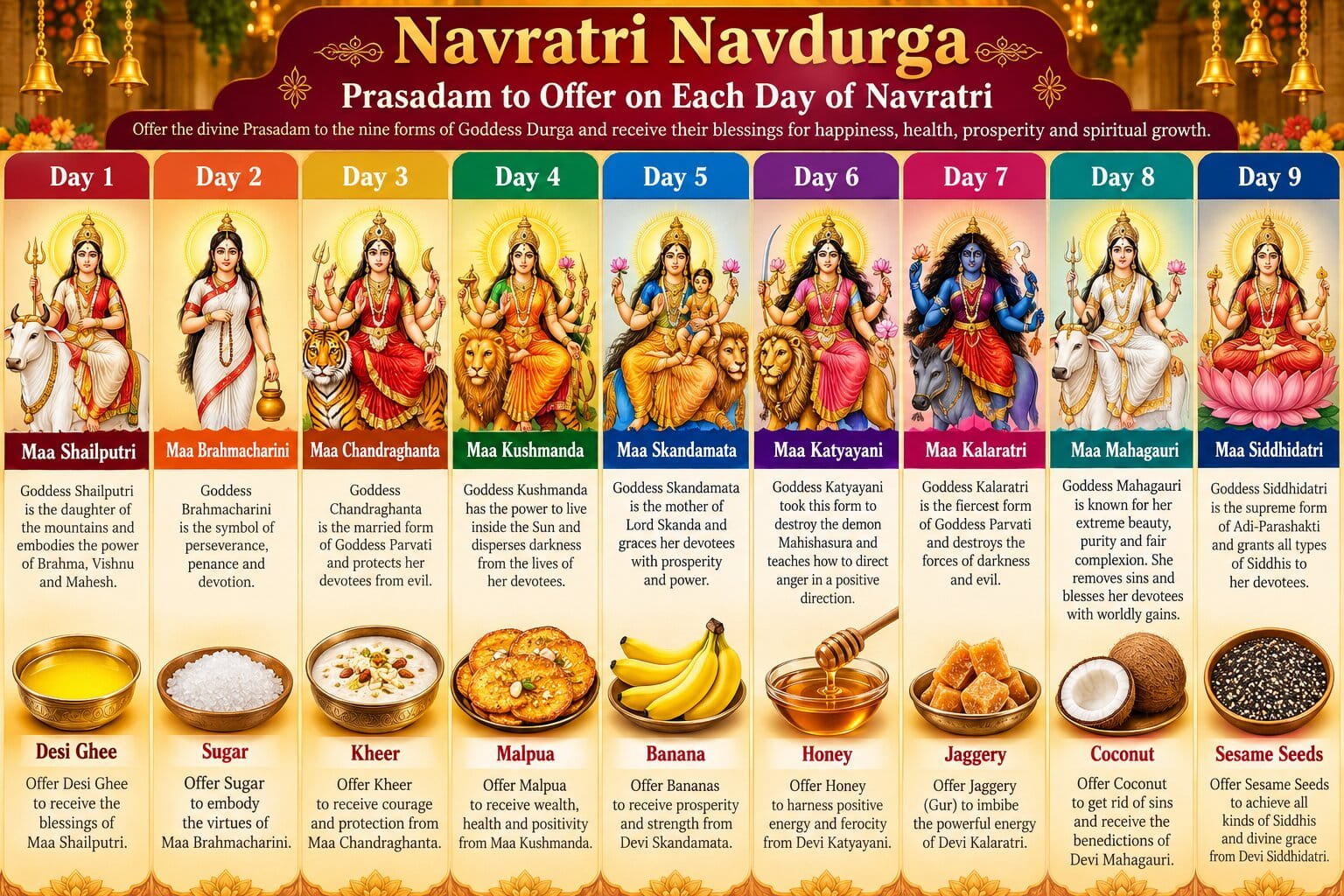
The traditional nine-day Navratri prasadam list is given below.
| Navratri Day | Goddess Worshipped | Traditional Bhog or Prasad | Spiritual Significance |
|---|---|---|---|
| Day 1 – Pratipada | Maa Shailputri | Desi ghee | Strength, stability and well-being |
| Day 2 – Dwitiya | Maa Brahmacharini | Sugar or mishri | Devotion, patience and perseverance |
| Day 3 – Tritiya | Maa Chandraghanta | Kheer | Courage, peace and protection |
| Day 4 – Chaturthi | Maa Kushmanda | Malpua | Vitality, prosperity and positive energy |
| Day 5 – Panchami | Maa Skandamata | Banana | Maternal blessings, prosperity and happiness |
| Day 6 – Shashthi | Maa Katyayani | Honey | Courage, determination and strength |
| Day 7 – Saptami | Maa Kalaratri | Jaggery (gur) | Protection and the removal of fear |
| Day 8 – Ashtami | Maa Mahagauri | Coconut | Purity, peace and spiritual well-being |
| Day 9 – Navami | Maa Siddhidatri | Sesame seeds (til) | Spiritual fulfilment and divine blessings |
Important: These are widely followed traditional offerings, particularly in North Indian Navratri observances. Bhog practices can differ by region, family tradition, temple custom and local sampradaya. Devotees should follow their family or temple’s established practice where applicable.
Day 1: Offer Desi Ghee to Maa Shailputri
The first day of Navratri is dedicated to Maa Shailputri, the first manifestation of Navdurga. The name Shailputri comes from the Sanskrit words shaila, meaning mountain, and putri, meaning daughter. She is worshipped as the daughter of Himavan, the king of the mountains, and is associated with the divine manifestation of Goddess Parvati.
Maa Shailputri is generally depicted riding a bull and holding a trident and a lotus. Her worship marks the beginning of the spiritual journey through the nine forms of the Goddess.
What to offer to Maa Shailputri?
Devotees traditionally offer pure desi ghee to Maa Shailputri on the first day of Navratri. Some families also offer fruits, milk-based sweets and other sattvic preparations according to their customs.
Spiritual significance of the offering
Desi ghee is associated with purity, nourishment and auspiciousness in Hindu ritual traditions. Offering ghee symbolises the devotee’s prayer for strength, stability, good health and a positive beginning.
How to offer the bhog
- Clean the puja area and place the image or idol of Maa Shailputri.
- Offer fresh flowers, water, incense and a diya according to your family tradition.
- Place a small quantity of pure desi ghee in a clean bowl.
- Offer the bhog with devotion and recite Maa Shailputri’s prayer or mantra.
- Distribute the prasad among family members after the offering.
Search: Maa Shailputri bhog, Navratri Day 1 prasad, desi ghee offering, Shailputri Puja Vidhi.
Day 2: Offer Sugar or Mishri to Maa Brahmacharini
The second day of Navratri is dedicated to Maa Brahmacharini, the second form of Navdurga. This manifestation represents devotion, austerity, discipline and unwavering determination.
According to Hindu tradition, Goddess Parvati undertook intense penance to attain Lord Shiva as her consort. Her form as Brahmacharini symbolises spiritual discipline and the strength required to remain committed to one’s purpose.
What to offer to Maa Brahmacharini?
Sugar or mishri, also known as rock sugar, is a commonly recommended offering to Maa Brahmacharini. Some devotees also offer fruits and other simple sattvic foods.
Spiritual significance of the offering
The sweetness of sugar symbolises harmony, kindness and a pleasant disposition. Devotees seek the Goddess’s blessings for patience, mental strength, devotion and perseverance in their personal and spiritual lives.
How to offer the bhog
- Prepare the puja space with cleanliness and devotion.
- Offer fresh flowers, water and a diya.
- Place sugar or mishri in a clean offering bowl.
- Pray to Maa Brahmacharini for discipline, wisdom and determination.
- Distribute the prasad respectfully after the puja.
Search: Maa Brahmacharini bhog, Navratri Day 2 prasad, sugar offering to Durga, Brahmacharini Puja.
Day 3: Offer Kheer to Maa Chandraghanta
The third day of Navratri is dedicated to Maa Chandraghanta, the third form of Navdurga. Her name refers to the crescent moon shaped like a bell that adorns her forehead.
Maa Chandraghanta is associated with courage, bravery, alertness and protection from negative forces. Her form combines divine grace with the strength required to confront challenges.
What to offer to Maa Chandraghanta?
Kheer, a traditional Indian dessert prepared with milk, rice and sugar, is a widely followed bhog offering on the third day of Navratri.
Depending on family customs, devotees may also offer other milk-based sweets and fresh fruits.
Spiritual significance of the offering
Kheer symbolises sweetness, nourishment and auspiciousness. Devotees pray to Maa Chandraghanta for courage, peace of mind, confidence and protection from difficulties.
How to offer the bhog
- Prepare fresh kheer using ingredients permitted by your family’s vrat practices.
- Place the offering in a clean bowl.
- Offer flowers, water and a diya to Maa Chandraghanta.
- Present the kheer with a sincere prayer for courage and peace.
- Distribute the prasad after the puja.
Search: Maa Chandraghanta bhog, Navratri Day 3 prasad, kheer for Durga Puja, Chandraghanta Puja Vidhi.
Day 4: Offer Malpua to Maa Kushmanda
The fourth day of Navratri is dedicated to Maa Kushmanda, the fourth form of Navdurga. In Hindu devotional tradition, she is associated with the creation of the universe and the radiance of the Sun.
The name Kushmanda is traditionally connected with the idea of cosmic creation and the divine energy that brings life and light into existence. She represents vitality, abundance and creative power.
What to offer to Maa Kushmanda?
Malpua, a traditional Indian sweet prepared in different regional styles using ingredients such as flour, milk and sugar, is a commonly recommended offering to Maa Kushmanda.
The recipe may vary according to regional preferences and household customs.
Spiritual significance of the offering
The sweet offering represents gratitude, abundance and the wish for a prosperous life. Devotees seek Maa Kushmanda’s blessings for energy, well-being, happiness and the removal of negativity.
How to offer the bhog
- Prepare fresh malpua using a recipe suitable for your observance.
- Arrange the sweet on a clean plate.
- Offer flowers, water and a diya to the Goddess.
- Pray for vitality, prosperity and positive energy.
- Distribute the bhog as prasad after the ritual.
Search: Maa Kushmanda bhog, Navratri Day 4 prasad, malpua offering, Kushmanda Puja Vidhi.
Day 5: Offer Bananas to Maa Skandamata
The fifth day of Navratri is dedicated to Maa Skandamata, the fifth form of Navdurga. She is worshipped as the mother of Lord Skanda, also known as Kartikeya, the divine commander of the celestial forces.
Maa Skandamata is commonly depicted holding her son Skanda and seated on a lotus. Her form represents motherhood, compassion, care and divine protection.
What to offer to Maa Skandamata?
Bananas are a traditional offering associated with Maa Skandamata. Fresh, ripe bananas are easy to prepare as bhog and can be offered without elaborate cooking.
Spiritual significance of the offering
Bananas symbolise nourishment and abundance. Devotees pray to Maa Skandamata for family happiness, prosperity, maternal blessings, peace and the well-being of children.
How to offer the bhog
- Select fresh bananas and wash them before arranging the offering.
- Place them on a clean plate.
- Offer flowers and water to Maa Skandamata.
- Pray for the well-being of your family and loved ones.
- Distribute the bananas as prasad after the puja.
Search: Maa Skandamata bhog, Navratri Day 5 prasad, banana offering to Durga, Skandamata Puja.
Day 6: Offer Honey to Maa Katyayani
The sixth day of Navratri is dedicated to Maa Katyayani, the sixth manifestation of Navdurga. In Hindu mythology, Maa Katyayani is associated with the destruction of the demon Mahishasura and the victory of divine power over evil.
Her form represents courage, determination, justice and the strength to overcome obstacles.
What to offer to Maa Katyayani?
Honey is a traditional offering associated with Maa Katyayani. Devotees may also offer flowers, fruits and other permissible sattvic preparations according to their customs.
Spiritual significance of the offering
Honey symbolises sweetness, harmony and the positive use of one’s strength. Devotees seek the Goddess’s blessings for courage, confidence, determination and the ability to overcome challenges.
How to offer the bhog
- Place a small quantity of pure honey in a clean bowl.
- Arrange flowers and other puja items before the Goddess.
- Offer the honey with a prayer for strength and clarity.
- Recite a prayer or mantra dedicated to Maa Katyayani.
- Complete the puja according to your family tradition.
Search: Maa Katyayani bhog, Navratri Day 6 prasad, honey offering to Durga, Katyayani Puja Vidhi.
Day 7: Offer Jaggery to Maa Kalaratri
The seventh day of Navratri is dedicated to Maa Kalaratri, the seventh form of Navdurga. Although her appearance is fierce, she is revered as a protective manifestation who destroys evil and removes fear.
Maa Kalaratri represents the power to confront darkness, ignorance and destructive forces. Her worship encourages devotees to develop courage and remain steadfast during difficult circumstances.
What to offer to Maa Kalaratri?
Jaggery, commonly known as gur, is a traditional offering associated with Maa Kalaratri. Some households also prepare sweets using jaggery.
Spiritual significance of the offering
Jaggery symbolises sweetness and the hope for relief from difficulties. Devotees pray to Maa Kalaratri for protection, courage, fearlessness and the removal of negative influences.
How to offer the bhog
- Prepare a small portion of clean jaggery.
- Place it on a clean plate before the Goddess.
- Offer flowers and water according to your puja practice.
- Pray for protection, strength and freedom from fear.
- Distribute the prasad respectfully after worship.
Search: Maa Kalaratri bhog, Navratri Day 7 prasad, jaggery offering, Kalaratri Puja Vidhi.
Day 8: Offer Coconut to Maa Mahagauri
The eighth day of Navratri is dedicated to Maa Mahagauri, the eighth form of Navdurga. She is associated with purity, serenity, compassion and spiritual illumination.
Maa Mahagauri is generally depicted wearing white garments and riding a bull. Her peaceful form represents the removal of impurities and the pursuit of inner peace.
What to offer to Maa Mahagauri?
Coconut is a widely followed traditional offering to Maa Mahagauri. Depending on regional and family customs, devotees may also offer coconut-based sweets and other sattvic foods.
Spiritual significance of the offering
Coconut is regarded as an auspicious offering in many Hindu rituals. It symbolises purity, devotion and surrender. Devotees pray to Maa Mahagauri for peace, well-being, harmony and spiritual growth.
How to offer the bhog
- Select a fresh coconut and clean it appropriately.
- Arrange it on a clean puja plate.
- Offer flowers, water and a diya to Maa Mahagauri.
- Pray for peace, purity and harmony in the family.
- Distribute the offering or use it as prasad according to your ritual practice.
Is Kanya Pujan performed on Day 8?
Yes. Many families perform Kanya Pujan on Ashtami, the eighth day of Navratri. In this ritual, young girls are respectfully worshipped as manifestations of the Goddess and offered food, gifts or prasad.
The exact timing and procedure may differ according to family customs, regional practices and the local Panchang.
Search: Maa Mahagauri bhog, Navratri Day 8 prasad, coconut offering to Durga, Ashtami Kanya Pujan.
Day 9: Offer Sesame Seeds to Maa Siddhidatri
The ninth day of Navratri is dedicated to Maa Siddhidatri, the ninth form of Navdurga. Her name refers to the giver of siddhis, or spiritual accomplishments and extraordinary attainments described in Hindu traditions.
Maa Siddhidatri represents wisdom, fulfilment, divine grace and spiritual development. She is worshipped at the culmination of the nine-day Navratri observance.
What to offer to Maa Siddhidatri?
Sesame seeds, known as til, are a traditional offering associated with Maa Siddhidatri. Some families prepare sweets containing sesame or offer other foods according to their regional and family traditions.
Spiritual significance of the offering
Sesame seeds hold an important place in several Hindu rituals. Their offering on Navami is associated with devotion, auspiciousness and the seeking of divine blessings.
Devotees pray to Maa Siddhidatri for wisdom, spiritual progress, fulfilment and harmony in life.
How to offer the bhog
- Arrange clean sesame seeds or a suitable sesame-based preparation on a clean plate.
- Offer flowers, water and a diya to Maa Siddhidatri.
- Pray for wisdom, spiritual growth and the fulfilment of righteous aspirations.
- Complete the Navami puja according to your family’s tradition.
- Distribute the prasad respectfully after worship.
Is Kanya Pujan performed on Navami?
Yes. Many devotees perform Kanya Pujan on Navami instead of Ashtami. The ritual commonly includes worshipping young girls, offering food and distributing gifts or dakshina according to family custom.
Some families observe both Ashtami and Navami rituals. Follow your family tradition or consult a knowledgeable priest for guidance.
Search: Maa Siddhidatri bhog, Navratri Day 9 prasad, sesame seeds offering, Navami Puja Vidhi, Kanya Pujan.
How to Prepare Navratri Bhog at Home
Preparing bhog for Navratri does not necessarily require an elaborate menu. Devotion, cleanliness and observance of your family’s ritual practices are central to the offering.
Follow these general steps:
- Clean the puja area: Keep the altar, utensils and preparation area clean.
- Prepare fresh offerings: Use fresh ingredients and prepare the food hygienically.
- Follow vrat restrictions: If observing a fast, use ingredients permitted by your particular fasting tradition.
- Use separate utensils where appropriate: Many households maintain dedicated utensils for puja offerings.
- Present the bhog respectfully: Arrange the food on a clean plate and place it before the Goddess.
- Offer a prayer: Recite the relevant mantra, stotra or prayer according to your tradition.
- Distribute prasad: After the offering, share it respectfully with family members and other devotees.
Food offerings and the procedure for presenting them can vary between temples, regions and households. Follow the instructions of your family priest or temple when a specific ritual method is prescribed.
Navratri Bhog Traditions Across India
Navratri is celebrated in different ways across India, and the foods offered to the Goddess reflect local culinary and devotional traditions.
North India
In many North Indian households, devotees follow the nine-day bhog list associated with Navdurga. Common offerings include ghee, mishri, kheer, malpua, bananas, honey, jaggery, coconut and sesame seeds. Kanya Pujan is also an important part of many Ashtami and Navami observances.
Gujarat
Navratri in Gujarat is widely associated with Garba, devotional singing and community celebrations. Bhog and prasad practices vary by household and temple, with offerings prepared according to local traditions and fasting customs.
Maharashtra
Devotees in Maharashtra worship Goddess Durga through household puja, temple visits, devotional observances and regional Navratri customs. The form of naivedya can differ according to family practice.
West Bengal
Durga Puja is a major festival in West Bengal. Bhog offered during community and temple celebrations may include khichuri, vegetables, sweets and other preparations, depending on the temple’s established customs.
South India
Navaratri traditions in South India often include the arrangement of Golu or Bommai Kolu dolls, devotional music and offerings such as sundal and other regional preparations. The precise menu depends on local and family traditions.
Important distinction: The nine-day Navdurga bhog list is a popular devotional tradition, not a universal menu followed identically throughout India. Regional naivedya customs are equally important within their respective traditions.
Common Mistakes to Avoid While Offering Navratri Prasad
- Do not assume that every family or temple follows exactly the same nine-day bhog list.
- Avoid presenting a regional custom as a compulsory rule for all devotees.
- Use fresh ingredients and clean utensils.
- Follow the fasting rules applicable to your own observance.
- Do not treat an offering as a guaranteed remedy for illness, financial problems or other difficulties.
- Consult a knowledgeable priest if your family tradition prescribes a specific mantra, timing or ritual procedure.
Book Navratri Puja Services with Panditji on Way
Navratri is an auspicious time for devotees to worship Maa Durga, perform traditional rituals and seek divine blessings for their families.
If you need assistance with Navratri Puja, Durga Puja, Ghatasthapana, Navchandi Path, Durga Saptashati Path or other Hindu religious ceremonies, Panditji on Way provides an online platform for exploring pooja booking services.
Visit Panditji on Way to explore the available services and booking options.
Before booking, check the ritual requirements, location availability, inclusions and timing for your selected puja.
Frequently Asked Questions About Navratri Bhog
1. What are the nine bhog offerings of Navratri?
A widely followed traditional list is desi ghee for Maa Shailputri, sugar or mishri for Maa Brahmacharini, kheer for Maa Chandraghanta, malpua for Maa Kushmanda, bananas for Maa Skandamata, honey for Maa Katyayani, jaggery for Maa Kalaratri, coconut for Maa Mahagauri and sesame seeds for Maa Siddhidatri.
2. Which prasad is offered on the first day of Navratri?
Desi ghee is traditionally offered to Maa Shailputri on the first day of Navratri. Devotees offer it with prayers for strength, well-being and an auspicious beginning.
3. What should be offered to Maa Durga on the second day of Navratri?
Sugar or mishri is commonly offered to Maa Brahmacharini on the second day. The offering is associated with sweetness, devotion, patience and perseverance.
4. Which bhog is offered to Maa Chandraghanta?
Kheer is a commonly followed offering to Maa Chandraghanta on the third day of Navratri. Some families also offer other milk-based sweets.
5. What is the bhog for Maa Kushmanda?
Malpua is traditionally associated with Maa Kushmanda, who is worshipped on the fourth day of Navratri.
6. Which fruit is offered to Maa Skandamata?
Bananas are traditionally offered to Maa Skandamata on the fifth day of Navratri. They are also a convenient fruit offering for many households observing vrat.
7. What should be offered to Maa Katyayani?
Honey is a widely followed bhog offering to Maa Katyayani on the sixth day of Navratri.
8. What is offered to Maa Kalaratri?
Jaggery, also known as gur, is traditionally offered to Maa Kalaratri on the seventh day of Navratri.
9. Which prasad is offered to Maa Mahagauri?
Coconut is a traditional offering to Maa Mahagauri on the eighth day of Navratri. Many devotees also perform Kanya Pujan on this day.
10. What should be offered to Maa Siddhidatri on Navami?
Sesame seeds, known as til, are traditionally offered to Maa Siddhidatri on the ninth day of Navratri. Sesame-based sweets may also be used according to family custom.
11. Can I offer fruits instead of cooked bhog during Navratri?
Yes, fresh fruits are commonly offered during Hindu worship. If a particular family or temple tradition prescribes a specific offering, follow that practice where possible.
12. Is it necessary to prepare a different bhog every day?
Many devotees follow the custom of offering a different food item each day to honour the nine forms of Navdurga. However, the exact offerings vary by tradition, and sincere worship is not dependent on preparing elaborate dishes.
13. Can I offer homemade sweets during Navratri?
Yes. Homemade sweets can be offered if they are prepared hygienically and are suitable for your ritual and fasting practices. Follow any specific requirements established by your family or temple tradition.
14. What food is offered during Kanya Pujan?
Many families prepare a traditional meal that may include puri, kala chana and halwa, along with other suitable foods or sweets. The menu varies by region and family custom. The girls are respectfully served, and prasad or gifts may be distributed according to tradition.
15. Where can I book a Navratri Puja online?
You can visit Panditji on Way to explore available online pooja booking services. Confirm the selected puja, location, date, priest availability and included rituals before booking.
Conclusion
The nine days of Navratri provide an opportunity to worship the nine manifestations of Maa Durga through prayer, fasting, devotional practices and traditional bhog offerings.
From desi ghee for Maa Shailputri on Day 1 to sesame seeds for Maa Siddhidatri on Day 9, each offering forms part of a rich devotional tradition. The significance of the bhog lies in the faith, gratitude and sincerity with which it is presented.
Whether you observe Navratri at home, visit a temple or participate in community celebrations, follow your family customs and local religious practices with respect.
For assistance with traditional Hindu puja services, visit Panditji on Way, India’s Trusted online pooja booking portal.
May Maa Durga bless every devotee with peace, strength, wisdom and well-being.
- Google Search Central: Creating Helpful, Reliable, People-First Content — Google’s guidance for creating useful, trustworthy content.
Google for Developers
-
Google Search Essentials — official guidance on discoverability, crawlable links and search best practices.