



Mallikarjuna Jyotirlinga: History, Timings, Darshan, How to Reach & Complete Travel Guide
Introduction to Mallikarjuna Jyotirlinga
Mallikarjuna Jyotirlinga, also known as Srisailam Temple, is one of the most sacred pilgrimage destinations in India. Located in Srisailam, Andhra Pradesh, this ancient shrine is uniquely revered as:
- One of the 12 Jyotirlingas of Lord Shiva
- One of the 18 Shakti Peethas, where Goddess Parvati is worshipped as Bhramaramba Devi
This divine union of Shaivism and Shaktism makes Mallikarjuna Jyotirlinga exceptionally powerful and spiritually significant.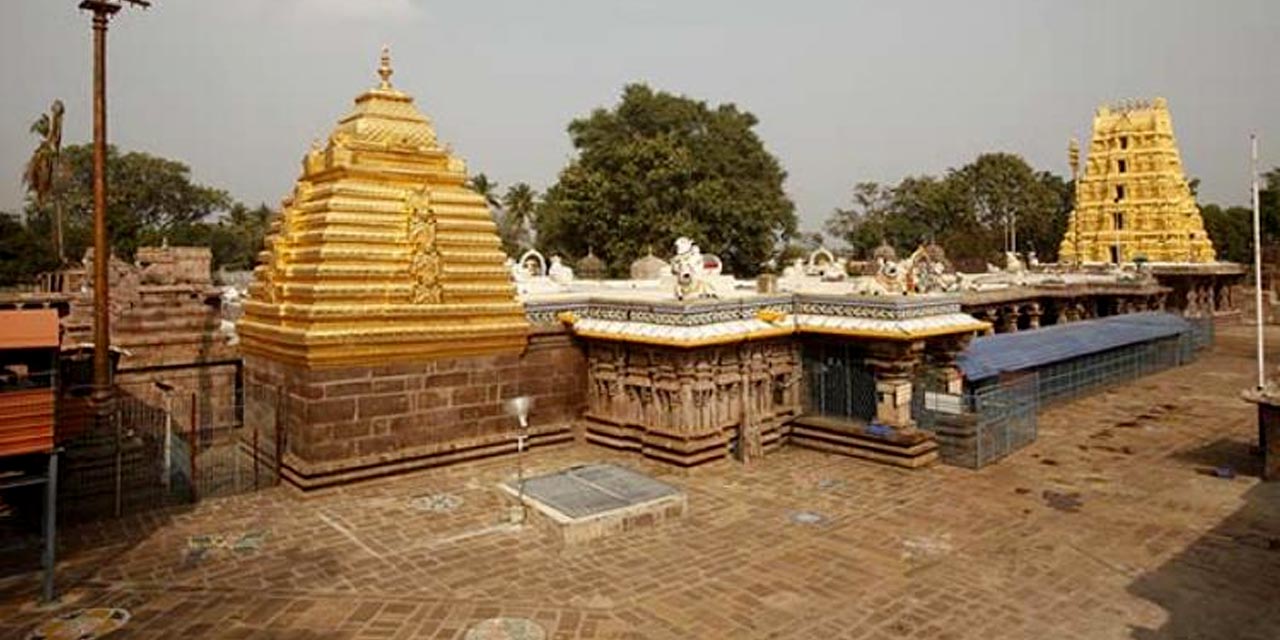

Why Mallikarjuna Jyotirlinga Is Spiritually Unique
- Lord Shiva is worshipped here as Mallikarjuna
- Goddess Parvati is worshipped as Bhramaramba
- The temple is situated amidst the Nallamala Hills, near the sacred Krishna River
- Often called the “Kailash of the South”
Pilgrims believe that a darshan here grants moksha (liberation), marital harmony, relief from debts, and freedom from planetary doshas.

History of Mallikarjuna Jyotirlinga – A Detailed & Scriptural Account
The Mallikarjuna Jyotirlinga, located in Srisailam, is not just an ancient temple—it is a living chronicle of Sanatana Dharma, spanning mythology, Vedic scriptures, royal patronage, and uninterrupted devotion for over two millennia.
This sacred shrine holds the rare distinction of being both a Jyotirlinga of Lord Shiva and a Shakti Peetha of Goddess Parvati, making its history spiritually unparalleled in Hinduism.
Mythological Origins of Mallikarjuna Jyotirlinga
Legend of Lord Shiva and Goddess Parvati
According to the Shiva Purana and Skanda Purana, Lord Shiva and Goddess Parvati came to Srisailam to console their son Kartikeya (Kumara Swamy) after he left Mount Kailash due to a disagreement with Lord Ganesha.
Out of parental affection, Shiva manifested here as Mallikarjuna Jyotirlinga, while Parvati appeared as Bhramaramba Devi. This divine reunion sanctified Srisailam forever.
Spiritual Belief:
A pilgrimage to Srisailam is considered equivalent to visiting Kailash Parvat, especially for devotees unable to undertake the Himalayan journey.
Jyotirlinga Significance in Scriptures
The Mallikarjuna Jyotirlinga is mentioned in:
- Shiva Purana
- Linga Purana
- Skanda Purana
- Mahabharata (Vanaparva references)
These texts affirm Srisailam as one of the 12 sacred Jyotirlingas, where Lord Shiva appeared as a self-manifested column of divine light (Jyoti).
Shakti Peetha Connection – Goddess Bhramaramba
Mallikarjuna is also revered as one of the 18 Shakti Peethas.
It is believed that when Sati Devi’s body parts fell across the earth, her neck or upper torso fell here, manifesting Goddess Bhramaramba.
This makes the temple a powerful convergence of Shiva-Shakti, attracting devotees from Shaivism, Shaktism, and Tantra traditions.
Historical Timeline of Mallikarjuna Jyotirlinga
Satavahana Period (1st Century CE)
- The earliest epigraphical evidence of the temple dates back to the Satavahana dynasty
- Stone inscriptions mention land grants and rituals for Mallikarjuna Swamy
Ikshvakus, Pallavas & Chalukyas
- Continued royal patronage ensured temple expansion
- Shaivism flourished alongside Vedic education
- Structural enhancements and ritual formalization took place
Reddy Kings & Kakatiyas
- The temple emerged as a major Shaiva pilgrimage center
- Festivals and grand processions were institutionalized
Vijayanagara Empire (14th–16th Century)
This era marked the golden age of Mallikarjuna Jyotirlinga:
- Massive architectural additions
- Construction of towering Gopurams
- Establishment of temple administration systems
- Donations of gold, land, and ornaments
Contribution of Chhatrapati Shivaji Maharaj
- In 1667 CE, Shivaji Maharaj sponsored the construction of temple gopurams
- Strengthened the temple fortifications
- Revived Shaiva traditions during turbulent times
Mughal Period & Temporary Decline
- Temple worship was restricted during Mughal rule
- Rituals declined but never fully ceased due to local devotion
- Sacred idols were protected by priests and villagers
British Era & Revival
- British administration restored temple access
- Pilgrimage routes reopened
- Documentation of temple rituals and land records resumed
Post-Independence Restoration
After 1947:
- Temple regained national importance
- Managed by Sri Bhramaramba Mallikarjuna Swamy Devasthanam
- Improved facilities for pilgrims
- Srisailam recognized as a pan-Indian spiritual destination
Why Srisailam Is Called “Kailasa of the South”
- Dense Nallamala forests
- Flow of the sacred Krishna River
- High spiritual vibrations
- Continuous Vedic chanting and pujas
Ancient saints believed that moksha could be attained by worshipping Mallikarjuna Jyotirlinga with sincere devotion.
Historical Importance in Shaivism & Shaktism
- One of the few temples equally important to both sects
- Prominent center for Tantric worship
- Mentioned by Adi Shankaracharya in spiritual texts


Architecture of Shri Mallikarjuna Temple – Detailed Explanation
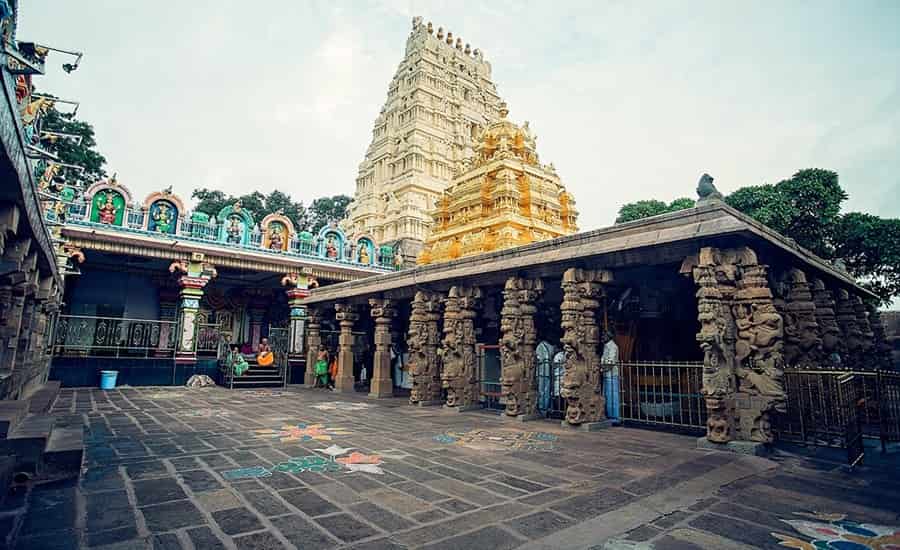
The architectural grandeur of Mallikarjuna Jyotirlinga is a remarkable blend of Dravidian, Vijayanagara, and Chalukyan architectural styles. This sacred structure is not only a place of worship but also a living testimony to India’s rich temple-building traditions spanning more than 2,000 years.
Overall Temple Layout
The Shri Mallikarjuna Temple is constructed on a vast elevated plateau of the Nallamala Hills, overlooking the sacred Krishna River. The temple complex is designed as a fortress-like structure, symbolizing protection of divine energy.
Key architectural features include:
- Massive prakara walls (enclosures)
- Multiple mandapams (pillared halls)
- Towering gopurams
- Sanctums for both Lord Mallikarjuna (Shiva) and Goddess Bhramaramba (Shakti)
This dual-sanctum layout is extremely rare and adds immense spiritual and architectural importance.
Gopurams (Temple Towers)
The temple has ornately carved gopurams, characteristic of South Indian Dravidian architecture.
- The Rajagopuram is tall and visually commanding
- Sculptures depict stories from:
- Shiva Purana
- Skanda Purana
- Ramayana and Mahabharata
- The gopuram acts as a symbolic gateway between the material world and the divine realm
Sanctum Sanctorum (Garbhagriha)
The Garbhagriha houses the sacred Jyotirlinga of Lord Mallikarjuna.
Architectural highlights:
- Built in dark granite stone
- Low ceiling to encourage humility and devotion
- Minimal natural light, enhancing spiritual focus
- The Shivling is placed on a panavattam, aligned with ancient Vedic principles
Adjacent to it lies the sanctum of Goddess Bhramaramba, making this temple one of the few Jyotirlingas also recognized as a Shakti Peetha.
Mandapams (Pillared Halls)
The temple complex includes several beautifully crafted mandapams:
- Mukha Mandapa – Entrance hall for devotees
- Ranga Mandapa – Used for rituals and festivals
- Veera Shaiva Mandapa – Dedicated to Shaivite saints
Each mandapam is supported by monolithic stone pillars, intricately carved with:
- Floral motifs
- Mythological characters
- Celestial beings (Gandharvas, Apsaras)
The symmetry and balance reflect Vijayanagara architectural excellence.
Stone Carvings & Sculptural Art
One of the most striking features of Shri Mallikarjuna Temple is its fine stone carvings:
- Depictions of Lord Shiva in various forms
- Detailed sculptures of Nandi, the sacred bull
- Images of Durga, Ganapati, Kartikeya, and Navagrahas
- Carved panels narrating Puranic legends
These carvings were created without modern tools, showcasing the engineering genius of ancient Indian artisans.
Prakaram & Temple Courtyards
The temple has multiple prakaram layers, each serving a ritualistic and symbolic function:
- Outer prakaram: Devotional circumambulation (Pradakshina)
- Inner prakaram: Sacred ritual zone
- Spacious courtyards accommodate thousands of devotees during festivals like Mahashivratri
Vijayanagara Influence
During the reign of the Vijayanagara Empire, extensive renovations were carried out:
- Expansion of mandapams
- Strengthening of temple walls
- Addition of sculptural panels
- Improved water drainage and temple tanks
This period contributed heavily to the monumental scale and symmetry seen today.
Sacred Water Structures
The architecture also integrates sacred water bodies:
- Patalaganga – Used for holy baths before darshan
- Temple tanks designed according to Agama Shastra
- Natural slope channels rainwater into reservoirs, showing advanced hydrological planning
Symbolism in Architecture
Every architectural element has symbolic meaning:
- Vertical gopurams symbolize spiritual ascent
- Dark sanctum represents the cosmic womb
- Stone material signifies permanence and eternity
- Hilltop location reflects closeness to Mount Kailash
Architectural Significance in Hinduism
The Shri Mallikarjuna Temple is considered:
- A Divya Kshetra
- A perfect example of Shaiva-Shakta architectural unity
- One of the finest surviving examples of South Indian sacred geometry
Why the Architecture Attracts Devotees & Scholars
- Combination of spiritual power and artistic brilliance
- Rare presence of Jyotirlinga + Shakti Peetha
- UNESCO-worthy heritage significance
- Harmonious integration with forested hills and river landscape
Shri Mallikarjuna Temple architecture reflects a magnificent blend of Dravidian and Vijayanagara styles, featuring massive gopurams, intricately carved mandapams, dual sanctums for Shiva and Shakti, fortress-like walls, and sacred water structures—making it one of India’s most architecturally and spiritually significant Jyotirlinga temples.

Mallikarjuna Jyotirlinga Timings & Darshan Schedule (Detailed & Updated Guide)
The darshan schedule at Mallikarjuna Jyotirlinga is structured around daily Vedic rituals (Nitya Karmas), Abhishekams, and Alankara Sevas. Understanding the timing properly helps devotees plan a smooth, peaceful, and spiritually fulfilling darshan.
Temple timings may slightly vary on Mondays, Pradosham, Amavasya, Purnima, Mahashivratri, Shravan Maas, and during major festivals.
Daily Temple Opening & Closing Timings
| Time Slot | Activity |
|---|---|
| 04:30 AM | Temple opens (Suprabhata Seva) |
| 04:30 – 06:00 AM | Morning Abhishekam & Nitya Puja |
| 06:30 AM – 03:30 PM | Free Sarva Darshan |
| 03:30 – 04:00 PM | Temple temporarily closes |
| 04:00 PM – 06:30 PM | Evening Darshan & Sevas |
| 06:30 PM – 10:00 PM | Free Darshan (Evening Session) |
| Around 09:00 PM | Last Darshan |
| 10:00 PM | Temple closes for the night |
Morning Darshan Timings (Most Auspicious)
Time: 4:30 AM – 10:00 AM
- Considered the best time for darshan
- Peaceful environment with minimal crowd (except Mondays)
- Ideal for Rudrabhishek Puja and Sankalp Sevas
- Sunrise darshan is believed to grant spiritual purity and prosperity
Recommended for:
Devotees seeking calm darshan, senior citizens, spiritual seekers
Afternoon Darshan Timings
Time: 10:00 AM – 3:30 PM
- Moderate crowd on weekdays
- Darshan may pause intermittently due to Abhishekam or Alankara Sevas
- Good time for devotees arriving by road or train in the morning
Note: Temple may close briefly in the afternoon depending on rituals.
Evening Darshan & Aarti Timings
Time: 4:00 PM – 6:30 PM
- Temple reopens after afternoon break
- Deepa Aarti and special Alankara Darshan
- Spiritual ambiance with lamp-lit sanctum
This time is ideal for devotees who want to experience the divine beauty of Lord Mallikarjuna and Goddess Bhramaramba together.
Night Darshan Timings
Time: 6:30 PM – 10:00 PM
- Last darshan usually allowed till 9:00 PM
- Crowd density increases on weekends and Mondays
- After final rituals, temple closes for the night
Free Darshan Timings
Free Sarva Darshan is available daily:
- Morning: 6:30 AM – 3:30 PM
- Evening: 6:30 PM – 10:00 PM
Free darshan waiting time:
- Weekdays: 30–45 minutes
- Weekends / Mondays: 1–2 hours
- Festivals: 3–5 hours
Paid / Special Darshan Options
- ₹300 Special Darshan Ticket
- Waiting time: ~45 minutes to 1 hour
- Preferred during rush days
- VIP / Break Darshan
- Time: Around 45 minutes
- Subject to availability and temple discretion
Sparsha Darshan (Touch Darshan) Timings
- Allowed 4 times daily on normal days
- Not permitted on:
- Mahashivratri
- Mondays of Shravan Month
- Major festivals and heavy rush days
During restrictions, devotees are allowed Alankara Darshan only.
Most Crowded Days (Avoid If Possible)
- Mondays
- Pradosham
- Amavasya & Purnima
- Mahashivratri
- Shravan Maas
- Karthika Maas
Best days for peaceful darshan:
Tuesday to Thursday (non-festival days)
Best Time Slot for Quick Darshan
👉 Early Morning (4:30 AM – 6:30 AM)
This slot offers:
- Shortest waiting time
- Maximum spiritual benefit
- Ideal for Abhishekam participation
Important Tips for Devotees
- Reach temple 30–45 minutes before desired darshan slot
- Follow dress code and temple discipline
- Check official temple updates during festivals
- For pujas like Rudrabhishek, Kaal Sarp Dosh Nivaran, Navagraha Shanti, pre-book pandits through trusted platforms like
https://www.panditjionway.com
Mallikarjuna Jyotirlinga temple opens at 4:30 AM and closes around 10:00 PM. Free darshan is available from 6:30 AM to 3:30 PM and again from 6:30 PM to 10:00 PM. Early morning darshan is considered the most auspicious and least crowded.
How Much Time Does Darshan Take?
- Normal days: 30–45 minutes
- Weekends / Mondays: 1–2 hours
- Festivals or Mahashivratri: 4–5 hours
- Paid darshan (₹300): Around 1 hour
What Is Sparsha Darshan?
Sparsha Darshan (touching the Shivling) is allowed four times daily on normal days.
It is restricted during festivals and high-rush days. Instead, devotees are allowed Alankara Darshan.
Popular Pujas at Mallikarjuna Jyotirlinga
Performing pujas here is believed to give faster spiritual results.
Rudrabhishek Puja
- Abhishekam with milk, honey, ghee, curd, and holy water
- Removes obstacles, grants peace and prosperity
Kaal Sarp Dosh Nivaran Puja
- Reduces Rahu-Ketu related problems
- Helpful for marriage delays, financial instability
Rin Mukti Puja
- For debt relief and financial stability
Navagraha Shanti Puja
- Balances planetary energies
- Improves health, career, and mental peace
You can book trusted Vedic pandits online via
👉 https://www.panditjionway.com (Panditji on way)
How to Reach Mallikarjuna Jyotirlinga (Srisailam) – Complete & Detailed Travel Guide
Reaching Mallikarjuna Jyotirlinga is a spiritually enriching journey in itself. Nestled deep inside the Nallamala Hills on the banks of the Krishna River, the temple town of Srisailam is well-connected by air, rail, and road, though the final stretch always involves road travel through scenic forest routes.
Below is a step-by-step, optimized, and pilgrim-friendly explanation of all travel options.
1. How to Reach Mallikarjuna Jyotirlinga by Air
Nearest Airport
- Rajiv Gandhi International Airport (HYD)
- Distance to Srisailam: ~250 km
This is the best and most preferred airport for pilgrims coming from other states or abroad.
After Landing at Hyderabad Airport
You have multiple options:
Option 1: Taxi (Most Comfortable)
- Direct taxi from Hyderabad Airport to Srisailam
- Travel time: 5–6 hours
- Ideal for families, senior citizens, and VIP pilgrims
- Night travel is allowed but daytime is safer due to forest roads
Option 2: Airport → Hyderabad City → Bus
- From airport, reach MGBS (Mahatma Gandhi Bus Station) or JBS
- Board APSRTC/TSRTC buses to Srisailam
- Buses run frequently (ordinary, express, sleeper)
Tip: “Hyderabad to Srisailam distance by road” is a high-ranking keyword (≈250 km).
2. How to Reach Mallikarjuna Jyotirlinga by Train
Nearest Railway Station
- Markapur Road Railway Station (MRK)
- Distance to Srisailam: ~85 km
This is the closest and most practical railhead.
Major Cities Connected to Markapur Road
- Hyderabad
- Chennai
- Bengaluru
- Vijayawada
Popular trains include:
- Rayalaseema Express
- Kacheguda–Yesvantpur Express
From Markapur Road to Srisailam
- APSRTC buses available at station exit
- Private taxis and shared jeeps available
- Travel time: 2.5–3 hours
Alternative Railway Stations
- Nandyal – ~150 km
- Guntur – ~180 km
From these stations, buses and taxis are easily available.
3. How to Reach Mallikarjuna Jyotirlinga by Road (Most Popular Option)
Road travel is the most common and flexible way to reach Srisailam.
Hyderabad to Mallikarjuna Jyotirlinga
- Distance: ~250 km
- Travel time: 5–6 hours
- Route: Hyderabad → Kalwakurthy → Dornala → Srisailam
- Forest check-post timings apply (generally 6 AM – 9 PM)
Bangalore to Mallikarjuna Jyotirlinga
- Distance: ~450 km
- Travel time: 9–10 hours
- Overnight buses available
Vijayawada to Mallikarjuna Jyotirlinga
- Distance: ~300 km
- Travel time: 6–7 hours
Bus Services
- APSRTC operates regular buses
- Night buses available from Hyderabad and Bangalore
- Economical and safe for pilgrims
4. Taxi & Cab Services to Mallikarjuna Jyotirlinga
Why Choose a Taxi?
- Door-to-door convenience
- Ideal for elderly devotees
- Easy to manage darshan timings
Popular Taxi Routes
- Hyderabad → Srisailam
- Vijayawada → Srisailam
- Markapur → Srisailam
App-based cabs and private operators are widely available.
Important Travel Tips for Pilgrims
- Forest routes have limited night access
- Mobile network may be weak near temple area
- Book darshan and puja slots in advance on weekends
- Avoid peak rush days like Mahashivratri, Amavasya, Pradosham
- Carry valid ID for paid darshan or accommodation
Best Route Recommendation (Expert Tip)
- From North & West India: Flight or train to Hyderabad → Road to Srisailam
- From South India: Train to Markapur Road → Road to Srisailam
Reaching Mallikarjuna Jyotirlinga is easy, well-planned, and spiritually rewarding when you choose the right route. Whether you travel by air, train, or road, the final journey through the sacred Nallamala forests enhances the divine experience of visiting one of the holiest Jyotirlingas of Lord Shiva.
For Rudrabhishek Puja, Kaal Sarp Dosh Puja, or booking trusted Vedic Pandits at Srisailam, visit
👉 https://www.panditjionway.com

Best Time to Visit Mallikarjuna Jyotirlinga – Season, Month & Festival Wise Guide
Visiting Mallikarjuna Jyotirlinga at the right time can significantly enhance your spiritual experience. Since the temple is located amidst the Nallamala Hills in Srisailam, weather conditions, festivals, and crowd patterns play an important role in planning your pilgrimage.
Below is a detailed, optimized, and practical guide explaining the best time to visit Mallikarjuna Jyotirlinga.
Best Months to Visit Mallikarjuna Jyotirlinga (September to February)
Winter Season (September – February) – ⭐ Best & Recommended
This is considered the most ideal time to visit Mallikarjuna Jyotirlinga.
Why winter is best:
- Pleasant temperature ranging between 15°C to 28°C
- Comfortable for senior citizens and children
- Ideal for early morning Abhishekam and Sparsha Darshan
- Best time for temple parikrama and nearby sightseeing
Spiritual Advantage:
Many devotees believe that prayers offered during winter months are more focused due to a calm environment and fewer climate distractions.
Tip: If you are planning Rudrabhishek Puja, Kaal Sarp Dosh Nivaran Puja, or Navagraha Shanti Puja, winter months give the best experience.
Summer Season (March – June) – Avoid If Possible
Summer is the least preferred time to visit.
Challenges during summer:
- Temperature rises up to 40°C
- Hot winds and dry climate
- Physical exhaustion during queues and darshan
- Difficult travel through hilly roads
When summer visits are unavoidable:
- Plan early morning darshan (4:30 AM – 7:00 AM)
- Avoid afternoon temple visits
- Stay hydrated and pre-book darshan tickets
Monsoon Season (July – August) – Moderate & Scenic
Monsoon offers a mixed experience.
Pros:
- Lush greenery in Srisailam Tiger Reserve
- Krishna River looks majestic
- Cooler temperatures than summer
Cons:
- Slippery ghat roads
- Occasional travel delays due to rainfall
- Higher humidity
Recommended for:
Devotees who enjoy nature and less crowd, but road safety must be considered.
Best Days of the Week to Visit
- Tuesday, Wednesday, Thursday – Least crowded
- Monday – Heavy rush (Lord Shiva’s day)
- Saturday & Sunday – Weekend crowd
Tip: Visit on weekday mornings for faster darshan and peaceful worship.
Best Time of Day for Darshan
- Early Morning (4:30 AM – 7:00 AM) – Highly auspicious
- Calm atmosphere
- Ideal for Sparsha Darshan and Abhishekam
- Shorter waiting time
Festival Season – When to Visit & When to Avoid
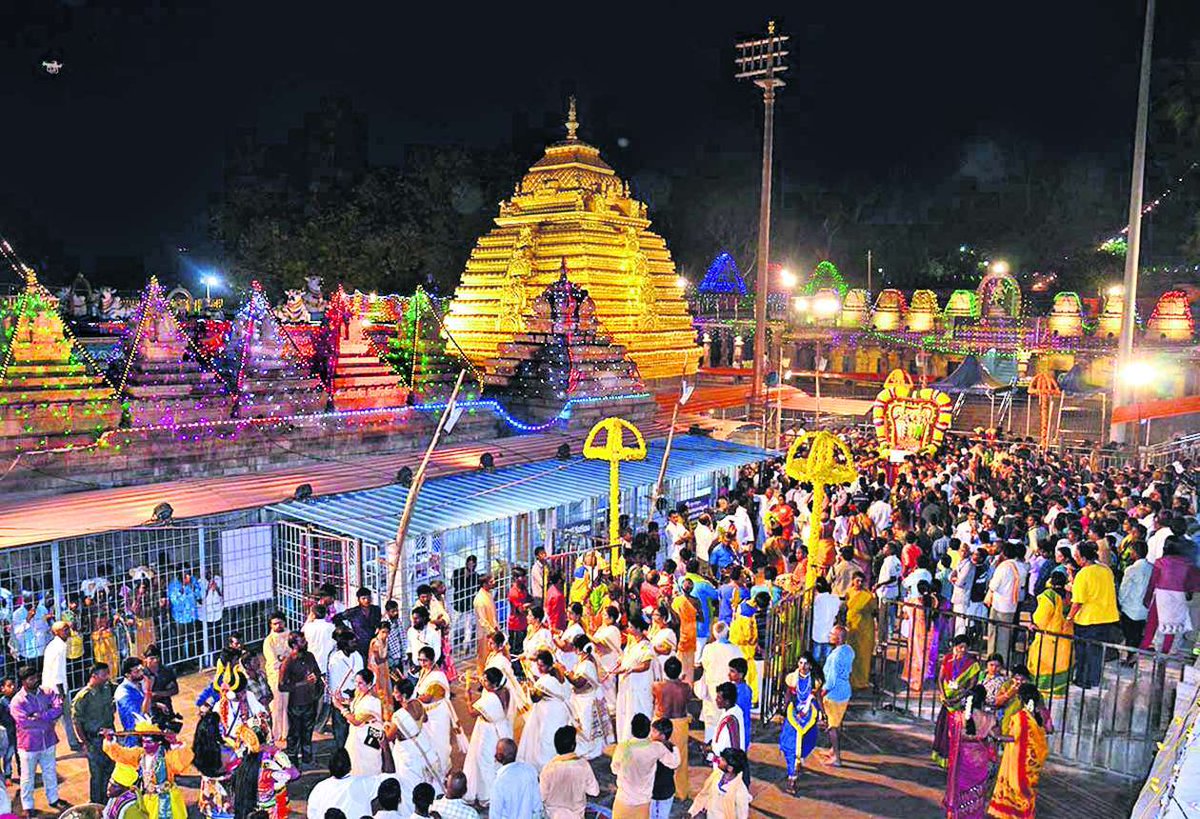
Mahashivratri – Extremely Auspicious but Crowded
- Highest spiritual significance
- Darshan waiting time can exceed 6–8 hours
- Only recommended for spiritually determined pilgrims
Pradosham, Amavasya & Purnima
- Heavy local crowd
- Longer queues
- Limited Sparsha Darshan
Avoid if you want a peaceful darshan.
Best Time for Specific Purposes
For Marriage Blessings
- Visit during Shravan Maas (July–August) or winter months
- Mallikarjuna Jyotirlinga is considered very auspicious for marriage-related prayers
For Kaal Sarp Dosh / Pitra Dosh
- Amavasya days (expect crowd)
- Early morning rituals recommended
For Peaceful Spiritual Retreat
- November to January
- Mid-week mornings
Best Time Summary
Best Time to Visit Mallikarjuna Jyotirlinga:
👉 September to February, especially early mornings on weekdays, offer the most peaceful, comfortable, and spiritually rewarding experience.
Pro Travel & Darshan Tips
- Pre-book paid darshan during festivals
- Wear traditional dress for temple entry
- Avoid peak summer afternoons
- Combine darshan with nearby sacred sites like Patalaganga
Choosing the right time to visit Mallikarjuna Jyotirlinga can transform your pilgrimage into a deeply fulfilling spiritual journey. While the temple is open throughout the year, winter months (September to February) stand out as the best period for darshan, rituals, and overall comfort.
For authentic Rudrabhishek, Navagraha Shanti, Kaal Sarp Dosh Puja, and trusted Vedic pandits at Srisailam, book through
👉 https://www.panditjionway.com

Dress Code Guidelines at Mallikarjuna Jyotirlinga – Complete & Detailed Guide
Maintaining the sanctity of the temple is of utmost importance while visiting Mallikarjuna Jyotirlinga. The temple administration strongly encourages devotees to follow traditional and modest dress codes, especially for darshan, Abhishekam, and special pujas.
Although the temple welcomes devotees from all backgrounds, adhering to proper attire ensures smooth entry, uninterrupted darshan, and respect for Vedic traditions.
Why Dress Code Matters at Mallikarjuna Jyotirlinga
- The temple is both a Jyotirlinga and Shakti Peetha
- Ritual purity is an essential part of Shaiva traditions
- Traditional attire is considered spiritually conducive
- Certain pujas and Sparsha Darshan require strict dress adherence
Dress Code for Men (Highly Recommended)
Ideal Traditional Attire
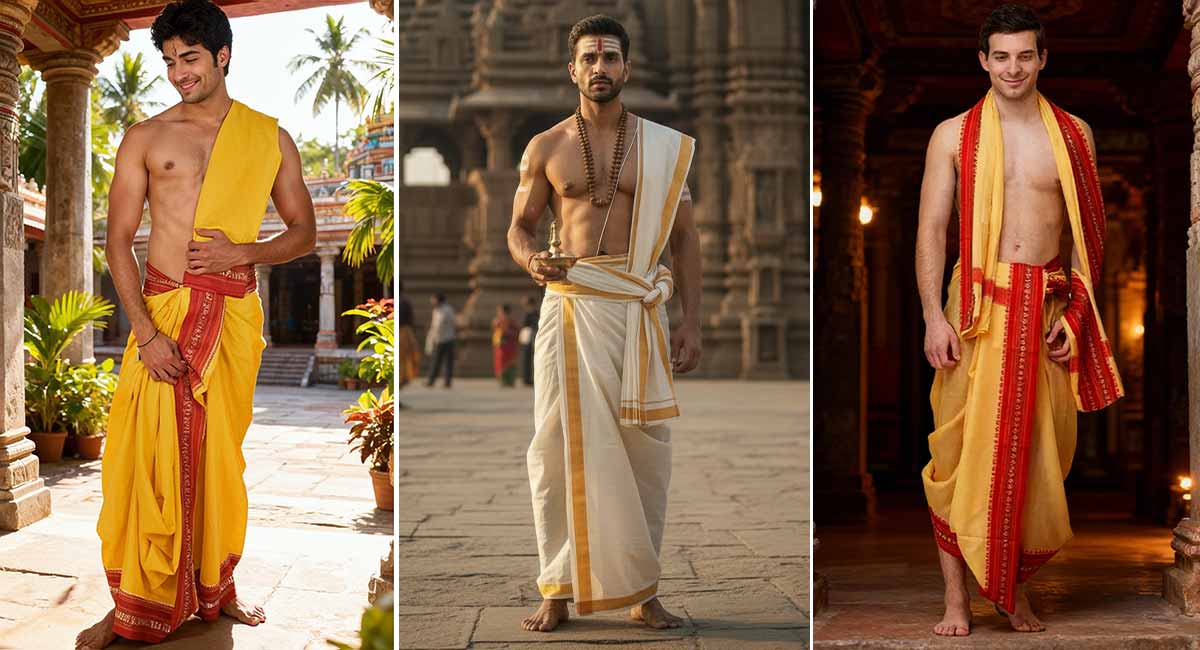
- Dhoti (Pancha) with Angavastram (upper cloth) – most preferred
- Dhoti with plain shirt or kurta
- Pyjama with kurta (traditional style)
Allowed with Caution
- Plain trousers with a decent shirt (acceptable for general darshan)
- Lungis are allowed if worn respectfully
Not Allowed / Discouraged
- Shorts or half pants
- Sleeveless vests
- Torn jeans or flashy clothing
- Western casual wear inside sanctum areas
Important Note:
For Abhishekam, Rudrabhishek, and Sparsha Darshan, men may be required to remove shirts and wear only dhoti and angavastram, as per temple customs.
Dress Code for Women (Modest & Traditional)
Recommended Attire
- Saree (most auspicious)
- Salwar kameez
- Churidar with dupatta
- Long skirts with modest tops
Acceptable
- Simple cotton dresses below knee length
- Traditional South Indian attire
Not Recommended
- Sleeveless tops
- Short skirts
- Tight-fitting or transparent outfits
- Modern western wear
Women participating in Bhramaramba Devi darshan or Shakti rituals are advised to wear sarees or fully covered traditional clothing.
Dress Code for Children
- Children are exempted from strict rules
- However, decent and respectful clothing is expected
- Avoid shorts or sleeveless tops for older children
Dress Code During Special Pujas
For pujas like:
- Rudrabhishek
- Kaal Sarp Dosh Nivaran
- Navagraha Shanti
- Rin Mukti Puja
Strict traditional attire is mandatory, especially for the karta (main devotee performing puja).
Temple authorities may deny participation if dress norms are not followed.
Season-wise Dress Recommendations
Winter (September – February)
- Light cotton dhoti or saree
- Shawl or thin sweater for early morning darshan
Summer (March – June)
- Breathable cotton clothes
- Avoid synthetic fabric
- Light-colored traditional attire
Monsoon (July – August)
- Quick-dry cotton fabrics
- Carry extra clothes due to rain and humidity
Is Dhoti Compulsory at Mallikarjuna Jyotirlinga?
- Dhoti is not strictly compulsory for general darshan
- Dhoti is mandatory for Abhishekam and Sparsha Darshan
- The temple provides dhoti rental services near the entrance if required
Practical Tips for Devotees
- Carry an extra set of traditional clothes
- Avoid carrying leather items inside temple premises
- Footwear must be removed before entering
- Follow instructions given by temple staff and priests
Dress Code Summary
Dress Code at Mallikarjuna Jyotirlinga:
Men should wear dhoti or traditional attire, while women should wear saree or salwar kameez. Modest and traditional clothing is strongly recommended, especially for Abhishekam and Sparsha Darshan.
Following the dress code at Mallikarjuna Jyotirlinga is not merely a rule—it is an expression of devotion, discipline, and respect for ancient Hindu traditions. Wearing appropriate attire allows devotees to fully immerse themselves in the sacred atmosphere and ensures a smooth and spiritually fulfilling darshan.
For authentic puja bookings, Rudrabhishek arrangements, and experienced Vedic pandits at Srisailam, visit
👉 https://www.panditjionway.com
Interesting Facts About Mallikarjuna Jyotirlinga
- One of the rare temples where Jyotirlinga and Shakti Peetha coexist
- Believed that Lord Shiva appeared here with Arjuna’s face
- Surrounded by Srisailam Tiger Reserve
- One-day visit is sufficient for darshan and nearby sightseeing
FAQs on Mallikarjuna Jyotirlinga
Q1. Where is Mallikarjuna Jyotirlinga located?
Mallikarjuna Jyotirlinga is located in Srisailam town, Andhra Pradesh, India, on the Nallamala Hills near the Krishna River.
Q2. Why is Mallikarjuna Jyotirlinga so special?
Mallikarjuna Jyotirlinga is special because it is both one of the 12 Jyotirlingas of Lord Shiva and one of the 18 Shakti Peethas, where Goddess Parvati is worshipped as Bhramaramba Devi. Very few temples in India hold this dual significance.
Q3. What is the best time to visit Mallikarjuna Jyotirlinga?
The best time to visit Mallikarjuna Jyotirlinga is from September to February, especially on weekday mornings. The weather is pleasant, crowds are manageable, and darshan is more peaceful.
Q4. What are the temple opening and closing timings?
Mallikarjuna Jyotirlinga generally opens at 4:30 AM and closes around 9:00 PM, with short breaks during the afternoon. Timings may vary on festivals and special occasions.
Q5. Is free darshan available at Mallikarjuna Jyotirlinga?
Yes, free darshan is available daily from 6:30 AM to 3:30 PM and again from 6:30 PM to 10:00 PM, subject to temple crowd conditions.
Q6. How much time does darshan usually take?
- Normal days: 30–45 minutes
- Weekends/Mondays: 1–2 hours
- Festivals: 4–6 hours
Paid darshan tickets can significantly reduce waiting time.
Q7. Is Sparsha Darshan (touch darshan) allowed?
Yes, Sparsha Darshan is allowed on normal days at specific times, but it is restricted during festivals and heavy rush days. During such times, devotees are allowed Alankara Darshan instead.
Q8. Is dhoti compulsory at Mallikarjuna Jyotirlinga?
Dhoti is not compulsory for general darshan, but it is mandatory for Abhishekam, Rudrabhishek, and Sparsha Darshan. Men are required to wear dhoti with angavastram during these rituals.
Q9. Which Jyotirlinga is considered best for marriage blessings?
Mallikarjuna Jyotirlinga is widely believed to be highly auspicious for marriage, relationship harmony, and removal of marriage delays when prayed with devotion.
Q10. Which pujas are most powerful at Mallikarjuna Jyotirlinga?
The most powerful pujas include:
- Rudrabhishek Puja
- Kaal Sarp Dosh Nivaran Puja
- Navagraha Shanti Puja
- Rin Mukti Puja
These pujas are believed to give faster results due to the Jyotirlinga’s energy.
Q11. How can I reach Mallikarjuna Jyotirlinga from Hyderabad?
From Hyderabad, you can reach Srisailam by:
- Road (Bus/Taxi): ~250 km, 5–6 hours
- Train: Up to Markapur Road, then taxi/bus
There is no direct train or flight to Srisailam.
Q12. Is one day enough for Mallikarjuna Jyotirlinga darshan?
Yes, one day is sufficient for temple darshan and nearby sacred sites like Patalaganga and Sakshi Ganapati. However, staying overnight allows a calmer spiritual experience.
Q13. Which days should be avoided due to heavy crowd?
Avoid visiting on:
- Mahashivratri
- Amavasya & Purnima
- Pradosham days
These days experience extremely heavy footfall and long waiting times.
Q14. What is the dress code for women at Mallikarjuna Jyotirlinga?
Women are advised to wear saree, salwar kameez, or traditional modest attire. Sleeveless, short, or revealing outfits are discouraged inside the temple.
Q15. Is Mallikarjuna Jyotirlinga suitable for senior citizens?
Yes, the temple is senior-citizen friendly, especially during winter months. Paid darshan and early morning visits are recommended for comfort.
Q16. Can pujas be booked online for Mallikarjuna Jyotirlinga?
Yes, devotees can book verified Vedic pandits and puja services online through
👉 https://www.panditjionway.com
(Panditji on way spiritual platform offering Rudrabhishek and dosha-nivaran pujas.)
Mallikarjuna Jyotirlinga, located in Srisailam, Andhra Pradesh, is one of the 12 Jyotirlingas and a Shakti Peetha. The best time to visit is September to February. Free darshan is available daily, and traditional dress is recommended, especially for Abhishekam and Sparsha Darshan.
Conclusion
Mallikarjuna Jyotirlinga is not just a sacred temple—it is a complete spiritual destination where devotion, history, nature, and divine energy merge seamlessly. As one of the 12 Jyotirlingas of Lord Shiva and a revered Shakti Peetha, this holy shrine in Srisailam holds immense importance for devotees seeking peace, prosperity, marriage blessings, dosha nivaran, and moksha.
With its ancient legacy, majestic Dravidian architecture, serene Nallamala Hills setting, and well-organized darshan system, Mallikarjuna Jyotirlinga offers a deeply fulfilling pilgrimage experience for devotees of all ages. Whether you are visiting for Rudrabhishek Puja, Kaal Sarp Dosh Nivaran, or a peaceful darshan, planning your visit with the right timing, dress code, and travel route ensures a smooth and spiritually enriching journey.
For those seeking authentic Vedic pujas, experienced pandits, and hassle-free ritual arrangements, Panditji On Way stands as a trusted platform, connecting devotees with verified pandits and sacred services at Mallikarjuna Jyotirlinga.
A visit to Mallikarjuna Jyotirlinga is not merely a trip—it is a divine experience that purifies the soul, strengthens faith, and brings lasting spiritual fulfillment.
For authentic Rudrabhishek, Kaal Sarp Dosh Puja, Navagraha Shanti, and verified Vedic pandits, visit
👉 https://www.panditjionway.com