Mahashtami 2026: Date, Puja Time, Sandhi Puja Muhurat, Rituals and Significance
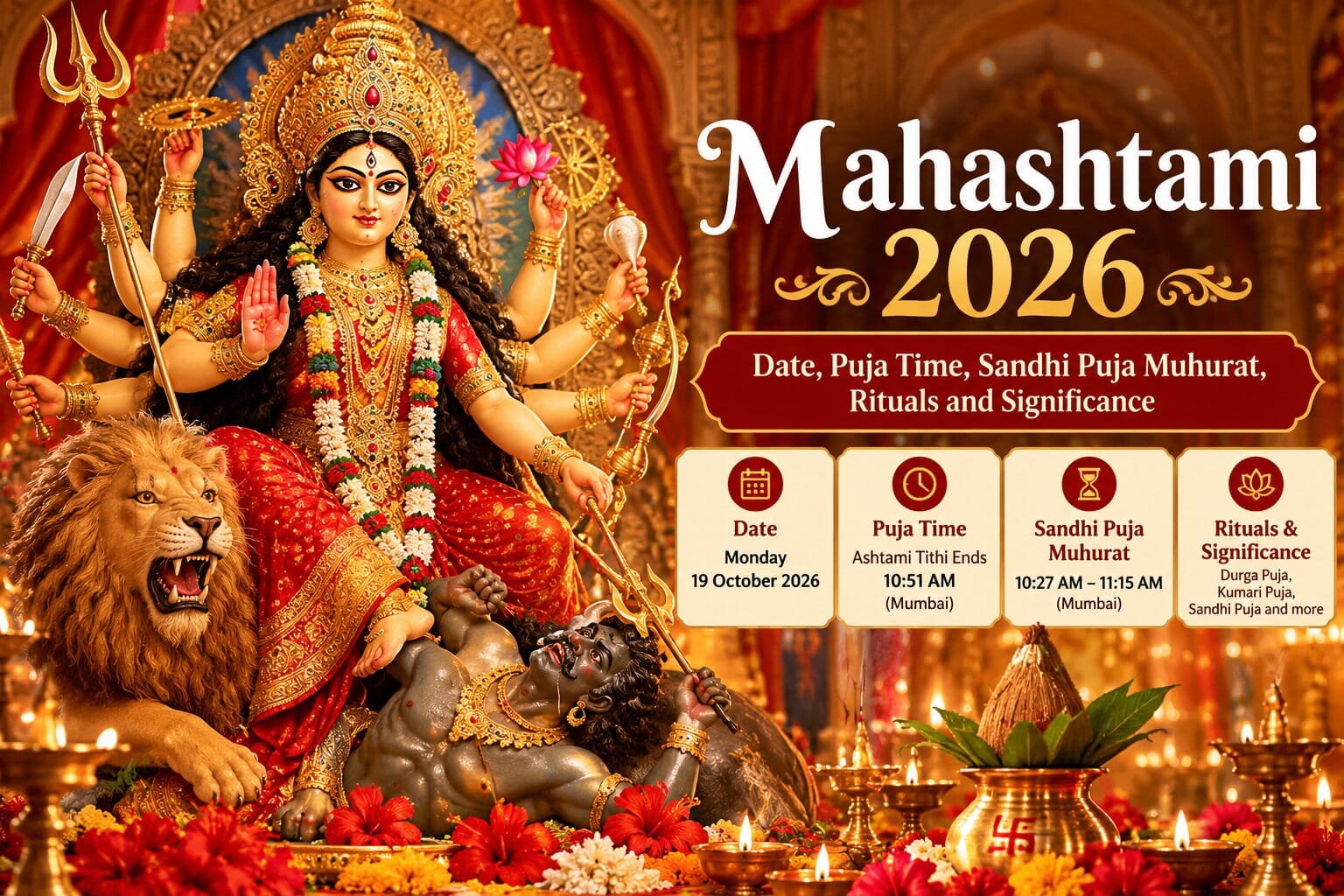
Mahashtami 2026 falls on October 19. Check Durga Ashtami puja timings, Sandhi Puja muhurat, rituals, Kumari Puja and significance.
Mahashtami 2026 Date: Monday, 19 October 2026
Festival: Maha Ashtami / Durga Ashtami / Maha Durgashtami
Ashtami Tithi Begins: 08:27 AM on 18 October 2026
Ashtami Tithi Ends: 10:51 AM on 19 October 2026
Location for timings: Mumbai, Maharashtra, India
Organized by: Panditji on Way – Online Puja Booking Portal
Mahashtami, also known as Maha Ashtami or Durga Ashtami, will be observed on Monday, 19 October 2026, during the sacred Sharadiya Durga Puja festival. Devotees worship Goddess Durga, perform special prayers, observe traditional fasting according to their customs, and participate in important rituals such as Kumari Puja and Sandhi Puja. Mahashtami is particularly significant in West Bengal, Assam, Tripura, Odisha, Maharashtra, and other parts of India where Durga Puja and Navratri are celebrated with devotion.
According to the supplied Mumbai Panchang timings, Ashtami Tithi begins at 08:27 AM on 18 October and ends at 10:51 AM on 19 October 2026. The exact puja muhurat can vary according to location, local Panchang calculations, and the ritual being performed. Devotees should verify the timings for their own city before beginning the puja.
Panditji on Way helps devotees explore traditional Hindu puja services and online puja booking options. Visit Panditji on Way for more information.
Mahashtami 2026: Date and Puja Timings
The following table provides the key Mahashtami 2026 details for devotees planning their Durga Puja rituals in Mumbai.
| Event | Date | Time |
|---|---|---|
| Mahashtami | Monday, 19 October 2026 | Full festival day |
| Ashtami Tithi Begins | Sunday, 18 October 2026 | 08:27 AM |
| Ashtami Tithi Ends | Monday, 19 October 2026 | 10:51 AM |
| Sandhi Puja reference window | Monday, 19 October 2026 | Approximately 10:27–11:15 AM |
| Panchang location | Mumbai, Maharashtra | Local Indian time |
Important: The Sandhi Puja window above is calculated from the supplied Ashtami Tithi ending time. It represents the final 24 minutes of Ashtami and the first 24 minutes of Navami. Confirm the precise local muhurat with a reliable Panchang or your family priest before performing the ritual.
For detailed calculations, consult Panditji on way for 19 October 2026 and Choghadiya Muhurat.
What Is Mahashtami?
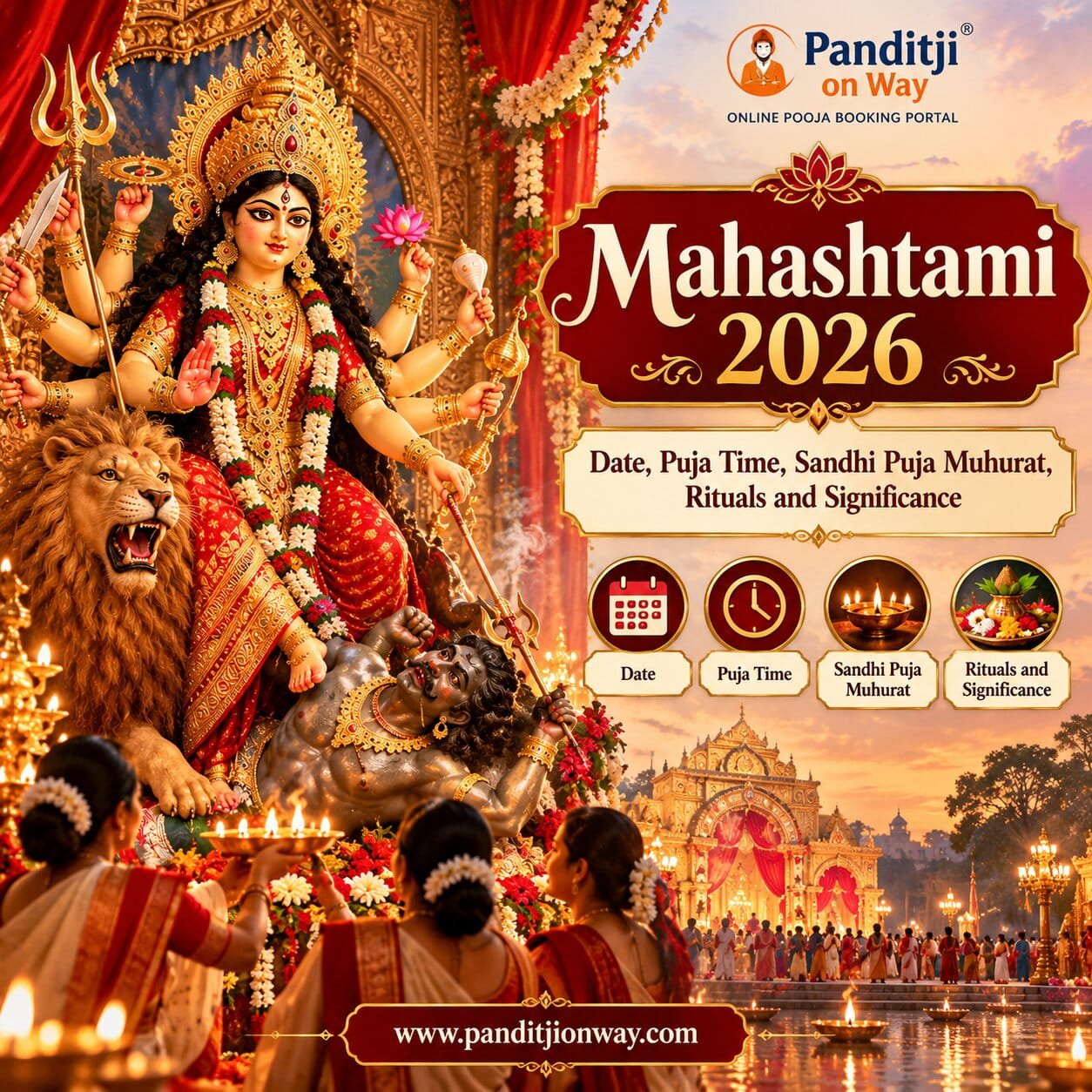
Mahashtami is the eighth lunar day, or Ashtami Tithi, of the Shukla Paksha during the Hindu month of Ashwin. It is one of the most important days of Sharadiya Durga Puja and is dedicated to the worship of Goddess Durga in her powerful, protective, and benevolent forms.
The festival commemorates the divine power of the Goddess and the victory of good over evil. In the Durga Puja tradition, devotees worship the Goddess with flowers, incense, lamps, devotional hymns, offerings, and prescribed rituals.
Mahashtami is especially associated with three important observances:
- Durga Ashtami Puja: Special worship of Goddess Durga and her manifestations.
- Kumari Puja: Reverential worship of a young girl as a symbolic manifestation of the Divine Feminine.
- Sandhi Puja: A sacred ritual performed at the transition between Ashtami and Navami Tithis.
Although the rituals and regional customs differ, the central purpose of Mahashtami remains devotion to Shakti, spiritual discipline, and the celebration of divine protection.
Why Is Mahashtami Celebrated?
Mahashtami celebrates the power of Goddess Durga and the triumph of righteousness over destructive forces. In Hindu tradition, Goddess Durga represents Shakti, the divine feminine energy responsible for protection, courage, balance, and the restoration of dharma.
The festival is connected with the narrative of Goddess Durga’s battle against Mahishasura, the buffalo demon. The Goddess’s victory symbolizes the overcoming of arrogance, injustice, ignorance, and negative forces.
For devotees, Mahashtami is an occasion to:
- Pray for the well-being and protection of their families.
- Seek courage, wisdom, prosperity, and spiritual strength.
- Perform traditional Durga Puja rituals.
- Participate in community worship and devotional gatherings.
- Reflect on the importance of truth, compassion, and righteousness.
The precise rituals followed on Mahashtami depend on regional traditions, family customs, and the form of Durga Puja being performed.
Major Mahashtami Rituals and Puja Vidhi
Mahashtami worship can include a combination of personal prayer, temple ceremonies, and community rituals. The following are some of the most widely recognized observances.
1. Mahasnan and Preparations for Durga Puja
In traditional Durga Puja ceremonies, Mahasnan refers to a ritual purification associated with the ceremonial worship of the Goddess. The puja area is cleaned, worship materials are arranged, and the priest prepares for the prescribed offerings.
The exact procedure depends on the particular Durga Puja tradition and the rituals established by the family or temple.
2. Shodashopachar Puja
Shodashopachar Puja, or षोडशोपचार पूजा, is a traditional method of worship involving sixteen forms of respectful service and offerings to the deity.
Depending on the tradition, these offerings may include invocation, a seat, water, ritual bathing, garments, fragrance, flowers, incense, a lamp, food offerings, and prayers.
The purpose is to express reverence and devotion to Goddess Durga through a structured ritual.
3. Worship of the Nine Forms of Durga
Goddess Durga is worshipped in multiple forms representing different aspects of divine feminine energy. In some Durga Puja traditions, nine sacred vessels are installed and the nine Shaktis are invoked and worshipped.
The specific arrangement and associated mantras can vary according to the ritual tradition followed by the priest.
Devotees also commonly worship the nine forms of Durga during Navratri. Read more in our planned guide to the nine forms of Goddess Durga.
4. Kumari Puja on Mahashtami
Kumari Puja is a ritual in which a young, unmarried girl is worshipped as a symbolic representation of the Divine Mother. The practice expresses the belief that the sacred feminine is present in all forms of life.
In many Durga Puja traditions, Kumari Puja is especially associated with Mahashtami, although some communities perform it on other days of Navratri as well.
The ceremony may include offering flowers, applying a ceremonial mark, presenting food or gifts, and seeking blessings. The child’s dignity, comfort, consent, and family customs should always be respected.
5. Sandhi Puja
Sandhi Puja is among the most important rituals associated with Mahashtami. It takes place at the sacred transition between Ashtami and Navami Tithis.
The traditional Sandhi Kaal consists of the final 24 minutes of Ashtami and the first 24 minutes of Navami. This creates a 48-minute ritual window around the Tithi transition.
For the supplied Mumbai timing, with Ashtami ending at 10:51 AM on 19 October 2026, the approximate Sandhi Kaal is 10:27 AM to 11:15 AM.
Sandhi Puja is performed with prescribed offerings, lamps, flowers, mantras, and other rituals according to the tradition followed. Devotees regard this period as especially sacred.
6. Balidan or Symbolic Offering
Certain traditional Durga Puja ceremonies include Balidan, a ritual offering associated with the worship of the Goddess. Customs vary considerably between temples, communities, and regions.
Many devotees and institutions choose symbolic offerings using items such as pumpkin, banana, or cucumber instead of animal sacrifice. The appropriate practice depends on the relevant religious tradition and local rules.
Devotees should follow the guidance of their temple or qualified priest and comply with applicable laws.
7. Lighting 108 Earthen Lamps
Lighting 108 earthen lamps during Sandhi Puja is a recognized custom in some Durga Puja traditions. The lamps symbolize devotion, auspiciousness, and the removal of spiritual darkness.
This practice is not universal, and devotees may follow the customary arrangements of their temple or family.
8. Pushpanjali and Prasad
Pushpanjali is the offering of flowers while reciting prescribed prayers or mantras. It is a familiar feature of community Durga Puja celebrations, particularly in Bengal.
After the worship, devotees may receive prasad and participate in community meals or other devotional activities according to local customs.
Sandhi Puja 2026: Timing, Significance and Rituals
Sandhi Puja is performed at the transition from Mahashtami to Mahanavami. This juncture is traditionally regarded as a spiritually significant moment in the Durga Puja calendar.
Sandhi Puja Timing for Mumbai
| Detail | Timing |
|---|---|
| Ashtami Tithi ends | 10:51 AM, 19 October 2026 |
| Final 24 minutes of Ashtami | 10:27–10:51 AM |
| First 24 minutes of Navami | 10:51–11:15 AM |
| Total Sandhi Kaal | Approximately 48 minutes |
These timings are based on the Tithi end time supplied for Mumbai. Check a location-specific Panchang before performing the ritual.
Why Is Sandhi Puja Important?
Sandhi Puja marks the sacred transition between two lunar Tithis. In a widely followed Durga Puja tradition, this ritual is associated with Goddess Chamunda and the story of the destruction of Chanda and Munda.
Devotees offer prayers to seek the Goddess’s protection and blessings. Depending on local custom, the ceremony may involve special mantras, flowers, lamps, and symbolic offerings.
Can Devotees Perform Sandhi Puja at Home?
Yes. Devotees can offer prayers to Goddess Durga at home according to their family tradition. Those who wish to perform the complete ceremonial procedure should consult a knowledgeable priest regarding the required materials, mantras, and timing.
Mahashtami Fasting Rules and Food
Many devotees observe a fast on Mahashtami to express their devotion to Goddess Durga. Fasting practices are not identical across India.
Some devotees observe a strict fast, while others consume fruit, milk, water, or foods permitted by their Navratri tradition. Some participate in the worship without fasting.
There is no single fasting rule followed by every Hindu community. Devotees should follow their family tradition and consider their health, age, medication requirements, and other personal circumstances.
Common Mahashtami Puja Samagri
The following materials are commonly used in home worship, although the exact list depends on the ritual being performed.
| Puja Item | Traditional Purpose |
|---|---|
| Image or idol of Goddess Durga | Focus of worship |
| Flowers and garland | Devotional offering |
| Kumkum and turmeric | Traditional puja materials |
| Incense sticks | Fragrance offering |
| Diya and suitable oil or ghee | Lighting the ritual lamp |
| Fruits and sweets | Bhog or prasad |
| Clean water | Ritual offerings |
| Betel leaves and nuts | Used in many traditional pujas |
| Rice or akshat | Traditional offering |
| Earthen lamps | Used in some Sandhi Puja traditions |
Consult your priest for the complete list if you are arranging a formal Durga Puja or Sandhi Puja.
Mahashtami 2026: Celebrations Across India
Mahashtami is observed throughout India, but the form of celebration varies by region. Durga Puja in Bengal is known for community pandals and elaborate ceremonies, while Navratri celebrations in other states may emphasize fasting, temple worship, devotional singing, or regional customs.
1. Kolkata, West Bengal
Kolkata is one of India’s most prominent destinations for Durga Puja. Mahashtami is marked by worship at community pandals, Pushpanjali, traditional offerings, and cultural gatherings.
The city’s Durga Puja is also internationally recognized for its artistic and community significance. UNESCO inscribed Durga Puja in Kolkata on the Representative List of the Intangible Cultural Heritage of Humanity in 2021.
Official references:
2. Mumbai, Maharashtra
In Mumbai, devotees celebrate Mahashtami through temple visits, household worship, community Durga Puja events, and participation in Navratri festivities.
The city has a diverse population, so Bengali-style Durga Puja and other regional forms of Goddess worship can be found in different neighbourhoods. Event dates, darshan schedules, and special puja timings should be confirmed with individual temples and organizing committees.
3. Guwahati, Assam
Guwahati and other parts of Assam observe Durga Puja with temple worship, decorated pandals, cultural programs, and community gatherings.
Devotees may attend local ceremonies or perform worship at home according to their family traditions.
4. Delhi, National Capital Territory
Delhi hosts Durga Puja celebrations organized by Bengali associations, cultural groups, and local communities. Mahashtami may include Pushpanjali, bhog, devotional programs, and community worship.
Visitors should check the announcements of individual puja committees for venue information and schedules.
5. Cuttack and Bhubaneswar, Odisha
Durga Puja is observed in several parts of Odisha through community worship, decorated pandals, temple visits, and regional traditions.
Cuttack is known for its distinctive Durga Puja celebrations, while Bhubaneswar offers opportunities to participate in local religious observances. The precise rituals and arrangements vary by locality.
6. Bengaluru, Karnataka
Devotees in Bengaluru celebrate Mahashtami through temple worship, household puja, Navratri gatherings, and Durga Puja events organized by regional communities.
Because the city has residents from different parts of India, celebrations can reflect a range of traditions.
Travel and temple visit tip: Confirm the location, opening hours, crowd arrangements, and puja schedule directly with the relevant temple or organizing committee before visiting.
Mahashtami vs Maha Navami vs Vijayadashami
These three observances are closely connected, but they have different religious and ritual significance.
| Festival | Main Significance | Common Observances |
|---|---|---|
| Mahashtami | Worship of Goddess Durga on Ashtami | Durga Puja, Kumari Puja, Pushpanjali |
| Maha Navami | Worship during Navami Tithi | Special puja, offerings, devotional ceremonies |
| Vijayadashami / Dussehra | Celebration of victory and auspicious completion | Prayers, regional ceremonies, and immersion rituals where customary |
The dates of these observances depend on the lunar calendar and local Panchang calculations. In some years, a Tithi may begin on one civil date and end on another, so a festival’s observance date should not be determined solely from the Tithi start time.
How to Arrange Mahashtami Puja with Panditji on Way
Devotees who wish to arrange a traditional Mahashtami Puja can prepare by identifying the ceremony they want to perform, checking the local muhurat, and confirming the required puja materials.
Panditji on Way is an online puja booking portal that helps devotees explore puja-related services.
To make an informed booking:
- Visit www.panditjionway.com.
- Explore the available puja services and confirm whether the required Mahashtami or Durga Puja ceremony is offered.
- Confirm the date, location, language, ritual requirements, and service inclusions before booking.
- Ask the priest or service provider to confirm the local muhurat and required puja samagri.
- Keep the relevant Panchang details available when discussing Sandhi Puja or other Tithi-sensitive rituals.
Availability, service inclusions, and booking terms should be verified directly on the website.
Frequently Asked Questions About Mahashtami 2026
1. When is Mahashtami in 2026?
Mahashtami will be observed on Monday, 19 October 2026, according to the supplied festival calendar for Mumbai.
2. What is the Ashtami Tithi timing on 19 October 2026?
For Mumbai, the supplied Panchang states that Ashtami Tithi ends at 10:51 AM on 19 October 2026. The Tithi begins at 08:27 AM on 18 October 2026.
3. What is the Sandhi Puja time on Mahashtami 2026?
Using the supplied Mumbai Ashtami Tithi end time of 10:51 AM, the approximate Sandhi Puja window is 10:27 AM to 11:15 AM on 19 October 2026. Confirm the local timing before performing the ritual.
4. Why is Mahashtami important in Durga Puja?
Mahashtami is one of the principal days of Durga Puja. It is dedicated to Goddess Durga and is associated with special worship, Kumari Puja, Pushpanjali, and Sandhi Puja.
5. What is Kumari Puja?
Kumari Puja is a ritual in which a young girl is worshipped as a symbolic manifestation of the Divine Mother. It is performed during Mahashtami in many Durga Puja traditions, although practices vary by region.
6. What is the difference between Durga Ashtami and Mahashtami?
The names Durga Ashtami, Maha Ashtami, and Mahashtami are commonly used for the eighth lunar day associated with Goddess Durga worship. The specific rituals may differ between regional traditions.
7. Can Mahashtami Puja be performed at home?
Yes. Devotees can worship Goddess Durga at home with flowers, a lamp, prayers, and traditional offerings. Those performing elaborate rituals should consult a priest for the appropriate procedure and local timing.
8. Is fasting compulsory on Mahashtami?
No single fasting rule applies to every devotee. Some observe a strict fast, others follow a fruit-based or other permitted diet, and some worship without fasting. Follow your family’s tradition and personal health requirements.
9. Why are 108 lamps lit during Sandhi Puja?
Lighting 108 earthen lamps is a customary practice in some Durga Puja traditions. The lamps symbolize devotion and auspiciousness, but the practice is not universal.
10. Where is Mahashtami celebrated most prominently?
Mahashtami is widely observed across India. Kolkata is particularly well known for its large-scale Durga Puja celebrations, while Mumbai, Guwahati, Delhi, Cuttack, Bhubaneswar, and Bengaluru also host regional and community celebrations.
11. What should I offer to Goddess Durga on Mahashtami?
Common offerings include flowers, fruits, sweets, incense, a lit lamp, and other items prescribed by the family’s puja tradition. The exact offerings depend on the ceremony and the guidance of the priest.
12. Where can I book a Mahashtami Puja online?
Visit Panditji on Way to explore available puja services. Confirm the availability, ritual details, location, and booking conditions directly before making a reservation.
Conclusion: Celebrate Mahashtami 2026 with Devotion
Mahashtami on Monday, 19 October 2026, is an important occasion for worshipping Goddess Durga and reflecting on the victory of good over evil. Durga Puja, Kumari Puja, Pushpanjali, and Sandhi Puja are among the important observances associated with this sacred day.
Devotees should use location-specific Panchang timings, follow their family or temple traditions, and seek guidance from a knowledgeable priest for elaborate ceremonies.
For information about puja services and online booking options, visit Panditji on Way, your online destination for exploring Hindu puja services.
Shubho Mahashtami. May Goddess Durga bless all devotees with strength, wisdom, peace, and prosperity.