

Dev Uthani Ekadashi 2026: Date, Puja Vidhi, Katha, Mantra, Vrat Rules & Benefits
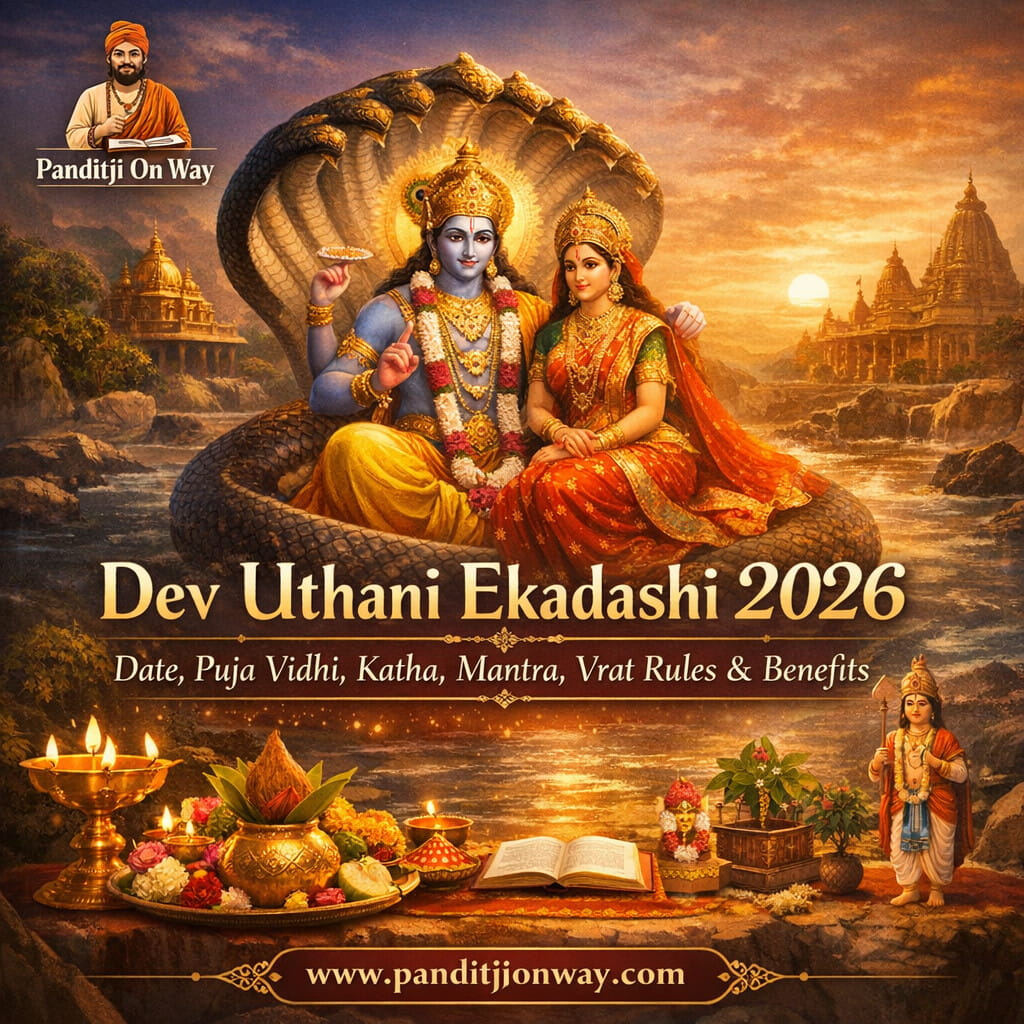
Dev Uthani Ekadashi 2026 (also known as Prabodhini Ekadashi or Dev Utthan Ekadashi) is among the most sacred Ekadashis in the Hindu calendar. It marks the divine awakening of Lord Vishnu after four months of Yoga Nidra during Chaturmas. With this awakening, all auspicious activities—marriages, griha pravesh, and major rituals—resume across India.
This in-depth, guide covers exact dates & timings, puja vidhi, samagri list, vrat katha, mantras, fasting rules, benefits, FAQs, and tables.
Quick Highlights
- Festival: Dev Uthani Ekadashi / Prabodhini Ekadashi
- Deity: Lord Vishnu
- Date (2026): Friday, 20 November 2026
- Significance: End of Chaturmas, start of auspicious ceremonies
- Major Ritual: Tulsi Vivah

Dev Uthani Ekadashi 2026 Date & Timings
| Particulars | Date & Time |
|---|---|
| Ekadashi Tithi Begins | 20 Nov 2026 – 07:15 AM |
| Ekadashi Tithi Ends | 21 Nov 2026 – 06:31 AM |
| Vrat Observance | 20 November (daytime) |
| Parana (Fast Breaking) | 21 November (after sunrise, Dwadashi) |
Note: Perform puja on 20 November and break the fast on 21 November during the appropriate Parana Muhurat.
What Is Dev Uthani Ekadashi?
Dev Uthani Ekadashi commemorates the day when Lord Vishnu awakens from his four-month rest on Sheshnag in Ksheer Sagar. During Chaturmas, auspicious ceremonies remain suspended. With Vishnu’s awakening, a new cycle of prosperity, harmony, and divine grace begins.
This Ekadashi symbolizes:
- Spiritual renewal
- Return of positive cosmic energy
- Re-commencement of weddings, engagements, and griha pravesh
Why Is Dev Uthani Ekadashi Celebrated?
- Devotees observe a strict Vishnu vrat seeking blessings of peace, wealth, and stability.
- Tulsi Vivah, the sacred marriage of Vishnu with Tulsi Mata, is performed at homes and temples.
- The day signifies faith, humility, and divine guidance in everyday life.
Dev Uthani Ekadashi Puja Vidhi (Step-by-Step)
1) Morning Preparations
- Wake during Brahma Muhurat, bathe, and wear clean (preferably white/yellow) clothes.
- Clean the home and puja area; decorate with flowers and rangoli.
2) Altar Setup
- Place an idol/photo of Lord Vishnu on a clean cloth.
- Keep a Tulsi plant near the altar.
3) Lighting the Lamp
- Light a ghee diya and incense to sanctify the space.
4) Offerings & Chanting
- Offer fruits, flowers, Panchamrit, sweets, betel nut, and Tulsi leaves.
- Chant “Om Namo Bhagavate Vasudevaya” and listen to the Ekadashi Katha.
5) Aarti & Prasad
- Perform Vishnu Aarti and distribute prasad with devotion.
Puja Samagri List
- Vishnu idol/photo
- Tulsi plant & leaves
- Kalash, Gangajal
- Panchamrit
- Chandan, Kumkum, Haldi, Akshat
- Flowers, garlands, fruits, dry fruits
- Betel leaves & nuts
- Diya, ghee, dhoop, agarbatti, camphor
- Bhog (kheer/ladoo)
- Yellow/white cloth, dakshina, mauli, bell
- Achamani (water pot & spoon), grains (rice/wheat/barley), asana

Dev Uthani Ekadashi Katha (Sacred Stories – Detailed)
The Dev Uthani Ekadashi Katha explains the deep spiritual meaning behind the awakening of Lord Vishnu after four months of Yoga Nidra during Chaturmas. These sacred stories are traditionally recited during the Ekadashi vrat to invoke divine blessings, remove obstacles, and mark the return of auspiciousness to the world.
Story 1: The Divine Awakening of Lord Vishnu from Yoga Nidra
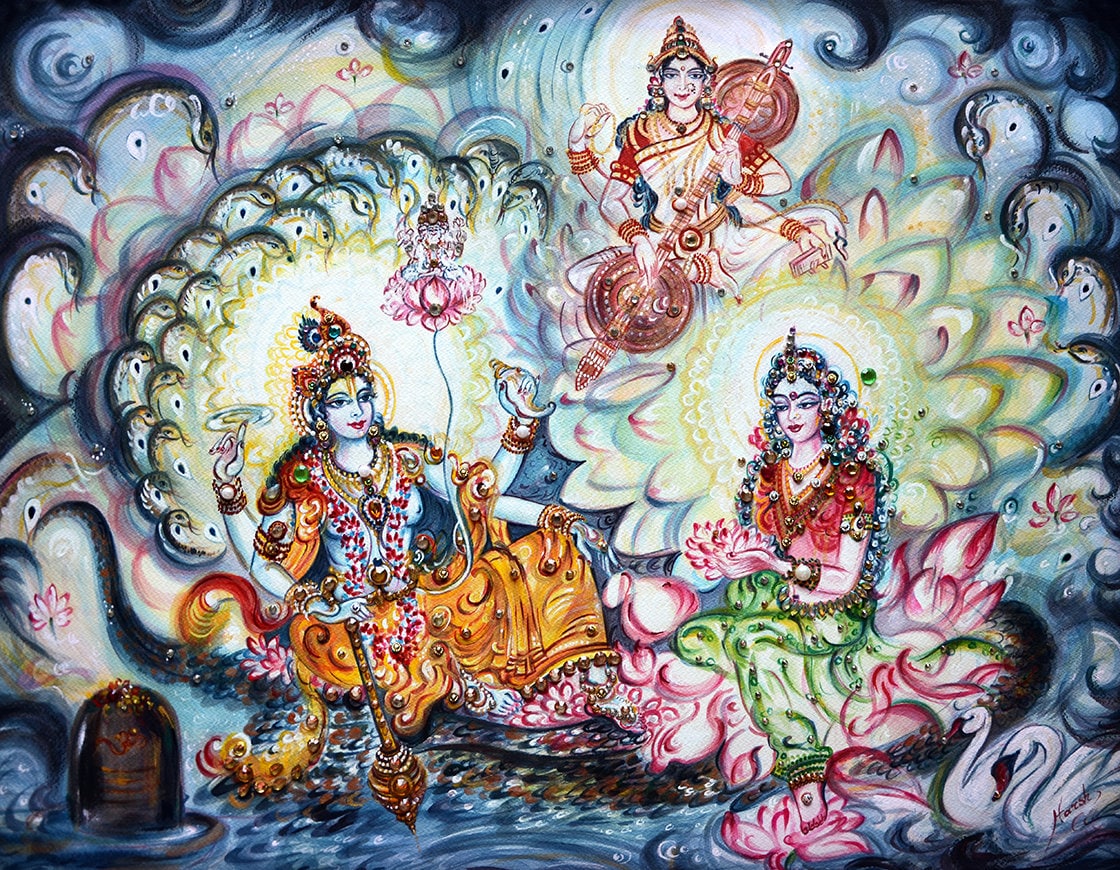
According to the Padma Purana and Skanda Purana, on Dev Shayani Ekadashi (Ashadha Shukla Ekadashi), Lord Vishnu entered Yoga Nidra on Sheshnag in the cosmic ocean known as Ksheer Sagar. This divine rest lasts for four lunar months—Shravan, Bhadrapada, Ashwin, and Kartik—a period collectively called Chaturmas.
During this time:
- The Lord temporarily withdraws from worldly affairs.
- All auspicious ceremonies such as marriages, griha pravesh, and major yajnas are paused.
- Devotees focus on penance, self-discipline, charity, and spiritual purification.
On Kartik Shukla Ekadashi, the celestial conch (Shankha) is symbolically blown by the gods, awakening Lord Vishnu from his cosmic sleep. Goddess Lakshmi welcomes him with devotion, lotus flowers, lamps, and sacred hymns.
With Vishnu’s awakening:
- Positive cosmic energy flows back into the universe.
- Dharma (righteousness) regains strength.
- The cycle of creation, preservation, and prosperity resumes.
This moment is celebrated as Prabodhini Ekadashi, meaning the Ekadashi of awakening, reminding devotees that spiritual awareness must awaken within the human soul just as the Lord awakens in the cosmos.
Story 2: Tulsi Mata, Vrinda Devi, and the Sacred Tulsi Vivah
One of the most emotionally powerful stories of Dev Uthani Ekadashi is associated with Tulsi Vivah, the divine marriage of Lord Vishnu with Tulsi Mata.
Tulsi Mata was originally Vrinda Devi, a pious woman married to the demon king Jalandhar. Her unwavering devotion and chastity made Jalandhar invincible. To restore cosmic balance, Lord Vishnu intervened, leading to Jalandhar’s defeat.
Heartbroken, Vrinda renounced her mortal body and transformed into the sacred Tulsi plant. Moved by her devotion, Lord Vishnu blessed her with immortality and promised to marry her in every household where Tulsi is worshipped.
Thus, on Dev Uthani Ekadashi:
- Tulsi Vivah is performed symbolically.
- Tulsi plant is adorned like a bride.
- Vishnu (or Shaligram) is worshipped as the groom.
Spiritual meaning:
This katha teaches that pure devotion, sacrifice, and righteousness are always honored by the Divine. Performing Tulsi Vivah removes marriage delays, brings harmony in relationships, and purifies the home environment.
Story 3: King Bali and the Vamana Avatar Blessing
Another highly revered katha relates to King Bali, the noble and generous ruler of the Asura kingdom. Though powerful, King Bali was deeply devoted to Lord Vishnu.
To humble his ego and protect the cosmic order, Vishnu incarnated as Vamana, a young Brahmin. He asked King Bali for just three steps of land. Bali agreed without hesitation.
In his cosmic form:
- Vishnu covered heaven and earth in two steps.
- For the third step, Bali offered his own head.
Pleased with Bali’s devotion, Lord Vishnu granted him immortality and promised to reside in Patal Lok during Chaturmas. On Dev Uthani Ekadashi, Vishnu returns to Vaikuntha, blessing King Bali and humanity with prosperity and protection.
Moral lesson:
True devotion lies in humility and self-surrender. Those who surrender to Vishnu are protected beyond life and death.
Story 4: Dev Uthani Ekadashi and the Return of Auspiciousness
Scriptures mention that when Lord Vishnu sleeps, divine administrative duties slow down, and negative energies gain temporary strength. His awakening on Dev Uthani Ekadashi restores balance, making this day the spiritual new year for religious activities.
From this day onward:
- Marriages regain divine sanction.
- Homes are purified through griha pravesh.
- Business and spiritual ventures flourish.
Devotees light lamps, sing bhajans, observe fasts, and stay awake at night (Jagran) to welcome the Lord’s return.
Spiritual Essence of Dev Uthani Ekadashi Katha
The Dev Uthani Ekadashi Katha conveys profound truths:
- Awakening of Vishnu = Awakening of inner consciousness
- End of Chaturmas = End of stagnation and negativity
- Tulsi Vivah = Union of devotion and divinity
- King Bali’s story = Power of humility and surrender
Listening to or reading this katha with devotion is believed to grant:
- Freedom from sins
- Family peace and prosperity
- Success in marriage and career
- Spiritual upliftment and divine grace
Including Dev Uthani Ekadashi Katha in detail, with references to Vishnu, Tulsi Vivah, King Bali, and Vamana Avatar.
Powerful Mantras for Dev Uthani Ekadashi
Vishnu Smaran Mantra
ॐ नमो भगवते वासुदेवाय।
Om Namo Bhagavate Vasudevaya
Prabodhini Ekadashi Mantra
उठो देव देवा, जागो देवदेवा…
(Chant to awaken the divine energy)
Tulsi Vivah Mantra
ॐ तुलस्यै नमः। ॐ श्रीविष्णवे नमः।
Fasting Rules & Rituals (Vrat Vidhi)
- Dashami (Previous Day): Avoid grains; eat satvik vegetarian food.
- Ekadashi Day: Take sankalp; worship Vishnu with Tulsi.
- Types of Fast:
- Nirjala (no food/water)
- Phalahar (fruits, milk, water)
- Parana: Break fast on Dwadashi after sunrise; donate food.
Benefits of Observing Dev Uthani Ekadashi Vrat
- Prosperity & Happiness: Attracts abundance and positivity.
- Removal of Past Sins: Purifies mind and soul.
- Strong Family Bonds: Tulsi Vivah enhances marital harmony.
- Path to Moksha: Vishnu bhakti liberates from rebirth.
- Start of Auspicious Season: Weddings and rituals resume.
Auspicious Activities After Dev Uthani Ekadashi
| Activity | Status |
|---|---|
| Marriage & Engagement | Auspicious |
| Griha Pravesh | Auspicious |
| Business Inauguration | Auspicious |
| Major Yajnas | Auspicious |
Book Pandit & Puja Samagri (Trusted Services)
Panditji On Way – India’s trusted online puja booking portal
- Available 24/7
- Zero Upfront Cost | Pay After Confirmation
- Expert pandits for Vishnu Puja, Tulsi Vivah, Griha Pravesh
👉 Panditji on way: https://www.panditjionway.com
External References:
- https://www.iskcon.org (Vishnu bhakti & Ekadashi insights)
- https://vedabase.io (Scriptural references – Bhagavata Purana)
Frequently Asked Questions Dev Uthani Ekadashi 2026
Q1. What is Dev Uthani Ekadashi and why is it important?
Dev Uthani Ekadashi is a sacred Hindu festival that marks the awakening of Lord Vishnu after four months of divine sleep during Chaturmas. It signifies the return of auspicious activities such as marriages, griha pravesh, and religious ceremonies.
Q2. When is Dev Uthani Ekadashi in 2026?
Dev Uthani Ekadashi in 2026 will be observed on Friday, 20 November 2026. The Ekadashi Tithi begins at 07:15 AM on 20 November and ends at 06:31 AM on 21 November 2026.
Q3. When should the Dev Uthani Ekadashi fast be broken (Parana time)?
The fast should be broken on Dwadashi, i.e., 21 November 2026, after sunrise, following Vishnu Puja and donation (daan), as per Ekadashi Parana rules.
Q4. What is the significance of Tulsi Vivah on Dev Uthani Ekadashi?
Tulsi Vivah symbolizes the divine marriage of Lord Vishnu and Tulsi Mata. Performing Tulsi Vivah on Dev Uthani Ekadashi is believed to bring marital harmony, remove obstacles in marriage, and invite prosperity into the home.
Q5. Is Dev Uthani Ekadashi auspicious for marriage and griha pravesh?
Yes. From Dev Uthani Ekadashi onward, all auspicious ceremonies like weddings, engagements, griha pravesh, and business inaugurations are considered highly favorable.
Q6. What are the fasting rules for Dev Uthani Ekadashi?
Devotees may observe:
- Nirjala Vrat (no food or water), or
- Phalahar Vrat (fruits, milk, and water).
Consumption of grains is strictly prohibited on Ekadashi.
Q7. Which mantra is most powerful on Dev Uthani Ekadashi?
The most powerful and commonly chanted mantra is:
“Om Namo Bhagavate Vasudevaya”, which invokes divine blessings, peace, and spiritual purification.
Q8. What are the benefits of observing Dev Uthani Ekadashi Vrat?
Observing this vrat:
- Removes past sins
- Brings wealth and happiness
- Strengthens family and marital bonds
- Grants spiritual growth and peace of mind
- Opens the path toward Moksha (liberation)
Q9. Can Ekadashi vrat be observed without fasting completely?
Yes. Those unable to fast strictly can observe Phalahar vrat, consuming fruits, milk, and water, while maintaining devotion and Vishnu bhakti.
Q10. What happens spiritually after Dev Uthani Ekadashi?
Spiritually, it marks the awakening of divine energy, renewal of faith, and the beginning of a positive cosmic phase where prayers and good deeds yield faster results.
Q11. How can I perform Dev Uthani Ekadashi Puja at home properly?
One can perform the puja at home by:
- Waking up early
- Worshipping Lord Vishnu with Tulsi leaves
- Chanting Vishnu mantras
- Listening to Ekadashi Katha
- Performing Aarti and donating food on Dwadashi
For authentic rituals, booking an experienced pandit is recommended.
Conclusion
Dev Uthani Ekadashi 2026 signifies the divine awakening that restores auspiciousness, harmony, and hope. By observing the vrat with devotion—performing Tulsi Vivah, chanting Vishnu mantras, and following proper puja vidhi—devotees invite health, happiness, wealth, and spiritual upliftment into their lives.
For authentic rituals and expert guidance, book your pandit online with Panditji On Way and celebrate this sacred Ekadashi with complete faith and purity.