

Ambe Tu Hai Jagdambe Kali Aarti Lyrics in Hindi: दुर्गा माता की आरती, अर्थ, पूजा विधि और महत्व
Read Ambe Tu Hai Jagdambe Kali Aarti lyrics in Hindi with meaning, Durga Mata Aarti vidhi, Navratri significance, famous temples and online pooja booking.
Ambe Tu Hai Jagdambe Kali Aarti is one of the most popular devotional aartis dedicated to Maa Durga, the divine mother and embodiment of Shakti. Devotees sing this aarti during Navratri, Durga Puja, daily worship, and other auspicious occasions to express their devotion, seek the blessings of the Goddess, and pray for strength, peace, and protection.
In this complete guide by Panditji on Way, India’s first and largest online pooja booking portal, you can read the complete Ambe Tu Hai Jagdambe Kali Aarti lyrics in Hindi, understand its meaning, learn the correct way to perform Durga Mata Aarti, discover important temples dedicated to Maa Durga, and explore how to book a pandit for Durga Puja and other Hindu rituals.

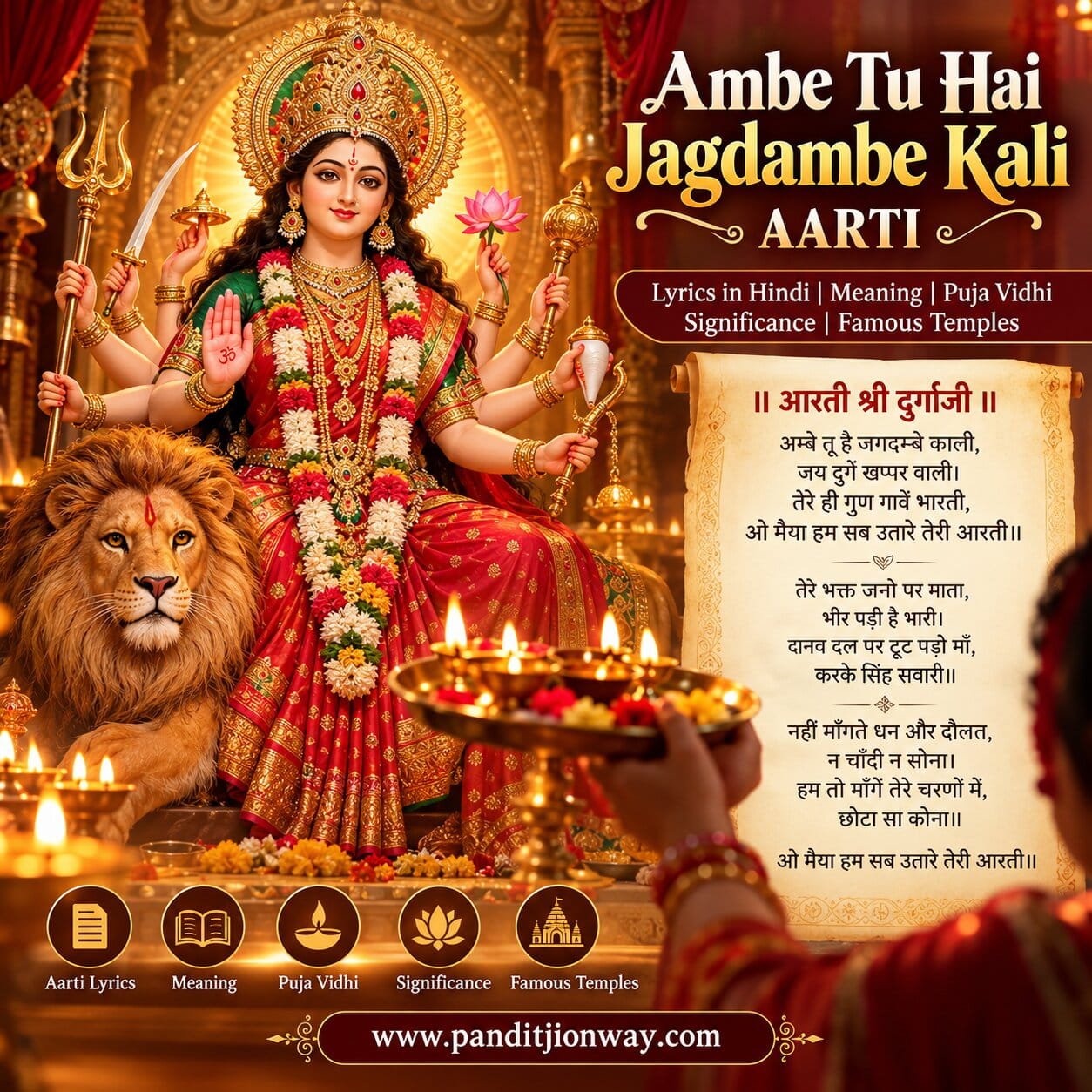
Quick Information: Ambe Tu Hai Jagdambe Kali Aarti
| Information | Details |
|---|---|
| Aarti name | Ambe Tu Hai Jagdambe Kali Aarti |
| Deity | Maa Durga, also worshipped as Ambe and Jagdamba |
| Language | Hindi |
| Type of prayer | Hindu devotional aarti |
| Main purpose | Devotion, prayer, gratitude, and seeking the Goddess’s blessings |
| Best time to recite | During morning or evening worship |
| Popular occasions | Navratri, Durga Puja, Durga Ashtami, Maha Navami, and daily puja |
| Worship essentials | Diya, incense, flowers, water, and aarti thali, as available |
| Online pooja booking | Panditji on Way |
| Official website | https://www.panditjionway.com/ |
Ambe Tu Hai Jagdambe Kali Aarti Lyrics in Hindi
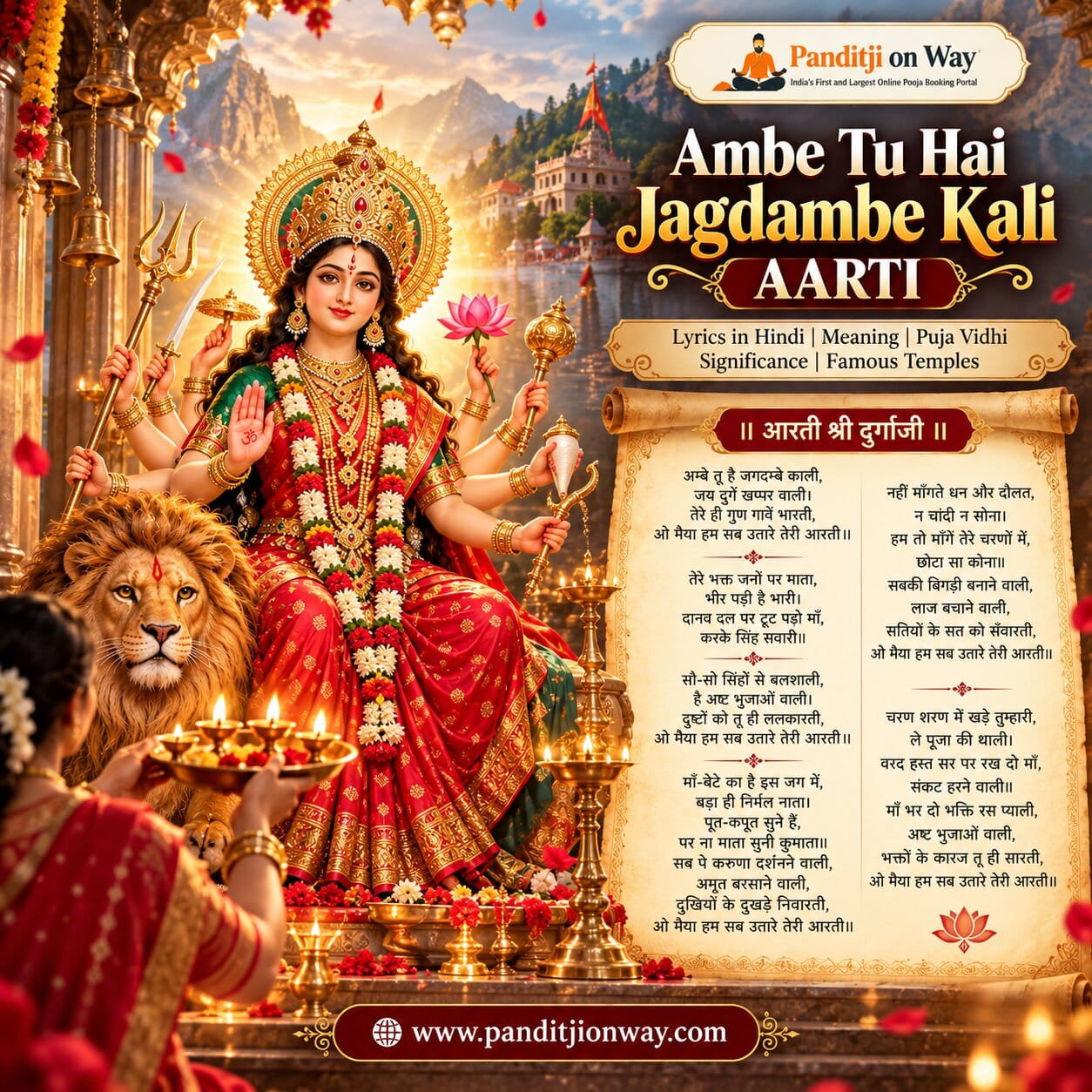
The following are the Hindi lyrics of the popular Durga Mata Aarti, beginning with the devotional invocation, “अम्बे तू है जगदम्बे काली.”
॥ आरती श्री दुर्गाजी ॥
अम्बे तू है जगदम्बे काली,
जय दुर्गे खप्पर वाली।
तेरे ही गुण गावें भारती,
ओ मैया हम सब उतारे तेरी आरती॥
ओ मैया हम सब उतारे तेरी आरती॥
तेरे भक्त जनों पर माता,
भीर पड़ी है भारी।
दानव दल पर टूट पड़ो माँ,
करके सिंह सवारी॥
सौ-सौ सिंहों से बलशाली,
है अष्ट भुजाओं वाली।
दुष्टों को तू ही ललकारती,
ओ मैया हम सब उतारे तेरी आरती॥
माँ-बेटे का है इस जग में,
बड़ा ही निर्मल नाता।
पूत-कपूत सुने हैं,
पर ना माता सुनी कुमाता॥
सब पे करुणा दर्शाने वाली,
अमृत बरसाने वाली।
दुखियों के दुखड़े निवारती,
ओ मैया हम सब उतारे तेरी आरती॥
नहीं माँगते धन और दौलत,
न चाँदी न सोना।
हम तो माँगें तेरे चरणों में,
छोटा सा कोना॥
सबकी बिगड़ी बनाने वाली,
लाज बचाने वाली।
सतियों के सत को सँवारती,
ओ मैया हम सब उतारे तेरी आरती॥
चरण शरण में खड़े तुम्हारी,
ले पूजा की थाली।
वरद हस्त सर पर रख दो माँ,
संकट हरने वाली॥
माँ भर दो भक्ति रस प्याली,
अष्ट भुजाओं वाली।
भक्तों के कारज तू ही सारती,
ओ मैया हम सब उतारे तेरी आरती॥
Note: Minor spelling and punctuation variations may appear in different published versions of this traditional devotional aarti.
What is Ambe Tu Hai Jagdambe Kali Aarti?
Ambe Tu Hai Jagdambe Kali Aarti is a popular Hindi devotional prayer dedicated to Maa Durga. It praises the Goddess’s strength, compassion, and protective nature. Devotees sing it during daily worship, Navratri, Durga Ashtami, and other auspicious occasions to express devotion and seek spiritual peace.
What Is the Meaning of Ambe Tu Hai Jagdambe Kali Aarti?
The Ambe Tu Hai Jagdambe Kali Aarti praises Maa Durga as the universal mother, a powerful protector, and a compassionate source of divine grace. Its verses express faith in the Goddess’s strength, kindness, and willingness to protect her devotees during difficult times.
The central message of this aarti is that true devotion is not limited to material wealth. It also means seeking spiritual peace, courage, humility, and shelter at the feet of the Divine Mother.
1. अम्बे तू है जगदम्बे काली — Invocation of the Divine Mother
The opening verse addresses the Goddess as Ambe, Jagdamba, and Kali. These names express her role as the mother of the universe and a manifestation of divine feminine power.
Devotees offer the aarti to honour her divine qualities and express their gratitude through prayer.
2. भक्तों की रक्षा करने वाली माँ दुर्गा
The next verse describes Maa Durga as a powerful protector who rides a lion and confronts demonic forces. Her eight arms symbolise divine strength and her ability to protect devotees against different forms of evil.
Spiritually, this verse encourages people to face difficulties with courage, faith, and determination.
3. माँ की ममता और करुणा
The aarti describes the relationship between a mother and her child as pure and unconditional. Maa Durga is worshipped as a compassionate mother who offers comfort, care, and hope to those who seek her blessings.
This verse reminds devotees of the importance of faith, compassion, and surrender.
4. धन-दौलत से बढ़कर भक्ति
The line “नहीं माँगते धन और दौलत, न चाँदी न सोना” expresses the desire for spiritual closeness rather than material possessions.
Its message is that devotion, contentment, and the opportunity to remain connected with the Divine Mother can be more meaningful than worldly riches.
5. माँ से आशीर्वाद और संकटों से मुक्ति की प्रार्थना
The final verses ask Maa Durga to place her blessing hand over her devotees and guide them through difficult circumstances.
The prayer expresses hope for inner strength, spiritual growth, and the ability to perform one’s responsibilities with faith.
What Is the Significance of Durga Mata Aarti?
Durga Mata Aarti is an important part of Hindu worship. It is an expression of devotion in which devotees sing praises of the Goddess while offering light from a diya.
Maa Durga represents Shakti, the divine feminine power associated with creation, protection, and the restoration of dharma. Through prayers and aarti, devotees remember these qualities and seek inspiration to cultivate courage, compassion, discipline, and righteousness.
Common reasons for reciting Durga Mata Aarti include:
- Expressing devotion and gratitude to Maa Durga.
- Concluding a Durga Puja or Navratri worship session.
- Praying for peace, courage, and spiritual well-being.
- Bringing family members together for devotional worship.
- Reflecting on the victory of good over evil.
- Honouring the Divine Mother during festivals and auspicious occasions.
The spiritual significance of aarti lies in sincere devotion and participation in worship. Specific beliefs about blessings and outcomes may differ among families, regions, and religious traditions.
When Should You Recite Ambe Tu Hai Jagdambe Kali Aarti?
Devotees may recite this aarti on any day when they worship Maa Durga. There is no universal requirement to restrict it to a particular weekday.
Popular occasions include:
| Occasion | Significance |
|---|---|
| Daily morning puja | Beginning the day with prayer and devotion |
| Evening aarti | Concluding daily worship with an offering of light |
| Chaitra Navratri | Worshipping the Goddess during the spring Navratri festival |
| Sharad Navratri | Celebrating the nine nights dedicated to the Goddess |
| Durga Ashtami | Observing an important day of Navratri worship |
| Maha Navami | Honouring Maa Durga during the concluding days of Navratri |
| Durga Puja | Participating in regional traditions celebrating the Goddess |
| Family Durga Puja | Offering prayers during household religious ceremonies |
During Navratri, the timing of rituals, fasting practices, and auspicious muhurat may vary according to the location, calendar tradition, and family customs. Consult a reliable local Panchang or a qualified pandit for date-specific guidance.
How to Perform Maa Durga Aarti at Home
Performing Durga Mata Aarti at home can be simple. The exact procedure may vary according to regional customs, family traditions, and the type of puja being performed.
Step 1: Clean the Puja Area
Clean the place of worship and arrange the picture or idol of Maa Durga respectfully.
Step 2: Prepare the Puja Samagri
Keep the following items ready according to your tradition:
- A diya with ghee or oil.
- Cotton wicks and a safe flame-resistant holder.
- Flowers or a garland.
- Incense, if customarily used.
- Kumkum, roli, or other traditional offerings.
- Water and prasad.
- An aarti thali.
Not every item is essential for every household puja.
Step 3: Offer Prayers to Maa Durga
Sit comfortably before the Goddess, fold your hands, and offer a prayer according to your family’s custom. You may chant a Durga mantra or recite a prayer before beginning the aarti.
Step 4: Sing Ambe Tu Hai Jagdambe Kali Aarti
Sing the aarti with devotion. Family members may join in the recitation.
Step 5: Perform the Aarti
Hold the lit diya securely in the aarti thali and move it gently in circular motions before the deity, following your tradition. Keep the flame away from curtains, clothing, and other flammable materials.
Step 6: Offer Prasad and Conclude the Puja
Offer prasad and conclude with a prayer for peace, wisdom, courage, and the well-being of all.
Safety tip: Never leave a burning diya or incense unattended. Keep it away from children and flammable materials.
Important Maa Durga Temples in India
India is home to many renowned temples dedicated to Maa Durga and her different manifestations. These sacred places attract devotees throughout the year, particularly during Navratri.
1. Vaishno Devi Temple, Jammu and Kashmir
The Shri Mata Vaishno Devi Shrine is one of India’s best-known pilgrimage destinations. Devotees undertake the pilgrimage to seek the blessings of Mata Vaishno Devi in the Trikuta hills.
2. Kamakhya Temple, Assam
Located in Guwahati, Kamakhya Temple is an important Shakti Peetha associated with the worship of the Divine Mother. Its religious traditions are particularly significant in Shakta worship.
3. Jwala Ji Temple, Himachal Pradesh
The Jwala Ji Temple in Kangra district is famous for its naturally occurring eternal flames, which are worshipped as manifestations of the Goddess.
4. Mansa Devi Temple, Haridwar, Uttarakhand
Mansa Devi Temple, situated on the Bilwa Parvat overlooking Haridwar, is a prominent pilgrimage site associated with Goddess Mansa Devi.
5. Dakshineswar Kali Temple, West Bengal
Located near Kolkata, Dakshineswar Kali Temple is a famous temple dedicated to Goddess Kali, a powerful manifestation of the Divine Mother.
6. Ambaji Temple, Gujarat
Ambaji Temple is an important pilgrimage centre dedicated to Amba Mata. It receives large numbers of devotees, especially during Bhadarvi Poonam and Navratri.
7. Chamundeshwari Temple, Karnataka
Situated on Chamundi Hill near Mysuru, Chamundeshwari Temple is dedicated to Goddess Chamundeshwari, a form of the Divine Mother associated with the victory over demonic forces.
8. Durga Temple, Varanasi, Uttar Pradesh
Also known as the Durga Kund Temple, this temple is an important religious destination in Varanasi and is especially visited by devotees during Navratri.
Before travelling, check current temple opening hours, access arrangements, and local festival schedules.
Book Durga Puja and Other Hindu Rituals Online with Panditji on Way

Planning a Durga Puja, Navratri Puja, Griha Pravesh, or another Hindu religious ceremony often involves finding a suitable pandit, understanding the puja samagri requirements, and coordinating the ritual at the correct time.
Panditji on Way is an online pooja booking portal that helps devotees explore pandit booking services for Hindu rituals.
Through the official website, devotees can explore available services and enquire about arrangements suited to their religious requirements.
Pooja Services You Can Explore
Depending on service availability and location, devotees may explore arrangements for:
- Durga Puja and Navratri Puja.
- Chandi Path and other Devi-related rituals.
- Griha Pravesh Puja.
- Satyanarayan Puja.
- Rudrabhishek Puja.
- Ganesh Puja.
- Vastu Shanti Puja.
- Festival-related puja ceremonies.
Service availability, language preferences, samagri inclusion, pricing, and scheduling should be confirmed before booking.
How to Book a Pandit Online
- Visit the official website: https://www.panditjionway.com/
- Explore the available puja services.
- Select the relevant ritual and provide your location and preferred date.
- Confirm the ceremony requirements, including samagri and the expected duration.
- Review the booking details and follow the available booking instructions.
For Navratri and other popular religious occasions, enquiring in advance can help with scheduling.
Book your next puja with Panditji on Way: https://www.panditjionway.com/
Frequently Asked Questions About Ambe Tu Hai Jagdambe Kali Aarti
1. What is Ambe Tu Hai Jagdambe Kali Aarti?
Ambe Tu Hai Jagdambe Kali is a popular Hindi devotional aarti dedicated to Maa Durga. It praises the Goddess as the universal mother, protector, and embodiment of divine power.
2. When should I sing Ambe Tu Hai Jagdambe Kali Aarti?
You can sing it during morning or evening worship, daily Durga Puja, Navratri, Durga Ashtami, Maha Navami, and other occasions dedicated to Maa Durga.
3. Can I recite Durga Mata Aarti every day?
Yes. Devotees may recite Durga Mata Aarti daily as part of their regular worship. Follow the customs and practices of your household or religious tradition.
4. What is the meaning of Ambe Tu Hai Jagdambe Kali?
The aarti praises Maa Durga’s strength, compassion, and protective nature. It expresses a devotee’s faith in the Divine Mother and the desire for spiritual shelter rather than material wealth alone.
5. What items are required for Durga Mata Aarti?
Common items include a diya, cotton wick, ghee or oil, flowers, an aarti thali, and prasad. Other items may be included according to family tradition and the type of puja.
6. Can I perform Maa Durga Aarti at home without a pandit?
Yes. A simple household aarti can be performed by devotees according to their family customs. For elaborate ceremonies involving specific mantras, rituals, or a prescribed vidhi, you may consult a qualified pandit.
7. Is Ambe Tu Hai Jagdambe Kali Aarti suitable for Navratri?
Yes. The aarti is widely suitable for devotional worship during Navratri and can be included in daily prayers to Maa Durga throughout the festival.
8. Which mantra can I chant before Durga Mata Aarti?
One commonly recited Durga mantra is:
ॐ दुं दुर्गायै नमः॥
Om Dum Durgayai Namah.
Devotees may chant it according to their tradition before beginning the aarti.
9. Where can I book a pandit for Durga Puja online?
You can visit Panditji on Way at https://www.panditjionway.com/ to explore available pooja booking services and enquire about arrangements for Durga Puja and other Hindu rituals.
10. Which temples are famous for Maa Durga worship in India?
Popular destinations associated with the Divine Mother include Vaishno Devi in Jammu and Kashmir, Kamakhya Temple in Assam, Ambaji in Gujarat, Jwala Ji in Himachal Pradesh, and Durga Kund Temple in Varanasi.
11. Is Durga Aarti different from Durga Chalisa?
Yes. Aarti is a devotional hymn generally sung while offering light to the deity. Durga Chalisa is a forty-verse devotional composition praising Maa Durga. Both may be included in worship according to personal and family traditions.
12. What should I pray for while performing Maa Durga Aarti?
Devotees commonly pray for wisdom, courage, peace, spiritual growth, family well-being, and the strength to face life’s challenges. The emphasis is on sincere devotion rather than a guaranteed material outcome.
Conclusion: Seek the Blessings of Maa Durga Through Devotion
Ambe Tu Hai Jagdambe Kali Aarti is a heartfelt expression of devotion to Maa Durga. Its verses celebrate the Divine Mother’s strength, compassion, and protective nature while reminding devotees that faith and spiritual connection can be more meaningful than material possessions.
Whether you recite the aarti during daily worship, Navratri, Durga Ashtami, or a family puja, approach the prayer with sincerity and respect for your traditions.
For devotees planning a Durga Puja or another Hindu religious ceremony, Panditji on Way helps you explore online pooja booking services and pandit arrangements.
Visit https://www.panditjionway.com/ to explore the available services and plan your next puja.
Jai Mata Di!
-
Google Search Central: Search appearance documentation — official guidance on search snippets, AI features, and structured data.
Google for Developers - Google Search Central: Structured data guidelines — implementation and eligibility guidance.
-
Incredible India: Kamakhya Temple — a credible tourism reference for the temple section.