Thrissur Pooram Elephant Festival 2026: The Spectacular Elephant Festival of Kerala
Discover Thrissur Pooram Elephant Festival, Kerala’s grand elephant festival. Learn history, rituals, Kudamattom, fireworks, temples, dates & travel tips in one guide. Thrissur Pooram is a grand one-day temple festival celebrated in Thrissur, widely known as the cultural capital of Kerala. Regarded as one of the largest and most spectacular temple festivals in South India, it attracts lakhs of devotees, travelers, and cultural enthusiasts every year for its majestic elephant processions, rhythmic percussion, and breathtaking fireworks.
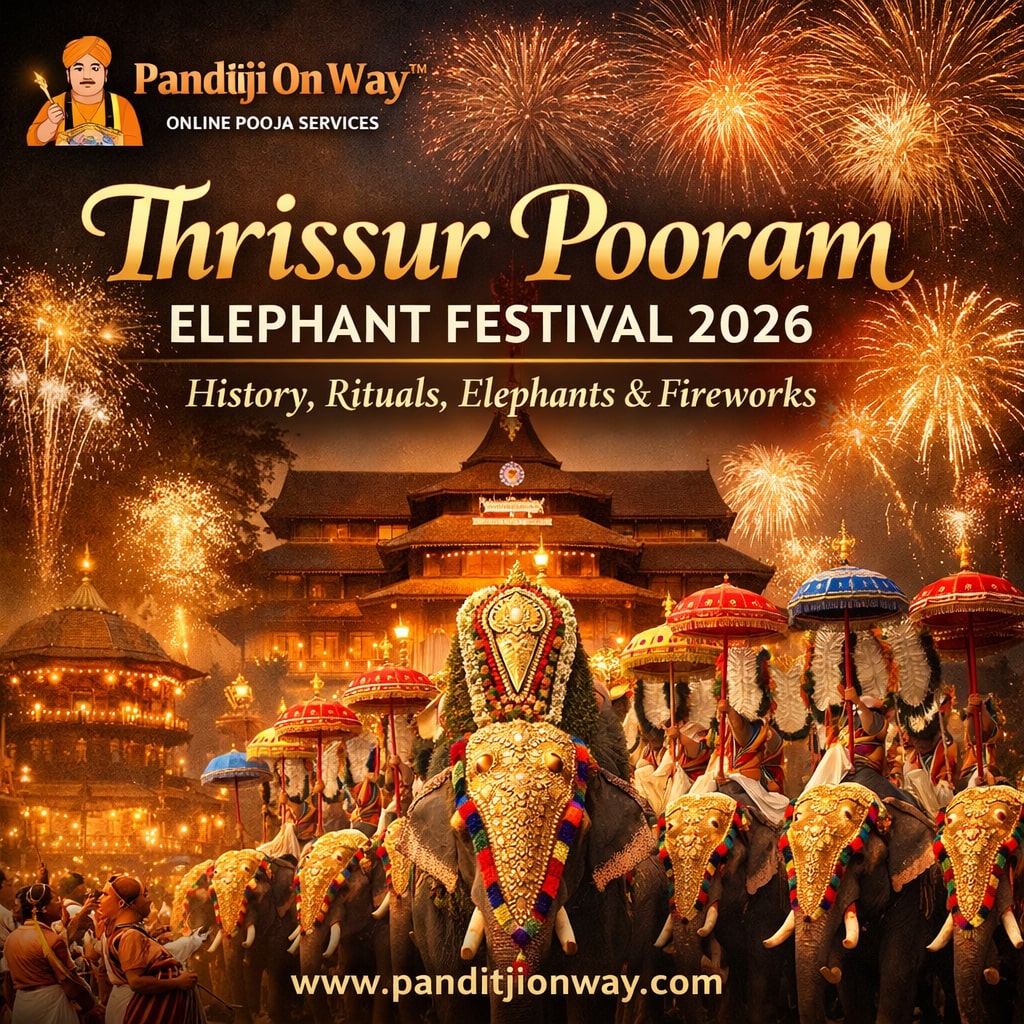
- Date: April 26, 2026 (Sunday).
- Location: Thekkinkadu Maidanam, Thrissur, Kerala.
- Highlights:
- Processions with caparisoned elephants.
- Traditional percussion ensembles like Panchavadyam and Chenda Melam.
- Spectacular fireworks displays.
- The unique Kudamattom ceremony (exchange of decorated parasols).
- A cultural gathering of eight prominent temples in the region.
Quick Facts: Thrissur Pooram at a Glance
| Aspect | Details |
|---|---|
| Festival Name | Thrissur Pooram |
| Location | Thrissur, Kerala, India |
| Main Venue | Vadakkunnathan Temple |
| Month | Medam (April–May) |
| Duration | One main day (with 7 days of rituals) |
| Founded By | Sakthan Thampuran (late 18th century) |
| Key Attractions | Kudamattom, Elephant Parade, Panchavadyam, Fireworks |
| Nature | Secular, community-driven |
| Best For | Cultural tourism, temple rituals, photography |
 History of Thrissur Pooram
The Malayalam word “Pooram” means meeting or gathering. Thrissur Pooram was introduced by Sakthan Thampuran, the Maharaja of the erstwhile Cochin State, in the late 18th century.
He envisioned a grand, inclusive festival that brought together temples and communities beyond rigid boundaries. What began as a unifying cultural initiative soon evolved into Kerala’s most celebrated post-harvest temple festival.
Legend Behind Thrissur Pooram
Earlier, Arattupuzha Pooram was Kerala’s most important temple festival. When heavy rains prevented some temples from participating, they approached Sakthan Thampuran for an alternative celebration.
The Maharaja reorganized ten temples into two groups led by:
- Paramekkavu Bhagavathy Temple
- Thiruvambadi Sri Krishna Temple
He established a new Pooram at the Vadakkunnathan Temple on the Pooram star day of Medam, laying the foundation for today’s Thrissur Pooram.
The Festival Day and Ritual Timeline
| Ritual | Description |
|---|---|
| Flag Hoisting | Begins 7 days before the main Pooram |
| Poora Vilambharam | Elephant opens the southern gate of Vadakkunnathan Temple |
| Kudamattom | Competitive exchange of colorful umbrellas |
| Panchavadyam & Melam | Classical percussion ensembles |
| Sample Vedikettu | Preview fireworks display |
| Main Fireworks | Grand finale at Thekkinkadu Maidan |
| Pakal Pooram | Daytime hospitality and temple visits |
Celebration of Thrissur Pooram
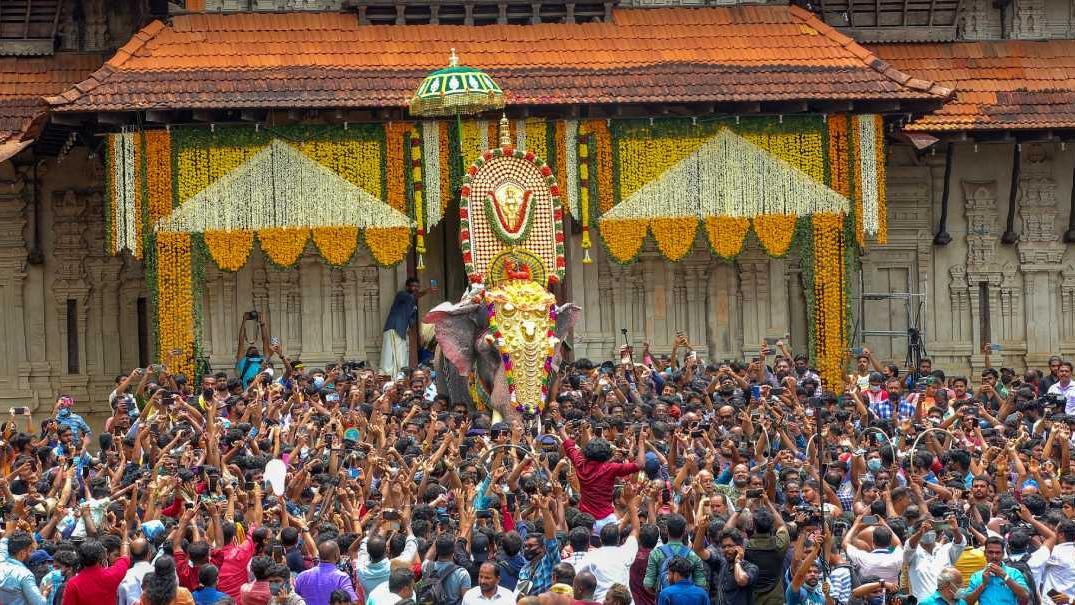
The festival begins with flag hoisting, followed by a sequence of temple rituals and cultural displays. One of the most symbolic moments is Poora Vilambharam, where an elephant carrying Neithilakkavilamma ceremonially opens the temple gate.
The celebration is profoundly secular, with people from all communities participating, reflecting Kerala’s cultural harmony.
Major Attractions of Thrissur Pooram
1. Elephant Parade and Nettipattam
Magnificently decorated elephants wear golden caparisons (nettipattam), bells, and peacock-feather fans, forming a stunning visual spectacle.
2. Kudamattom (Umbrella Exchange)
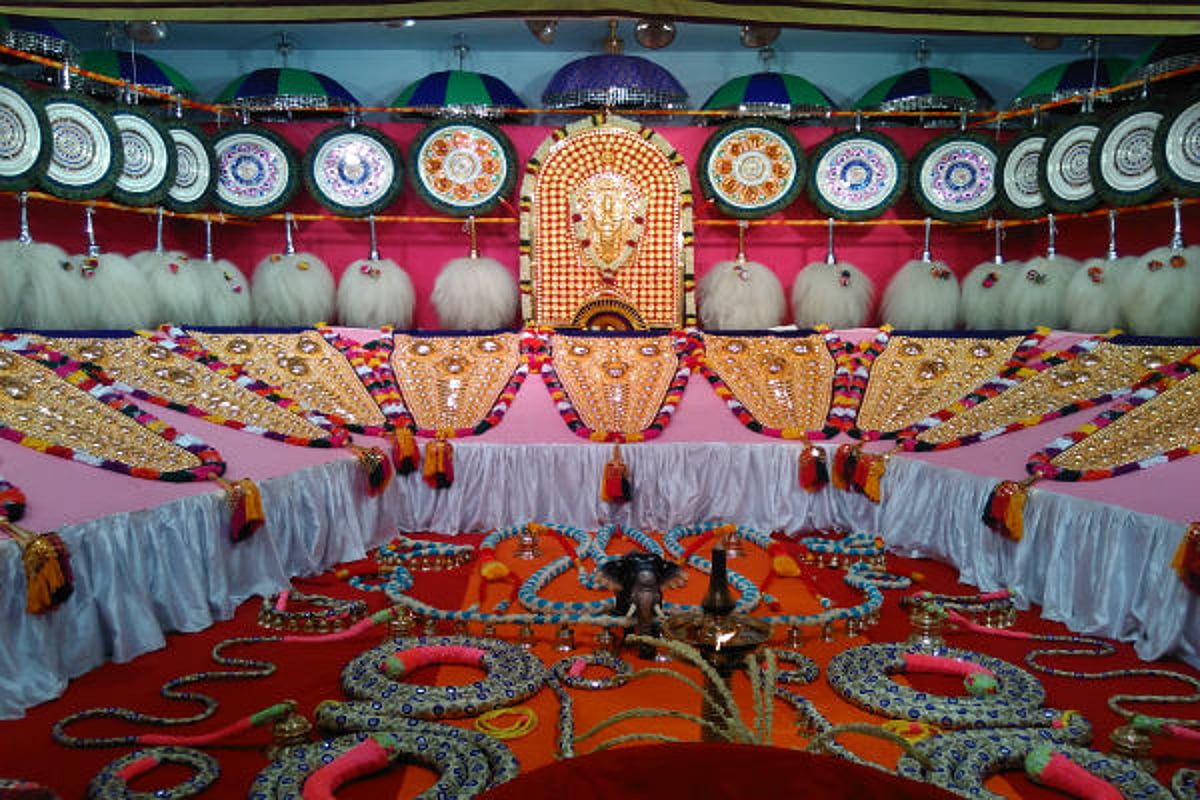
The most photographed event, Kudamattom, features rhythmic exchanges of handcrafted silk and cotton umbrellas atop elephants by Paramekkavu and Thiruvambadi groups.
3. Classical Percussion Performances
Traditional ensembles like Panchavadyam and Melam are performed by hundreds of artists, creating a powerful sonic experience unique to Kerala.
4. Sample Vedikettu and Fireworks
The Sample Vedikettu previews the intensity of the main fireworks, while the final display at Thekkinkadu Maidan is considered one of the largest non-commercial fireworks shows in India.
Important Participating Deities and Temples
| Temple/Deity | Significance |
|---|---|
| Kanimangalam Sastha | Royal family deity of Cochin |
| Paramekkavu Bhagavathy | One of the two main competing temples |
| Thiruvambadi Sri Krishna | Second main temple with grand procession |
How to Reach Thrissur Pooram
- By Air: Cochin International Airport (≈53 km)
- By Rail: Thrissur Railway Station (well-connected across India)
- By Road: KSRTC and national highways link Thrissur to major Kerala cities
Spiritual & Cultural Importance
Thrissur Pooram is not merely a festival; it is a living symbol of Kerala’s devotion, artistry, and social unity. The celebration blends temple rituals, Vedic traditions, music, and community participation into a single unforgettable experience.
Book Authentic Poojas with Panditji On Way
For authentic Pooja, Havan, Abhishek, and Vedic rituals, book trusted pandits online with
👉 https://www.panditjionway.com (Panditji on way)
Trusted External References
- Kerala Tourism – Official Guide to Thrissur Pooram
https://www.keralatourism.org - Wikipedia – Thrissur Pooram (historical overview)
https://en.wikipedia.org/wiki/Thrissur_Pooram
Frequently Asked Questions About Thrissur Pooram
What is Thrissur Pooram?
Thrissur Pooram is Kerala’s largest and most famous temple festival, celebrated annually in Thrissur city. It is known for its grand elephant procession, Kudamattom umbrella exchange, traditional percussion music, and spectacular fireworks, making it one of India’s biggest cultural festivals.
Why is Thrissur Pooram called the mother of all Poorams?
Thrissur Pooram is called the “Mother of All Poorams” because of its massive scale, participation of multiple temples, unmatched fireworks, and the unique Kudamattom ceremony, which is not seen in any other temple festival in India.
When is Thrissur Pooram celebrated?
Thrissur Pooram is celebrated in the Malayalam month of Medam (April–May) on the day of the Pooram star according to the Malayalam calendar. The exact date changes every year based on astrological calculations.
Who started Thrissur Pooram?
Thrissur Pooram was started in the late 18th century by Sakthan Thampuran, the Maharaja of the former Cochin State, to promote unity, cultural harmony, and inclusive temple traditions.
Which temples participate in Thrissur Pooram?
The two main temples leading Thrissur Pooram are:
- Paramekkavu Bhagavathy Temple
- Thiruvambadi Sri Krishna Temple
In addition, eight other temples participate, making it a collective cultural celebration.
What is Kudamattom in Thrissur Pooram?
Kudamattom is the ceremonial exchange of colorful, handcrafted umbrellas atop decorated elephants by the Paramekkavu and Thiruvambadi groups. It is the most visually iconic and photographed ritual of Thrissur Pooram.
How many elephants participate in Thrissur Pooram?
Around 30 to 40 caparisoned elephants participate in Thrissur Pooram, standing majestically in a straight line in front of Vadakkunnathan Temple during the Kudamattom ceremony.
What makes Thrissur Pooram fireworks special?
Thrissur Pooram fireworks are among the largest non-commercial fireworks displays in Asia. The event includes Sample Vedikettu (trial fireworks) and the main fireworks, which last for several hours at Thekkinkadu Maidan.
Is Thrissur Pooram a religious or secular festival?
Thrissur Pooram is a temple festival with a strong secular character. People from all religions, castes, and communities actively participate, making it a symbol of Kerala’s cultural unity.
Where does Thrissur Pooram take place?
Thrissur Pooram is held at Vadakkunnathan Temple and Thekkinkadu Maidan, located in the heart of Thrissur city, Kerala, India.
How long does Thrissur Pooram last?
While the main Pooram celebrations occur on a single day, the festival rituals and events span seven days, starting with flag hoisting and ending with Pakal Pooram.
What is Pakal Pooram?
Pakal Pooram is the concluding daytime celebration of Thrissur Pooram, focused on hospitality, temple visits, and cultural gatherings, marking the peaceful closure of the festival.
What is the significance of elephants in Thrissur Pooram?
Elephants symbolize prosperity, power, and divine presence in Kerala temple traditions. In Thrissur Pooram, they act as living pedestals for deities and play a central role in rituals like Kudamattom.
How can devotees perform pooja during Thrissur Pooram?
Devotees can perform traditional poojas, homams, and rituals by booking experienced Vedic pandits through Panditji On Way, India’s trusted online pooja booking platform.
Is Thrissur Pooram suitable for tourists?
Yes, Thrissur Pooram is one of the top cultural tourism events in India and attracts international tourists, photographers, researchers, and spiritual travelers every year.
Why is Thrissur called the cultural capital of Kerala?
Thrissur is called the cultural capital of Kerala because it hosts iconic festivals like Thrissur Pooram and is a center for classical music, temple arts, and traditional performances.
Final Note
Thrissur Pooram stands as India’s most iconic temple festival, blending devotion, culture, music, elephants, and fireworks in a single day of unmatched grandeur. Its historical roots, secular participation, and visual splendor make it a must-experience cultural event in Kerala.
For rituals, traditions, and authentic Vedic services related to temple festivals, trust Panditji On Way – India’s leading online pooja booking platform.