
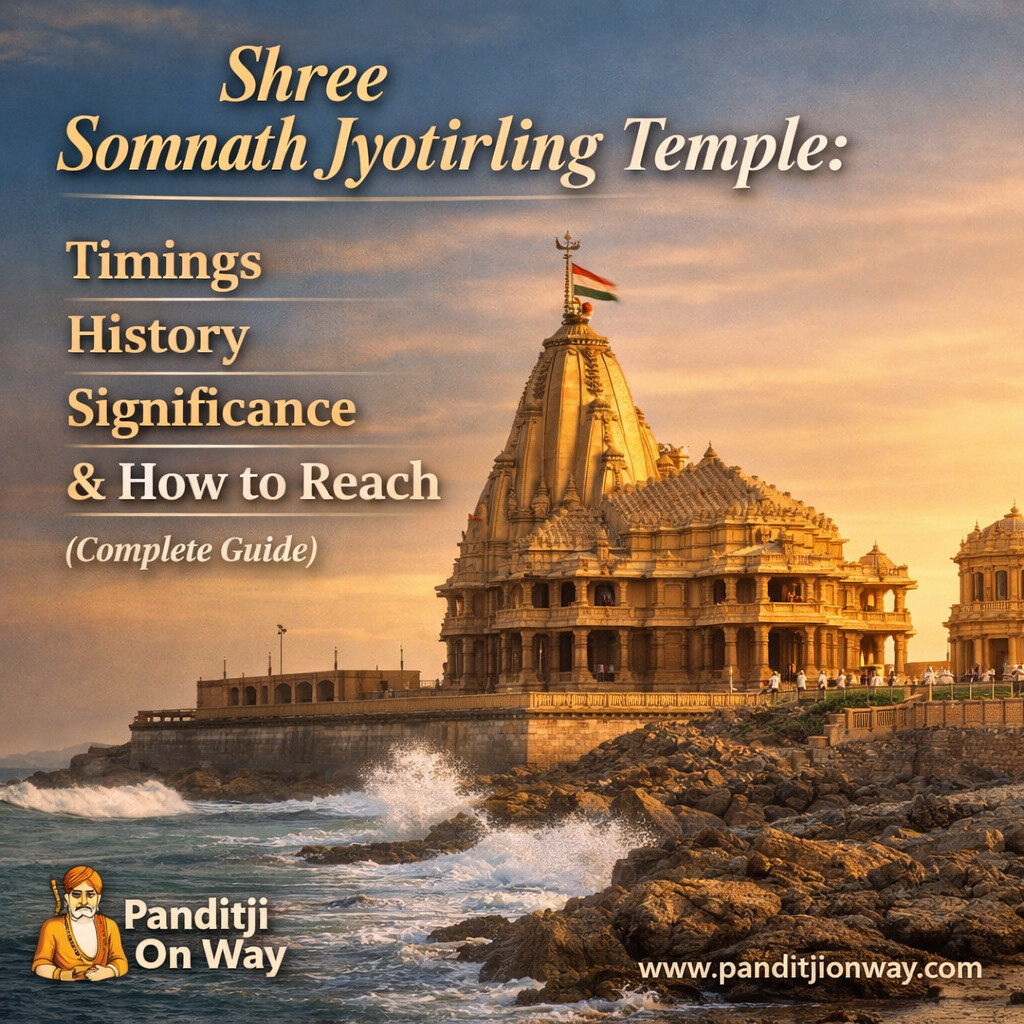
Shree Somnath Jyotirling Temple: Timings, History, Significance & How to Reach (Complete Guide)
Shree Somnath Jyotirling Temple is one of the 12 sacred Jyotirlingas of Lord Shiva and the first among all Jyotirlinga shrines. Located on the shores of the Arabian Sea in Gujarat, this ancient temple is a timeless symbol of faith, resilience, and Sanatan Dharma.
Known for its repeated destruction and glorious reconstruction, Somnath Temple stands today as one of India’s most revered pilgrimage destinations, attracting millions of devotees from India and across the world.
About Shree Somnath Jyotirlinga Temple (Detailed & Elaborated Guide)
Somnath Jyotirlinga Temple is not only a sacred Hindu shrine but also a living symbol of Sanatan Dharma’s eternity, resilience, and spiritual supremacy. Revered as the first among the twelve Jyotirlingas of Lord Shiva, Somnath holds an unmatched position in Hindu theology, history, and collective consciousness.
Located at Prabhas Kshetra, where the Arabian Sea meets the western coast of India, the temple is believed to be the very place where Lord Shiva manifested as an endless pillar of divine light (Jyoti), establishing it as the Adi Jyotirlinga.
Why Somnath Jyotirlinga Is Spiritually Supreme
Somnath is regarded as the foundation stone of all Jyotirlinga worship. According to ancient scriptures:
- Lord Shiva appeared here in his formless, infinite light
- This manifestation symbolized creation, preservation, and dissolution
- The Jyotirlinga represents the cosmic axis of the universe
Devotees believe that worship at Somnath:
- Cleanses accumulated karma
- Grants spiritual awakening
- Bestows inner peace and divine protection
The temple is often described as a gateway to moksha (liberation) for sincere seekers.
Meaning of the Name “Somnath”
The name Somnath means “Lord of the Moon”:
- Soma = Moon
- Nath = Lord
This directly connects the temple to the famous legend of Chandra (Moon God), whose lost radiance was restored after worshipping Lord Shiva at this sacred site. Even today, devotees associate Somnath with healing, renewal, and cyclical rebirth, just like the waxing and waning of the moon.
Architectural Grandeur of Somnath Temple
The present structure of Somnath Temple is built in the Chalukya (Solanki) style of architecture, reflecting ancient Indian craftsmanship.
Key architectural highlights:
- Honey-coloured sandstone construction
- Intricately carved pillars and ceilings
- Massive shikhara (spire) rising over 150 feet
- Sacred Kalash weighing several tons at the top
- Temple aligned with the sea, symbolizing cosmic infinity
The temple complex is designed to channel spiritual vibrations, making the experience deeply meditative even for first-time visitors.
Somnath Temple and Indian Civilization
Somnath is not merely a religious structure; it is a historical chronicle carved in stone.
- Mentioned in Rig Veda, Skanda Purana, and Shiv Purana
- Witnessed the rise and fall of empires
- Destroyed and rebuilt multiple times
- Emerged stronger after every invasion
Each reconstruction symbolizes India’s refusal to let faith perish, making Somnath a monument of civilizational continuity rather than just devotion.
Why Somnath Temple Is Called Eternal
Despite repeated destruction across centuries, Somnath:
- Never lost its spiritual relevance
- Continued to attract saints, scholars, and pilgrims
- Became a rallying symbol for cultural revival
The reconstruction in 1951 restored not just a temple but the collective spiritual pride of India.
Somnath teaches that faith cannot be erased, only reborn.
Somnath Jyotirlinga and Cosmic Energy Belief
Many devotees and spiritual practitioners believe:
- Somnath lies on a powerful energy axis
- The sound of waves combined with Vedic chants amplifies meditation
- The Jyotirlinga emits subtle spiritual vibrations
This is why saints describe Somnath as a place where earthly and cosmic energies merge.
Role of Somnath in Pilgrimage Circuits
Somnath is a crucial part of:
- 12 Jyotirlinga Yatra
- Dwarka–Somnath pilgrimage route
- Gujarat spiritual tourism circuit
Pilgrims often begin or conclude their Jyotirlinga journey at Somnath, believing it completes the spiritual cycle.
Somnath Temple Today
Today, Somnath stands as:
- A fully active temple with daily rituals
- A global pilgrimage destination
- A center of spiritual learning and devotion
- A symbol of India’s timeless faith
Millions of devotees visit Somnath annually to:
- Perform Abhishek and special pujas
- Seek blessings for health, peace, and prosperity
- Experience divine serenity by the Arabian Sea
Shree Somnath Jyotirlinga Temple, located in Veraval, Gujarat, is the first and most sacred Jyotirlinga of Lord Shiva. Known for its divine origin, architectural brilliance, and history of resilience, Somnath represents eternal faith, cosmic energy, and the unbroken spiritual heritage of India.

Somnath Temple Timings – Complete & Detailed Guide for Devotees
The Somnath Jyotirlinga Temple follows a strictly organized daily schedule that allows devotees to experience peaceful darshan, sacred aartis, and spiritual programs throughout the day. Understanding the exact timings helps pilgrims plan their visit efficiently and avoid peak crowd hours.
Somnath Temple remains one of the best-managed Jyotirlinga temples in India, ensuring smooth darshan even during heavy pilgrim seasons.
Daily Darshan Timings of Somnath Temple
| Activity | Time |
|---|---|
| Temple Opening Time | 6:00 AM |
| Morning Darshan | 6:00 AM – 12:00 PM |
| Afternoon Darshan | 12:00 PM – 6:00 PM |
| Evening Darshan | 6:00 PM – 9:30 PM |
| Temple Closing Time | 10:00 PM |
Average Darshan Duration:
- Normal days: 30 minutes
- Weekends/Festivals: 1–2 hours
Best Time for Peaceful Darshan:
- Early morning (6:00 AM – 8:00 AM)
- Late evening after 8:30 PM
Somnath Temple Aarti Timings (Detailed)
Aarti at Somnath Temple is a deeply spiritual experience accompanied by Vedic chants, bells, and devotional music.
1. Mangala Aarti (Morning Aarti)
- Time: 7:00 AM
- Significance: Awakening Lord Shiva and seeking blessings for a positive day
- Best for: Devotees seeking peace, clarity, and divine protection
2. Madhyan Aarti (Afternoon Aarti)
- Time: 12:00 PM
- Significance: Offering gratitude to Lord Shiva for life’s sustenance
- Best for: Families and senior citizens due to moderate crowd
3. Sandhya Aarti (Evening Aarti)
- Time: 7:00 PM
- Significance: Most powerful aarti, performed as the sun sets over the Arabian Sea
- Best for: Spiritual seekers and first-time visitors
⮞ Entry to aarti areas may be regulated during peak days.
Somnath Temple Light & Sound Show Timings
- Show Time: 8:00 PM – 9:00 PM
- Frequency: Daily
- Language: Hindi (English summaries available)
The light and sound show narrates:
- The divine origin of Somnath Jyotirlinga
- Historical invasions and reconstructions
- Spiritual and cultural significance of the temple
This show is highly recommended for visitors who want a complete spiritual and historical understanding of Somnath.
Special Timings During Festivals & Shravan Month
During major occasions like:
- Mahashivratri
- Shravan Maas
- Somnath Mahotsav
- Diwali & Mondays
The temple may:
- Open earlier than 6:00 AM
- Extend darshan hours late into the night
- Introduce special aartis and abhishek slots
⮞ Festival schedules are announced separately by the temple trust.
Somnath Temple Abhishek & Puja Timing Insights
- Abhishek rituals are performed during specific slots allotted by temple authorities
- Advance booking is recommended during weekends and festivals
- Morning hours are considered most auspicious for Abhishek
Devotees performing Rudrabhishek or special pujas are advised to reach the temple at least 45 minutes earlier than their allotted time.
Weekly Crowd Pattern at Somnath Temple
| Day | Crowd Level |
|---|---|
| Monday | Very High |
| Tuesday–Thursday | Moderate |
| Friday | Moderate to High |
| Saturday–Sunday | Very High |
Best Day to Visit:
- Tuesday or Wednesday for quick darshan and calm atmosphere
Important Guidelines Related to Timings
- Entry gates may close 30 minutes before temple closing time
- Late-night darshan is not allowed after 9:30 PM
- Security checks may increase waiting time
- Phones, electronics, leather items are prohibited
Somnath Jyotirlinga Temple opens daily at 6:00 AM and closes at 10:00 PM. Darshan is available from 6:00 AM to 9:30 PM, with three daily aartis at 7:00 AM, 12:00 PM, and 7:00 PM. The famous light and sound show runs from 8:00 PM to 9:00 PM every evening. Early mornings and weekdays offer the most peaceful darshan experience.
Spiritual Significance of Shree Somnath Jyotirlinga Temple (In-Depth Explanation)
Somnath Jyotirlinga Temple holds a supreme spiritual position in Hinduism as the first and most ancient Jyotirlinga of Lord Shiva. More than a place of worship, Somnath is regarded as a cosmic power center where divine energy, natural elements, and human consciousness converge.
For seekers, saints, and devotees, Somnath is a gateway to inner awakening, karmic purification, and spiritual liberation.
Somnath as the Adi Jyotirlinga (First Manifestation of Shiva)
According to sacred texts such as the Shiva Purana and Skanda Purana, Lord Shiva manifested at Somnath as an endless column of divine light (Jyoti) to resolve the cosmic conflict between Brahma and Vishnu.
This manifestation:
- Proved Shiva’s supremacy beyond form and time
- Established Somnath as the origin point of Jyotirlinga worship
- Symbolized the infinite, formless nature of the Supreme Consciousness
Because it is the Adi Jyotirlinga, Somnath is believed to carry the combined spiritual potency of all 12 Jyotirlingas.
Representation of the Cosmic Trinity
Somnath uniquely represents the Trimurti:
- Brahma – Creation
- Vishnu – Preservation
- Shiva – Transformation
Ancient belief states that Shiva manifested here in three divine aspects simultaneously, making Somnath a rare site where the entire cosmic cycle is worshipped in one place.
Connection with Chandra (Moon God) and Healing Energy
Somnath is inseparably linked to Chandra (Moon God). After being cursed and losing his radiance, Chandra performed severe penance here.
Pleased by his devotion, Lord Shiva restored the moon’s glow.
Spiritual implications:
- Somnath is associated with emotional healing and mental balance
- Devotees believe worship here calms the mind and stabilizes emotions
- Particularly beneficial for people suffering from anxiety, stress, or mental unrest
The moon’s waxing and waning cycle is symbolically linked to rebirth and renewal, making Somnath ideal for spiritual rejuvenation.
A Place for Karmic Purification
Somnath is believed to be a powerful karmic cleansing center.
Devotees perform:
- Abhishek for removal of past-life karma
- Rudrabhishek for liberation from negative energies
- Pitra-related rituals near Triveni Sangam
It is believed that sincere prayers at Somnath help dissolve:
- Ancestral karmic debts
- Planetary afflictions
- Repeated life obstacles
Union of the Five Elements (Pancha Tattva)
Somnath is one of the rare temples where all five natural elements are present in perfect harmony:
- Earth – Sacred land of Prabhas Kshetra
- Water – Arabian Sea & Triveni Sangam
- Fire – Jyoti of the Shivlinga
- Air – Coastal breeze enhancing prana flow
- Space – Vast open sea symbolizing infinity
This elemental balance is believed to amplify spiritual experiences and deepen meditation.
Somnath and Moksha (Liberation)
Scriptures describe Somnath as a moksha-kshetra:
- A place where devotees attain freedom from the cycle of birth and death
- A sacred zone where prayers reach Shiva instantly
Saints believe that:
- Chanting Om Namah Shivaya here accelerates spiritual progress
- Death or final rites near Somnath grant liberation
Spiritual Power of Aarti and Mantras
The rhythmic chanting of Vedic mantras combined with:
- Ocean waves
- Temple bells
- Collective devotion
creates a high-frequency spiritual environment. Evening aarti at Somnath is considered one of the most energetically charged spiritual experiences in India.
Somnath as a Symbol of Faith and Dharma
Beyond metaphysical belief, Somnath teaches:
- Devotion outlives destruction
- Dharma rises after adversity
- Spiritual truth cannot be erased
Each reconstruction of the temple reinforces the belief that divine consciousness is eternal.
Why Saints & Yogis Are Drawn to Somnath
Historically, sages, yogis, and ascetics visited Somnath to:
- Perform penance
- Experience heightened meditation
- Absorb Shiva tattva (Shiva consciousness)
Even today, many spiritual practitioners describe Somnath as a place where meditation becomes effortless.
The spiritual significance of Somnath Temple lies in its identity as the first Jyotirlinga of Lord Shiva. Known for karmic purification, emotional healing, and liberation, Somnath represents cosmic balance, eternal faith, and the formless divine light of Shiva.
Popular Pujas at Somnath Jyotirlinga
Rudrabhishek Puja
One of the most powerful rituals performed at Somnath.
Benefits
- Removes obstacles
- Brings peace and prosperity
- Reduces negative energies
- Improves health and relationships
Kaal Sarp Dosh Nivaran Puja
Performed for relief from planetary doshas caused by Rahu and Ketu.
Benefits
- Career and financial stability
- Delays in marriage resolved
- Mental peace and growth
Rin Mukti Puja (Debt Relief)
Highly recommended for those facing financial stress.
Benefits
- Gradual debt clearance
- New income opportunities
- Business stability
Navagraha Shanti Puja
Balances the influence of all nine planets.
Benefits
- Career growth
- Improved education
- Health and mental clarity
History of Shree Somnath Jyotirlinga Temple (Detailed & Chronological Account)
The history of Somnath Jyotirlinga Temple is one of the most extraordinary and powerful narratives in Indian civilization. It is not merely the story of a temple but a chronicle of Sanatan Dharma itself—marked by faith, destruction, resilience, and rebirth over thousands of years.
Somnath stands as a timeless witness to India’s spiritual continuity, having risen repeatedly from ruins without ever losing its divine essence.
Ancient Origins: The First Sacred Shrine of Shiva
According to Hindu scriptures such as the Rig Veda, Skanda Purana, and Shiva Purana, Somnath is the earliest sacred abode of Lord Shiva on Earth.
- It is believed that Lord Shiva manifested here as the first Jyotirlinga
- This made Somnath the Adi Jyotirlinga, the origin point of all Jyotirlinga worship
- The temple site was already revered thousands of years before recorded history
Ancient sages described Somnath as a cosmic energy center, where divine consciousness descended into the physical realm.
Mythological Construction Timeline
Hindu tradition narrates a symbolic sequence of reconstructions that reflect the evolution of time:
- Chandra (Moon God) built the first temple in gold
- Ravana, king of Lanka, rebuilt it in silver
- Lord Krishna reconstructed it using wood
- King Bhimdeva of the Solanki dynasty built the first stone temple
This progression represents the changing Yugas and the eternal renewal of faith.
Somnath During Ancient and Classical India
By the early centuries CE, Somnath had become:
- One of the wealthiest and most influential temples in India
- A major center of Vedic learning and Shaivite philosophy
- A pilgrimage destination for scholars, saints, and kings
Historical records suggest that Somnath housed:
- Vast libraries
- Gold and jewel offerings
- Endowments from multiple dynasties
Its prosperity made it both spiritually revered and politically significant.
Repeated Destruction: Trials of Faith
From the 8th century onwards, Somnath faced repeated invasions:
- 1026 CE: Mahmud of Ghazni attacked and destroyed the temple
- Several subsequent invasions over centuries caused repeated damage
- Each time, local Hindu rulers and devotees rebuilt the temple
Despite severe destruction, the Jyotirlinga worship never ceased. Temporary shrines were established whenever the main structure was damaged.
Traditionally, it is believed that Somnath was destroyed and rebuilt 17 times, making it one of the most targeted yet indestructible spiritual centers in the world.
Somnath as a Symbol of Cultural Resistance
Unlike ordinary monuments, Somnath became:
- A symbol of religious identity
- A rallying point for cultural revival
- Proof that faith survives violence
For centuries, devotees protected the sacred site, preserved oral traditions, and ensured continuity of rituals even during periods of suppression.
Colonial Era and Spiritual Revival
During British rule:
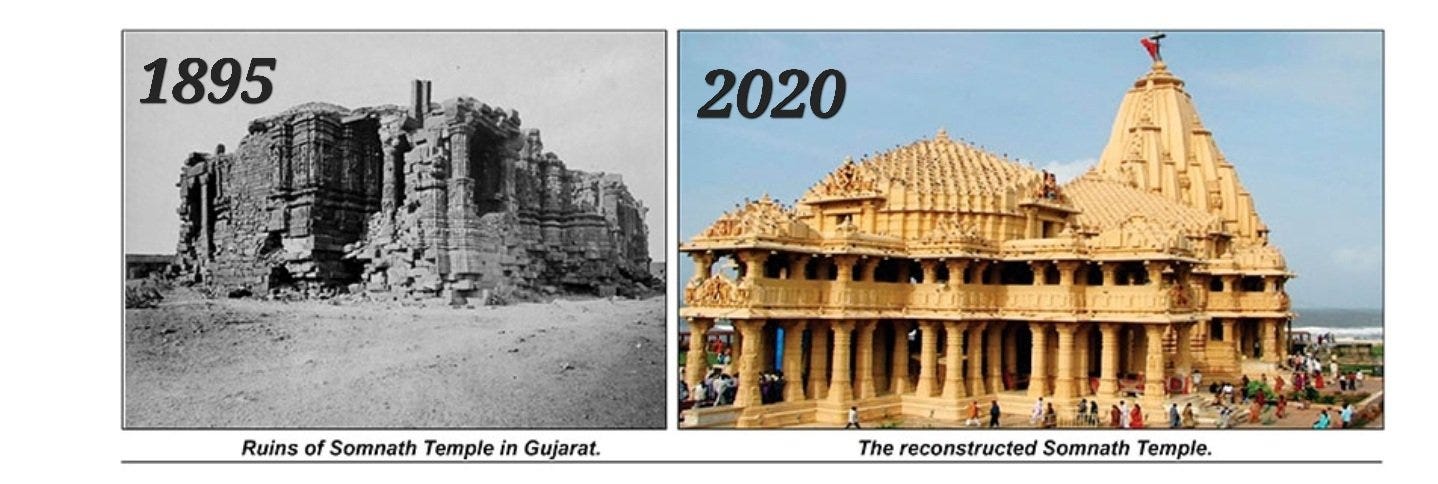
- Somnath remained in a dilapidated state
- However, it continued to attract pilgrims
- Saints and spiritual leaders advocated its restoration
The temple became a symbol of India’s spiritual awakening in the early 20th century.
Modern Reconstruction (1951): Rebirth of Somnath
After India’s independence:
- The decision was made to fully reconstruct Somnath
- The temple was rebuilt in 1951 in the Chalukya (Solanki) architectural style
- The reconstruction was funded entirely by public donations
This restoration was not just architectural—it marked the revival of India’s spiritual self-confidence.
Architectural Continuity with Ancient Traditions
The modern Somnath temple was designed to:
- Reflect ancient temple geometry
- Preserve Vedic proportions
- Align with cosmic and geographical principles
Despite being a modern reconstruction, it retains the soul and sanctity of the ancient shrine.
Somnath Today: Living History
Today, Somnath stands as:
- A fully active Jyotirlinga temple
- A national heritage symbol
- A living example of faith triumphing over adversity
Daily rituals, Vedic chanting, and pilgrimages continue uninterrupted, just as they have for millennia.
Why Somnath’s History Is Unique in the World
Very few sacred sites in global history:
- Have been destroyed repeatedly
- Rebuilt with unwavering devotion
- Retained continuous spiritual relevance
Somnath is not remembered for its destruction—but for its resurrection.
The history of Somnath Jyotirlinga Temple spans thousands of years, marked by repeated destruction and reconstruction. As the first Jyotirlinga of Lord Shiva, Somnath symbolizes eternal faith, cultural resilience, and the unbroken continuity of Sanatan Dharma in India.

Legend Behind Shree Somnath Jyotirlinga (Detailed Mythological Explanation)
The legend behind Shree Somnath Jyotirlinga is one of the most profound and spiritually symbolic stories in Hindu mythology, explaining not only the origin of this sacred shrine but also the cosmic rhythm of time, karma, devotion, and renewal.
Somnath Jyotirlinga Temple derives its divine name, purpose, and spiritual power directly from this ancient legend recorded in the Shiva Purana, Skanda Purana, and other sacred texts.
The Story of Chandra (Moon God) and the Curse
According to Hindu scriptures, Chandra Dev (the Moon God) married 27 daughters of Prajapati Daksha, each representing one of the 27 Nakshatras (lunar constellations).
However:
- Chandra loved Rohini more than his other wives
- This favoritism deeply angered Prajapati Daksha
- Despite repeated warnings, Chandra did not change his behavior
Enraged by this injustice, Daksha cursed Chandra with gradual loss of his divine radiance, causing the moon to fade day by day.
Cosmic Imbalance Caused by the Curse
As Chandra lost his glow:
- Nights became darker
- Tides became unstable
- Medicinal plants lost potency
- Human minds suffered imbalance
The universe began to lose harmony because the Moon governs:
- Time (Kala)
- Emotions and mind
- Growth and nourishment
Seeing the cosmic disorder, the Devas approached Lord Brahma and Lord Vishnu, who advised Chandra to seek refuge in Lord Shiva, the ultimate destroyer of karma and giver of grace.
Chandra’s Penance at Prabhas Kshetra
Guided by divine wisdom, Chandra reached Prabhas Kshetra, the sacred land where Somnath now stands.
Here, he:
- Installed a Shivlinga
- Performed intense penance
- Chanted Shiva mantras continuously
- Observed strict austerities
Moved by his devotion, Lord Shiva manifested as a radiant pillar of divine light (Jyoti) at this very spot.
This manifestation became the Somnath Jyotirlinga, the first Jyotirlinga on Earth.
Lord Shiva as Somnath – Protector of the Moon
Pleased with Chandra’s surrender, Lord Shiva:
- Reduced the severity of the curse
- Restored Chandra’s radiance partially
- Established the cycle of waxing and waning of the moon
This is why:
- The moon regains brightness every fortnight
- Time moves in rhythmic cycles
- Life follows birth, decay, and renewal
From that moment, Lord Shiva was worshipped here as Somnath – “The Lord of the Moon.”
Spiritual Symbolism of the Legend
This legend conveys deep spiritual truths:
- Pride leads to downfall (Chandra’s favoritism)
- Surrender leads to grace (penance at Somnath)
- Even divine curses can be softened by devotion
- Life moves in cycles, not permanence
Somnath thus represents healing, renewal, and second chances.
Connection with the Ocean and Tides
It is believed that after regaining his radiance, Chandra:
- Bathed in the sacred waters near Somnath
- Blessed the region with lunar energy
This explains why:
- Somnath lies beside the Arabian Sea
- Moon cycles influence tides strongly here
- The place is considered energetically powerful
Devotees believe worship at Somnath stabilizes:
- Emotional disturbances
- Mental stress
- Hormonal and psychological imbalances
Somnath and the Concept of Time (Kala)
In Hindu philosophy:
- Moon controls Manas (mind)
- Shiva controls Kala (time)
Somnath is where mind surrenders to time, and time bows to divine consciousness. This makes Somnath a sacred place for:
- Mental peace
- Karmic release
- Breaking repetitive life patterns
Why This Legend Makes Somnath Unique Among Jyotirlingas
Unlike other Jyotirlingas:
- Somnath is directly linked to cosmic order
- It governs time, mind, and cycles
- It explains natural phenomena spiritually
This is why Somnath is considered the spiritual starting point of the Jyotirlinga tradition.
The legend behind Somnath Jyotirlinga tells the story of Chandra, the Moon God, who was cursed to lose his radiance and later restored through devotion to Lord Shiva at Prabhas Kshetra. This divine event led to the manifestation of the first Jyotirlinga, establishing Somnath as a symbol of healing, renewal, and cosmic balance.

Best Time to Visit Shree Somnath Jyotirlinga Temple (Complete Seasonal & Timing Guide)
Visiting Somnath Jyotirlinga Temple at the right time can greatly enhance your darshan experience, spiritual connection, and overall comfort. While the temple remains open throughout the year, certain seasons, months, days, and time slots are considered more favorable for devotees and pilgrims.
Below is a detailed, optimized guide to help you plan the most peaceful and spiritually fulfilling visit to Somnath Temple.
Best Season to Visit Somnath Temple
Winter Season (October to March) – Most Recommended
Winter is widely regarded as the best time to visit Somnath Temple.
Why winter is ideal:
- Pleasant temperature ranging between 12°C to 28°C
- Comfortable weather for darshan, temple parikrama, and sightseeing
- Ideal for early morning and evening aarti
- Perfect for coastal walks along Somnath Beach
Winter also aligns with major Hindu festivals, making the spiritual ambiance even more vibrant.
Best months:
October, November, December, January, February
Summer Season (April to June) – Less Preferred
Summers in Somnath can be hot and humid, especially during afternoons.
What to expect:
- Temperature may rise up to 40°C
- Midday darshan can be tiring
- Early morning and late evening visits are still manageable
Tip: If visiting in summer, plan darshan between 6:00 AM – 8:30 AM or after 6:30 PM.
Monsoon Season (July to September) – Spiritually Calm
Monsoon offers a serene and less crowded experience.
Advantages:
- Refreshing greenery around the temple
- Fewer tourists
- Deeply peaceful atmosphere for meditation
Considerations:
- Occasional heavy rains
- Sea waves can be rough
- Outdoor sightseeing may be limited
Monsoon is ideal for devotees seeking solitude and introspection.
Best Month to Visit Somnath Temple
| Month | Experience |
|---|---|
| October – March | Best weather & comfort |
| February – March | Maha Shivratri celebrations |
| July – August | Spiritual calm, fewer crowds |
| April – June | Hot but manageable mornings |
Best Day of the Week for Darshan
- Weekdays (Monday to Thursday): Least crowded, peaceful darshan
- Mondays: Spiritually powerful but more crowded
- Weekends: Heavy rush, longer waiting time
Recommendation: Visit on a weekday morning for the smoothest darshan.
Best Time of Day to Visit Somnath Temple
Early Morning (6:00 AM – 8:00 AM) – Most Peaceful
- Minimal crowd
- Ideal for meditation and Abhishek
- Fresh spiritual energy
Evening (6:30 PM – 8:00 PM) – Most Divine
- Sandhya Aarti at 7:00 PM
- Stunning sunset view over the Arabian Sea
- Highly charged spiritual vibrations
Night (8:00 PM – 9:00 PM)
- Light and Sound Show
- Calm, reflective environment
- Good for spiritual contemplation
Best Time for Special Occasions & Festivals
- Maha Shivratri: Most sacred time, grand celebrations
- Shravan Month (July–August): Highly auspicious for Shiva devotees
- Kartik Purnima: Powerful for spiritual merit
Note: Festivals bring heavy crowds—plan accordingly.
Best Time for Spiritual Seekers & Meditation
For those seeking deep spiritual experiences:
- Visit during monsoon weekdays
- Attend early morning Mangala Aarti
- Spend time near Somnath Beach during sunrise
The blend of mantras, ocean waves, and temple bells creates a naturally meditative state.
Best Time for Family & Senior Citizens
- Winter mornings and evenings are safest
- Avoid summer afternoons
- Use temple facilities for seating and resting
The best time to visit Somnath Temple is during the winter season from October to March due to pleasant weather and comfortable darshan conditions. Early morning and evening hours are ideal for peaceful worship, while weekdays offer shorter waiting times.
Quick Planning Tips
- Check weather forecast before travel
- Book accommodation early during festivals
- Prefer weekday visits
- Avoid afternoon darshan in summer

How to Reach Shree Somnath Jyotirlinga Temple (Detailed Travel Guide)
Reaching Somnath Jyotirlinga Temple is convenient and well-planned due to Gujarat’s strong transport infrastructure. Located in Veraval town of the Saurashtra region, Somnath is easily accessible by road, rail, and air, making it ideal for pilgrims, senior citizens, and international travelers alike.
Below is a comprehensive, step-by-step travel guide to help you plan a smooth and stress-free journey to Somnath Temple.
📍 Location Overview
- City/Town: Veraval
- District: Gir Somnath
- State: Gujarat
- Region: Saurashtra
- Coastal Landmark: Arabian Sea (Temple faces the sea)
Somnath lies close to major pilgrimage circuits such as Dwarka–Somnath–Gir–Diu, making it a preferred spiritual stop.
🚗 How to Reach Somnath Temple by Road
Somnath is excellently connected by national and state highways, making road travel one of the most popular options.
Major Road Distances
- Ahmedabad → Somnath: ~400 km (8–9 hours)
- Rajkot → Somnath: ~214 km (5–6 hours)
- Dwarka → Somnath: ~230 km (6–7 hours)
- Porbandar → Somnath: ~130 km (4 hours)
- Junagadh → Somnath: ~85 km (2–3 hours)
Road Travel Options
- Gujarat State Transport (GSRTC) buses
- Luxury & Volvo buses from Ahmedabad, Rajkot, Dwarka
- Private taxis and self-drive cars
✔ Roads are smooth, scenic, and well-marked
✔ Parking facilities available near the temple
✔ Ideal for family and group travel
Tip: Road travel is best for pilgrims planning multi-temple yatra.
How to Reach Somnath Temple by Train
Train travel is one of the most economical and convenient ways to reach Somnath.
Nearest Railway Station
- Veraval Railway Station (VRL) – approx. 7 km from Somnath Temple
Direct Train Connectivity
- Ahmedabad
- Rajkot
- Dwarka
- Mumbai (via Somnath Express)
Popular Train
- Somnath Express (Ahmedabad–Veraval) – widely used by pilgrims
From Veraval Railway Station:
- Auto-rickshaws
- Taxis
- Local buses
✔ Travel time from station to temple: 15–20 minutes
✈️ How to Reach Somnath Temple by Air
Air travel is suitable for outstation and international devotees.
Nearest Airport
- Diu Airport – approx. 85 km from Somnath
Other Major Airports
- Rajkot Airport – ~195 km
- Ahmedabad Airport – ~410 km
From the airport:
- Prepaid taxis
- Private cabs
- Bus services via Veraval
✔ Diu Airport offers scenic coastal travel
✔ Ahmedabad Airport has maximum domestic & international connectivity
Last-Mile Connectivity to the Temple
Once you reach Veraval or Somnath town:
- Auto-rickshaws are easily available
- E-rickshaws operate near temple zone
- Many hotels offer temple drop services
The temple area is pedestrian-friendly, with clear signage for devotees.
Travel Tips for Pilgrims (Highly Recommended)
- Prefer early morning arrival for peaceful darshan
- Avoid weekends & major festivals if crowd-sensitive
- Senior citizens should opt for road + taxi combo
- Keep ID proof handy for security checks
- Do not carry mobile phones or electronic devices inside
Pilgrimage Route Suggestions
- Dwarka → Somnath → Gir → Diu (Most popular)
- Ahmedabad → Junagadh → Somnath
- Rajkot → Porbandar → Somnath
These routes enhance both spiritual and cultural tourism.
Shree Somnath Jyotirlinga Temple in Veraval, Gujarat, is easily accessible by road, rail, and air. The nearest railway station is Veraval (7 km), and the closest airport is Diu (85 km). Well-connected highways, frequent trains, and local transport make Somnath a convenient pilgrimage destination for devotees from across India and abroad.
Places to Visit Near Shree Somnath Jyotirlinga Temple (Detailed & Spiritual Travel Guide)
A visit to Somnath Jyotirlinga Temple becomes far more meaningful when you explore the sacred, historical, and scenic places nearby. The region around Somnath is spiritually dense, deeply rooted in Hindu mythology, and enriched with coastal beauty.
Below is a comprehensive and elaborated guide to the most important places to visit near Somnath Temple, ideal for pilgrims, families, and spiritual seekers.
1. Bhalka Tirtha
Distance: ~5 km from Somnath Temple
Bhalka Tirtha is one of the most sacred Krishna-related sites in India. According to legend, this is the place where Lord Krishna was accidentally struck by a hunter’s arrow, marking the end of his earthly incarnation.
Spiritual Importance
- Marks the divine departure of Lord Krishna
- Considered a highly auspicious place for prayer and reflection
- Devotees seek blessings for moksha and spiritual clarity
Key Attractions
- Mahaprabhuji Baithak Temple
- Sacred Peepal Tree
- Peaceful meditation atmosphere
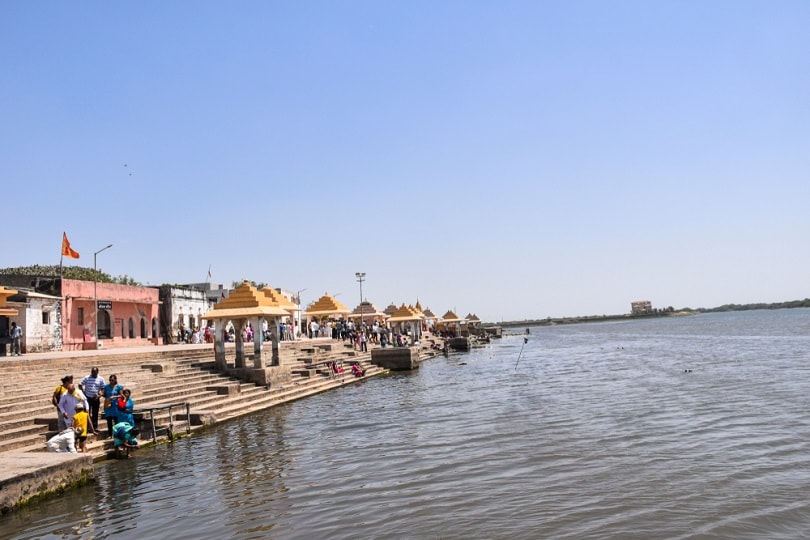
2. Triveni Sangam
Distance: ~1 km from Somnath Temple
Triveni Sangam is the confluence of three holy rivers—Hiran, Kapila, and Saraswati. It is considered extremely sacred in Hinduism.
Religious Significance
- Ideal for snan (holy dip)
- Pitra Tarpan and ancestral rituals performed here
- Believed to cleanse sins and negative karma
Nearby Temples
- Gita Mandir
- Lakshminarayan Temple
3. Somnath Beach
Distance: Walking distance from temple
Somnath Beach offers a serene coastal experience alongside spiritual tranquility. The sight of the Arabian Sea beside the ancient temple creates a powerful spiritual aura.
Why Visit
- Peaceful sunrise and sunset views
- Ideal for relaxation after darshan
- Local shopping and camel rides available
⚠️ Swimming is not advised due to strong sea currents.
4. Dehotsarg Tirtha
Distance: ~1.5 km from Somnath Temple
Dehotsarg Tirtha is believed to be the place where Lord Krishna left his mortal body and ascended to Vaikuntha.
Why It’s Sacred
- Marks Krishna’s final earthly moment
- Footprint of Lord Krishna worshipped
- Baldev Gufa nearby enhances mythological depth
This site is deeply revered by Vaishnav devotees and pilgrims.
5. Panch Pandav Gufa
Distance: ~1.5 km from Somnath Temple
Panch Pandav Gufa is a cave temple believed to have been used by the Pandavas during their exile.
Highlights
- Ancient cave structure
- Idols of Lord Shiva and Lord Rama
- Elevated view of the city and Arabian Sea
Founded by Baba Narayandas in 1949, this site blends spirituality with scenic beauty.
6. Gita Mandir
This temple houses inscriptions of the Bhagavad Gita on its walls and pillars, making it a place of learning and contemplation.
Why Visit
- Spiritual wisdom through scripture
- Calm environment for meditation
- Ideal stop near Triveni Sangam
7. Somnath Museum
Managed by the Archaeological Survey, the Somnath Museum displays:
- Ancient temple remains
- Sculptures and inscriptions
- Historical evidence of temple reconstructions
A must-visit for those interested in history and archaeology.
Other Notable Places Near Somnath
- Ahilyabai Temple
- Sun Temple
- Prachi Tirth
- Gauri Kund
- Rudreshwar Mahadev Temple
- Old Jain Temples
- Bhadrakali Rock Inscription
- Veraval Gate
Each site adds another layer of mythological, architectural, or cultural richness to your Somnath journey.
Suggested 1-Day Local Itinerary
Morning:
Somnath Temple Darshan → Triveni Sangam → Gita Mandir
Afternoon:
Bhalka Tirtha → Somnath Museum
Evening:
Somnath Beach → Light & Sound Show → Panch Pandav Gufa
Places to visit near Somnath Temple include Bhalka Tirtha, Triveni Sangam, Somnath Beach, Dehotsarg Tirtha, and Panch Pandav Gufa. These sites offer a unique blend of spiritual sanctity, mythological importance, and coastal beauty, making Somnath a complete pilgrimage and cultural destination.
Essential Visitor Guidelines for Shree Somnath Jyotirlinga Temple (Detailed Guide)
Visiting Somnath Jyotirlinga Temple is a deeply spiritual experience. To maintain the sanctity, safety, and smooth flow of devotees, the temple trust follows strict guidelines. Understanding these rules in advance helps devotees focus on devotion without inconvenience.
Below is a complete, elaborated guide covering everything a visitor must know before entering Somnath Temple.
1. Dress Code – Modesty Is Mandatory
Somnath is one of the holiest Jyotirlingas; hence, traditional and modest attire is compulsory.
Recommended Clothing
- Men: Dhoti, kurta, pajama, or full-length trousers
- Women: Saree, salwar-kameez, or long traditional dresses
Not Allowed
- Shorts, mini skirts
- Sleeveless tops
- Transparent or revealing clothes
✔ Modest dressing shows respect to Lord Shiva and temple traditions
✔ Shawls are advised if clothing is borderline
2. Footwear Policy
- Shoes, slippers, sandals are strictly prohibited inside the temple premises
- Dedicated footwear stands are available outside the temple gates
✔ Carry minimal footwear for quick exit
✔ Avoid expensive shoes to prevent inconvenience
3. Mobile Phones & Electronic Items (Strictly Prohibited)
Somnath Temple enforces high-level security.
Items NOT Allowed Inside
- Mobile phones
- Smartwatches
- Bluetooth devices
- Cameras
- Power banks
- Wallets with electronics
- Car keys with remote systems
✔ Locker facilities are available near the entrance
✔ Violation may result in denial of entry
4. Photography & Videography Rules
- Photography and videography are strictly banned
- This rule applies inside and outside the main temple complex
✔ Helps maintain spiritual discipline
✔ Ensures uninterrupted darshan for all devotees
5. Security Checks & Entry Process
Somnath is among the most secure temples in India.
Security Measures
- Metal detectors
- Manual frisking
- Bag scanning
✔ Cooperation with security staff is mandatory
✔ Carry only essential items
6. Darshan Timing Strategy (Avoid Crowds)
To experience peaceful darshan:
- Best Time: 6:00 AM – 8:00 AM
- Moderate Crowd: Afternoon
- Heaviest Crowd: Evening aarti & weekends
✔ Weekdays are recommended
✔ Festival days witness heavy rush
7. Smoking, Alcohol & Intoxicants (Zero Tolerance)
- Smoking
- Alcohol consumption
- Chewing tobacco
❌ Strictly prohibited in and around the temple area
Violation may lead to legal action or entry ban.
8. Offerings & Puja Samagri
- Puja items are available inside the temple premises
- Outside offerings are discouraged
✔ Authorized counters ensure ritual purity
✔ Prevents crowding and security risks
9. Senior Citizens & Special Assistance
- Wheelchair access available in certain areas
- Priority assistance during off-peak hours
- Family members advised to accompany elderly devotees
✔ Early morning darshan is most comfortable for seniors
10. Cleanliness & Temple Discipline
Somnath Temple follows strict cleanliness standards.
Devotees Must
- Use dustbins
- Avoid spitting
- Maintain silence
- Follow queue system
✔ The temple is a spiritual zone, not a tourist spot
11. Parking & Local Facilities
- Designated parking areas available near the temple
- Auto-rickshaws and e-rickshaws operate nearby
- Hotels often provide drop services
✔ Reach early during peak seasons to secure parking
12. Festival & Special Day Guidelines
During festivals like:
- Mahashivratri
- Shravan Month
- Kartik Purnima
Additional rules may apply:
- Longer waiting times
- Extended security checks
- Restricted entry flow
✔ Plan accordingly and follow temple announcements
Visitors to Shree Somnath Jyotirlinga Temple must follow strict guidelines including modest dress code, prohibition of mobile phones and electronics, footwear restrictions, security checks, and cleanliness rules. These measures ensure safety, spiritual discipline, and a peaceful darshan experience for all devotees.
Final Advice for Devotees
A disciplined visit enhances spiritual fulfillment. By respecting Somnath Temple’s guidelines, devotees align themselves with the purity, sanctity, and divine energy of one of Hinduism’s most sacred shrines.
Frequently Asked Questions About Shree Somnath Jyotirlinga Temple
Q1. What is the spiritual significance of Somnath Jyotirlinga Temple?
Somnath Jyotirlinga Temple is spiritually significant because it is the first (Adi) Jyotirlinga of Lord Shiva, where Shiva manifested as an infinite pillar of divine light. Worship here is believed to cleanse past karma, grant mental peace, and help devotees progress toward moksha (liberation).
Q2. Why is Somnath called the first Jyotirlinga of Lord Shiva?
Somnath is called the first Jyotirlinga because, according to Hindu scriptures, this is the place where Lord Shiva first appeared as Jyoti (divine light) before manifesting at the other eleven Jyotirlinga sites across India.
Q3. Where is Somnath Temple located exactly?
Somnath Temple is located in Veraval town, Gir Somnath district, Gujarat, on the western coast of India, facing the Arabian Sea at a sacred place known as Prabhas Kshetra.
Q4. What are the Somnath Temple darshan timings?
Somnath Temple darshan timings are:
- Darshan: 6:00 AM to 9:30 PM
- Temple opens: 6:00 AM
- Temple closes: 10:00 PM
Darshan is available throughout the day with scheduled aartis.
Q5. What are the Somnath Temple aarti timings?
Somnath Temple aarti timings are:
- Morning (Mangala) Aarti: 7:00 AM
- Afternoon (Madhyan) Aarti: 12:00 PM
- Evening (Sandhya) Aarti: 7:00 PM
Q6. Is there a light and sound show at Somnath Temple?
Yes, Somnath Temple hosts a daily light and sound show from 8:00 PM to 9:00 PM, narrating the temple’s spiritual and historical journey.
Q7. What is the best time to visit Somnath Temple?
The best time to visit Somnath Temple is October to March, when the weather is pleasant. For peaceful darshan, early morning hours (6:00–8:00 AM) on weekdays are ideal.
Q8. How can I reach Somnath Temple by train?
The nearest railway station is Veraval Railway Station, located about 7 km from the temple. Veraval is well connected with Ahmedabad, Rajkot, Dwarka, and Mumbai through regular trains.
Q9. Which is the nearest airport to Somnath Temple?
The nearest airport to Somnath Temple is Diu Airport, approximately 85 km away. Rajkot and Ahmedabad airports are alternative options with wider connectivity.
Q10. Are mobile phones allowed inside Somnath Temple?
No, mobile phones, smartwatches, cameras, and electronic devices are strictly prohibited inside Somnath Temple. Locker facilities are available outside the temple premises.
Q11. Is there a dress code for Somnath Temple?
Yes, visitors must wear modest and traditional clothing. Shorts, sleeveless outfits, and revealing clothes are not allowed, as Somnath is a highly sacred Jyotirlinga shrine.
Q12. What pujas can be performed at Somnath Jyotirlinga?
Popular pujas at Somnath include:
- Rudrabhishek Puja
- Kaal Sarp Dosh Nivaran Puja
- Navagraha Shanti Puja
- Rin Mukti (Debt Relief) Puja
These rituals are believed to remove obstacles and bring peace and prosperity.
Q13. Why was Somnath Temple destroyed multiple times?
Somnath Temple was historically targeted during invasions due to its wealth and spiritual prominence. Despite being destroyed multiple times, it was rebuilt repeatedly, symbolizing the resilience of Hindu faith and culture.
Q14. What is the mythological story behind Somnath Jyotirlinga?
According to mythology, Chandra (Moon God) was cursed and lost his radiance. After praying to Lord Shiva at Somnath, his glow was restored. Hence, Shiva is worshipped here as Somnath – Lord of the Moon.
Q15. Is Somnath Temple a moksha-giving place?
Yes, Somnath is considered a moksha kshetra. Scriptures believe that sincere worship, mantra chanting, and rituals here help devotees attain spiritual liberation and freedom from rebirth.
Q16. Are senior citizens allowed special assistance at Somnath Temple?
Yes, Somnath Temple provides wheelchair access and assistance in certain areas. Early morning darshan is recommended for elderly devotees.
Q17. What places can be visited near Somnath Temple?
Popular places near Somnath include:
- Bhalka Tirtha
- Triveni Sangam
- Dehotsarg Tirtha
- Somnath Beach
- Gita Mandir
Q18. Is photography allowed inside Somnath Temple?
No, photography and videography are strictly prohibited inside the temple complex to maintain sanctity and security.
Q19. How much time is required for Somnath darshan?
On average, Somnath darshan takes 30 minutes to 1 hour, depending on crowd levels. During festivals, waiting time may increase.
Q20. Why is Somnath Temple considered so powerful?
Somnath Temple is considered powerful because it represents the formless, infinite Shiva consciousness, combines all five elements of nature, and is believed to radiate intense spiritual energy that transforms devotees internally.
Shree Somnath Jyotirlinga Temple in Veraval, Gujarat, is the first and most sacred Jyotirlinga of Lord Shiva. Known for its spiritual power, karmic purification, and history of resilience, Somnath offers darshan from 6:00 AM to 9:30 PM and is easily accessible by road, rail, and air.
Panditji on way:
👉 https://www.panditjionway.com (Pandit booking, puja services, astrology & rituals)
Conclusion
A visit to Somnath Jyotirlinga Temple is far more than a traditional pilgrimage—it is a profound spiritual journey into the heart of Sanatan Dharma. As the first and most sacred Jyotirlinga of Lord Shiva, Somnath embodies divine energy, timeless faith, and the unbreakable spirit of Hindu civilization.
From its powerful spiritual significance and ancient legends to its majestic seaside architecture and disciplined temple traditions, Somnath offers devotees an experience of inner peace, karmic purification, and spiritual elevation. The temple’s history of repeated destruction and rebirth stands as a living reminder that true faith is eternal and indestructible.
Whether you seek blessings, healing, liberation, or a deeper connection with Lord Shiva, Somnath Jyotirlinga Temple welcomes every devotee with divine grace. A well-planned visit, guided by proper knowledge and reverence, ensures that your darshan becomes a transformative and unforgettable experience.
May Lord Somnath bless your journey with peace, prosperity, and spiritual fulfillment.