

Powerful Maa Kali Mantras: Meaning, Benefits, Chanting Method, Beej Mantra & Complete Guide
Discover the most powerful Maa Kali Mantras with Sanskrit text, meanings, chanting rules, benefits, Beej Mantra, Japa Vidhi, FAQs and complete spiritual guidance,
Summary
Maa Kali is one of the most revered and powerful manifestations of the Divine Mother in Sanatana Dharma. She symbolizes the destruction of evil, ignorance, fear, and ego while guiding devotees toward inner strength, wisdom, and spiritual liberation. Chanting Maa Kali Mantras with devotion is believed to help cultivate courage, mental resilience, spiritual focus, and protection from negativity. This guide explains the meaning of Kali Mantras, their benefits, proper chanting methods, spiritual significance, and answers frequently asked questions based on Hindu traditions.
What is the Most Powerful Maa Kali Mantra?
One of the most commonly chanted mantras dedicated to Maa Kali is:
ॐ क्रीं कालिकायै नमः
Om Kreem Kalikayai Namah
This mantra is traditionally recited by devotees seeking courage, spiritual growth, inner transformation, and the blessings of Goddess Kali. It invokes her divine energy with reverence and surrender.


Quick Information Table
| Particular | Details |
|---|---|
| Goddess | Maa Kali |
| Also Known As | Mahakali, Dakshina Kali, Adya Kali |
| Represents | Time, Transformation, Divine Power, Protection |
| Beej Mantra | क्रीं (Kreem) |
| Best Day | Tuesday, Friday, Saturday |
| Auspicious Tithi | Amavasya, Ashtami, Navami |
| Best Time | Brahma Muhurta, Evening Sandhya, Nishita Kaal (for experienced practitioners) |
| Flower | Red Hibiscus |
| Favorite Color | Red, Black |
| Offering | Fruits, Sweets, Hibiscus, Deepam |
| Direction | East or North |
| Ideal Chant Count | 11, 21, 51, 108 or multiples thereof |
| Scripture References | Devi Mahatmya, Kalika Purana, Devi Bhagavata Purana |
Table of Contents
- Who is Maa Kali?
- Why is Goddess Kali Worshipped?
- Symbolism of Maa Kali
- Kali in Hindu Scriptures
- Different Forms of Maa Kali
- Kali Beej Mantra
- Spiritual Importance of Beej Mantras
- Benefits of Chanting Maa Kali Mantras
- Most Powerful Kali Mantras
- Complete Japa Vidhi
- Best Time for Chanting
- Important Rules
- Frequently Asked Questions
Who is Maa Kali?
Maa Kali is among the most profound manifestations of Adi Shakti, the primordial cosmic energy revered in Sanatana Dharma. She embodies the transformative power that dissolves fear, ignorance, and ego, making way for wisdom, courage, and spiritual awakening. Although her appearance is fierce, devotees understand her as a compassionate mother who protects those who approach her with humility and devotion.
The name Kali is derived from the Sanskrit word Kala, meaning time. As time consumes all creation, Maa Kali represents the eternal force that governs creation, preservation, and dissolution. She reminds devotees that while everything in the material world is temporary, the soul’s journey toward liberation is eternal.
Her worship spans centuries and remains deeply rooted in spiritual traditions across India and beyond. She is especially revered in states such as West Bengal, Assam, Odisha, Tripura, and parts of South India, where Kali temples and festivals draw millions of devotees every year.
Why Do Devotees Worship Maa Kali?
Devotees seek the blessings of Maa Kali for a variety of spiritual and personal reasons. Rather than worshipping her out of fear, they revere her as the Divine Mother who offers protection, guidance, and the strength to overcome life’s challenges.
Many worship Maa Kali to:
- Develop inner courage and resilience.
- Cultivate spiritual discipline and self-awareness.
- Overcome fear, anxiety, and negative thought patterns.
- Seek protection from harmful influences.
- Strengthen devotion and surrender to the Divine.
- Pursue spiritual growth and self-realization.
- Pray for wisdom in difficult life decisions.
- Honor the Divine Feminine in its transformative aspect.
In many traditions, Maa Kali is regarded as the compassionate force that destroys ignorance so that truth and wisdom may flourish.
Understanding the Fierce Form of Maa Kali
At first glance, Maa Kali’s iconography may appear intimidating. However, each element carries profound philosophical meaning rather than promoting fear or violence. Her imagery serves as a visual representation of deep spiritual truths.
Dark Complexion
Maa Kali’s dark complexion symbolizes the infinite, unmanifest reality from which the universe arises and into which it eventually dissolves. Just as the night sky encompasses countless stars, her form represents the limitless nature of the Divine beyond all names and forms.
Garland of Heads
The garland of severed heads is commonly interpreted as the destruction of ego, ignorance, and attachment. In some philosophical traditions, the heads also symbolize the letters of the Sanskrit alphabet, representing the source of all sound and knowledge.
Sword
The sword held by Maa Kali signifies the power of discernment (viveka). It cuts through illusion (maya), false identification, and ignorance, enabling the seeker to realize spiritual truth.
Extended Tongue
Her protruding tongue has multiple traditional interpretations. One widely accepted explanation is that it reflects humility and remorse when she realizes she has stepped upon Lord Shiva. It also symbolizes the control of speech and the dissolution of ego.
Standing on Lord Shiva
The image of Maa Kali standing on Lord Shiva represents the inseparable union of Shakti (dynamic energy) and Shiva (pure consciousness). Together they illustrate that consciousness and energy are complementary aspects of the same ultimate reality.
Maa Kali in Hindu Scriptures
The glory of Maa Kali is celebrated across several revered Hindu texts.
Devi Mahatmya
The Devi Mahatmya, part of the Markandeya Purana, narrates how the Divine Mother manifests in various forms to restore cosmic balance. Kali emerges in the battle against demonic forces, symbolizing the triumph of divine power over adharma.
Devi Bhagavata Purana
The Devi Bhagavata Purana elaborates on the supreme nature of the Goddess and presents Kali as an expression of the all-encompassing Divine Mother who protects devotees and grants spiritual wisdom.
Kalika Purana
The Kalika Purana focuses on the worship, philosophy, and sacred traditions associated with Goddess Kali, particularly emphasizing her role as a powerful manifestation of Shakti.
Different Forms of Maa Kali
Hindu traditions recognize several forms of Goddess Kali, each associated with distinct aspects of divine energy and worship.
| Form | Significance |
|---|---|
| Mahakali | Represents cosmic time and the transformative power beyond creation and destruction. |
| Dakshina Kali | Revered for compassion, protection, and guidance toward liberation. |
| Smashana Kali | Symbolizes detachment from worldly illusion and the impermanence of life. |
| Bhadra Kali | Associated with auspiciousness, protection, and the welfare of devotees. |
| Raksha Kali | Invoked in prayers for protection and courage during challenging times. |
| Adya Kali | Considered the primordial form of the Divine Mother and the source of all creation. |
The Kali Beej Mantra
At the heart of many Kali mantras lies the sacred Beej (Seed) Mantra, a compact sound vibration that represents the essence of the deity’s energy.
Sanskrit
क्रीं
Transliteration
Kreem
Pronunciation
Kreem (rhyming approximately with “dream”)
What Does “Kreem” Represent?
Unlike ordinary words, Beej Mantras are not translated literally. They are revered as sacred sound vibrations that support meditation, devotion, and concentration. In many spiritual traditions, Kreem is associated with transformation, inner strength, and the dynamic energy of the Divine Mother.
Practitioners chant this syllable with devotion to cultivate spiritual focus, deepen meditation, and invoke the blessings of Maa Kali.
Spiritual Significance of the Kali Beej Mantra
Traditional teachings associate the chanting of Kreem with:
- Strengthening spiritual discipline.
- Enhancing concentration during meditation.
- Encouraging self-transformation.
- Supporting the cultivation of courage and resilience.
- Deepening devotion to the Divine Mother.
- Inspiring inner clarity and self-awareness.
These benefits are understood within the framework of Hindu spiritual practice and should be viewed as devotional beliefs rather than guaranteed outcomes.
How Many Times Should You Chant the Beej Mantra?
A common devotional practice is to chant the Beej Mantra:
- 11 times for beginners.
- 21 times for daily worship.
- 51 times for focused spiritual practice.
- 108 times using a mala for extended japa.
Consistency, sincerity, and mindfulness are traditionally considered more important than the number of repetitions alone.
The Most Powerful Maa Kali Mantras (Sanskrit, Meaning, Benefits & Chanting Guide)

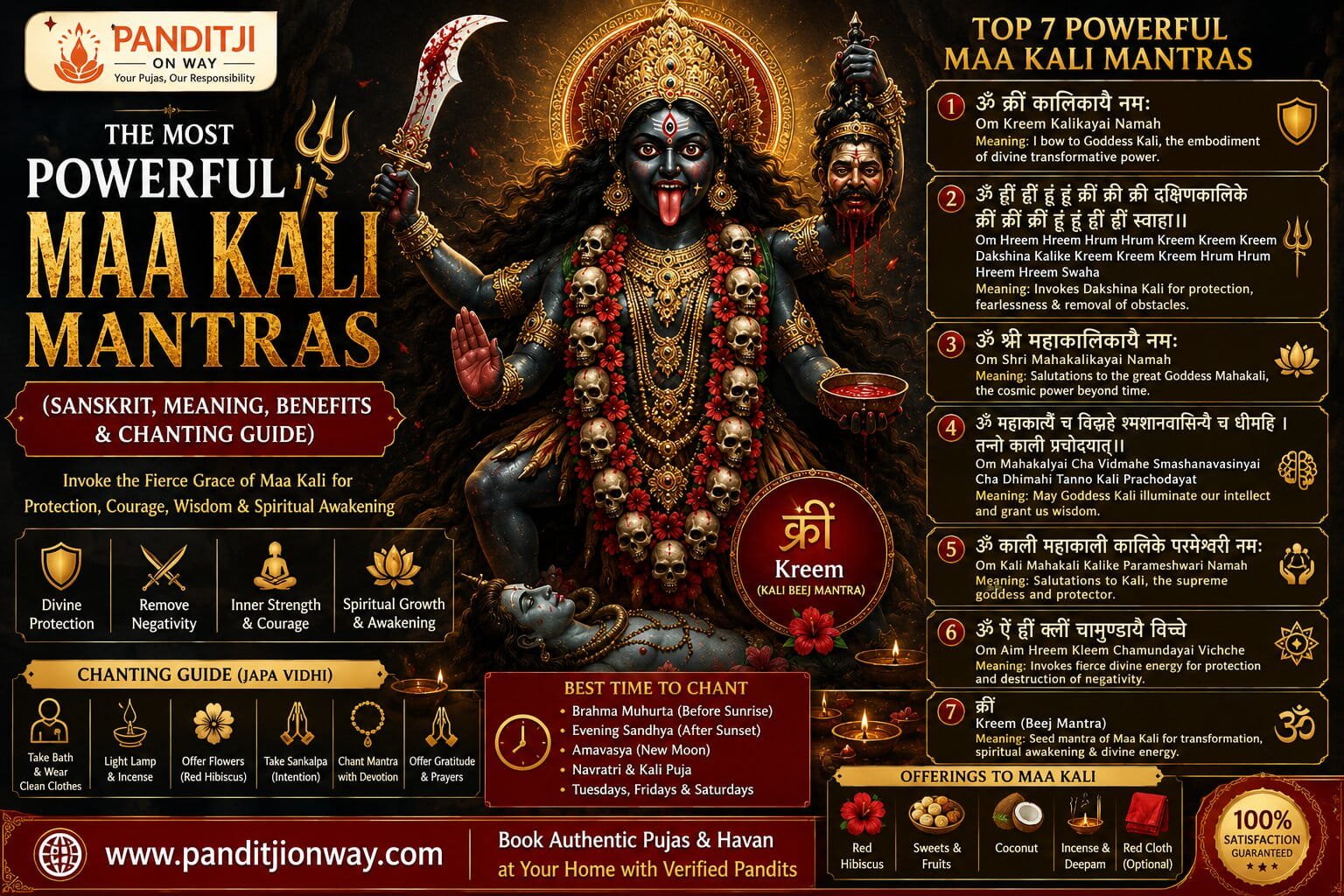
Most Powerful Maa Kali Mantras
The sacred mantras of Maa Kali are among the most revered chants in the Shakta tradition of Sanatana Dharma. Each mantra carries a unique spiritual purpose, ranging from cultivating inner courage and devotion to deepening meditation and self-transformation. While these mantras are traditionally believed to invoke the grace of Goddess Kali, they should always be chanted with humility, faith, and pure intention.
Note: Simpler devotional mantras are suitable for most devotees. More complex Tantric mantras are traditionally learned under the guidance of a qualified Guru.
1. Om Kreem Kalikayai Namah (Daily Worship Mantra)
Sanskrit
ॐ क्रीं कालिकायै नमः
Transliteration
Om Kreem Kalikayai Namah
Meaning
“I bow to Goddess Kali, the embodiment of divine transformative power.”
This is one of the most widely practiced Kali mantras. It is appropriate for daily worship and is commonly recommended for beginners due to its simplicity and devotional nature.
Traditional Benefits
- Strengthens devotion to Maa Kali.
- Encourages inner courage and confidence.
- Supports spiritual discipline.
- Helps calm a restless mind during prayer.
- Deepens meditation and self-awareness.
- Invokes the blessings of the Divine Mother.
Best Time
- Morning during Brahma Muhurta.
- Evening Sandhya.
- Tuesdays and Fridays.
- During Navratri.
Recommended Chant Count
- 11
- 21
- 51
- 108
2. Kali Beej Mantra
Sanskrit
क्रीं
Transliteration
Kreem
Meaning
The syllable “Kreem” is the sacred seed sound traditionally associated with Goddess Kali. It is revered as a vibration representing transformation, divine energy, and spiritual awakening rather than having a literal word-for-word translation.
Traditional Benefits
- Enhances concentration in meditation.
- Supports spiritual growth.
- Encourages inner transformation.
- Deepens devotion.
- Helps cultivate mental focus.
Recommended Chant Count
108 repetitions using a Rudraksha or Crystal Mala.
3. Dakshina Kali Mantra
Sanskrit
ॐ ह्रीं ह्रीं ह्रूं ह्रूं क्रीं क्रीं क्रीं दक्षिणकालिके क्रीं क्रीं क्रीं ह्रूं ह्रूं ह्रीं ह्रीं स्वाहा॥
Transliteration
Om Hreem Hreem Hrum Hrum Kreem Kreem Kreem Dakshina Kalike Kreem Kreem Kreem Hrum Hrum Hreem Hreem Swaha
Meaning
This mantra invokes Dakshina Kali, the compassionate and protective form of the Divine Mother. It combines several sacred seed syllables that are traditionally associated with divine wisdom, transformative energy, and spiritual protection.
Traditional Benefits
- Encourages fearlessness.
- Strengthens faith during difficult times.
- Supports spiritual purification.
- Helps devotees cultivate resilience and surrender.
- Invokes the compassionate aspect of Maa Kali.
Recommended Chant Count
Traditionally 108 repetitions under appropriate guidance.
4. Mahakali Mantra
Sanskrit
ॐ श्री महाकालिकायै नमः
Transliteration
Om Shri Mahakalikayai Namah
Meaning
“I offer my respectful salutations to the great Goddess Mahakali.”
This mantra honors Mahakali as the cosmic force beyond time, who dissolves ignorance and guides the soul toward liberation.
Traditional Benefits
- Encourages spiritual discipline.
- Inspires detachment from ego.
- Deepens meditation.
- Strengthens devotion.
5. Kali Gayatri Mantra
Sanskrit
ॐ महाकाल्यै च विद्महे श्मशानवासिन्यै च धीमहि ।
तन्नो काली प्रचोदयात् ॥
Transliteration
Om Mahakalyai Cha Vidmahe Smashanavasinyai Cha Dhimahi Tanno Kali Prachodayat
Meaning
“May we know the Supreme Mahakali. We meditate upon the One who dwells beyond worldly attachment. May Goddess Kali inspire and illuminate our intellect.”
Traditional Benefits
- Enhances spiritual wisdom.
- Encourages clarity in decision-making.
- Supports meditation.
- Promotes devotion and self-reflection.
6. Mahakali Protection Mantra
Sanskrit
ॐ काली महाकाली कालिके परमेश्वरी नमः
Transliteration
Om Kali Mahakali Kalike Parameshwari Namah
Meaning
“Salutations to Goddess Kali, Mahakali, the Supreme Divine Mother.”
Traditional Benefits
This mantra is traditionally recited by devotees seeking:
- Divine protection.
- Inner courage.
- Emotional resilience.
- Spiritual strength.
- Confidence during challenging situations.
7. Adya Kali Mantra
Sanskrit
ॐ ऐं ह्रीं क्लीं चामुण्डायै विच्चे
Transliteration
Om Aim Hreem Kleem Chamundayai Vichche
Meaning
This revered mantra invokes the Divine Mother in her fierce protective aspect. Although often associated with Goddess Chamunda, it is also recited within Shakta traditions that honor the many forms of the Divine Mother, including Kali.
Traditional Benefits
- Cultivates devotion.
- Encourages mental clarity.
- Strengthens resolve.
- Supports spiritual practice.
8. Kali Dhyana Mantra
Before beginning japa, many devotees meditate upon Maa Kali using a Dhyana (meditation) mantra to focus the mind.
Sanskrit
करालवदनां घोरां मुक्तकेशीं चतुर्भुजाम्
(Opening line of a traditional Dhyana verse.)
Purpose
Rather than asking for worldly gains, this meditation helps the devotee visualize Maa Kali’s divine form and prepare the mind for worship.
9. Kali Kavach Mantra
Within the Shakta tradition, Kali Kavach refers to a collection of verses seeking the Goddess’s protective grace. These are traditionally recited as part of longer devotional practices rather than as a single short mantra.
Traditional Purpose
- Seeking divine protection.
- Strengthening faith.
- Cultivating courage.
- Deepening surrender to the Divine Mother.
Because full Kavach texts are lengthy and traditionally recited according to established practices, devotees may learn them from authentic scriptural sources or qualified teachers.
10. Simple Devotional Prayer to Maa Kali
Not every prayer to Maa Kali needs to be a complex mantra. A heartfelt salutation can also be a meaningful act of devotion.
Sanskrit
जय माँ काली
Transliteration
Jai Maa Kali
This simple invocation expresses reverence, gratitude, and surrender to the Divine Mother.
Which Maa Kali Mantra Should You Chant?
| Purpose | Recommended Mantra |
|---|---|
| Daily Worship | Om Kreem Kalikayai Namah |
| Meditation | Kreem Beej Mantra |
| Spiritual Wisdom | Kali Gayatri Mantra |
| Inner Courage | Mahakali Mantra |
| Devotion | Om Shri Mahakalikayai Namah |
| Fearlessness | Dakshina Kali Mantra (traditionally learned with guidance) |
| Beginners | Om Kreem Kalikayai Namah |
| Advanced Practitioners | Longer Tantric mantras under Guru guidance |
Understanding the Power of Beej Syllables
Many Kali mantras include sacred Beej (Seed) Syllables, each representing a specific aspect of divine energy in traditional Hindu practice.
| Beej | Traditional Association |
|---|---|
| Om | Universal consciousness and the primordial sound. |
| Kreem | Transformative energy and the grace of Maa Kali. |
| Hreem | Divine wisdom and the power of the Supreme Mother. |
| Kleem | Attraction through devotion, harmony, and divine love. |
| Aim | Knowledge, learning, and clarity. |
| Hrum | Fiery spiritual purification and strength. |
| Swaha | Offering and complete surrender to the Divine. |
Can Beginners Chant Kali Mantras?
Yes. Most spiritual teachers agree that simple devotional mantras such as “Om Kreem Kalikayai Namah” can be chanted by anyone with sincerity and respect.
For more elaborate Tantric mantras containing multiple Beej syllables or specialized ritual requirements, traditional practice recommends receiving guidance from a knowledgeable Guru.
Common Intentions for Chanting Maa Kali Mantras
Devotees traditionally chant Maa Kali mantras with intentions such as:
- Seeking spiritual growth.
- Cultivating fearlessness.
- Developing inner strength.
- Finding peace during difficult times.
- Enhancing concentration in meditation.
- Deepening devotion.
- Praying for wisdom and right judgment.
- Surrendering ego and attachment.
Rather than viewing mantra recitation as a guaranteed solution to external problems, Hindu philosophy emphasizes that sincere practice transforms the devotee from within, fostering resilience, clarity, and a closer connection with the Divine.
Complete Maa Kali Japa Vidhi, Benefits, Worship Rules, Best Time to Chant & Spiritual Significance
Complete Maa Kali Japa Vidhi (Step-by-Step Chanting Method)
In Sanatana Dharma, mantra chanting (Japa) is more than the repetition of sacred words—it is a disciplined spiritual practice intended to cultivate devotion, concentration, and self-transformation. The effectiveness of Japa is traditionally linked to sincerity, regularity, and mindful practice rather than the number of repetitions alone.
The following steps are commonly observed by devotees worshipping Maa Kali.
Step 1: Take a Bath and Wear Clean Clothes
Before beginning your prayers, cleanse yourself physically by taking a bath. Wear fresh, clean clothes to symbolize purity and respect.
Recommended Clothing
| Devotee | Suggested Colors |
|---|---|
| Men | White, Saffron, Yellow |
| Women | Red, White, Yellow |
Many devotees also wear black during Kali worship, especially on Kali Puja or Amavasya, according to local traditions.
Step 2: Prepare the Worship Space
Choose a clean, quiet, and peaceful area where you can pray without distractions.
Your altar may include:
- Picture or idol of Maa Kali
- Brass or copper diya
- Incense sticks
- Camphor
- Fresh water
- Fresh flowers
- Fruits
- Sweets
- Kumkum
- Akshata (unbroken rice)
- Ghee or mustard oil lamp
Keeping the prayer space clean and uncluttered supports focus and reverence.
Step 3: Offer Your Sankalpa (Intention)
Before chanting, close your eyes and mentally offer a simple prayer to Maa Kali.
A Sankalpa is not merely asking for material success. Traditionally, it is a sincere expression of devotion and the intention to cultivate virtues such as courage, wisdom, compassion, and self-discipline.
Examples of heartfelt intentions include:
- May my mind become peaceful.
- May I overcome fear.
- May I grow in devotion.
- May I act with wisdom.
- May I serve others selflessly.
Step 4: Light the Lamp
Lighting a lamp symbolizes the removal of darkness and the awakening of inner knowledge.
Traditionally preferred:
- Ghee lamp
- Mustard oil lamp
The steady flame also helps create a calm atmosphere for meditation.
Step 5: Offer Flowers
Among the flowers traditionally associated with Maa Kali, the red hibiscus (Japa flower) holds special significance.
Other offerings may include:
- Red roses
- Lotus
- Seasonal fresh flowers
Offer flowers gently with gratitude and devotion.
Step 6: Begin with Ganesha Invocation
Many Hindu worship traditions begin by remembering Lord Ganesha, who is revered as the remover of obstacles.
A brief prayer to Ganesha before Maa Kali worship is a common practice.
Step 7: Meditate on Maa Kali
Before chanting, spend a few minutes visualizing the compassionate yet powerful form of Maa Kali.
Meditation may focus on qualities such as:
- Fearlessness
- Wisdom
- Compassion
- Strength
- Detachment
- Divine protection
Allow the mind to settle naturally before beginning mantra repetition.
Step 8: Chant the Mantra
Maintain a steady rhythm while chanting.
General recommendations:
- Sit comfortably.
- Keep the spine straight.
- Chant with clear pronunciation.
- Avoid rushing.
- Focus on the meaning and devotion behind the mantra.
Step 9: Complete with Gratitude
After finishing the Japa, sit quietly for a few moments.
Offer gratitude to Maa Kali and dedicate the merit of your practice for the well-being of all beings.
Which Direction Should You Face?
| Direction | Traditional Significance |
|---|---|
| East | Knowledge and spiritual growth |
| North | Prosperity and wisdom |
| Northeast | Meditation and devotion |
Any clean and peaceful place can become a sacred space when approached with sincerity.
Which Mala Should Be Used?
Different traditions recommend different malas based on personal practice.
| Mala | Traditional Use |
|---|---|
| Rudraksha | Meditation and spiritual discipline |
| Crystal (Sphatik) | Calmness and mental clarity |
| Tulsi | Devotional worship |
| Sandalwood | Peaceful meditation |
Choose one mala and reserve it only for spiritual practice whenever possible.
Best Time to Chant Maa Kali Mantras
1. Brahma Muhurta
Approximately 1.5 hours before sunrise.
Traditionally considered the most peaceful time for meditation and mantra chanting.
2. Evening Sandhya
The period around sunset is another auspicious time for prayer and reflection.
3. Amavasya
Many devotees especially worship Maa Kali on the New Moon, observing Kali Puja or special prayers according to regional customs.
4. Navratri
The nine nights of Navratri are dedicated to different manifestations of the Divine Mother, making this an especially meaningful period for Kali worship in many traditions.
5. Tuesdays and Fridays
These weekdays are widely observed for Devi worship and are considered favorable for offering prayers to Maa Kali.
How Many Times Should You Chant?
| Level | Recommended Count |
|---|---|
| Beginner | 11 |
| Daily Practice | 21 |
| Regular Devotee | 51 |
| Traditional Japa | 108 |
| Extended Sadhana | 1008 (under guidance where appropriate) |
Consistency is valued more highly than very large numbers of repetitions.
Spiritual Benefits of Chanting Maa Kali Mantras
Traditional Hindu teachings describe several spiritual benefits associated with sincere mantra practice.
1. Cultivates Courage
Devotees often report feeling greater confidence in facing life’s uncertainties through regular prayer and meditation.
2. Encourages Self-Transformation
The symbolism of Maa Kali inspires practitioners to gradually let go of fear, anger, attachment, and ego.
3. Supports Mental Calmness
Focused chanting may help reduce mental restlessness by encouraging concentration and mindfulness.
4. Deepens Devotion
Regular remembrance of the Divine Mother strengthens one’s spiritual connection and faith.
5. Enhances Meditation
The rhythmic repetition of mantras helps many practitioners maintain attention during meditation.
6. Promotes Positive Habits
Daily spiritual discipline often encourages patience, gratitude, compassion, and self-control.
7. Encourages Inner Resilience
During difficult phases of life, devotional practices may provide emotional comfort and a sense of hope.
Spiritual Symbolism of Maa Kali
Understanding the symbolism behind Maa Kali’s form enriches devotional practice.
| Symbol | Spiritual Meaning |
|---|---|
| Black complexion | Infinite cosmic reality beyond form |
| Sword | Discernment and removal of ignorance |
| Garland of heads | Transcending ego and attachment |
| Four arms | Protection, blessings, courage, and liberation |
| Standing on Shiva | Unity of consciousness (Shiva) and divine energy (Shakti) |
| Red tongue | Humility, transformation, and the power of speech |
Common Mistakes to Avoid During Japa
While there are regional variations in practice, the following principles are widely encouraged.
Avoid Mechanical Chanting
Reciting the mantra without attention or devotion may reduce its meditative value.
Do Not Rush
Slow, mindful chanting is generally preferred over hurried repetition.
Keep the Prayer Space Respectful
Maintain cleanliness and minimize distractions during worship.
Avoid Negative Intentions
Mantras are traditionally practiced for self-purification, devotion, and spiritual growth—not to wish harm upon others.
Maintain Regular Practice
Even a short daily practice is often considered more beneficial than infrequent long sessions.
Foods Commonly Offered to Maa Kali
Offerings vary by family and regional traditions.
Popular offerings include:
- Fresh fruits
- Coconut
- Bananas
- Sweets
- Kheer
- Rice preparations
- Red hibiscus flowers
- Betel leaves
- Dry fruits
Offerings should be fresh, clean, and made with devotion.
Auspicious Festivals for Maa Kali Worship
| Festival | Significance |
|---|---|
| Kali Puja | Dedicated specifically to Maa Kali |
| Navratri | Worship of the Divine Mother in her many forms |
| Maha Ashtami | Reverence to Durga and Kali traditions |
| Maha Navami | Celebration of Shakti |
| Deepavali (in many eastern traditions) | Kali Puja is observed on this night |
Who Can Chant Maa Kali Mantras?
Simple devotional mantras such as “Om Kreem Kalikayai Namah” are generally considered suitable for anyone who approaches the practice with respect and sincerity.
Children, adults, householders, and senior devotees may incorporate simple mantra chanting into their daily prayers.
More specialized Tantric practices involving complex rituals or advanced mantras are traditionally undertaken under the guidance of a qualified Guru.
Scriptural Perspective on Devotion
Across Hindu scriptures, the Divine Mother is portrayed as responding not to external status but to sincere devotion (bhakti). Whether one offers elaborate rituals or a simple heartfelt prayer, the emphasis remains on purity of intention, ethical living, and remembrance of the Divine.
- Durga Saptashati Complete Guide
- Kali Puja Vidhi
- Navratri Fasting Rules
- Lakshmi Mantras
- Saraswati Mantras
- Mahamrityunjaya Mantra Guide
- Rudraksha Benefits
- Shiva Panchakshari Mantra
- Hanuman Chalisa Meaning
- Bhagavad Gita Teachings
Frequently Asked Questions (FAQ) Powerful Maa Kali Mantra
1. What is the most powerful Maa Kali Mantra?
One of the most widely chanted and revered mantras dedicated to Maa Kali is:
ॐ क्रीं कालिकायै नमः
Om Kreem Kalikayai Namah
It is traditionally recited by devotees seeking courage, inner transformation, spiritual growth, and the blessings of the Divine Mother.
2. Can beginners chant Maa Kali Mantras?
Yes. Simple devotional mantras such as Om Kreem Kalikayai Namah are generally suitable for beginners. More advanced Tantric mantras are traditionally learned under the guidance of a qualified Guru.
3. What is the meaning of the Kali Beej Mantra “Kreem”?
“Kreem” is a sacred seed (Beej) syllable associated with Goddess Kali. It is understood as a spiritual sound vibration symbolizing transformation, divine energy, and inner awakening rather than having a direct literal translation.
4. Which day is best for worshipping Maa Kali?
Many devotees worship Maa Kali on:
- Tuesday
- Friday
- Saturday (in some traditions)
- Amavasya (New Moon)
- Navratri
- Kali Puja
5. What is the best time to chant Maa Kali Mantras?
Traditionally preferred times include:
- Brahma Muhurta (before sunrise)
- Evening Sandhya
- Amavasya
- Navratri
- Personal daily prayer time
The best time is ultimately one you can follow consistently with devotion.
6. Which flower is offered to Maa Kali?
Red hibiscus is the flower most commonly associated with Maa Kali. Depending on regional traditions, devotees may also offer lotus or red roses.
7. Which mala is used for Kali Mantra Japa?
Common choices include:
- Rudraksha Mala
- Sphatik (Crystal) Mala
- Sandalwood Mala
The same mala is traditionally reserved for spiritual practice.
8. How many times should I chant Maa Kali Mantras?
A common practice is:
- 11 times for beginners
- 21 times for daily worship
- 51 times for regular practice
- 108 times with a mala
Consistency is generally emphasized over large numbers.
9. Can Maa Kali Mantras be chanted at home?
Yes. Simple devotional mantras may be chanted at home in a clean and peaceful environment. Traditional Tantric rituals may require guidance from a qualified teacher.
10. Is fasting necessary for Maa Kali worship?
No. Fasting is optional and varies by family tradition. Devotion, sincerity, and ethical conduct are considered more important than ritual austerity alone.
11. Which direction should I face while chanting?
East and North are commonly recommended for prayer and meditation. However, any clean and peaceful place can be suitable for sincere worship.
12. Can women chant Maa Kali Mantras?
Yes. In Hindu traditions, devotion to the Divine Mother is open to all devotees. Practices may vary according to personal, family, or lineage traditions.
13. What are the spiritual benefits of Maa Kali worship?
Devotees traditionally associate Maa Kali worship with:
- Courage
- Self-discipline
- Inner transformation
- Devotion
- Spiritual awareness
- Mental resilience
- Detachment from ego
- Compassion and wisdom
14. Is Maa Kali a fearsome goddess?
Although her iconography is fierce, Maa Kali is revered by devotees as a compassionate Divine Mother who destroys ignorance, ego, and adharma while protecting her devotees.
15. Which scripture describes Maa Kali?
Maa Kali is prominently described in:
- Devi Mahatmya
- Devi Bhagavata Purana
- Kalika Purana
- Various Tantric and Shakta texts
Quick Summary Table
| Topic | Information |
|---|---|
| Primary Deity | Maa Kali |
| Sacred Beej | Kreem |
| Best Mantra | Om Kreem Kalikayai Namah |
| Ideal Chant Count | 108 |
| Auspicious Days | Tuesday, Friday, Amavasya |
| Primary Flower | Red Hibiscus |
| Mala | Rudraksha / Crystal |
| Main Purpose | Devotion, courage, spiritual growth |
Suggested (PanditjiOnWay)
- Durga Saptashati Path
- Durga Ashtottara Shatanamavali
- Lakshmi Mantras
- Saraswati Mantras
- Mahamrityunjaya Mantra
- Gayatri Mantra
- Navratri Puja Vidhi
- Kali Puja Guide
- Rudraksha Guide
- Vastu Puja
- Satyanarayan Puja
- Ganesh Puja
- Navagraha Puja
- Shiv Abhishek
- Chandi Havan
- Home Temple Setup Guide
Recommended External References
- Official publications of the Ministry of Culture, Government of India
- Encyclopaedia Britannica (background on Kali and Hindu traditions)
- Sanskrit text repositories such as GRETIL for scriptural references
- Official publications from reputable Hindu educational organizations.
Conclusion
Maa Kali represents the transformative power of the Divine Mother, reminding devotees that fear, ego, and ignorance can be overcome through devotion, discipline, and self-awareness. Her mantras are not merely words but sacred aids to meditation and spiritual reflection.
Whether you chant Om Kreem Kalikayai Namah as part of your daily prayers or study the deeper philosophy behind her symbolism, the essence of Kali worship lies in sincerity, humility, and ethical living. Consistent practice can nurture inner courage, compassion, and a deeper connection with the Divine.
May the blessings of Maa Kali inspire wisdom, strength, and peace on your spiritual journey.
About PanditjiOnWay


PanditjiOnWay connects devotees with experienced Vedic priests for a wide range of pujas, havans, and religious ceremonies. From Griha Pravesh and Satyanarayan Katha to Chandi Havan and Navagraha Shanti, the platform aims to make authentic Vedic rituals accessible while preserving traditional practices.