

Nine Leaves Used During Navpatrika Puja: Names, Significance, Botanical Names and Durga Puja Rituals
Discover the nine leaves used during Navpatrika Puja, their botanical names, Hindi names, religious significance, ritual procedure and Durga Puja traditions.
Navpatrika Puja, also known as Nabapatrika Puja or Kolabou Puja in Bengal, is an important ritual performed during Durga Puja, particularly in West Bengal and other parts of eastern India. The ritual involves nine sacred plant elements that represent different forms of divine feminine energy and the abundance of nature. These plants are traditionally brought together, ritually prepared, and worshipped as part of the Durga Puja ceremonies.
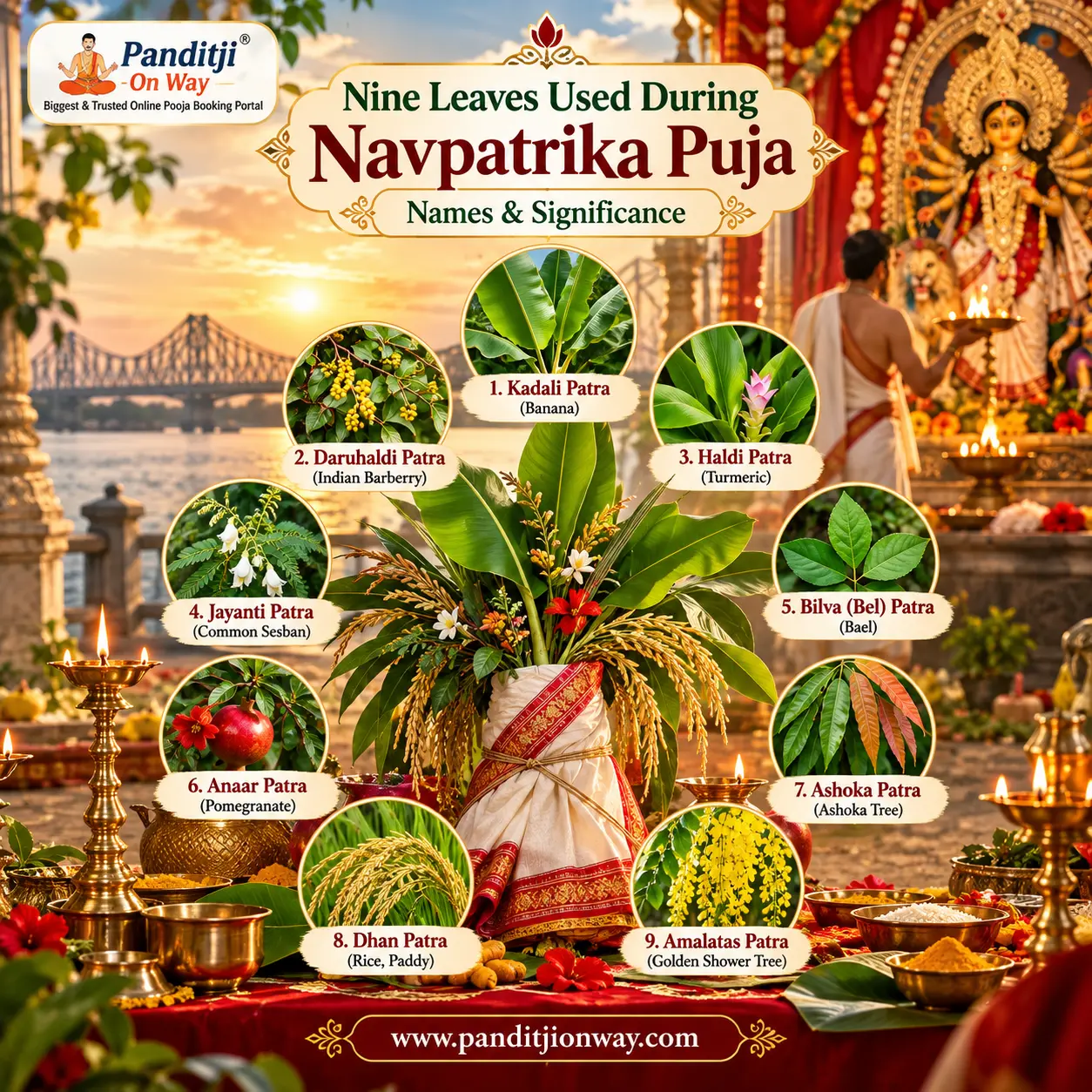
The nine leaves and plant elements associated with Navpatrika Puja are Kadali (banana), Daruhaldi, Haldi (turmeric), Jayanti, Bilva (bel), Anaar (pomegranate), Ashoka, Dhan (paddy), and Amalatas (golden shower tree). Their names, regional variations, and ritual interpretations can differ according to local traditions and the puja paddhati followed by the family or priest.
For devotees preparing for Durga Puja, understanding the nine leaves used during Navpatrika Puja, their botanical names, religious significance, and regional names helps make the worship more meaningful.
Panditji on Way, a pooja booking portal, helps devotees explore Hindu puja services and connect with priests for religious ceremonies. Visit Panditji on Way to learn more about available pooja services.
What Is Navpatrika Puja?
Navpatrika is a traditional Durga Puja ritual in which nine plant elements are worshipped together. The Sanskrit-derived term is commonly understood as Nava meaning nine and Patrika referring to a leaf or plant element.
In the traditional Bengali Durga Puja observance, Navpatrika is prepared on Maha Saptami. The banana plant forms the central element, and the associated plants are tied together and ritually bathed before being placed for worship. In many Bengali traditions, the assembled Navpatrika is draped in a sari and affectionately called Kolabou.
The ritual symbolizes the relationship between the Divine Mother, fertility, agriculture, vegetation, prosperity, and the natural world. It is especially significant in Bengal, where Durga Puja brings together religious devotion, community worship, and cultural heritage.
Although the ritual is widely associated with Bengali Durga Puja, the precise procedure and plant combinations may vary by region, temple, family tradition, and priestly guidance.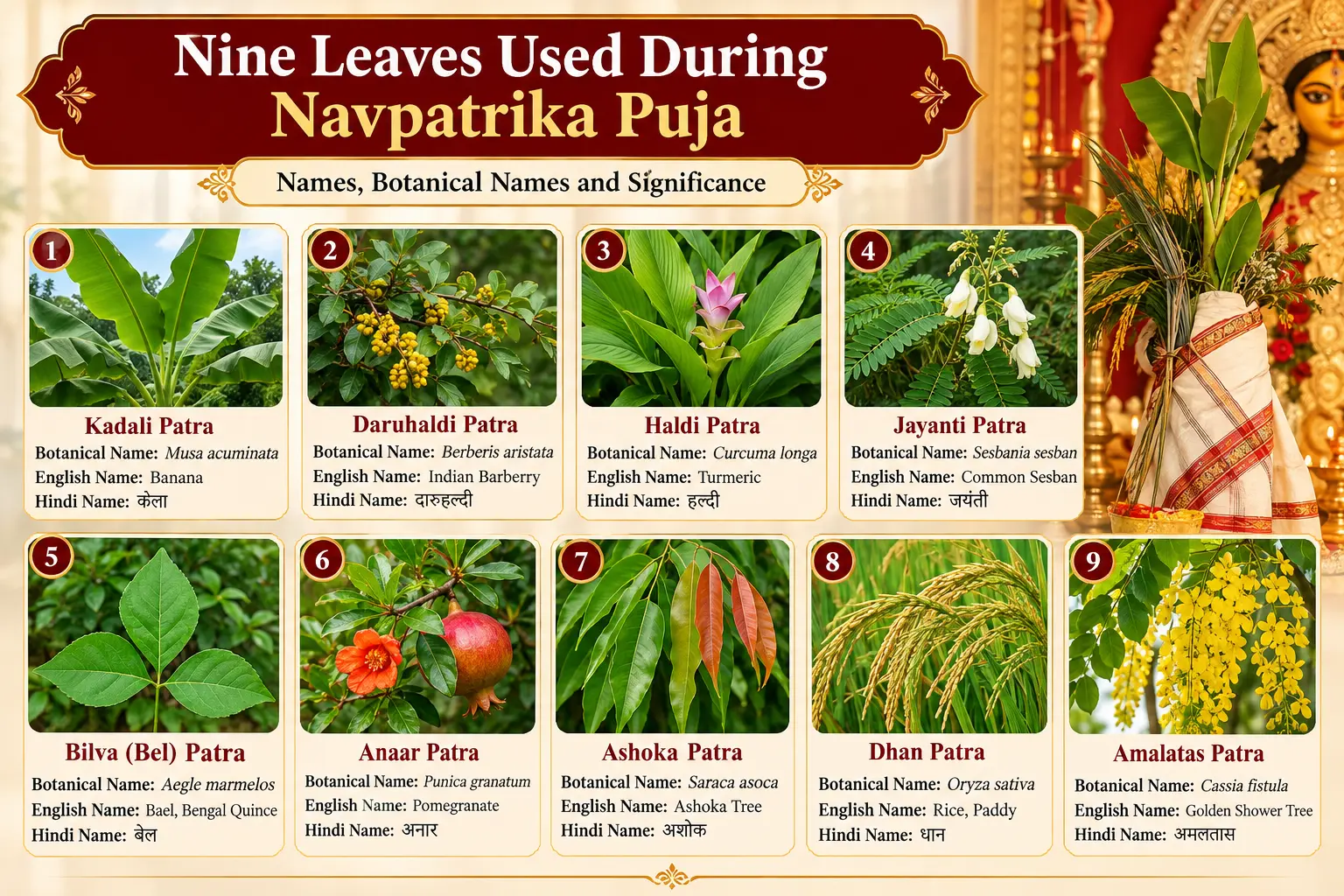

Nine Leaves Used During Navpatrika Puja
The following table lists the nine plant elements commonly associated with Navpatrika Puja, along with their botanical names and commonly used English and Hindi names.
| No. | Traditional Name | Botanical Name | English Name | Hindi Name |
|---|---|---|---|---|
| 1 | Kadali Patra | Musa spp. | Banana plant | केला |
| 2 | Daruhaldi Patra | Berberis aristata | Indian barberry | दारुहल्दी |
| 3 | Haldi Patra | Curcuma longa | Turmeric | हल्दी |
| 4 | Jayanti Patra | Sesbania sesban | Common sesban | जयंती |
| 5 | Bilva or Bel Patra | Aegle marmelos | Bael or Bengal quince | बेल |
| 6 | Anaar Patra | Punica granatum | Pomegranate | अनार |
| 7 | Ashoka Patra | Saraca asoca | Ashoka tree | अशोक |
| 8 | Dhan Patra | Oryza sativa | Rice or paddy | धान |
| 9 | Amalatas Patra | Cassia fistula | Golden shower tree | अमलतास |
Quick answer: The nine plant elements used in Navpatrika Puja are banana, daruhaldi, turmeric, jayanti, bel, pomegranate, ashoka, paddy, and amaltas. They are traditionally assembled and worshipped during Durga Puja, particularly on Maha Saptami in the Bengali tradition.
Botanical identification note: The exact plant material used in regional rituals may vary. The table follows the commonly cited identifications supplied for this guide; local names should be verified with a knowledgeable priest or botanist where identification is uncertain.

1. Kadali Patra — Banana Leaf
Botanical name: Musa spp.
English name: Banana plant
Hindi name: केला
Sanskrit name: कदली
Telugu name: అరటి (Arati)
Marathi name: केळ
Kadali, or the banana plant, occupies a central place in Navpatrika Puja. The banana plant is associated with fertility, nourishment, growth, and prosperity in many Hindu rituals. Its broad leaves and fruit also make it a familiar element in traditional worship and ceremonial arrangements.
In Bengali Durga Puja, the banana plant serves as the central component around which the other eight plant elements are traditionally assembled. The resulting arrangement is known as Navpatrika and is associated with the worship of the Divine Mother.
The banana plant is also used in other Hindu ceremonies, including weddings, household pujas, and festivals, although the exact rituals differ.
keywords: Kadali Patra meaning, banana leaf in Navpatrika Puja, banana plant significance in Durga Puja.
2. Daruhaldi Patra — Indian Barberry
Botanical name: Berberis aristata
English name: Indian barberry
Hindi name: दारुहल्दी
Sanskrit name: दारुहरिद्रा
Telugu name: Manupasupu (regional identification may vary)
Marathi name: दारुहळद
Daruhaldi, also known as Daruharidra, is a plant traditionally recognized in Indian botanical and Ayurvedic literature. Its name is associated with a woody plant known for its yellow-colored root material.
Within the Navpatrika tradition, Daruhaldi is one of the nine plant elements assembled for worship. Its ritual importance is best understood within the wider symbolism of the sacred plant grouping rather than through unsupported claims about specific supernatural effects.
The regional names of Daruhaldi may differ, so devotees should confirm the correct plant with a knowledgeable local supplier or priest when collecting puja materials.
keywords: Daruhaldi Patra in Navpatrika Puja, Daruharidra botanical name, Indian barberry in Durga Puja.
3. Haldi Patra — Turmeric Leaf
Botanical name: Curcuma longa
English name: Turmeric
Hindi name: हल्दी
Sanskrit name: हरिद्रा
Telugu name: పసుపు (Pasupu)
Marathi name: हळद
Turmeric is widely used in Hindu religious ceremonies and is associated with auspiciousness, purity, prosperity, and traditional ceremonial preparation. Both its leaves and rhizomes have uses in different cultural and ritual contexts.
In Navpatrika Puja, the turmeric plant is included among the nine sacred plant elements. Its place in the ritual reflects the wider importance of turmeric in Hindu worship, weddings, festive preparations, and household ceremonies.
The turmeric plant should be distinguished from turmeric powder or the dried rhizome: the plant element used in a particular puja depends on the prescribed ritual and local custom.
keywords: Haldi Patra significance, turmeric leaf in Durga Puja, Haldi plant botanical name.
4. Jayanti Patra — Common Sesban
Botanical name: Sesbania sesban
English name: Common sesban or Egyptian rattlepod
Hindi name: जयंती
Sanskrit name: जयन्तिका
Telugu name: Samintha (regional identification may vary)
Marathi name: शेवरी
Jayanti is another plant traditionally included in the Navpatrika grouping. The name Jayanti is associated with victory and auspiciousness in Sanskrit-derived religious vocabulary.
In the context of Durga Puja, the inclusion of Jayanti forms part of the traditional nine-plant arrangement dedicated to the Divine Mother. Devotees may encounter different regional names for this plant, making accurate botanical identification important when preparing the ritual materials.
Because common names can refer to different species in different regions, the scientific identification should be confirmed before collecting the plant.
keywords: Jayanti Patra botanical name, Jayanti leaf in Navpatrika Puja, nine sacred plants of Durga Puja.
5. Bilva or Bel Patra — Bael Leaf
Botanical name: Aegle marmelos
English name: Bael, Bengal quince, or stone apple
Hindi name: बेल
Sanskrit name: बिल्व
Telugu name: విల్వం (Vilvam)
Marathi name: बेल
Bilva, commonly called bel, is a sacred tree in Hindu traditions. Its leaves are particularly well known for their association with the worship of Lord Shiva. The bilva plant is also included among the nine plant elements used during Navpatrika Puja.
The significance of bel in Navpatrika reflects the wider place of sacred trees and plants in Hindu worship. The leaf is valued not only as a ritual offering but also as a symbol within longstanding religious traditions.
Although bilva leaves are especially associated with Shiva worship, their inclusion in Navpatrika demonstrates how plant symbolism is shared across different Hindu rituals.
keywords: Bel Patra in Navpatrika Puja, Bilva leaf significance, Aegle marmelos botanical name.
6. Anaar Patra — Pomegranate Leaf
Botanical name: Punica granatum
English name: Pomegranate
Hindi name: अनार
Sanskrit name: दाडिम
Telugu name: దానిమ్మ (Danimma)
Marathi name: डाळिंब
The pomegranate plant is one of the nine plant elements listed in traditional Navpatrika references. Its inclusion connects the ritual with the wider symbolism of vegetation, fruitfulness, and the abundance of nature.
Pomegranate is cultivated across many parts of India and is familiar in regional food traditions, gardens, and horticulture. In the ritual context, the relevant element is the plant material prescribed by the local Navpatrika tradition.
The Sanskrit term commonly associated with pomegranate is dadima. The botanical name is Punica granatum.
keywords: Anaar Patra in Durga Puja, pomegranate leaf botanical name, Navpatrika nine leaves list.
7. Ashoka Patra — Ashoka Tree Leaf
Botanical name: Saraca asoca
English name: Ashoka tree
Hindi name: अशोक
Sanskrit name: अशोकवृक्ष
Telugu name: అశోకము (Asokamu)
Marathi name: सीता अशोक
The Ashoka tree holds a respected place in Indian cultural and literary traditions. Its name is commonly interpreted as referring to the absence or removal of sorrow. The tree is associated with beauty, auspiciousness, and traditional symbolism.
Ashoka is included among the plant elements used in Navpatrika Puja. Its presence contributes to the traditional collection of plants worshipped during Durga Puja.
Care should be taken not to confuse the true Ashoka tree, Saraca asoca, with unrelated ornamental trees that are sometimes sold under the common name “false ashoka.” When the exact species is required for a ritual, botanical identification is advisable.
keywords: Ashoka Patra significance, Saraca asoca in Navpatrika Puja, Ashoka leaf in Durga Puja.
8. Dhan Patra — Paddy or Rice Plant
Botanical name: Oryza sativa
English name: Rice or paddy
Hindi name: धान
Sanskrit name: धान्य
Telugu name: బియ్యం (Biyyam; rice)
Marathi name: तांदूळ
Dhan refers to paddy or rice, a staple crop that has shaped India’s agricultural, culinary, and cultural traditions for centuries. In religious symbolism, grain is commonly associated with nourishment, sustenance, agricultural prosperity, and abundance.
In Navpatrika Puja, the paddy plant represents the agricultural dimension of the ritual. Its inclusion highlights the relationship between religious observance and the natural resources that sustain life.
The term Oryza sativa refers to cultivated Asian rice. The plant material used in the ritual may be selected according to local custom and availability.
keywords: Dhan Patra in Navpatrika Puja, paddy plant significance, rice plant in Durga Puja.
9. Amalatas Patra — Golden Shower Tree Leaf
Botanical name: Cassia fistula
English name: Golden shower tree
Hindi name: अमलतास
Sanskrit name: आरग्वध (Aragvadha)
Telugu name: రేల (Raela)
Marathi name: बहावा (Bahava)
Amaltas, known botanically as Cassia fistula, is a tree recognized for its long clusters of yellow flowers. It is found in different parts of India and is known by several regional names.
In Navpatrika Puja, Amaltas is included among the nine plant elements associated with the ritual. Its role should be understood as part of the traditional plant grouping, with the precise ritual interpretation depending on the source and local puja tradition.
Because common plant names can vary between regions, confirming the species helps ensure that the correct plant material is selected.
keywords: Amaltas Patra in Navpatrika Puja, Cassia fistula botanical name, golden shower tree in Durga Puja.
Religious Significance of the Nine Leaves Used During Navpatrika Puja
The nine plant elements of Navpatrika are traditionally worshipped together as part of Durga Puja. Their combined presence reflects the importance of vegetation, agriculture, nourishment, fertility, and the sacred relationship between humans and nature.
The ritual is especially prominent in Bengali Durga Puja, where Navpatrika is prepared on Maha Saptami and incorporated into the worship of Goddess Durga.
The nine plants are often explained through the symbolic presence of different forms of the Divine Mother. However, interpretations of individual plants and their associated goddesses can vary across ritual texts and regional traditions. For this reason, the symbolism of each plant should be presented according to the specific puja paddhati being followed rather than treating every popular interpretation as universally established.
The broader significance of Navpatrika includes:
- Nature worship: The ritual honors plant life and the natural world.
- Agricultural prosperity: Paddy and other plants evoke nourishment, fertility, and abundance.
- Divine feminine energy: The assembled plants are worshipped in the context of Goddess Durga.
- Cultural continuity: Navpatrika preserves a distinctive element of traditional Bengali Durga Puja.
- Ritual devotion: Preparing and worshipping the plant grouping allows devotees to participate in a longstanding religious observance.
Navpatrika Puja Vidhi: How Is the Ritual Performed?
Navpatrika Puja is traditionally performed on Maha Saptami during Durga Puja in the Bengali tradition. The exact sequence may vary by temple, family custom, and the priest’s prescribed ritual method.
A general outline is given below for educational purposes.
Step 1: Collect the Required Plant Elements
Arrange the nine prescribed plant elements in accordance with the local Navpatrika tradition. Since regional names can be confusing, consult a knowledgeable priest or reliable botanical source to confirm the plants.
Step 2: Assemble the Navpatrika
The plant elements are traditionally tied together, with the banana plant serving as the central element. The arrangement should follow the ritual procedure prescribed by the officiating priest.
Step 3: Perform the Ritual Bath
In the Bengali tradition, the Navpatrika is ceremonially bathed on Maha Saptami. This ritual bath is an important part of the observance and is associated with purification and the commencement of the day’s worship.
Step 4: Dress and Establish the Navpatrika
In many Bengali households and community pujas, the assembled Navpatrika is draped in a sari and placed near the Durga image or in the designated place of worship. It is commonly known as Kolabou.
Step 5: Perform the Puja and Offerings
The priest performs the prescribed worship, mantras, and offerings according to the applicable puja paddhati. Devotees participate through prayer and customary offerings.
Step 6: Continue the Durga Puja Observances
Navpatrika worship forms part of the larger Durga Puja celebrations. The subsequent rituals and their sequence depend on the tradition followed by the temple or household.
Important: This is a general overview, not a complete mantra-based ritual manual. For a formal Navpatrika Puja, follow the instructions of an experienced priest familiar with the relevant regional tradition.
Navpatrika Puja: Regional Traditions and Important Places
Navpatrika Puja is most closely associated with Bengali Durga Puja. The ritual is particularly relevant in West Bengal and in Bengali communities elsewhere in India and abroad.
1. Kolkata, West Bengal
Kolkata is one of India’s best-known centers of Durga Puja. Community pandals, traditional household worship, and established family pujas preserve different forms of the Bengali Durga Puja tradition, including Navpatrika observances.
2. Howrah, West Bengal
Howrah shares many of the cultural and religious traditions of the greater Kolkata region. Navpatrika Puja is observed in Bengali households, community celebrations, and local Durga Puja arrangements according to individual customs.
3. Hooghly, West Bengal
Hooghly has a long history of religious and cultural traditions associated with Bengal. Devotees following Bengali Durga Puja practices may observe Navpatrika as part of their Maha Saptami rituals.
4. Bardhaman, West Bengal
Bardhaman, also known as Burdwan, is another important part of Bengal’s cultural landscape. Household and community Durga Puja traditions may include Navpatrika preparation according to local ritual practices.
5. Siliguri and North Bengal
Durga Puja is celebrated across North Bengal, including Siliguri. Bengali families and community organizations may maintain Navpatrika traditions alongside their other regional forms of worship.
6. Other Indian Cities
Navpatrika Puja may also be observed by Bengali communities in cities such as Mumbai, Delhi, Pune, Bengaluru, Hyderabad, and Chennai. The availability of specific plants and the exact ritual procedure can differ outside Bengal.
The list above identifies places where Bengali Durga Puja traditions are relevant; it is not a verified directory of specific Navpatrika Puja venues. Devotees should confirm arrangements with individual temples, community organizers, or priests.
For those who need priestly assistance, visit Panditji on Way to explore pooja booking options and related Hindu religious services.
Are the Nine Leaves of Navpatrika the Same Everywhere?
Not necessarily. Traditional ritual practices are preserved through regional customs, family traditions, temple procedures, and different puja manuals.
Some lists use different local names, while certain secondary sources mention Arbi Patra, or colocasia leaf, among the Navpatrika plants. The inclusion of Arbi Patra should not be treated as universally established without checking the specific ritual source being followed.
The list in this article follows the nine plants supplied for this guide. Devotees preparing for a traditional Bengali Navpatrika Puja should confirm the prescribed plant combination with the officiating priest rather than substituting one plant for another based solely on an online list.
Botanical names are particularly helpful when local names overlap or when a plant is sold under several regional names.
Where to Find the Nine Plants for Navpatrika Puja
The availability of the nine plant elements depends on the region, season, and local market.
- Banana and turmeric: Often available through vegetable markets, nurseries, or local ritual-material suppliers.
- Bel leaves: May be available from sellers specializing in puja materials.
- Paddy: Ask local agricultural suppliers or puja-material vendors for suitable plant material.
- Daruhaldi, Jayanti, Ashoka, pomegranate, and Amaltas: Availability varies by region; botanical gardens, nurseries, or knowledgeable local suppliers may help identify the correct plants.
These are general sourcing suggestions, not guarantees of availability. Some plants may be difficult to find in urban markets or outside their growing regions.
Do not collect protected plants or remove branches from private or protected land without permission. Where a plant is unavailable, consult the officiating priest about the appropriate practice for the specific tradition.
Frequently Asked Questions About Navpatrika Puja
1. What are the nine leaves used during Navpatrika Puja?
The nine plant elements listed for Navpatrika Puja are Kadali (banana), Daruhaldi, Haldi (turmeric), Jayanti, Bilva (bel), Anaar (pomegranate), Ashoka, Dhan (paddy), and Amalatas (Amaltas). They are traditionally assembled and worshipped during Durga Puja in the Bengali tradition.
2. Why are nine leaves used in Navpatrika Puja?
The nine plant elements form a traditional ritual grouping associated with Goddess Durga. Their collective symbolism is connected with divine feminine energy, vegetation, fertility, nourishment, and agricultural abundance. Specific interpretations may vary by ritual tradition.
3. When is Navpatrika Puja performed?
In Bengali Durga Puja, Navpatrika Puja is traditionally performed on Maha Saptami. The preparation and ceremonial bath of the plant grouping form important parts of the observance.
4. What is Navpatrika called in Bengali Durga Puja?
The assembled plant grouping is commonly known as Navpatrika or Nabapatrika. When dressed in a sari and worshipped according to Bengali tradition, it is also commonly called Kolabou or Kola Bou.
5. Which plant is placed at the center of Navpatrika?
The banana plant, known as Kadali, forms the central element of the traditional Navpatrika arrangement. The other plant elements are assembled with it according to the prescribed ritual.
6. What is the botanical name of Kadali Patra?
The banana plant belongs to the genus Musa. The exact botanical species depends on the cultivated banana variety, so Musa spp. is appropriate when the precise species is not established.
7. What is the botanical name of Daruhaldi?
Daruhaldi is commonly identified as Berberis aristata, also known as Indian barberry. Local plant identification should be confirmed when preparing ritual materials.
8. Is Bel Patra included in Navpatrika Puja?
Yes. Bilva or bel is included in the nine-plant list used for Navpatrika Puja. The botanical name of the bael tree is Aegle marmelos.
9. Is Arbi Patra one of the nine leaves of Navpatrika?
Some secondary lists mention Arbi Patra, or colocasia leaf, but plant lists can vary across sources and regional traditions. Confirm the required plant combination with the priest or ritual manual being followed.
10. Can Navpatrika Puja be performed outside West Bengal?
Yes. Bengali communities observe Durga Puja in many Indian cities and abroad. Navpatrika Puja can be performed where the tradition is followed, with the precise procedure and plant availability determined by local custom and priestly guidance.
11. What should devotees do if one of the nine plants is unavailable?
Consult the officiating priest before making substitutions. Ritual requirements may vary, and an alternative should be chosen according to the specific puja paddhati rather than an unverified online recommendation.
12. Where can I book a priest for Navpatrika Puja?
Devotees can visit Panditji on Way to explore available pooja booking services. Confirm directly whether a priest is available for Navpatrika Puja in your city and whether the service includes the required ritual materials.
Conclusion
The nine leaves used during Navpatrika Puja represent an important part of traditional Bengali Durga Puja. Banana, Daruhaldi, turmeric, Jayanti, bel, pomegranate, Ashoka, paddy, and Amaltas are brought together in a ritual that reflects devotion to Goddess Durga and the sacred importance of nature.
Learning the botanical names, regional names, and traditional uses of these plants helps devotees prepare more confidently for Maha Saptami. Because the identification of certain plants and the interpretation of individual elements can vary, following a knowledgeable priest or an established ritual manual is the best way to preserve the relevant regional tradition.
Panditji on Way aims to make Hindu religious services more accessible by helping devotees explore pooja booking options and priestly assistance. Visit www.panditjionway.com to learn more about its services.
About Panditji on Way


Panditji on Way is an online pooja booking portal that helps devotees explore Hindu religious ceremonies and priestly services. Its content aims to make traditional rituals, festival observances, and Hindu worship practices easier to understand.
Website: https://www.panditjionway.com/
Editorial note: Ritual details in this article are provided for educational purposes. Readers should verify plant identification and ceremony-specific requirements with a qualified priest familiar with their regional tradition.
-
oyal Botanic Gardens, Kew — Daruhaldi: Berberis aristata botanical profile. Kew recognizes this botanical species and documents its distribution.
-
Royal Botanic Gardens, Kew — Ashoka: Saraca asoca botanical profile. This reference helps verify the scientific name of the Ashoka tree.
-
Panditji on Way: Official website