Nandi – The Sacred Bull of Lord Shiva | Complete Story, Symbolism, Temples & Significance
Discover Nandi, the sacred bull of Lord Shiva. Learn his birth story, symbolism, temple significance, spiritual meaning, and why he faces the Shivling.
Nandi is the sacred bull and divine vehicle of Lord Shiva in Hinduism. He symbolizes devotion, dharma, strength, and meditation. According to the Vayu Purana, Nandi was born to Sage Shilada and granted immortality by Shiva. Placed before every Shivling, Nandi represents eternal focus on the divine and acts as the messenger of devotees’ prayers.
Introduction: Who is Nandi?
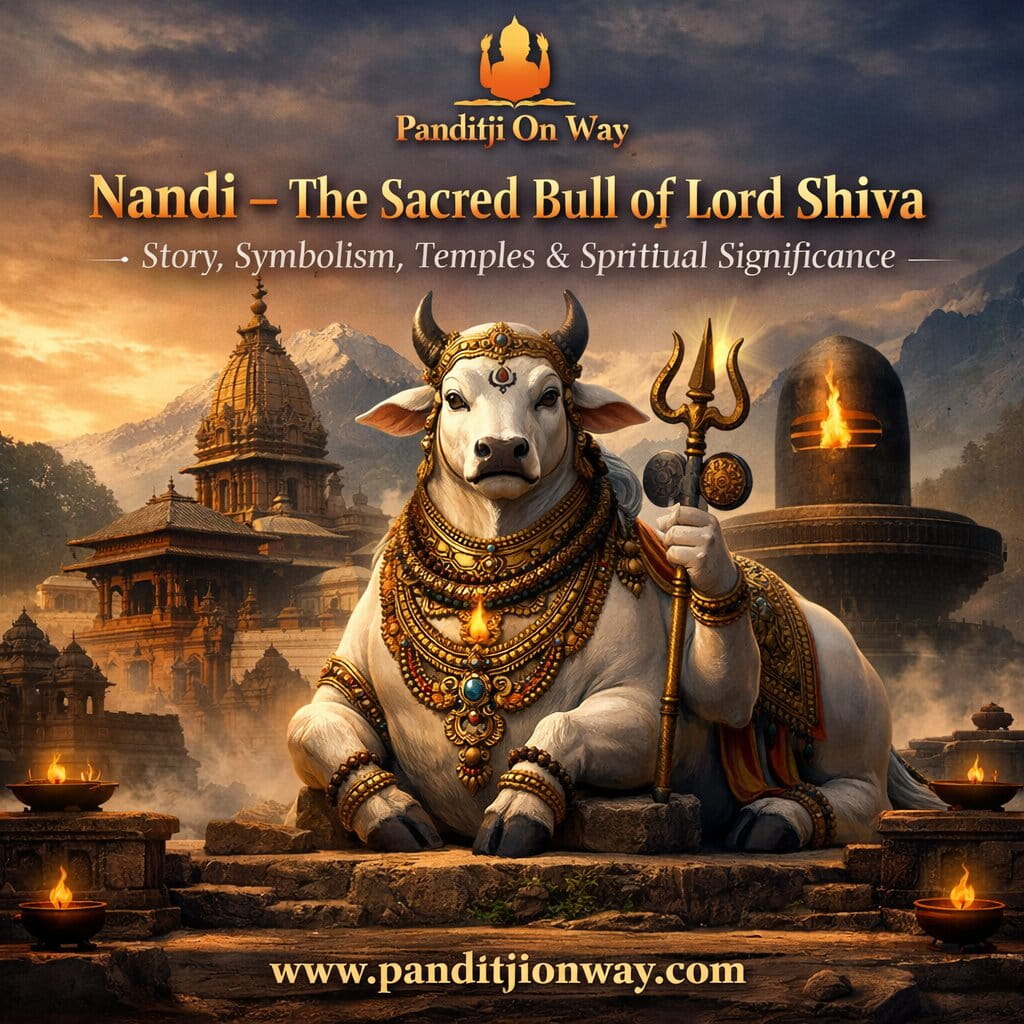
Nandi is the sacred bull and divine vehicle (Vahana) of Lord Shiva. He is not merely a mount but also the gatekeeper (Dwarapala), chief of Shiva’s Ganas, symbol of dharma, devotion, strength, and eternal patience.
In every Shiva temple across India and Nepal, Nandi is consecrated facing the Shivling, symbolizing unwavering devotion and constant meditation upon Lord Shiva.
Nandi at Pashupatinath Temple

One of the most revered depictions of Nandi can be seen at the sacred Pashupatinath Temple in Nepal. The majestic Nandi statue sits directly aligned with the sanctum of Lord Shiva, symbolizing:
- Eternal devotion (Bhakti)
- Guardian of sacred space
- Messenger between devotee and deity
Devotees often whisper their wishes into Nandi’s ears, believing he conveys prayers directly to Lord Shiva.
Story of Nandi’s Birth
The origin of Nandi is described in several Puranas including the:
- Vayu Purana
- Saura Purana
- Brihaddharma Purana
Version 1: Son of Sage Shilada
Sage Shilada desired an immortal son. After intense penance and a sacred Yagya, a divine child emerged from the fire — blessed by the gods and named Nandi.
When sages predicted Nandi would die at age eight, he performed intense devotion to Lord Shiva. Pleased, Shiva granted him:
- Immortality
- Half-man, half-bull divine form
- Leadership of Shiva’s Ganas
- Status as Shiva’s eternal companion
Version 2: Son of Kashyapa and Surabhi
The Vayu Purana states that Nandi was born to Maharishi Kashyapa and Surabhi, the divine cow.
Version 3: Manifestation of Vishnu
Some texts describe Nandi emerging from the right side of Lord Vishnu and later becoming Shiva’s companion.
Nandi’s Human Form (Nandikeshwara)
Nandi is sometimes depicted as Nandikeshwara — a half-human, half-bull deity and a great yogi.
He is believed to be the Guru of the Nandinatha Sampradaya and teacher of:
- Sanaka
- Sanatana
- Sanandana
- Sanatkumara
- Tirumular
- Vyagrapada
- Patanjali
- Sivayoga Muni
This establishes Nandi not only as a vehicle but as a spiritual master and embodiment of yogic discipline.
Story of Goddess Parvati Cursing Nandi
During a game of dice between Shiva and Parvati, Nandi declared Shiva the winner out of devotion, though Parvati had won.
Angered, Goddess Parvati cursed Nandi. To lift the curse, he was instructed to worship Lord Ganesha on Chaturdashi in Bhadrapada and offer green grass.
This story highlights:
- Importance of respecting all deities
- Balance between devotion and truth
- Power of repentance
Nandi’s Sacrifice During Samudra Manthan
During the cosmic ocean churning (Samudra Manthan), the serpent Vasuki released deadly poison.
Lord Shiva consumed it to save creation, becoming Neelkanth. Some poison spilled, and Nandi drank it to protect Shiva — showcasing:
- Ultimate devotion
- Sacrifice
- Protective power
Symbolism of Nandi
| Symbol | Meaning | Spiritual Insight |
|---|---|---|
| White Color | Purity | Clean mind and intention |
| Bull | Strength & Dharma | Stability in life |
| Facing Shivling | Meditation | Focus on higher truth |
| Seated Posture | Patience | Eternal waiting for divine grace |
| Vehicle of Shiva | Service | Selfless devotion |
Nandi represents:
- Dharma (Righteousness)
- Faith & Devotion
- Fertility & Prosperity
- Justice
- Courage
Nandi as Meditation Bull
Nandi’s seated posture reflects:
- Calm awareness
- Yogic discipline
- Devotional absorption
He symbolizes the ideal devotee — steady, focused, unwavering.
Meditating on Nandi is believed to:
- Remove obstacles
- Increase inner peace
- Enhance spiritual growth
- Strengthen willpower
Nandi in Indian Culture & Agriculture
In rural India, Nandi is worshipped as:
- Protector of livestock
- Guardian of agriculture
- Symbol of fertility
Farmers celebrate Nandi Habba, decorating ploughs and offering prayers for prosperity.
The sacred bull tradition traces back to the Indus Valley Civilization where bulls symbolized:
- Power
- Fertility
- Prosperity
Nandikeshwar Temple

Located in Tamil Nadu, this ancient Chola-era temple is dedicated to Nandikeswarar.
Highlights:
- Dravidian architecture
- Sacred Abhishekams
- Grand Mahashivratri celebrations
- Daily Shiva-Nandi rituals
Nandi – Assistant and Commander of Shiva
According to the Brihaddharma Purana:
- Nandi is commander of Shiva’s army
- Leader of 18 Siddhars
- Guardian of justice
He is also believed to have defeated Airavata in divine battle, demonstrating extraordinary strength.
Spiritual Benefits of Worshipping Nandi
- Removes obstacles in life
- Enhances devotion to Lord Shiva
- Grants fertility & prosperity
- Protects from negative energies
- Strengthens discipline and patience
Devotees often pray to Nandi before entering Shiva temples.
How to Worship Nandi at Home
- Offer white flowers
- Light a ghee lamp
- Chant “Om Nandikeshwaraya Namah”
- Meditate facing east
- Offer green grass (especially on Chaturdashi)
For proper Vedic rituals and authentic guidance, book expert pandits through:
Panditji on way: https://www.panditjionway.com
Panditji on Way is India’s trusted online platform for Shiva Puja, Rudrabhishek, Mahashivratri Puja, and personalized Vedic rituals.
Nandi is the sacred bull and divine vehicle of Lord Shiva, symbolizing devotion, dharma, strength, and spiritual discipline. According to Vedic scriptures like the Vayu Purana and Saura Purana, Nandi was born to Sage Shilada and granted immortality by Lord Shiva. Worshipping Nandi is believed to remove obstacles, bring prosperity, and enhance spiritual growth.
FAQ Section for Nandi – The Sacred Bull
1. Who is Nandi in Hinduism?
Nandi is the sacred bull and divine vehicle (Vahana) of Lord Shiva. He serves as Shiva’s gatekeeper, chief of the Ganas, and symbol of devotion, dharma, strength, and meditation. Nandi is worshipped in every Shiva temple and always faces the Shivling.
2. Why is Nandi always placed in front of Shiva temples?
Nandi is positioned directly facing the Shivling to symbolize eternal devotion and unwavering focus on Lord Shiva. Devotees believe Nandi carries their prayers to Shiva, which is why people whisper their wishes into Nandi’s ear before offering prayers.
3. What is the story of Nandi’s birth?
According to the Vayu Purana and other scriptures, Nandi was born to Sage Shilada after intense penance to Lord Shiva. Shiva granted Nandi immortality and appointed him leader of the Shiva Ganas, making him his eternal companion and vehicle.
4. Is Nandi an incarnation of Lord Shiva?
Some Shaiva traditions describe Nandi as a manifestation or divine aspect of Lord Shiva. While primarily known as Shiva’s Vahana and devotee, certain Puranas depict him as sharing Shiva’s divine qualities and cosmic responsibilities.
5. What does Nandi symbolize spiritually?
Nandi symbolizes dharma (righteousness), purity, patience, devotion, wisdom, and strength. His seated meditative posture represents the ideal devotee’s mind—calm, focused, and fixed on the divine truth without distraction.
6. What happened during Samudra Manthan involving Nandi?
During Samudra Manthan, when Lord Shiva drank the deadly poison to save the universe, some poison spilled. Nandi consumed it to protect Shiva, demonstrating supreme devotion, sacrifice, and divine strength.
7. Why do devotees whisper wishes in Nandi’s ear?
Devotees believe Nandi acts as the divine messenger of Lord Shiva. Whispering wishes into Nandi’s ear symbolizes direct communication with Shiva, expressing faith that sincere prayers will be heard and fulfilled.
8. What are the benefits of worshipping Nandi?
Worshipping Nandi is believed to remove obstacles, enhance devotion to Shiva, grant fertility and prosperity, strengthen discipline, and bring spiritual growth. Farmers also worship Nandi for agricultural success and protection of cattle.
9. Where is the most famous Nandi temple located?
The sacred Nandi statue at Pashupatinath Temple is widely revered. In India, the Nandikeshwar Temple is dedicated to Nandikeswarar and attracts thousands of devotees annually.
10. Is Nandi associated with meditation and yoga?
Yes. Nandi is considered a great yogi and meditation master. His still posture represents mental discipline and spiritual focus. He is also regarded as a guru in the Shaiva tradition and teacher of advanced yogic wisdom.
11. How can one worship Nandi at home?
Devotees can worship Nandi by offering white flowers, lighting a ghee lamp, chanting “Om Nandikeshwaraya Namah,” and meditating with devotion to Lord Shiva. Worship is especially auspicious on Mondays and during Mahashivratri.
12. Why is Nandi called the gatekeeper of Lord Shiva?
Nandi is known as the divine gatekeeper (Dwarapala) of Lord Shiva because he guards the entrance of Shiva temples and the sacred Kailasa abode. Devotees seek Nandi’s permission before approaching the Shivling, symbolizing humility and devotion before entering divine presence.
13. What does Nandi represent in front of the Shivling?
Nandi represents unwavering focus, devotion, and spiritual discipline. His posture facing the Shivling symbolizes constant meditation on Lord Shiva. Spiritually, it teaches devotees to remain steady, patient, and aligned with dharma while seeking divine blessings.
14. What is the significance of Nandi in Shaivism?
In Shaivism, Nandi is the chief of Shiva’s Ganas and a symbol of loyalty, righteousness, and strength. He is also regarded as a spiritual teacher and yogi. Scriptures describe him as the embodiment of devotion and protector of sacred knowledge.
15. Why is Nandi associated with fertility and agriculture?
Nandi, as a sacred bull, symbolizes fertility, strength, and prosperity. In rural India, farmers worship Nandi for good harvests, livestock protection, and agricultural abundance. His connection to ancient bull worship traditions links him to prosperity and life-sustaining power.
External Authority References
- Britannica – Hinduism Overview: https://www.britannica.com/topic/Hinduism
- Vedic Text Archive: https://www.sacred-texts.com
- Nepal Tourism – Pashupatinath: https://ntb.gov.np
Conclusion
Nandi is the sacred bull and Vahana of Lord Shiva, representing devotion, righteousness, strength, and spiritual discipline. Born through divine blessing after Sage Shilada’s penance, Nandi became immortal and leader of Shiva’s Ganas. His presence in front of Shiva temples symbolizes eternal meditation and unwavering faith in Sanatan Dharma. Nandi is not merely Shiva’s vehicle but the embodiment of unwavering devotion, strength, and spiritual discipline. His presence in every Shiva temple reminds devotees of:
- Faith
- Patience
- Service
- Dharma
The white bull seated before the sanctum represents the highest state of meditation — eternal focus on the divine.
For authentic Shiva Puja, Rudrabhishek, and personalized Vedic rituals, visit:
Book experienced Vedic pandits and bring divine blessings into your home.