
Milk Boiling Ceremony in Griha Pravesh: Spiritual Meaning, Vastu Rules, Directions, Rituals & Benefits
Milk Boiling Ceremony in Griha Pravesh: Learn why milk is boiled during Griha Pravesh, its spiritual significance, Vastu rules, correct direction, rituals, benefits, and regional traditions.
Milk Boiling Ceremony in Griha Pravesh: Why Is Milk Boiled in a New Home?
Moving into a new home is one of life’s most important milestones. In Hindu tradition, a house becomes a home only after sacred rituals invite positive energy, prosperity, and divine blessings.
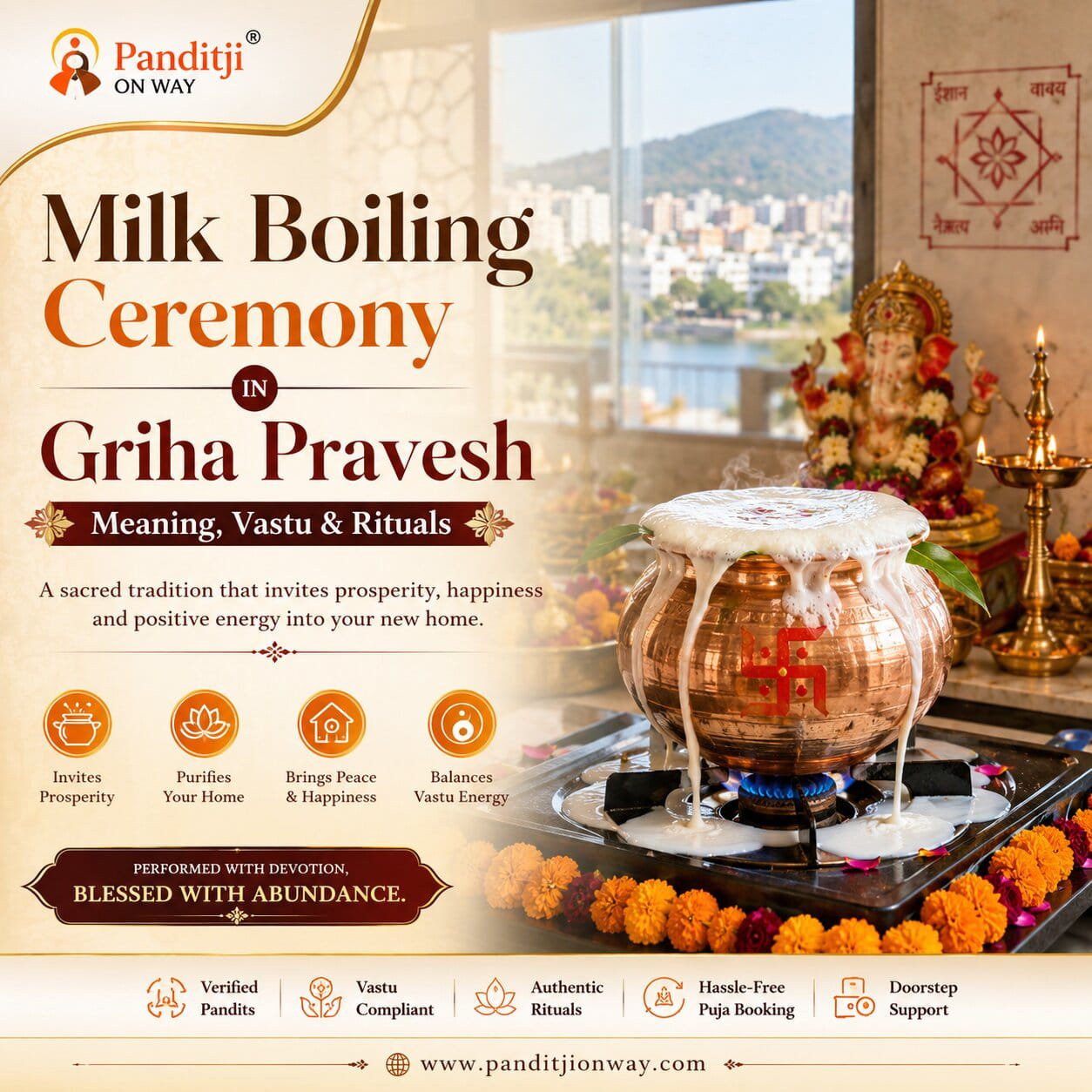
Among all housewarming rituals, the Milk Boiling Ceremony is one of the most significant. Known as Doodh Ubalna, Paal Kachal, or Paalu Ponginchadam in different parts of India, this ceremony symbolizes abundance, purity, prosperity, and the beginning of a blessed life in the new house.
When the milk overflows from the pot, it signifies that happiness, wealth, food, and opportunities will overflow into the lives of the family members.
In this comprehensive guide, you will learn:
- Spiritual significance of boiling milk during Griha Pravesh
- Vastu rules and correct direction
- Step-by-step procedure
- Scientific and symbolic meaning
- Regional traditions across India
- Common mistakes to avoid
- Frequently asked questions
Quick Answer: Why Is Milk Boiled During Griha Pravesh?
Milk is boiled during Griha Pravesh because it symbolizes purity, prosperity, nourishment, and abundance. Allowing the milk to overflow signifies that wealth, happiness, and blessings will continuously increase in the household. The ritual also purifies the kitchen and invokes the blessings of Goddess Lakshmi and Agni Dev.
This answer is optimized for Google’s Featured Snippet.
What Is the Milk Boiling Ceremony in Griha Pravesh?
The Milk Boiling Ceremony is traditionally the first cooking activity performed in a new home after entering the property.
A new vessel is placed on the stove, fresh milk is heated, and the family waits for it to rise and overflow naturally.
The ritual represents:
| Symbol | Meaning |
|---|---|
| Milk | Purity and divine nourishment |
| Fire | Presence of Agni Dev |
| Overflowing Milk | Continuous prosperity |
| New Pot | Fresh beginnings |
| Sweetened Milk | Harmony and happiness |
| Family Participation | Unity and togetherness |
Spiritual Significance of Boiling Milk During Griha Pravesh
1. Inviting Goddess Lakshmi
In Hindu beliefs, milk is associated with purity and prosperity.
Boiling milk during Griha Pravesh is considered an invitation for Goddess Lakshmi to reside permanently in the home.
Her presence is believed to bring:
- Wealth
- Success
- Financial stability
- Family harmony
2. Blessings of Agni Dev
The kitchen represents the heart of the home.
The first sacred fire lit in the new kitchen invokes Agni Dev, the deity of fire.
Agni Dev:
- Purifies the surroundings
- Removes negative vibrations
- Carries prayers to the divine realm
3. Symbol of Unlimited Abundance
The most important aspect of the ritual is allowing the milk to overflow.
The overflowing milk signifies:
- Continuous growth
- Prosperity without limits
- Never-ending food and resources
- Positive opportunities
According to traditional beliefs, abundance should never be restricted; therefore, the milk should rise naturally and spill over.
Scientific Perspective Behind the Milk Boiling Ceremony
While rooted in spirituality, the ritual also has practical significance.
| Traditional Belief | Scientific Perspective |
|---|---|
| Milk purifies the home | Heat sterilizes utensils and cooking surfaces |
| Fire removes negativity | Fire and warmth create a psychologically welcoming atmosphere |
| First cooking ritual | Establishes household routines |
| Family gathers together | Builds emotional connection with the new home |
The ceremony creates a strong emotional and psychological attachment to the new living space.
Correct Vastu Rules for Milk Boiling Ceremony
Best Direction for the Stove
According to Vastu Shastra:
| Element | Recommended Direction |
|---|---|
| Kitchen | Southeast |
| Stove Placement | Southeast |
| Person Performing Ritual | Facing East |
| Overflow Direction | East or Northeast |
The Southeast direction is associated with the fire element and is governed by Agni Dev.
Step-by-Step Procedure for Milk Boiling Ceremony
Step 1: Clean the Kitchen
Clean the entire kitchen thoroughly before beginning the ritual.
Step 2: Place a New Pot
Use a new vessel made of:
- Stainless steel
- Silver
- Brass
Avoid using old utensils.
Step 3: Decorate the Pot
Many families decorate the vessel with:
- Kumkum
- Turmeric
- Mango leaves
- Sacred thread
Step 4: Boil Fresh Milk
Pour fresh milk into the vessel and place it on the stove.
Recite prayers to:
- Lord Ganesha
- Goddess Lakshmi
- Agni Dev
Step 5: Allow the Milk to Overflow
Do not stop the milk from rising.
Allow it to overflow naturally.
This symbolizes:
- Wealth
- Prosperity
- Happiness
- Growth
Step 6: Add Auspicious Ingredients
Many families add:
| Ingredient | Meaning |
|---|---|
| Rice | Food security |
| Sugar | Sweet relationships |
| Turmeric | Protection |
| Cardamom | Positive vibrations |
| Saffron | Luxury and prosperity |
Step 7: Offer Naivedyam
Offer the prepared milk to the deity before serving anyone.
Regional Variations of the Milk Boiling Ceremony Across India
| State | Local Name | Unique Practice |
|---|---|---|
| Tamil Nadu | Paal Kachal | Family chants “Pongalo Pongal” |
| Andhra Pradesh | Paalu Ponginchadam | Milk overflow celebrated with prayers |
| Karnataka | Halu Kudisuvudu | Family gathers around stove |
| Maharashtra | Doodh Ubalna | Vedic mantras recited |
| Gujarat | Doodh Ukaalvu | Turmeric and sugar added |
| Bengal | First Kheer Ritual | Sweet rice pudding prepared |
Common Mistakes to Avoid During the Ritual
Using an Old Vessel
Always choose a new pot.
Stopping the Overflow
Allow the milk to spill naturally.
Ignoring Vastu Direction
Face East whenever possible.
Skipping the Offering
Offer the milk to the deity first.
Leaving the House Empty
Many traditions recommend staying overnight after Griha Pravesh.
What to Do After the Milk Boiling Ceremony?
Share the Sacred Prasad
Distribute the sweetened milk among family members and guests.
Light Lamps
Light diyas throughout the home to spread positive energy.
Prepare a Sattvic Meal
The first meal should ideally avoid:
- Onion
- Garlic
- Non-vegetarian food
Stay Overnight
Many traditions recommend spending the first night in the new home.
Benefits of the Milk Boiling Ceremony
- Invites prosperity and abundance
- Removes negative energies
- Activates positive Vastu vibrations
- Strengthens family bonds
- Marks a sacred beginning
- Brings blessings of Goddess Lakshmi
- Purifies the kitchen and living space
Book a Pandit for Griha Pravesh Puja
For a complete and authentic Griha Pravesh experience, professional Vedic guidance ensures that every ritual is performed according to traditional scriptures and regional customs.
Internal Links
- Griha Pravesh Puja Guide
- Griha Pravesh Muhurat Calculator
- Vastu Shanti Puja
- Satyanarayan Puja
- Navagraha Puja
- Ganesh Puja
Visit: Panditji On Way

Authoritative References
For additional cultural and traditional understanding:
FAQs & People Also Ask (PAA) Questions for Milk Boiling Ceremony in Griha Pravesh
FAQ 1: Why is milk boiled during Griha Pravesh?
Milk is boiled during Griha Pravesh because it symbolizes purity, prosperity, nourishment, and abundance. The overflowing milk represents continuous growth, financial stability, happiness, and blessings entering the new home. In Hindu tradition, this ritual is believed to invite Goddess Lakshmi and positive energy into the house.
FAQ 2: What does overflowing milk symbolize in a new house?
Overflowing milk symbolizes limitless prosperity, wealth, happiness, and success. It signifies that the household will always have sufficient food, financial security, and positive opportunities. The overflow is considered an auspicious sign of abundance.
FAQ 3: What is the Milk Boiling Ceremony called in different parts of India?
The Milk Boiling Ceremony is known by different names across India:
- Doodh Ubalna (North India)
- Paal Kachal (Tamil Nadu)
- Paalu Ponginchadam (Andhra Pradesh & Telangana)
- Halu Kudisuvudu (Karnataka)
- Doodh Ukaalvu (Gujarat)
Although the names vary, the spiritual significance remains the same.
FAQ 4: Is boiling milk compulsory during Griha Pravesh?
Boiling milk is not mandatory according to all scriptures, but it is one of the most widely followed traditions in Hindu housewarming ceremonies. It is considered highly auspicious because it marks the first cooking activity and symbolizes prosperity in the new home.
FAQ 5: Which direction should milk overflow during Griha Pravesh?
According to Vastu Shastra, milk should ideally overflow toward the East or Northeast direction. These directions are associated with positivity, health, spiritual growth, and prosperity. Facing East while performing the ritual is considered highly auspicious.
FAQ 6: Who should perform the Milk Boiling Ceremony?
Traditionally, the lady of the house performs the ceremony because she is considered the nurturer of the household. However, all family members can participate and offer prayers together during the ritual.
FAQ 7: Can milk boiling be done before entering the house?
In many South Indian traditions, the Milk Boiling Ceremony is performed immediately after entering the house and before other household activities. However, practices may vary depending on regional customs and family traditions.
FAQ 8: Which pot should be used for boiling milk during Griha Pravesh?
A new pot should always be used. Stainless steel, brass, silver, or copper vessels are considered auspicious. Using a new vessel symbolizes a fresh beginning and the start of a positive chapter in life.
FAQ 9: What ingredients can be added to the boiling milk?
Many families add:
- Rice for abundance
- Sugar for sweetness in relationships
- Turmeric for protection
- Cardamom for positivity
- Saffron for prosperity and luxury
These ingredients enhance the symbolic meaning of the ritual.
FAQ 10: What should be done with the boiled milk after the ceremony?
The boiled milk should first be offered to Lord Ganesha and Goddess Lakshmi as Naivedyam. After the offering, it is distributed as Prasad among family members and guests as a blessing.
FAQ 11: What is the best time to perform the Milk Boiling Ceremony?
The ceremony should ideally be performed during the auspicious Griha Pravesh Muhurat selected by a qualified priest. Performing the ritual during a favorable Muhurat is believed to maximize positive energy and blessings.
FAQ 12: Can the Milk Boiling Ceremony remove Vastu Dosha?
Many Vastu experts believe that the Milk Boiling Ceremony helps activate positive energy within the home and reduces minor Vastu imbalances. When combined with Griha Pravesh Puja and Vastu Shanti rituals, it is considered highly beneficial.
FAQ 13: Why is the kitchen important during Griha Pravesh?
The kitchen is considered the heart of the home because it provides nourishment and sustains family life. The first fire lit in the kitchen is dedicated to Agni Dev, the Hindu deity of fire, making the space sacred and spiritually energized.
FAQ 14: Can we make kheer after boiling milk during Griha Pravesh?
Yes. Many families prepare kheer using the boiled milk as their first sacred dish in the new home. Kheer symbolizes sweetness, prosperity, and divine blessings and is commonly offered to deities before being served to guests.
FAQ 15: Is Milk Boiling Ceremony scientifically beneficial?
From a practical perspective, the ritual promotes cleanliness, family bonding, emotional attachment to the new home, and the ceremonial activation of the kitchen. The gathering of family members during the ceremony also creates positive psychological associations with the new living space.
FAQ 16: What are the spiritual benefits of the Milk Boiling Ceremony in Griha Pravesh?
The Milk Boiling Ceremony is believed to create a spiritually charged environment that welcomes divine blessings into the home. According to Hindu traditions, milk represents purity, peace, nourishment, and sacred energy. When milk is boiled and allowed to overflow, it symbolizes the removal of negativity and the arrival of prosperity.
The ritual invokes the blessings of Goddess Lakshmi, who is associated with wealth and abundance, and Agni Dev, who purifies the surroundings through sacred fire. Families perform this ceremony with prayers for good health, financial stability, harmony, and success.
Many spiritual practitioners also believe that the ritual establishes positive vibrations in the home, making it an ideal beginning for a new phase of life.
FAQ 17: What mistakes should be avoided during the Milk Boiling Ceremony?
Several common mistakes should be avoided to maintain the traditional significance of the ritual. Families should avoid using old utensils, skipping prayers, performing the ceremony outside the auspicious Muhurat, or preventing the milk from overflowing.
The most important aspect is allowing the milk to rise and spill naturally. Stopping the overflow is traditionally seen as restricting prosperity. Additionally, the milk should be offered to the deities before consumption.
Maintaining cleanliness in the kitchen and following Vastu recommendations can further enhance the positive effects of the ceremony.
FAQ 18: How does the Milk Boiling Ceremony differ across Indian states?
Although the core symbolism remains the same, different regions celebrate the ritual in unique ways. In Tamil Nadu, families chant “Pongalo Pongal” when the milk overflows. In Andhra Pradesh and Telangana, the ritual is known as Paalu Ponginchadam and often includes traditional prayers for prosperity.
In Maharashtra, Vedic mantras are commonly recited while boiling milk. In Gujarat, families may add turmeric and sugar to the milk. In Bengal, the boiled milk is often used to prepare sweet kheer that is offered to deities.
These regional variations highlight India’s rich cultural diversity while preserving the same spiritual objective of welcoming prosperity into the home.
FAQ 19: What should be done after completing the Milk Boiling Ceremony?
After the ceremony, the boiled milk is offered to the deities and then distributed as Prasad among family members and guests. Many families also prepare a sattvic meal, light lamps in different rooms, and perform additional prayers for peace and prosperity.
Some traditions recommend spending the first night in the new house to establish a spiritual connection with the property. Lighting lamps and maintaining positive thoughts are believed to strengthen the beneficial energies activated during the ritual.
These practices collectively help transform a newly constructed building into a spiritually vibrant and welcoming home.
FAQ 20: Why is the Milk Boiling Ceremony considered one of the most important Griha Pravesh rituals?
The Milk Boiling Ceremony is considered one of the most important rituals because it represents the first act of nourishment and prosperity within the home. Unlike many symbolic rituals, it directly involves the kitchen, which is regarded as the center of family well-being.
The overflowing milk serves as a visual representation of abundance, growth, and continuous blessings. It reflects the family’s hope that their new home will always be filled with food, happiness, wealth, and harmony.
From a spiritual perspective, the ritual invites Goddess Lakshmi, honors Agni Dev, purifies the living space, and marks the beginning of a prosperous journey. This combination of symbolism, tradition, and devotion makes it one of the most cherished moments of every Griha Pravesh ceremony.