How to pick the Right Breath? For More relaxed, happy and healthy life (Calm & energize Your Body Mind and Soul on daily basis)
How to pick the right breath? – Do you want more relaxed ,happy and healthy life? Or Still waking up with anxiety every single day? Try below combo, it will surely help you out
क्या आप ज़्यादा सुकून, खुशहाल और स्वस्थ जीवन चाहते हैं? या फिर भी हर दिन चिंता के साथ जागते हैं? नीचे दिए गए कॉम्बो को आज़माएँ, यह निश्चित रूप से आपकी मदद करेगा
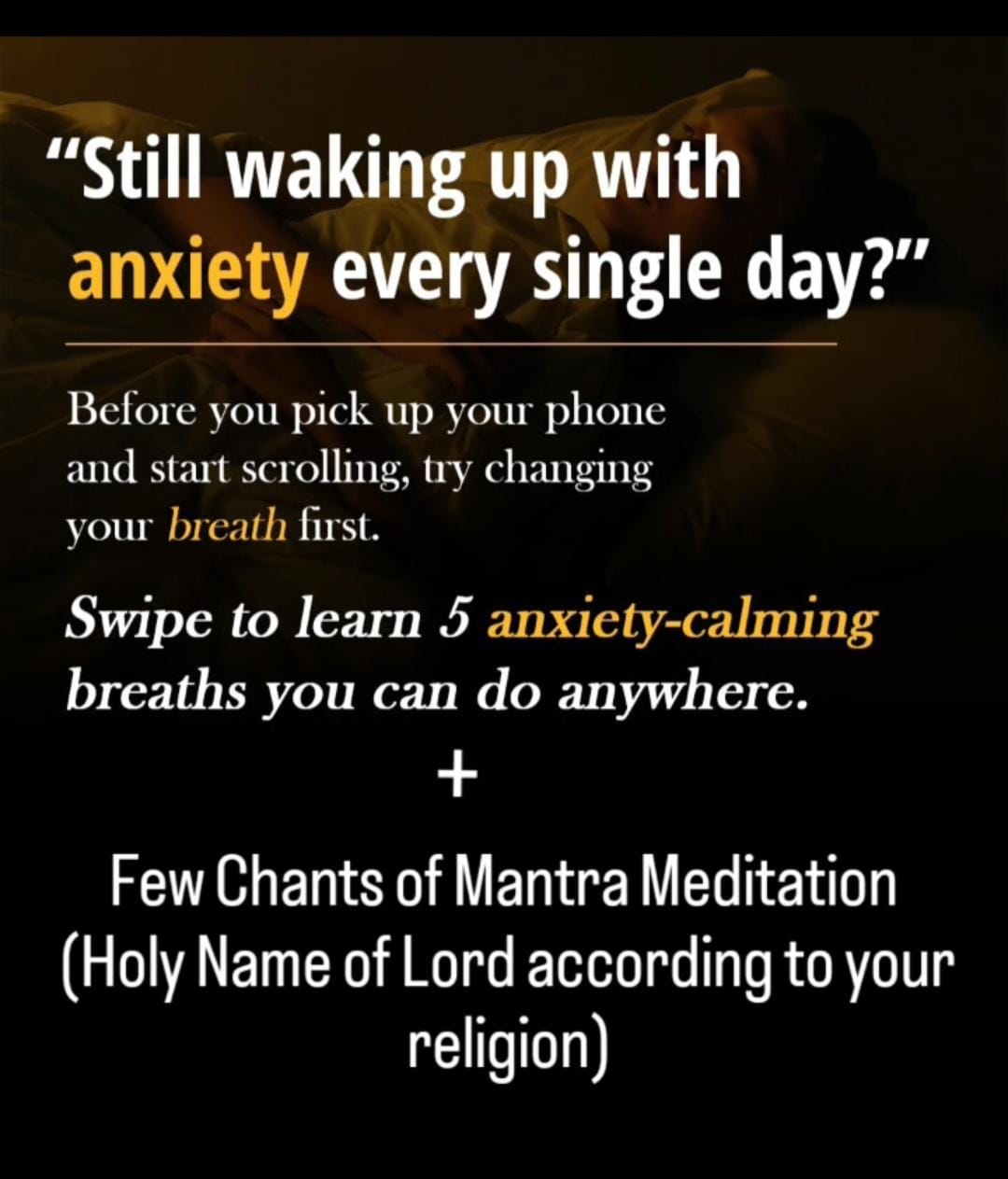 “Still waking up with anxiety every single day?”
Before you pick up your phone and start scrolling, try changing your breath first. Learn 5 anxiety-calming breaths you can do anywhere. + Few Chants of Mantra Meditation (Holy Name of Lord according to your religion)
- Calm and energize your body, mind, and soul on a daily basis with simple breathing exercises designed especially for beginners.
- Discover powerful breathwork secrets that help detox your system naturally and support emotional balance.
- These beginner-friendly yoga and pranayama techniques not only reduce anxiety but also improve sleep quality.
- Daily breathing exercises for detox and relaxation are one of the most effective ways to restore mental clarity and overall well-being.
- Practice these yoga-based breathing secrets to improve sleep, deepen relaxation, and build long-term emotional resilience.
- If you want to sleep faster and wake up refreshed, these simple breathwork practices can transform your nights.
How to Pick the Right Breath for a More Relaxed, Happy and Healthy Life
Are you searching for a more relaxed, happier, and healthier life? Or do you still wake up every morning with anxiety, racing thoughts, or a heavy mind? Before reaching for your phone and drowning yourself in notifications, try changing your breath first.
Breath is the fastest way to influence the nervous system. The right breathing technique can calm anxiety, reduce overthinking, soothe anger, and help you feel grounded within minutes.
This guide explains how to pick the right breath based on your emotional state, along with step-by-step breathing formulas, meditation tips, and a free anxiety worksheet.
For personalized meditation and live sessions, contact 9664453781.
How to Pick the Right Breath – Formula No 1
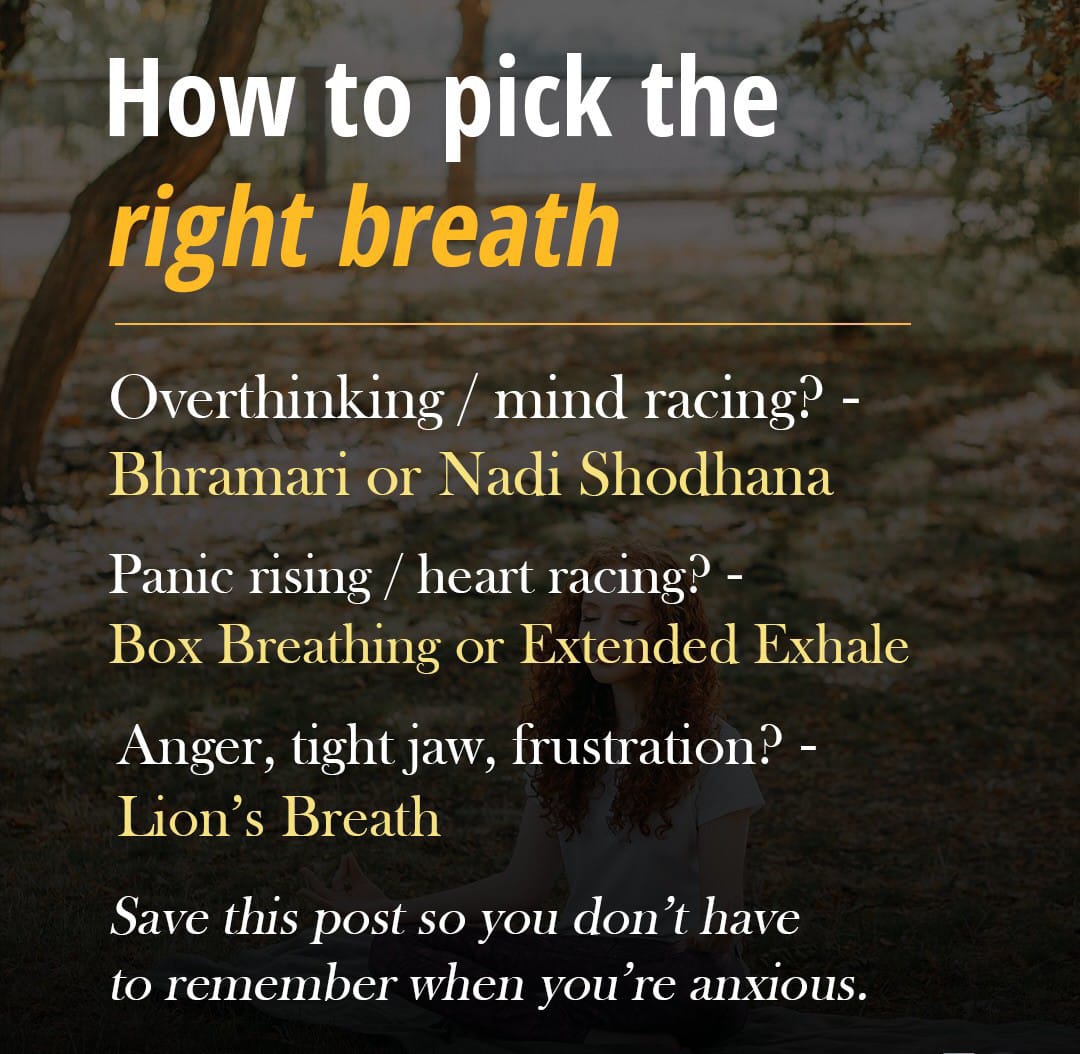
How to pick the right breath
Choosing the right breath depends entirely on what you are feeling in the moment. Here is a simple formula to help you decide:
1. Overthinking or Mind Racing
Use: Bhramari or Nadi Shodhana (Alternate Nostril Breathing)
2. Panic Rising or Heart Racing
Use: Box Breathing or Extended Exhale (Vagus Nerve Activation)
3. Anger, Tight Jaw, or Frustration
Use: Lion’s Breath (Simha Pranayama)
Save this guide so you can use the right technique whenever anxiety appears.
Box Breathing – Formula No 2
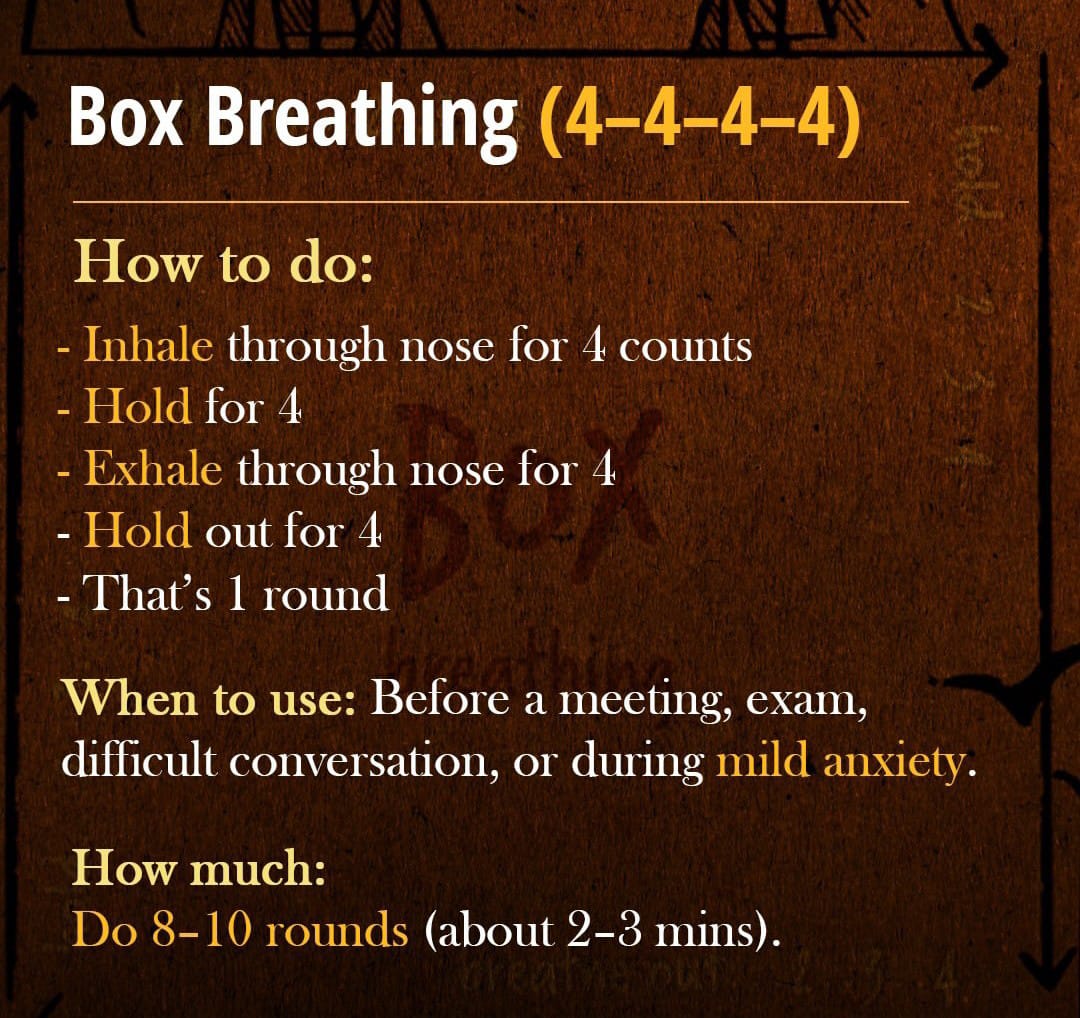
Box Breathing (4-4-4-4)
Works best for: Mild anxiety, before a meeting, exams, important calls, or high-pressure situations.
How to Do Box Breathing (4-4-4-4)
- Inhale through the nose for 4 counts
- Hold the breath for 4 counts
- Exhale through the nose for 4 counts
- Hold the breath out for 4 counts
This completes 1 round.
How much: Do 8–10 rounds (2–3 minutes).
Alternate Nostril Breath (Nadi Shodhana) – Formula No 3
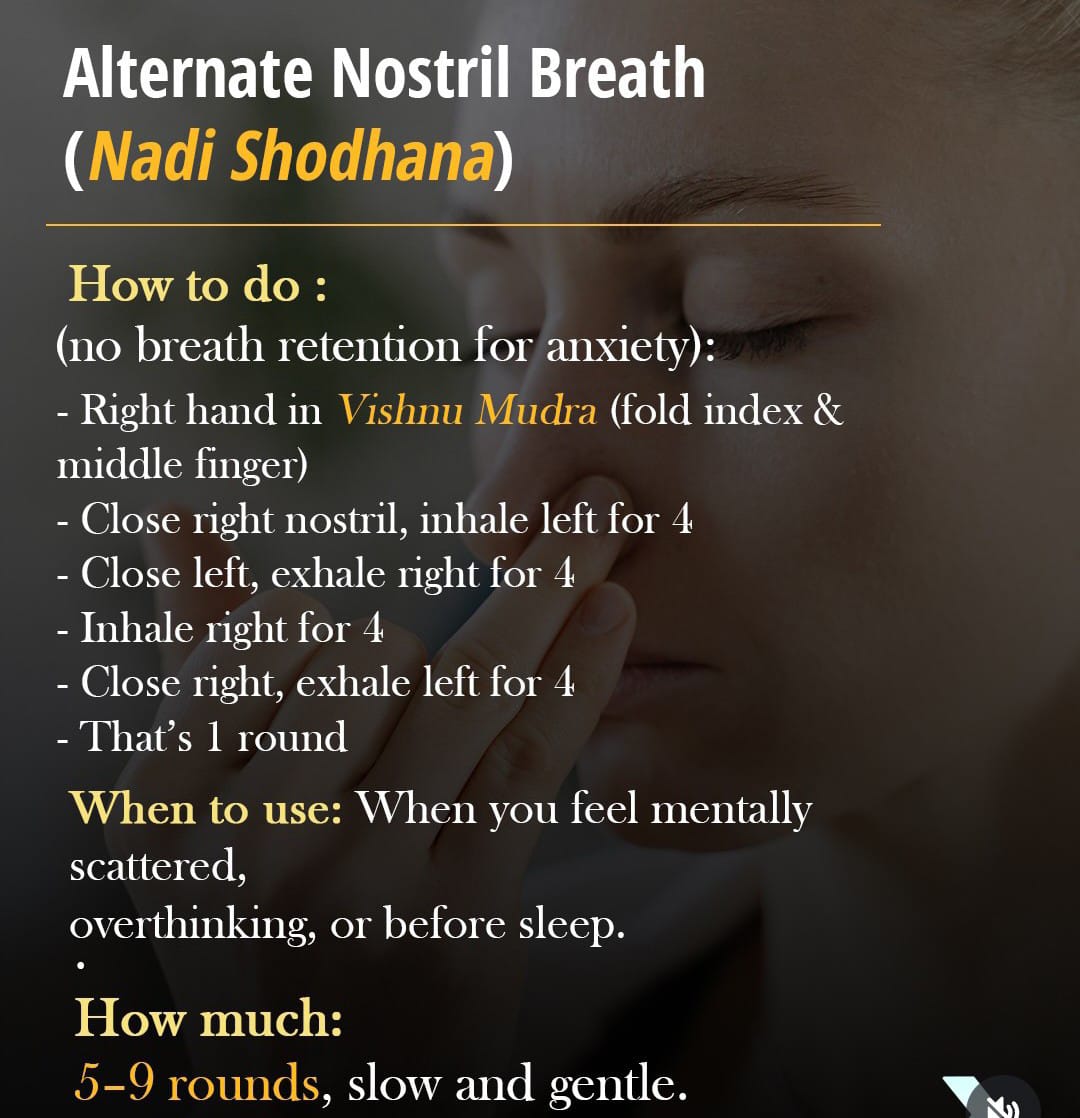
Works best for: Overthinking, mental fatigue, lack of focus, or trouble sleeping.
How to Do Nadi Shodhana
(Without breath retention for anxiety relief)
- Place your right hand in Vishnu Mudra
- Close the right nostril and inhale through the left for 4 counts
- Close the left nostril and exhale through the right for 4 counts
- Inhale through the right for 4 counts
- Close right nostril and exhale through left for 4 counts
This completes 1 round.
How much: 5–9 slow and gentle rounds.
Extended Exhale (Vagus Nerve Soother) (4–6 / 4–8 Breathing)
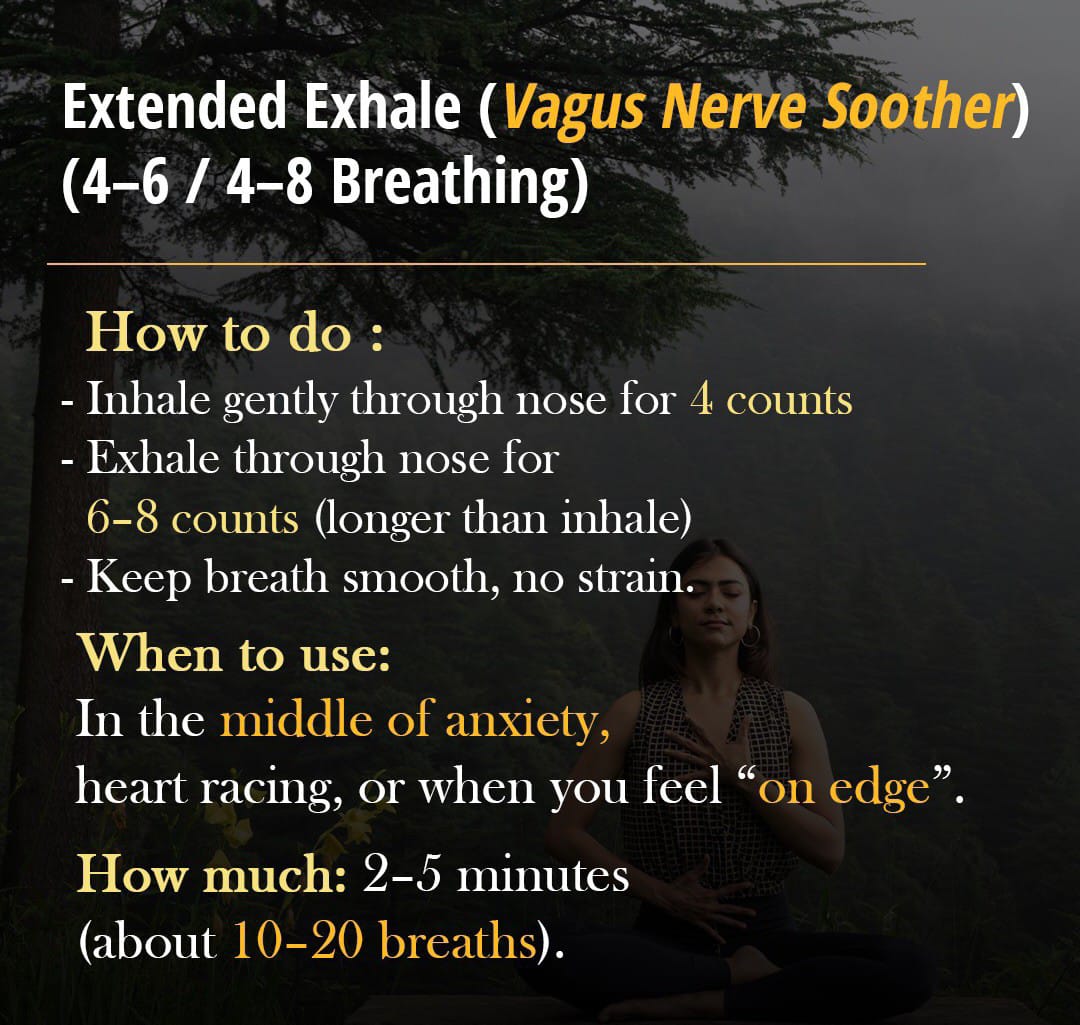
How to do :
- Inhale gently through nose for 4 counts
- Exhale through nose for 6-8 counts (longer than inhale)
- Keep breath smooth, no strain.
When to use:
In the middle of anxiety, heart racing, or when you feel “on edge”.
How much: 2-5 minutes (about 10-20 breaths).
Works best for: High anxiety, racing heartbeat, nervous system overload, sudden stress.
Bhramari (Humming Bee Breath)
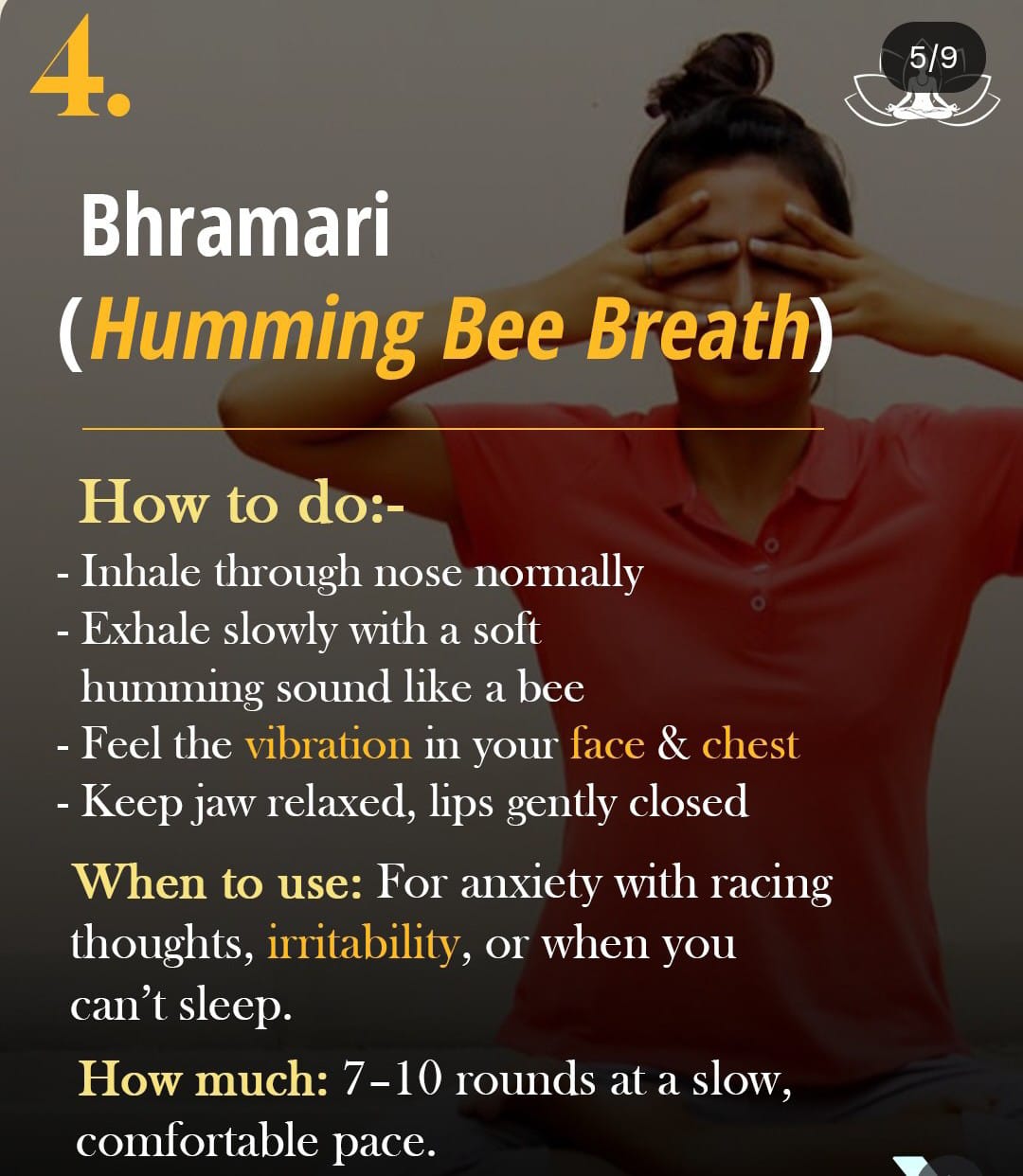
How to do:-
- Inhale through nose normally
- Exhale slowly with a soft humming sound like a bee
- Feel the vibration in your face & chest
- Keep jaw relaxed, lips gently closed
When to use: For anxiety with racing thoughts, irritability, or when you can’t sleep.
How much: 7-10 rounds at a slow, comfortable pace.
Works best for: Anxiety with racing thoughts, irritability, sleeplessness, mental restlessness.
Lion’s Breath (Simha Pranayama)
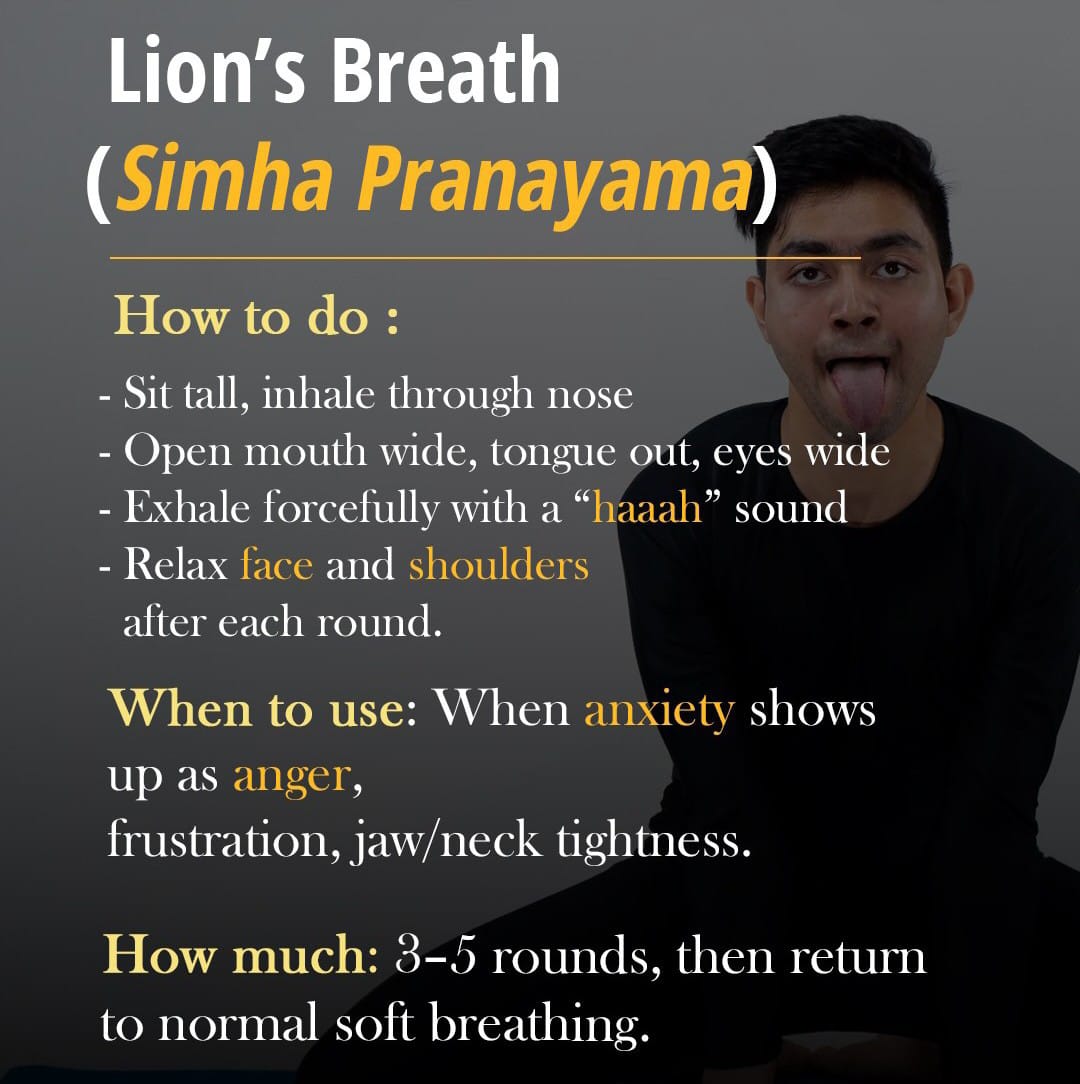
How to do :
- Sit tall, inhale through nose
- Open mouth wide, tongue out, eyes wide
- Exhale forcefully with a “haaah” sound
- Relax face and shoulders after each round.
When to use: When anxiety shows up as anger, frustration, jaw/neck tightness.
How much: 3-5 rounds, then return to normal soft breathing.
Works best for: Anger, frustration, jaw tightness, emotional pressure.
Want my FREE Anxiety Relief Worksheet?
I’ve created a simple Anxiety Relief Worksheet you can use with these breaths to:
- Track your triggers
- Notice body sensations
- Choose the right breath for that moment
Live Session and Meditation Sessions Contact
Free Anxiety Relief Worksheet
You can request my Free Anxiety Relief Worksheet, which helps you:
• Track your anxiety triggers
• Understand body sensations
• Choose the right breath instantly
• Reduce stress using a simple daily plan
Contact 9664453781 to receive your copy.
For live session and Meditation sessions kindly contact 9664453781
Mantra Meditation (Optional but Powerful)
After completing any breathwork technique, you can enhance calmness by chanting the holy name of your faith.
Examples:
• Hindu: “Om Namah Shivaya” or “Hare Krishna Maha Mantra”
• Buddhist: “Om Mani Padme Hum”
• Christian: “Hallelujah”
• Islamic: “Subhan Allah” or “Ya Salam”
Select the mantra based on your belief system for deeper relaxation.
Need Live Meditation or Breathwork Sessions?
For guided sessions, personal anxiety-relief coaching, or mantra meditation, contact:
Phone: 9664453781
Website:
Visit PanditJi On Way for spiritual guidance, puja booking, and meditation services:
https://www.panditjionway.com (Panditji on way)
Why Breathwork Works (Science + Scriptures)
Breath regulates the Autonomic Nervous System.
• Slow exhale activates the vagus nerve
• Balanced breathing stabilizes focus
• Mantra chanting calms the mind
• Pranayama techniques reduce cortisol levels
Ancient yogic texts such as the Hatha Yoga Pradipika and modern neuroscience both confirm that breathing is the fastest way to shift from stress to balance.
• https://www.yogajournal.com
• https://www.healthline.com
• https://www.mindbodygreen.com
Frequently Asked Questions – How to pick the right breath?
1. What is the best breathing exercise for immediate anxiety relief?
The best breathing exercise for immediate anxiety relief is Extended Exhale Breathing (4–6 or 4–8 method). It quickly activates the vagus nerve, lowers heart rate, and shifts the nervous system from fight-or-flight to calm. This technique is currently recommended by yoga experts and supported by modern stress research.
2. Which pranayama is best for overthinking and racing thoughts?
Nadi Shodhana (Alternate Nostril Breathing) is considered the most effective pranayama for overthinking because it balances both hemispheres of the brain, reduces cognitive overload, and enhances mental clarity. It is ideal before sleep or during mental exhaustion.
3. What is the fastest way to calm panic or a racing heart?
The fastest natural way to calm a racing heart is Box Breathing (4-4-4-4). It stabilizes breath rhythm, reduces panic response, and supports emotional regulation. It is widely used in military, corporate wellness, and therapy settings.
4. Can breathing exercises really reduce anxiety long-term?
Yes. Consistent breathwork reduces baseline stress, improves vagal tone, and lowers cortisol levels. Scientific studies show that 5–10 minutes of daily pranayama can significantly reduce chronic anxiety and improve emotional resilience.
5. Which breathing techniques help with anger and frustration?
Lion’s Breath (Simha Pranayama) is most effective for releasing anger, jaw tension, facial tightness, and emotional buildup. It relaxes the throat, softens facial muscles, and reduces internal pressure.
6. Should I avoid breath retention if I feel anxious?
Yes. Avoid holding your breath when experiencing anxiety or panic. Breath retention can increase discomfort. Instead, use slow, steady breathing techniques like Extended Exhale or Bhramari.
7. What is the best breathing exercise before sleep?
The best breathing exercises before sleep are Bhramari (Humming Bee Breath) and Nadi Shodhana, as they slow down brain activity, reduce nighttime anxiety, and prepare the mind for deep rest.
8. How many minutes of breathwork should I practice each day?
Most people benefit from 5–10 minutes daily, which is enough to reset the nervous system, reduce stress, and support mental well-being. Beginners can start with 2–3 minutes.
9. Is breathwork safe for beginners?
Yes. All techniques mentioned—Box Breathing, Nadi Shodhana, Bhramari, Extended Exhale, and Lion’s Breath—are safe for beginners when practiced gently, without forcing or straining the breath.
10. Can I combine breathwork with mantra meditation?
Absolutely. Combining breathwork with mantra meditation (such as “Om Namah Shivaya,” “Hare Krishna,” or spiritual chants from your religion) enhances calmness, increases focus, and deepens emotional grounding.
11. How do I choose the right breath for my condition?
Use this quick formula:
• Overthinking: Bhramari or Nadi Shodhana
• Panic or heart racing: Box Breathing or Extended Exhale
• Anger or tension: Lion’s Breath
Choosing based on emotional state is the most effective approach.
12. Are there any side effects of breathwork?
There are no major side effects when practiced correctly. Avoid forcing the breath, over-expanding the lungs, or practicing retention during anxiety. If dizziness occurs, pause and breathe normally.
13. Can breathwork improve sleep quality naturally?
Yes. Breathwork activates the parasympathetic nervous system, reduces mental activity, and prepares the body for rest, making it one of the most effective natural sleep improvement methods.
14. Which breathing technique is best for beginners?
Box Breathing and Extended Exhale are the easiest beginner techniques because they have simple counts and provide fast relaxation.
15. Who can guide me personally in breathwork and meditation?
You can join live guided meditation and breathwork sessions by contacting 9664453781 or visiting PanditJiOnWay.com for expert spiritual and wellness guidance.
Conclusion
The quality of your breath determines the quality of your life. When anxiety, overthinking, or frustration arises, choosing the right breath can transform your emotional state instantly. Use this guide daily, save it for reference, and explore the link between breath, mind, and inner peace.
For live breathwork sessions, meditation coaching, and spiritual guidance, contact 9664453781 or visit PanditJiOnWay.com.