10 Most Fierce Gods and Goddesses in Hinduism – Powerful Deities Who Destroy Evil and Protect Devotees
Discover the 10 most fierce hindu gods and goddesses in Hinduism including Kali, Shiva, Narasimha, Bhairava, and Durga. Learn their stories, symbolism, and significance.
The most fierce gods and goddesses in Hinduism include Goddess Kali, Lord Shiva, Lord Narasimha, Lord Bhairava, Goddess Durga, Lord Varaha, Lord Indra, Lord Yamaraj, Lord Hanuman, and Dhumravarna. These powerful deities represent destruction of evil, cosmic transformation, protection of devotees, and restoration of universal balance.
Why Are Some Hindu Deities Fierce?
In Hinduism, the universe operates in cycles of creation, preservation, and destruction. Destruction is not negative — it is necessary for renewal and spiritual evolution. Fierce deities symbolize:
- Destruction of ego and ignorance
- Protection against demons and negative forces
- Transformation and karmic cleansing
- Restoration of Dharma
These forms remind devotees that divine power can be compassionate yet formidable when righteousness is threatened.
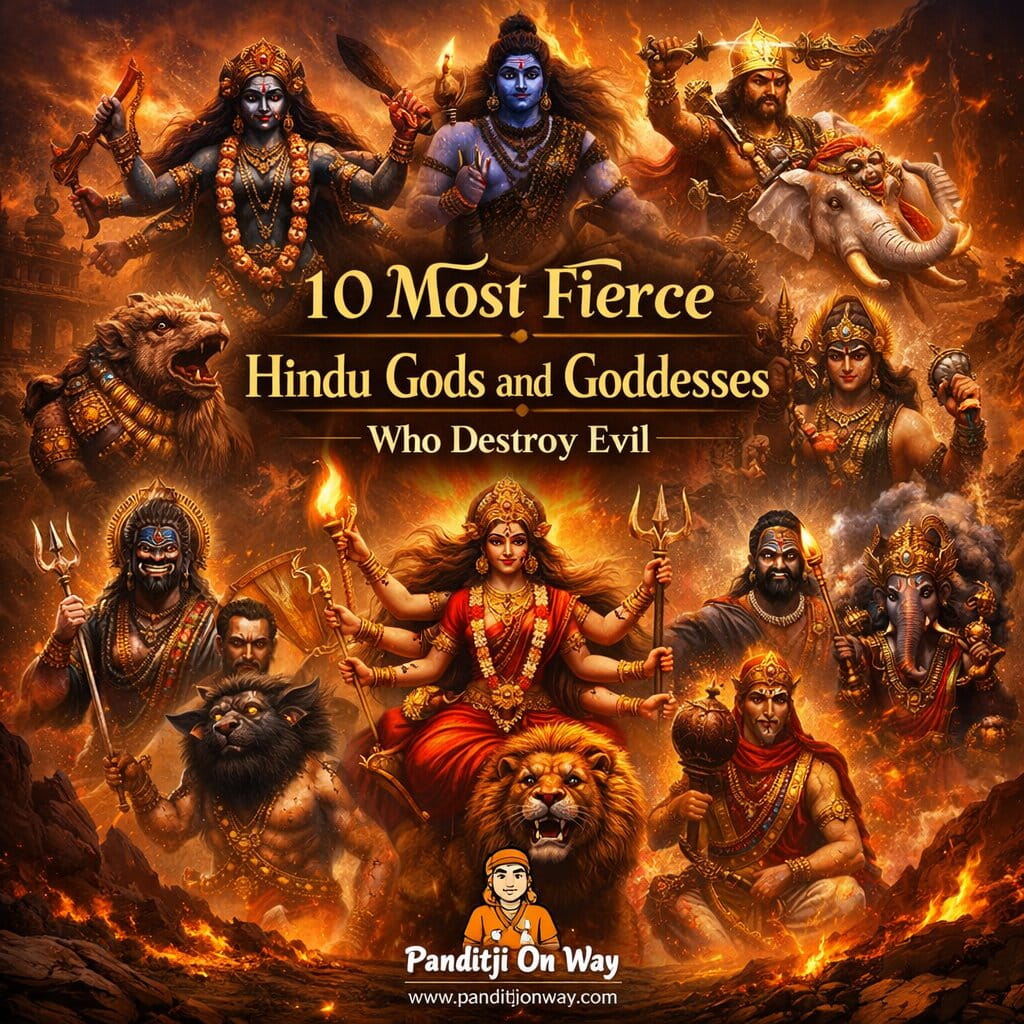
Table: 10 Most Fierce Gods and Goddesses in Hinduism
| Deity | Role | Symbol of Fierceness | Key Demon Defeated | Primary Scripture |
|---|---|---|---|---|
| Goddess Kali | Destruction & Time | Skull garland, severed heads | Raktabija | Devi Bhagavata Purana |
| Lord Shiva | Destroyer | Third eye, Trishul | Kamadeva (burned) | Rudra Samhita |
| Lord Narasimha | Protector Avatar | Lion-man form | Hiranyakashipu | Bhagavata Purana |
| Goddess Durga | Warrior Shakti | Multiple arms, lion mount | Mahishasura | Devi Mahatmya |
| Lord Bhairava | Terrifying Shiva Form | Skull & dog vehicle | Brahma’s 5th head | Skanda Purana |
| Lord Varaha | Vishnu Avatar | Boar form | Hiranyaksha | Rig Veda |
| Lord Indra | King of Gods | Vajra (thunderbolt) | Vritrasura | Rig Veda |
| Lord Yamaraj | God of Death | Noose & buffalo | Judge of souls | Mahabharata |
| Lord Hanuman | Devotion & Strength | Burning Lanka | Ravana’s army | Ramayana |
| Dhumravarna | Fierce Ganesha Form | Smoky complexion | Abhimanasura | Ganesha Purana |
10 Most Fierce Gods and Goddesses in Hinduism
Hinduism presents divinity in multiple dimensions — benevolent, nurturing, compassionate, and at times fierce and destructive. These fierce forms are not representations of cruelty, but of divine justice, cosmic balance, and protection of Dharma. They manifest when evil, ego, and adharma threaten universal harmony.
Below is a detailed and enriched explanation of the ten most fierce deities in Hindu tradition.
1. Goddess Kali – The Fierce and Feared Goddess
Goddess Kali represents the ultimate power of time (Kala), transformation, and destruction. She is often depicted with dark complexion, disheveled hair, a garland of skulls, a skirt of severed arms, and a protruding tongue. These symbols are deeply philosophical rather than literal.
Symbolism of Kali’s Form
- Garland of skulls represents the cycle of birth and death.
- Severed arms symbolize the fruits of human actions (karma).
- Protruding tongue signifies shock, humility, and control of destructive force.
- Dark complexion represents the infinite, formless cosmic reality.
Kali is not merely destructive — she destroys negativity, ego, illusion, and demonic forces that disturb cosmic order. She embodies the fierce compassion of the Divine Mother who protects her devotees at all costs.
The Slaying of Raktabija
The demon Raktabija possessed a boon that allowed each drop of his blood to create another demon like him. To prevent his multiplication, Kali drank his blood before it could touch the ground, ultimately annihilating him.
After the battle, Kali’s rage became uncontrollable. To calm her, Lord Shiva lay among the corpses. When Kali stepped on him, she realized her mistake and calmed down, symbolizing the restoration of balance between destructive energy (Shakti) and consciousness (Shiva).
Scriptural Reference:
Devi Bhagavata Purana, Skanda 5, Chapter 29
रक्तवीज महासेनावध्यो भूत्वा स्वरूपिणः । जग्राह च ततो देवी चक्रं खड्गमथासकृत् ॥
[Raktabija, becoming invulnerable and assuming many forms, Was slain by the Devil with the help of Her own Sakti. Then the Devī took Her own fierce form, and taking Her chakra and Her sword, drank the blood that flowed from the wounds of the Dānava.]
Devi Bhagavata Purana, Skanda 5, Chapter 29
2. Lord Shiva – The Destroyer
Lord Shiva, part of the Trimurti, represents destruction that leads to renewal. His fierce aspect symbolizes dissolution of ignorance, ego, and attachment.
The Third Eye
Shiva’s third eye represents supreme wisdom and transcendental perception. When opened, it releases fire that destroys illusion and restores cosmic balance.
Fierce Incidents
- Burned Kamadeva (god of desire) to ashes.
- Beheaded Ganesha (later revived him).
- Destroyed Daksha’s arrogance.
Despite his fierce acts, Shiva’s ultimate purpose is liberation (moksha). His destructive energy clears the path for spiritual awakening.
Scriptural Reference:
Rudra Samhita
किं करोमि क्व गच्छामि किं कृतं दैवतैरिह मत्स्वामिनं समाहूय नाशयामासुरुद्धतम् ॥
[O mighty lord what shall I do? Where shall I go? The gods called my husband here to be a victim. Bless me Lord Shiva. Give my husband back. Rati, the wife of Kamadeva, cried compassionately.]
Rudra Samhita 2.3.19 (Rati when her husband got turned into ashes)
3. Lord Indra – The King of the Gods
Indra, king of the Devas, governs thunder, lightning, and storms. His weapon, the Vajra, symbolizes indestructible spiritual power.
Slaying of Vritrasura
The demon Vritrasura imprisoned the waters of the earth. Indra, using the Vajra crafted from Sage Dadhichi’s bones, split the mountains and released the waters, restoring life.
Rig Veda (1.32.1-2) celebrates this heroic act.
Indra’s fierceness reflects his role as defender of cosmic order, though his pride and impulsiveness also teach moral lessons.
इन्द्रस्य नु वीर्याणि प्र वोचं यानि चकार प्रथमानि वज्री । अहन्नहिमन्वपस्ततर्द प्र वक्षणा अभिनत्पर्वतानाम् ॥
अहन्नहिं पर्वते शिश्रियाणं त्वष्टास्मै वज्रं स्वर्यं ततक्ष । वाश्रा इव धेनवः स्यन्दमाना अञ्जः समुद्रमव जग्मुरापः ॥
[Now I shall proclaim the heroic deeds of Indra, those foremost deeds that the mace-wielder performed, He smashed the serpent Vrtra. He bored out the waters. He split the bellies of the mountains. He smashed the serpent resting on the mountain—for him Tvaṣṭar had fashioned the resounding mace. Like bellowing milk-cows, streaming out, the waters went straight down to the sea.]
Rig Veda, 1.32.1-2
4. Lord Varaha – The Boar God
Varaha, the third avatar of Vishnu, manifested as a colossal boar to rescue Mother Earth (Bhudevi) from the demon Hiranyaksha.
Symbolism
- Boar form represents primal strength.
- Tusks symbolize sacrifice.
- Lifting Earth signifies restoration of cosmic stability.
Varaha’s fierce battle lasted for thousands of years, culminating in the destruction of Hiranyaksha and reestablishment of balance.
Scriptural Reference:
Rig Veda and Vishnu Purana
5. Lord Narasimha – The Lion Man
Narasimha, the fourth avatar of Vishnu, appeared to protect Prahlada from his tyrannical father Hiranyakashipu.
Why His Form Was Unique
Hiranyakashipu had a boon that he could not be killed:
- By man or animal
- Indoors or outdoors
- During day or night
- By weapon
- On earth or sky
Narasimha bypassed all conditions:
- Half-man, half-lion
- Twilight (neither day nor night)
- Threshold (neither indoors nor outdoors)
- Used claws (not weapons)
- On his lap (neither earth nor sky)
Bhagavata Purana (7.8) describes how Narasimha tore open the demon’s chest with his nails.
His fierce manifestation represents divine justice beyond human logic.
नखा रोत्पाटित हृत्सरोरुहं विसृज्य तस्यानुचरानुदायुधान्
अहन्समस्तान्नखशस्त्रपाणिभिर्दो र्दण्डयूथोऽनुपथान्सहस्रशः॥
[The Supreme Personality of Godhead, who had many, many arms, first uprooted Hiraṇyakaśipu’s heart and then threw him aside and turned toward the demon’s soldiers. These soldiers had come in thousands to fight with Him with raised weapons and were very faithful followers of Hiranyakasipu, but Lord Nrsimhadeva killed all of them merely with the ends of His nails.]
Bhagavata Purana 7.8
6. Lord Bhairava – The Terrible
Kaal Bhairava is a fierce form of Shiva associated with time, dissolution, and transcendence.
Plucking Brahma’s Fifth Head
According to Skanda Purana, Bhairava removed Brahma’s fifth head to eliminate ego and arrogance. The skull remained attached to him until he performed penance.
Bhairava is associated with cremation grounds, symbolizing detachment from worldly illusions.
Scriptural Reference:
Skanda Purana, Avantya Khanda
तेजोराशिशशांकाभः शशांकार्काग्निलोचनः। वामांगुष्ठनखाग्रेण ब्रह्मणः पञ्चमं शिरः॥ चकर्त कदलीगर्भं नरः कररुहैरिव।
[The Lord who had the brilliance of the moon in its height of refulgence, who had the moon, the sun and fire for his eyes, plucked off the fifth head of Brahma with the tip of the nail of the left thumb, like a man plucking the inner core of plantain with his fingers. Afterwards, the head that had been cut off remained in the hand of Rudra.]
Skanda Purana, Avantya Khanda, Avantikshetra, 59-69
7. Goddess Durga – The Invincible
Durga represents Shakti, the supreme feminine cosmic power.
Battle with Mahishasura
Mahishasura, a shape-shifting buffalo demon, terrorized the heavens. Durga emerged from the combined energies of the gods and defeated him after a fierce battle.
Her weapons represent divine powers given by various deities.
Navratri celebrates her victory, symbolizing triumph of righteousness.
Scriptural Reference:
Devi Mahatmya and Devi Atharvashirsha
यस्याः परतरं नास्ति सैषा दुर्गा प्रकीर्तिता
[She who is renowned by the name “Durga” is superior to whom no one exists.]
Devi Atharvashirsha Upanishad
8. Lord Yamaraj – The God of Death
Yama governs death and karmic justice.
He rides a buffalo and carries a noose (Pasha) to guide souls to the afterlife. Though feared, Yama is impartial and upholds moral law.
His fierce appearance emphasizes accountability and cosmic justice rather than cruelty.
Scriptural Reference:
Mahabharata, Vana Parva
नमो यमुनायच, यमलायच, वैश्रवणायच, कृतान्ताय, कृताय, कृतघ्नाय।
[A salutation to Yama, as well as his assistants Yamuna and Vaishravana, who brings an end (Kritanta) to life, and as the one who is just and impartial (Kritaghnaya).]
Mahabharata, Vana Parva, 311.12
9. Lord Hanuman – As Fast as the Wind
Hanuman is the embodiment of devotion, strength, and courage.
Though generally gentle, his fierce side emerges when Dharma is threatened.
Burning of Lanka
During the Ramayana, Hanuman set Lanka ablaze after Ravana insulted him. This act demonstrated divine power guided by righteousness.
Valmiki Ramayana, Sundara Kanda, describes his blazing energy as resembling cosmic dissolution fire.
Hanuman’s fierceness is disciplined and purposeful, never ego-driven.
अवप्लुत्य महावेगः प्रहस्तस्य निवेशनम्।
अग्निं तत्र स निक्षिप्य श्वसनेन समो बली।।ततोऽन्यत्पुप्लुवे वेश्म महापार्श्वस्य वीर्यवान्।
मुमोच हनुमानग्निं कालानलशिखोपमम्।।[Powerful and brave Hanuman who was equal to the Wind God in speed jumped down on the house of Prahasta and set fire to it. From there he jumped onto Mahaparsva’s house and set it ablaze. Hanuman appeared like the fireflame at the time of dissolution.]
Valmiki Ramayana, Sundara Kanda, 5.54.8-9
10. Dhumravarna – The Most Fierce Avatar of Ganesha
Dhumravarna, described in the Ganesh Purana, appears in smoky form riding a blue horse.
He is prophesied to reappear as Dhumraketu at the end of Kali Yuga alongside Kalki to destroy Abhimanasura, the demon representing pride and ego.
His fierce manifestation symbolizes the destruction of arrogance and restoration of humility.
Scriptural Reference:
Ganesh Purana and Mudgala Purana
Spiritual Significance of Fierce Deities
These fierce forms teach profound spiritual truths:
- Destruction is necessary for renewal.
- Ego must be eliminated for liberation.
- Divine justice protects the righteous.
- Transformation often requires intense change.
They are not symbols of fear, but of ultimate protection and cosmic order.
Book Pandit for Powerful Protection Puja
To perform:
- Maa Kali Puja
- Narasimha Havan
- Durga Saptashati Path
- Kaal Bhairav Puja
- Rudrabhishek
Visit:
https://www.panditjionway.com (Panditji on way)
Panditji on Way is India’s first and largest online puja booking portal offering authentic Vedic rituals.
Authority External References
For Scriptural Study:
- https://www.sacred-texts.com (Ancient Hindu Scriptures)
- https://vedabase.io (Bhagavata Purana & Vedic texts)
- https://www.britannica.com/topic/Hinduism (Scholarly reference)
FAQ – Most Fierce Gods and Goddesses in Hinduism
1. Who is the most fierce god in Hinduism?
Goddess Kali and Lord Narasimha are widely considered the most fierce deities in Hinduism. Kali represents cosmic destruction and time, while Narasimha manifested in a half-lion form to destroy the demon Hiranyakashipu. Both symbolize divine protection and destruction of evil forces.
2. Why do Hindu gods and goddesses have terrifying forms?
Fierce forms in Hinduism symbolize the destruction of evil, ego, and ignorance. These terrifying appearances represent divine power used to protect devotees and restore cosmic balance (Dharma). They are not evil but protective and transformative manifestations of supreme consciousness.
3. Is Goddess Kali evil or dangerous?
No, Goddess Kali is not evil. She represents time (Kala), transformation, and destruction of negativity. Though depicted with skulls and a fierce expression, she is a compassionate mother who protects her devotees and removes fear, ego, and karmic obstacles.
4. Why did Lord Narasimha appear in a half-man half-lion form?
Lord Narasimha appeared in a half-man half-lion form to bypass the boon granted to demon Hiranyakashipu. He killed the demon at twilight, on a threshold, using his claws — proving that divine justice transcends material logic and protects true devotees.
5. What is the significance of Lord Shiva’s third eye?
Lord Shiva’s third eye symbolizes spiritual wisdom and higher consciousness. When opened, it destroys ignorance, ego, and negative forces. It represents ultimate truth beyond illusion and is associated with cosmic destruction necessary for regeneration.
6. Which goddess defeated Mahishasura?
Goddess Durga defeated Mahishasura, the buffalo demon, symbolizing the victory of good over evil. This event is celebrated during Navratri and Vijayadashami, representing the power of divine feminine energy (Shakti) in restoring righteousness.
7. Who is Kaal Bhairava and why is he feared?
Kaal Bhairava is a fierce form of Lord Shiva associated with time, destruction, and liberation. He is feared for his terrifying appearance but worshipped for removing obstacles, protecting devotees, and dissolving karmic bondage.
8. Is Lord Yama considered evil in Hinduism?
No, Lord Yama is not evil. He is the god of death and karmic justice. Yama judges souls impartially based on their actions and maintains cosmic order. His fierce appearance symbolizes discipline and moral accountability.
9. Why is Hanuman sometimes shown in a fierce form?
Although Hanuman is known for devotion and humility, he displays fierce strength when protecting Lord Rama and destroying evil. His burning of Lanka demonstrates divine power used solely for righteousness and protection of Dharma.
10. What does the Varaha avatar symbolize?
Lord Varaha, the boar incarnation of Vishnu, symbolizes strength and cosmic rescue. He defeated Hiranyaksha and lifted Mother Earth from the cosmic ocean, representing restoration of balance and protection of creation.
11. What is the spiritual meaning of fierce Hindu deities?
Fierce Hindu deities symbolize transformation, protection, karmic cleansing, and destruction of ego. Their powerful forms remind devotees that spiritual growth requires removal of negativity and restoration of inner and cosmic balance.
Conclusion
The fierce gods and goddesses in Hinduism are not symbols of fear but of divine justice, protection, and transformation. They teach that destruction of negativity is essential for spiritual growth and universal harmony.
For authentic Vedic rituals and protection pujas, trust Panditji on Way – India’s most trusted online puja booking platform.
Visit Now: https://www.panditjionway.com