
Can Yogis Really Levitate? Scriptural Insights, Scientific Perspective & Hidden Yogic Powers
Can Yogis Levitate? Explore whether Yogis can really levitate. Discover Pancha Kosha, Vayu Siddhi, Autobiography of a Yogi insights, Kundalini awakening, and scientific theories like superconductivity explained in depth.
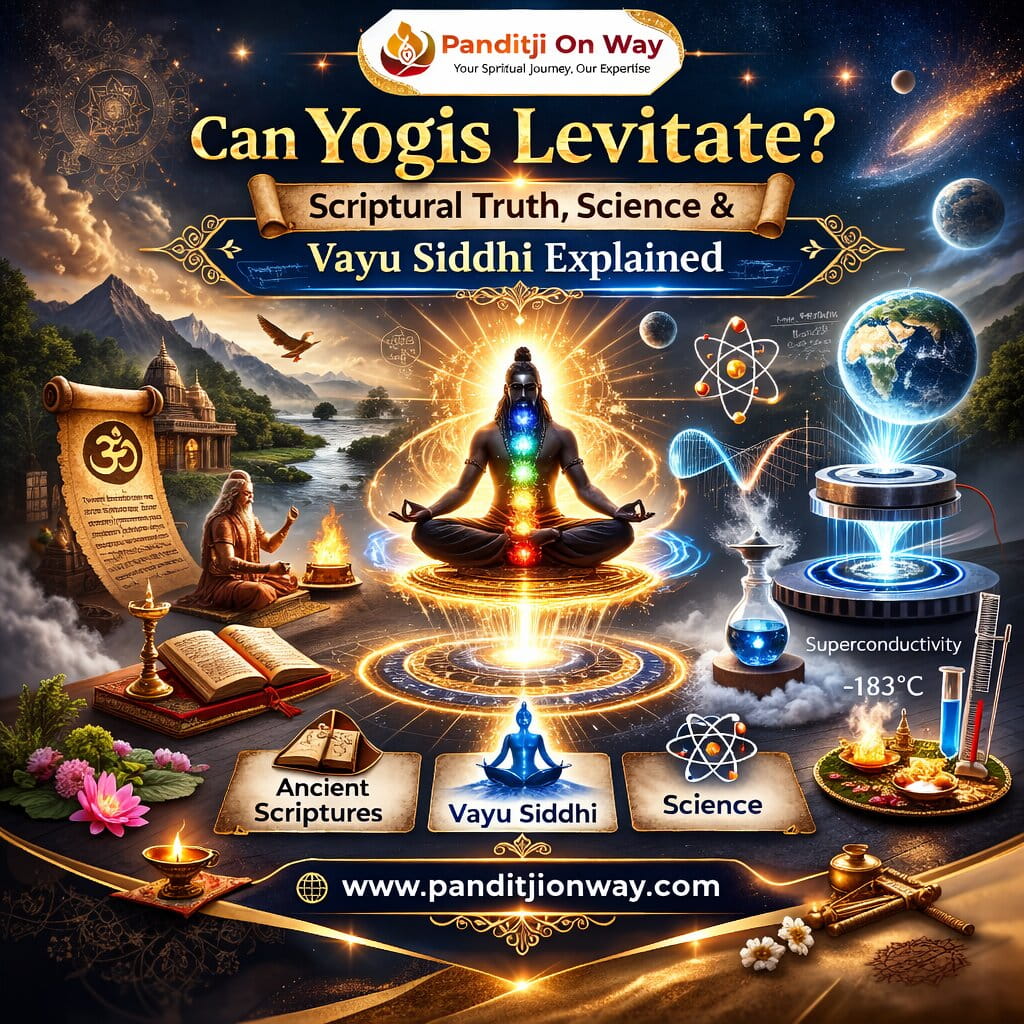
Yogic levitation, known as Vayu Siddhi in Hindu scriptures, is described in texts like the Shiva Samhita and Autobiography of a Yogi. While ancient traditions claim advanced yogis can rise above the ground through mastery of prana and consciousness, modern science has not verified human levitation. The ultimate goal of yoga remains self-realization, not supernatural powers.
Introduction
The idea that a Yogi can float or walk in the air has fascinated seekers for centuries. Ancient scriptures such as the Shiva Samhita, Dnyaneshwari, and the Chandogya Upanishad describe extraordinary yogic siddhis (powers). Modern spiritual literature, especially Autobiography of a Yogi by Paramahansa Yogananda, also narrates accounts of levitating saints.
But what is the philosophical foundation behind such claims? Is there any scientific parallel? And how does Vedanta explain this phenomenon?
This in-depth article explores scriptural references, yogic philosophy, chakra science, and modern speculation.
Understanding the Pancha Kosha – The Five Sheaths of Human Existence
According to Vedantic philosophy, the human body is not merely physical. It consists of five koshas (sheaths):
| Kosha | Meaning | Function |
|---|---|---|
| Annamaya Kosha | Food sheath | Physical body made of food |
| Pranamaya Kosha | Energy sheath | Vital life force (Prana) |
| Manomaya Kosha | Mental sheath | Thoughts and emotions |
| Vijnanamaya Kosha | Intellectual sheath | Wisdom and discrimination |
| Anandamaya Kosha | Bliss sheath | Causal body, pure joy |
The Chandogya Upanishad explains that after death, the subtle body (Sukshma Sharira) carries karma into a new physical birth.
A realized Yogi identifies not with these koshas but with the Atman (pure consciousness)—beyond time, space, and physical laws.
Levitation in Yogic Literature Autobiography of a Yogi – The Levitating Sage
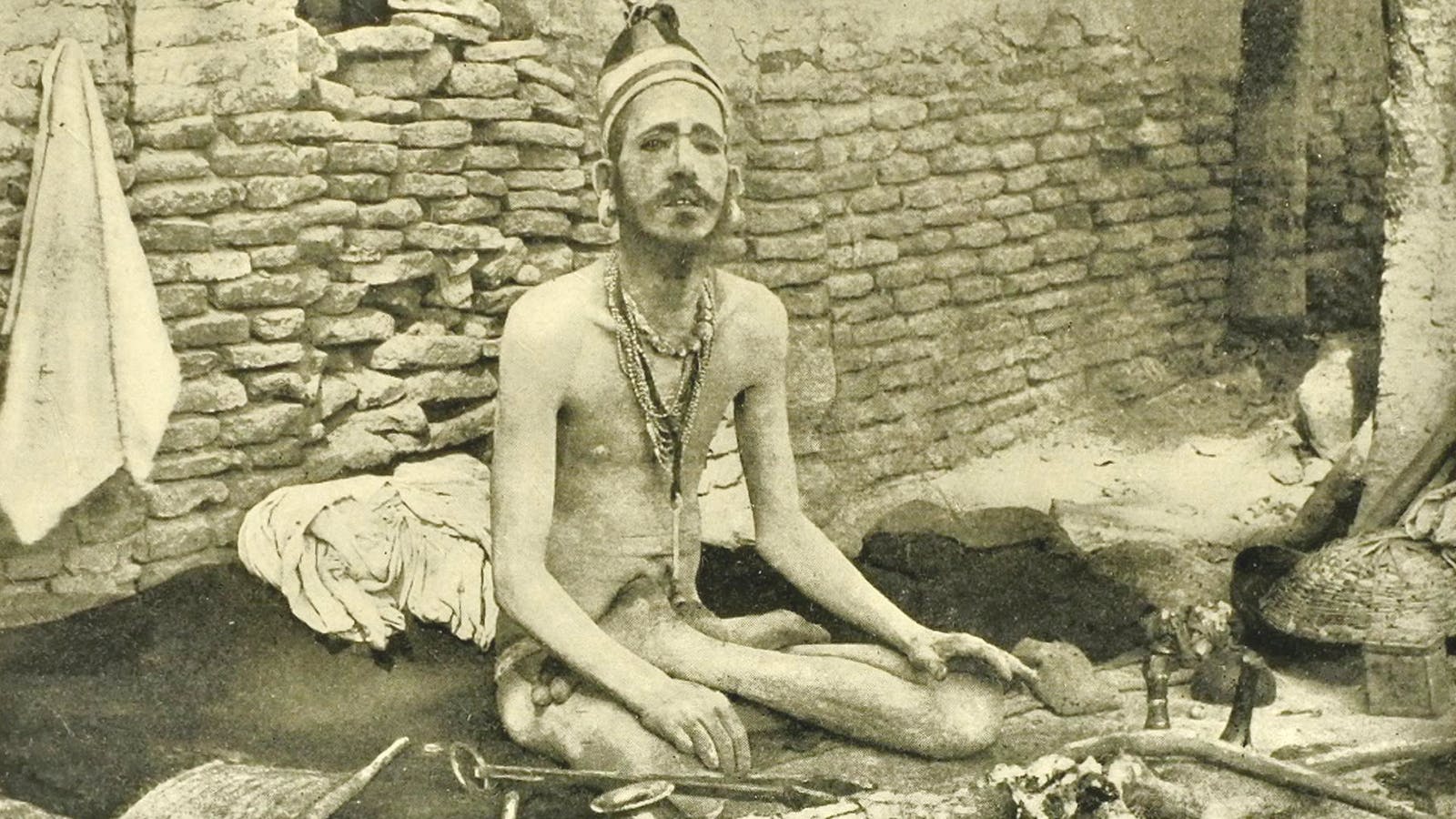
In Chapter 7 of Autobiography of a Yogi, Yogananda describes Bhaduri Mahasaya, known as the “Levitating Sage.”
Yogananda explains that through advanced pranayama:
“A yogi’s body loses its grossness… then it will levitate or hop like a frog.”
In Chapter 30, he further explains:
A perfected yogi perceives the universe as an undifferentiated mass of light. Gravitation becomes powerless over such a master.
This description suggests transcendence of material consciousness rather than mere physical levitation.
Shiva Samhita and Vayu Siddhi

The Shiva Samhita describes stages of yogic progress:
- Sweating
- Trembling
- Frog-like jumping
- Rising in Padmasana
The ability to rise above the ground is called Vayu Siddhi—mastery over the air element.
Connection with Anahata Chakra
The Anahata Chakra is ruled by the Vayu Tattva (air element). By meditating upon the Banalinga within Anahata, the Yogi gains:
- Kechari Siddhi – Movement in the sky
- Bhuchari Siddhi – Travel anywhere at will
Other Siddhis Mentioned in Scriptures
| Siddhi | Meaning |
|---|---|
| Vakya Siddhi | Prophetic speech |
| Kamachari | Teleportation at will |
| Duradrishti | Clairvoyance |
| Durasruti | Clairaudience |
| Sukshma Drishti | Subtle vision |
| Parakaya Pravesha | Entering another’s body |
| Adrishya | Invisibility |
| Vayu Gaman | Moving in air |
These powers are described across yogic traditions but are considered by many masters as secondary to Self-realization.
Scientific Speculation: Can Superconductivity Explain Levitation?

Superconductivity is a phenomenon where electrical resistance becomes zero below critical temperatures (e.g., -183°C for cuprate materials).
Key Principle:
In superconductors, magnetic lines are expelled (Meissner Effect), enabling magnetic levitation.
Some speculate that:
- Deep meditation lowers body temperature
- Yogic mastery alters electromagnetic properties
- Body becomes analogous to a superconductor
However:
This remains purely speculative. No scientific experiment has proven human superconductivity or levitation.
For authoritative physics reference, see:
- https://home.cern (Educational resource)
- https://www.britannica.com/science/superconductivity
Kundalini Awakening and Body Transformation
In the Dnyaneshwari, Sant Dnyaneshwar describes intense Kundalini awakening where:
- Body becomes extremely cold
- Flesh and blood metaphorically consumed
- Regeneration occurs
Symbolically, this represents dissolution of ego and rebirth of consciousness.
Scriptural vs Scientific Perspective
| Aspect | Scriptural View | Scientific View |
|---|---|---|
| Levitation | Result of Vayu Siddhi | Not proven |
| Light Body | Consciousness beyond matter | No measurable data |
| Temperature Drop | Kundalini effect | Meditation lowers metabolism |
| Gravity Transcendence | Self-realization | Gravity constant |
Conclusion:
Spiritual texts describe levitation as a by-product of enlightenment. Science has yet to validate such phenomena.
Is Yogic Levitation a Superstition?
The concept appears in:
- Upanishads
- Hatha Yoga texts
- Bhakti literature
- Modern spiritual biographies
While science has not proven it, historical consistency suggests it is a serious yogic claim rather than mere folklore.
However, true Yogis emphasize liberation (Moksha), not siddhis.
Practical Spiritual Insight
According to authentic traditions:
- Siddhis arise naturally
- Attachment to powers halts spiritual progress
- Ultimate goal is Atman realization
If you are interested in authentic Vedic rituals, spiritual guidance, and Kundalini practices, consult qualified Vedic scholars through:
https://www.panditjionway.com (Panditji for spiritual services)
Panditji On Way is one of India’s leading online platforms for Vedic puja booking and authentic ritual guidance.
FAQ Section Can Yogis Levitate? Scriptural Truth, Science & Vayu Siddhi Explained
1. Can yogis really levitate according to Hindu scriptures?
Yes, certain Hindu scriptures describe levitation as a yogic siddhi called Vayu Siddhi, or mastery over the air element. Texts such as the Shiva Samhita and Autobiography of a Yogi mention advanced yogis rising from the ground. However, these accounts are spiritual claims, not scientifically verified phenomena.
2. What is Vayu Siddhi in yoga?
Vayu Siddhi is a yogic power described in the Shiva Samhita, referring to mastery over the air element (Vayu Tattva). It is said to allow a yogi to rise in Padmasana or move through the air after intense pranayama and meditation practices.
3. Does Autobiography of a Yogi mention levitation?
Yes. In Autobiography of a Yogi, Paramahansa Yogananda describes Bhaduri Mahasaya, known as the “Levitating Sage.” The book explains that through advanced pranayama, a yogi’s body may lose grossness and become light.
4. Is there scientific proof that humans can levitate?
No peer-reviewed scientific evidence proves that humans can levitate. Some speculative comparisons are made with superconductivity and the Meissner effect, but there is no experimental data showing that meditation can transform the human body into a superconductor.
5. What is the Pancha Kosha concept in Vedanta?
Pancha Kosha refers to the five sheaths of human existence: Annamaya (physical body), Pranamaya (energy body), Manomaya (mind), Vijnanamaya (intellect), and Anandamaya (bliss). According to the Chandogya Upanishad, the subtle body carries karma into rebirth.
6. Can Kundalini awakening cause physical transformation?
Spiritual texts like the Dnyaneshwari describe intense internal transformation during Kundalini awakening. Some practitioners report changes in metabolism and body temperature, but no scientific study confirms supernatural physical abilities.
7. What are other siddhis mentioned in yogic scriptures?
Yogic texts describe several siddhis including clairvoyance (Duradrishti), prophecy (Vakya Siddhi), invisibility, Parakaya Pravesha (entering another’s body), and Kechari Siddhi (movement in air). These are considered secondary to self-realization.
8. Do modern yogis claim levitation today?
Some modern spiritual traditions discuss levitation symbolically or as rare mystical experiences. However, no verified public demonstration has been scientifically validated under controlled conditions.
9. Is levitation the goal of yoga?
No. Classical yoga philosophy emphasizes Moksha (liberation) and Self-realization, not supernatural powers. Siddhis are considered distractions if pursued for ego or display.
10. What is the connection between Anahata Chakra and levitation?
The Anahata Chakra is associated with the air element (Vayu Tattva). Some yogic traditions teach that deep meditation on this chakra can lead to Vayu Siddhi, symbolizing transcendence of material limitations.
11. Are yogic levitation stories symbolic or literal?
Interpretations vary. Some traditions consider them literal siddhis attained by advanced yogis. Others interpret levitation symbolically as rising above ego, attachment, and material consciousness.
12. What does the Chandogya Upanishad say about the subtle body?
The Chandogya Upanishad explains that the subtle body (Sukshma Sharira) carries karma after death and takes rebirth in a new physical form. While it does not directly describe levitation, it establishes the concept that consciousness exists beyond the physical body.
13. How does pranayama relate to levitation?
Advanced pranayama practices regulate prana (life force) within the Pranamaya Kosha. Some yogic texts state that when prana is mastered, the body becomes light and may exhibit movements such as hopping or rising. However, this remains scriptural description rather than scientific validation.
14. Is levitation mentioned in Patanjali’s Yoga Sutras?
The Yoga Sutras mention siddhis obtained through samyama (deep meditative absorption). While levitation is not explicitly detailed as modern interpretations describe it, mastery over elements (bhuta jaya) is said to grant extraordinary abilities.
15. What is the difference between symbolic and literal levitation?
Literal levitation implies physically rising above the ground. Symbolic levitation represents transcending ego, attachment, and material limitations. Many scholars interpret scriptural references metaphorically rather than physically.
16. Can meditation alter gravity?
No scientific study confirms that meditation can alter gravitational forces. However, meditation can significantly reduce metabolic rate, heart rate, and body temperature, which may create sensations of lightness.
17. What is Kechari Siddhi?
Kechari Siddhi refers to the ability to move through the sky or air, as described in yogic scriptures. It is often linked to advanced chakra awakening and Vayu Tattva mastery.
18. What is Bhuchari Siddhi?
Bhuchari Siddhi refers to the ability to move freely across the earth at will. It is mentioned alongside Kechari Siddhi in certain Hatha Yoga texts.
19. Is superconductivity related to yogic levitation?
Superconductivity is a physics phenomenon where electrical resistance becomes zero at extremely low temperatures. While magnetic levitation occurs in superconductors, there is no scientific evidence that the human body can achieve such a state through meditation.
20. Does Kundalini awakening change body temperature?
Some practitioners report sensations of extreme heat or cold during Kundalini awakening. Scientific studies show meditation can influence thermoregulation, but no evidence supports transformation into a superconductive state.
21. Are siddhis considered distractions in yoga?
Yes. Many spiritual masters warn that siddhis can distract seekers from the ultimate goal of Moksha (liberation). True yoga focuses on Self-realization rather than supernatural powers.
22. Have levitating yogis been scientifically tested?
There is no verified scientific documentation of a yogi levitating under controlled laboratory conditions. Claims remain anecdotal or scriptural.
23. Why do ancient scriptures describe supernatural powers?
Ancient texts often describe siddhis to illustrate the potential of consciousness and spiritual mastery. They serve as inspiration for seekers rather than instructional manuals for acquiring powers.
24. What is the ultimate goal of Vedic spirituality?
The ultimate goal is liberation from the cycle of birth and death (Moksha) and realization of one’s true nature as Atman — beyond body, mind, and material laws.
Final Thoughts
Yogic levitation, known as Vayu Siddhi, is described in ancient Hindu scriptures as a result of mastery over prana and the air element. While spiritual texts recount yogis rising above the ground, modern science has not verified human levitation. The primary goal of yoga remains self-realization, not supernatural powers. The phenomenon of yogic levitation lies at the intersection of spirituality and mystery. Scriptures describe it as a consequence of mastering consciousness and the Vayu element. Science offers intriguing parallels like superconductivity but no confirmation.
The deeper message remains clear:
The highest achievement of Yoga is not floating in the air — but rising above ignorance.
For authentic Vedic knowledge, puja services, and spiritual guidance, visit: