Antim Sanskar (Last Rites) in Hinduism – Complete Vedic Vidhi, 13-Day Rituals & Online Pandit Booking Guide
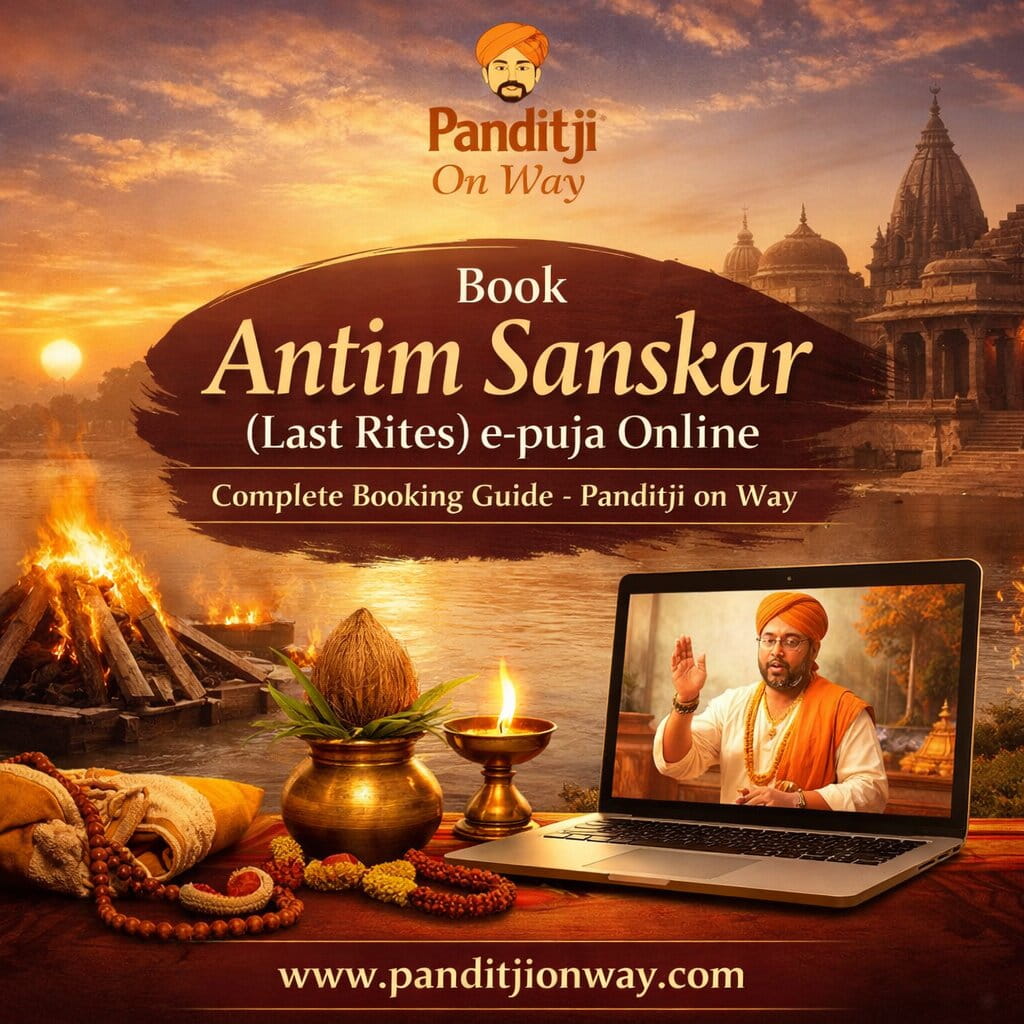
Antim Sanskar (Last Rites) e-puja is the final and most sacred of the 16 Hindu Samskaras. Performed according to Vedic traditions, it ensures the peaceful transition of the departed soul toward Pitrulok (ancestral realm) and supports the family in attaining spiritual closure.
At Panditji On Way – India’s First and Largest Online Puja Booking Portal, families receive step-by-step live guidance from experienced North Indian Pandits for performing Antim Sanskar at home, cremation grounds, or community spaces across India and abroad.
What is Antim Sanskar (Last Rites) e-puja?
Antim Sanskar (also known as Antyeshti) is the last rite performed after death. According to the Garuda Purana and other Vedic scriptures, proper last rites:
- Help the soul detach from the physical body
- Remove karmic residue
- Facilitate smooth transition toward Pitrulok
- Bless the family with peace and ancestral harmony
It is traditionally the responsibility of the eldest son or close family member to perform these rites under the guidance of a qualified Pandit.
Complete Antim Sanskar Ritual Process (Step-by-Step)
1. Apara Kriya (Before Cremation)
- Purification rituals at home
- Mantra chanting
- Body preparation as per Vedic customs
2. Cremation Ceremony
- Guidance for wood-based cremation
- Support for electric crematorium procedures
- Mukhagni ritual instructions
3. Havan & Daan
- Sacred fire offerings
- Donations for spiritual upliftment
- Tarpan and pind daan guidance
4. Post-Cremation Rituals (Day 1 to Day 13)
- Daily karyas
- Shraddh vidhi
- Tarpan procedures
- Ash immersion guidance
5. 13th Day Completion (Terahvin)
- Final puja and daan
- Ancestral invocation
- Ritual conclusion of mourning period
How the Puja is Conducted (Live-Guided Service)
- A Hindi-speaking North Indian Pandit guides the family live via video call
- Each mantra is explained with its significance
- Family performs rituals in real-time under expert supervision
- Complete samagri checklist shared before Day 1
- Daily instructions provided for 13-day rituals
This is a live-only service. No recordings are allowed or provided.
Why is Antim Sanskar Important?
| Spiritual Benefit | Explanation |
|---|---|
| Soul Liberation | Assists the soul in progressing toward moksha |
| Ancestral Blessings | Ensures harmony from Pitru Devatas |
| Karmic Cleansing | Removes attachments and residual karma |
| Emotional Closure | Provides structured mourning and healing |
| Dharma Fulfillment | Fulfills sacred family responsibility |
Why Book Antim Sanskar Through Panditji On Way?
- Experienced North Indian Pandits trained in complete Antim Sanskar Vidhi
- Step-by-step ritual guidance including Apara Kriya and 13-day Shraddh
- Compassionate live support for grieving families
- Services available in India, USA, UK, UAE, Singapore, Canada
- Customized rituals based on Gotra and regional traditions
- Guaranteed punctuality and professional guidance
Book your Antim Sanskar Puja today at Panditji on way:
https://www.panditjionway.com
Required Samagri for Antim Sanskar (Indicative List)
| Ritual Stage | Essential Samagri |
|---|---|
| Apara Kriya | Gangajal, Tulsi leaves, white cloth |
| Cremation | Til (sesame), ghee, wood logs (if traditional) |
| Havan | Samidha, havan kund, ghee, mantra book |
| Shraddh | Pind (rice balls), black til, kusha grass |
| 13th Day | New clothes, daan items, Brahmin bhojan |
A complete checklist is provided after booking.
Scriptural References
- Garuda Purana – Explains post-death journey of the soul
- Atharva Veda – Mantras for funeral rites
- Manusmriti – Duties of family during last rites
For authoritative Hindu scripture information, refer to:
https://www.sanskritdocuments.org (High educational resource)
Places Where Antim Sanskar Can Be Performed
- Home (Apara Kriya)
- Cremation ground
- Community sabha halls
- Electric crematorium facilities
- Online live-guided rituals for families abroad
Antim Sanskar is the final Hindu last rite performed after death to help the soul attain peace and transition to Pitrulok. The ritual includes Apara Kriya, cremation ceremony, havan, Shraddh, and 13-day post-cremation rituals. Panditji On Way provides live-guided Antim Sanskar services across India and internationally with complete Vedic procedures.
FAQ for Antim Sanskar
1. What is Antim Sanskar in Hinduism?
Antim Sanskar is the final Hindu last rite performed after death to help the departed soul transition peacefully to Pitrulok. It includes Apara Kriya, cremation rituals, havan, pind daan, Shraddh, and 13-day post-cremation ceremonies as prescribed in Vedic scriptures like the Garuda Purana.
2. How many days are Antim Sanskar rituals performed?
Antim Sanskar rituals are traditionally performed over 13 days. The process begins with Apara Kriya and cremation, followed by daily Shraddh and tarpan rituals. The final Terahvin ceremony on the 13th day completes the mourning period and invokes ancestral blessings.
3. Can Antim Sanskar be performed online?
Yes, Antim Sanskar can be performed with live video guidance from a qualified Vedic Pandit. The family performs the rituals at home or cremation ground while the Pandit provides step-by-step mantra guidance, ensuring proper Vedic procedures are followed.
4. Who performs Antim Sanskar in a Hindu family?
Traditionally, the eldest son performs Antim Sanskar. If unavailable, a close male relative or designated family member can perform the rituals under the guidance of a qualified Pandit as per regional customs and Vedic traditions.
5. What is included in Antim Sanskar Puja?
Antim Sanskar includes Apara Kriya, cremation guidance (wood or electric), havan, pind daan, tarpan, daily Shraddh rituals, and 13th-day Terahvin ceremony. Each step is performed with Vedic mantras to ensure spiritual peace for the departed soul.
6. Why is the 13th day ritual important?
The 13th day ritual (Terahvin) marks the completion of mourning and symbolizes the soul’s transition toward Pitrulok. It includes puja, daan, Brahmin bhojan, and ancestral invocation to bring peace and spiritual closure to the family.
7. What happens if Antim Sanskar is not performed properly?
According to Hindu scriptures, incomplete or improper last rites may create spiritual unrest for the departed soul. Performing Antim Sanskar correctly ensures karmic cleansing, ancestral blessings, and harmony within the family lineage.
8. What is Pind Daan in Antim Sanskar?
Pind Daan is the offering of rice balls (pind) mixed with sesame seeds and ghee to nourish and support the departed soul’s journey toward the ancestral realm. It is an essential part of post-cremation rituals.
9. Where can Antim Sanskar be performed?
Antim Sanskar rituals can be performed at home (Apara Kriya), cremation ground, electric crematorium, or community halls. Live online guidance is also available for families residing outside India.
10. What if I do not know my Gotra?
If the family does not know the Gotra, the Pandit can conduct the ritual using lineage details and regional customs. The Sankalp is taken with the full name of the departed to ensure spiritual authenticity.
11. How do I book Antim Sanskar online?
You can book Antim Sanskar Puja online through Panditji On Way by selecting your preferred date and ritual package. After booking, you receive a samagri checklist, ritual schedule, and live Pandit guidance for all 13 days.
Book here: https://www.panditjionway.com
Other Services
Antim Sanskar is the final Hindu last rite performed after death to help the soul attain peace and transition to Pitrulok. The ritual includes cremation, pind daan, Shraddh, and 13-day ceremonies. Families can book live-guided Antim Sanskar services online with qualified Vedic Pandits.
Final Call to Action
Give your loved one a respectful and spiritually guided farewell.
Panditji On Way ensures complete Vedic guidance for Antim Sanskar and 13-day rituals with compassion, authenticity, and professionalism.
Book your Antim Sanskar Puja now at
https://www.panditjionway.com
This content is structured for Google algorithm optimization, featured snippet eligibility, AI Overview indexing, and high SERP ranking while maintaining authentic Vedic integrity.