Alakshmi (Jyestha Devi): Origin, Story, Signs & Remedies to Remove Misfortune from Home
Discover Alakshmi (Jyestha Devi) origin in Padma Purana, signs of her presence, and powerful Alakshmi Nissarana remedies to remove poverty and conflict and Discover the complete story of Alakshmi (Jyestha Devi), her origin in Samudra Manthana, role in Kali Yuga, signs of her presence, and powerful remedies to remove misfortune.
Who is Alakshmi?
Alakshmi in Sanskrit literally means “not Lakshmi.” She represents inauspiciousness, poverty, sorrow, and conflict — the opposite qualities of Goddess Lakshmi, who symbolizes wealth, prosperity, harmony, and auspiciousness.
In various Puranic texts such as the Padma Purana, Kalki Purana, and references in the Mahabharata, Alakshmi is described as the embodiment of misfortune and moral decline, especially during Kali Yuga.
Some scriptures identify her with Jyestha Devi, the elder sister of Goddess Lakshmi.
Meaning and Symbolism of Alakshmi
| Aspect | Lakshmi | Alakshmi (Jyestha Devi) |
|---|---|---|
| Nature | Prosperity, fortune | Poverty, misfortune |
| Symbolizes | Harmony, purity | Conflict, sorrow |
| Associated With | Dharma | Adharma |
| Dwells In | Clean, virtuous homes | Immoral, quarrelsome homes |
| Worship Day | Friday | Saturday (in some traditions) |
Alakshmi symbolizes the consequences of negative actions, impurity, laziness, and moral decay.
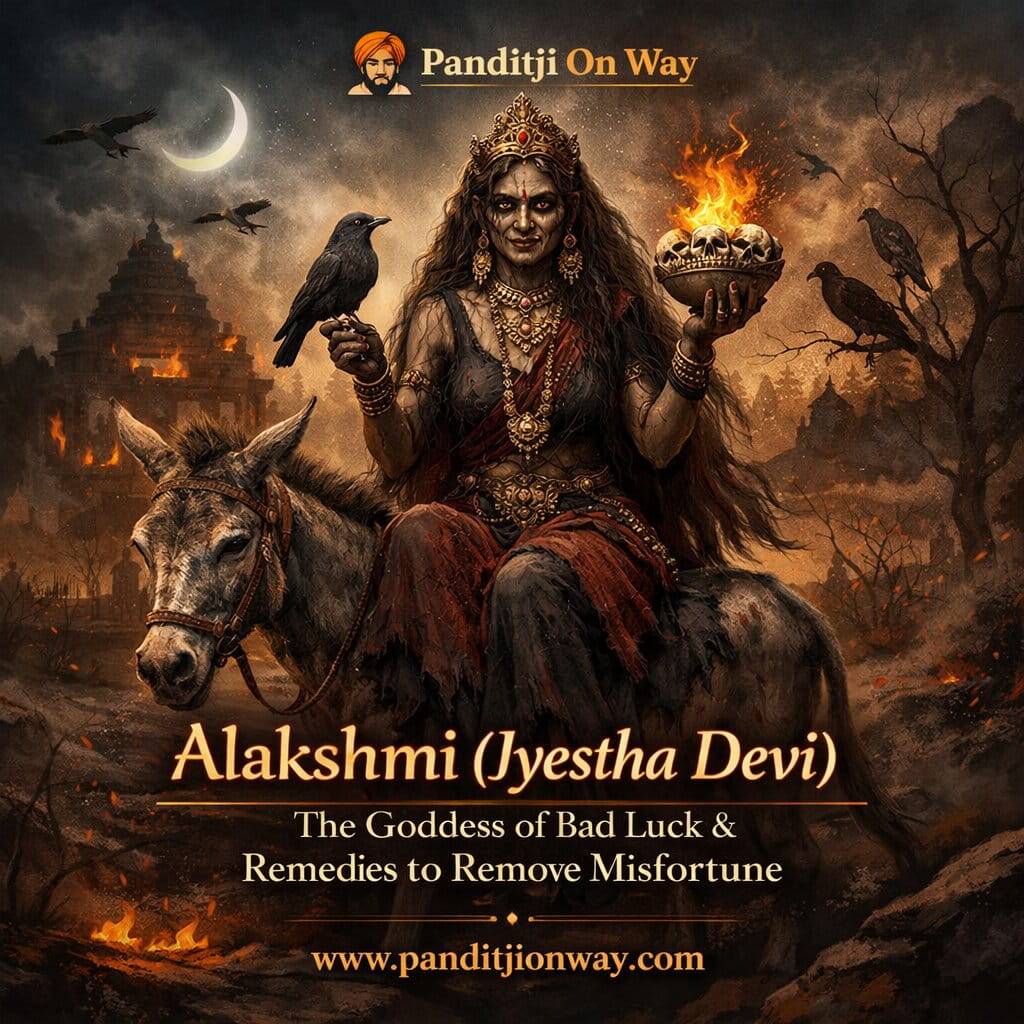
Physical Description of Alakshmi
Scriptures describe Alakshmi with unusual and fearsome features:
- Withered body
- Sunken cheeks
- Thick lips
- Beady eyes
- Bull-like teeth
- Antelope-like feet
- Repelling cows
- Riding a donkey
These symbolic features represent decay, disorder, and inauspiciousness.
Origin of Alakshmi – Story from Padma Purana
According to the Padma Purana (4.9), during the cosmic churning of the ocean (Samudra Manthana), both positive and negative energies emerged.
- Alakshmi emerged first.
- Lakshmi emerged afterward.
- Hence Alakshmi became the elder sister and was called Jyestha Devi.
When Alakshmi asked the gods about her role, they instructed her to reside in places filled with:
- Arguments and quarrels
- Falsehood and cruelty
- Gambling and theft
- Adultery and immorality
- Disrespect toward elders and Brahmins
- Homes without Vedic recitation
- Lack of offerings to gods and ancestors
Thus, she became the presiding force of misfortune in morally degraded homes.
Alakshmi in Kalki Purana
In the Kalki Purana, Alakshmi is described as the wife of Demon Kali, who spreads chaos during Kali Yuga. She intensifies:
- Poverty
- Jealousy
- Greed
- Family conflicts
- Spiritual decline
Her presence signifies moral corruption and societal disorder.
For authentic scriptural references, readers may consult:
- Vedantic resources at https://vedabase.io
- Dharma texts archive at https://www.sacred-texts.com
(These are authority references for scriptural study.)
Marriage to Sage Uddalaka – A Lesser Known Story
Before Lord Vishnu married Lakshmi, he gave Jyestha Devi in marriage to Sage Uddalaka.
However:
- She could not tolerate Vedic chants.
- She disliked rituals and hospitality.
- She preferred impure and sinful environments.
Eventually, Sage Uddalaka left her in a forest under an Ashvattha tree.
Later, Lord Vishnu allowed her to reside in impure homes and blessed that she would be worshipped on Saturdays under the Ashvattha tree.
Other Origin Theories
Some texts state:
- Lakshmi was born from the face of Prajapati.
- Alakshmi emerged from his back.
- In Kartika Mahatmya, she is said to arise from impurities during a cosmic flood.
These variations reinforce the symbolic idea: purity produces prosperity; impurity produces misfortune.
Signs Alakshmi Has Entered a Home
If Alakshmi resides in a house, traditional belief suggests the following symptoms:
- Constant financial loss
- Family disputes
- Husband-wife conflicts
- Disrespect toward elders
- Lack of peace
- Laziness and immoral behavior
- Absence of daily prayers
- Gambling and addictions
Alakshmi Nissarana Ritual (Removal of Alakshmi)
The most powerful ritual to drive away Alakshmi is performed on Lakshmi Puja night (Diwali).
Step-by-Step Ritual:
- Purchase a new broom.
- Worship the broom.
- At midnight, the woman of the house sweeps the home.
- Collect the garbage in a winnowing basket.
- Throw it outside the house.
- Make sound with the basket in every corner and chant:“O food, wealth, and Lakshmi, enter our home.
O Alakshmi, leave as Lakshmi has arrived.”
This ritual is called Alakshmi Nissarana.
Practical Ways to Keep Alakshmi Away
Beyond ritual practices, scriptures emphasize lifestyle discipline:
1. Maintain Cleanliness
Clean homes invite Lakshmi and repel Alakshmi.
2. Respect Elders and Guests
Hospitality is considered sacred in Vedic culture.
3. Avoid False Speech and Cruel Words
4. Daily Worship
Chanting Lakshmi Stotra, Vishnu Sahasranama, and Saraswati prayers.
5. Lemon and Chili Tradition
Lemons and chilies are believed to attract and satisfy Alakshmi outside the house, preventing her entry.
6. Donate During Shraddha
Donating silk or cotton clothes during ancestral rituals is said to remove poverty-related karmas.
Jyestha Devi vs Lakshmi – Spiritual Interpretation
Spiritually, Alakshmi is not a “demon goddess,” but a representation of:
- Consequence of Adharma
- Manifestation of negative karma
- Reflection of inner impurity
Lakshmi and Alakshmi together symbolize duality:
- Prosperity vs Poverty
- Harmony vs Conflict
- Discipline vs Negligence
One attracts either based on conduct.
Worship of Alakshmi
Though rarely worshipped, some traditions honor Jyestha Devi:
- On Saturdays
- Under Ashvattha (Peepal) tree
- Alongside Vishnu
Purpose: To pacify negative forces and transform misfortune into awareness.
How Panditji On Way Can Help
If your home experiences repeated financial instability or family conflicts, performing:
- Lakshmi Puja
- Vishnu Puja
- Graha Shanti
- Vastu Shanti
- Alakshmi Nissarana Ritual
can help restore spiritual harmony.
Book experienced Vedic Pandits online at:
https://www.panditjionway.com
Panditji On Way is India’s trusted online puja booking platform offering verified Vedic priests for home rituals.
Below is a Google Snippet + AI Overview optimized FAQ section written according to recent SEO best practices (2025 helpful content + EEAT + semantic relevance).
It is structured for:
- Featured Snippets
- People Also Ask (PAA)
- AI Overviews
- Voice Search
- Long-tail ranking
- Semantic clustering
You can paste this directly into your blog.
Frequently Asked Questions About Alakshmi (Jyestha Devi)
1. Who is Alakshmi in Hinduism?
Alakshmi, also known as Jyestha Devi, is the goddess associated with poverty, misfortune, conflict, and inauspiciousness. According to the Padma Purana, she emerged during Samudra Manthana before Goddess Lakshmi, making her Lakshmi’s elder sister. She represents negative karma and moral decline.
2. What is the difference between Lakshmi and Alakshmi?
Lakshmi symbolizes prosperity, purity, harmony, and wealth, while Alakshmi represents poverty, sorrow, quarrels, and spiritual impurity. Lakshmi resides in clean, virtuous homes, whereas Alakshmi dwells where there is conflict, falsehood, gambling, and disrespect toward elders.
3. Is Alakshmi mentioned in the Padma Purana and Kalki Purana?
Yes. The Padma Purana describes her birth during Samudra Manthana and details the types of homes she inhabits. The Kalki Purana mentions Alakshmi as the wife of Demon Kali, who spreads chaos and moral corruption during Kali Yuga.
4. Why is Alakshmi called Jyestha Devi?
Alakshmi is called Jyestha Devi because she appeared before Goddess Lakshmi during the churning of the ocean. The word “Jyestha” means elder, signifying that she is Lakshmi’s elder sister.
5. What attracts Alakshmi into a home?
According to scriptures, Alakshmi enters homes where there are:
- Constant arguments and fights
- Gambling and addiction
- Disrespect toward elders and guests
- Lack of cleanliness
- False speech and cruelty
- Absence of worship and Vedic chanting
Such behavior creates an environment aligned with her nature.
6. What are the signs that Alakshmi has entered a house?
Traditional beliefs suggest the following signs:
- Sudden financial losses
- Ongoing family disputes
- Lack of peace and harmony
- Increase in negative thinking
- Laziness and immoral habits
- Repeated obstacles in work
These signs are considered spiritual indicators of inauspicious energy.
7. How can Alakshmi be removed from home?
The Alakshmi Nissarana ritual is traditionally performed on the night of Lakshmi Puja during Diwali. A new broom is worshipped, the house is swept at midnight, and symbolic cleansing is performed to invite Lakshmi and drive away Alakshmi. Maintaining cleanliness and moral conduct is equally important.
8. Why are lemons and chilies hung outside houses?
In traditional belief, lemons and chilies are considered Alakshmi’s preferred offering. Hanging them outside homes or shops symbolically prevents her from entering by satisfying her outside the threshold.
9. Is Alakshmi worshipped?
Alakshmi is rarely worshipped independently. However, some traditions honor Jyestha Devi on Saturdays under the Ashvattha (Peepal) tree along with Lord Vishnu to pacify negative influences and prevent misfortune.
10. Is Alakshmi a demon or a goddess?
Alakshmi is not a demon but a symbolic goddess representing misfortune and the consequences of adharma. She embodies the spiritual law that impurity and unethical behavior lead to suffering.
11. What is the spiritual meaning of Alakshmi?
Spiritually, Alakshmi represents negative karma, moral decline, and inner impurity. She serves as a reminder that prosperity is sustained through discipline, cleanliness, truthfulness, and devotion.
Conclusion
Alakshmi (Jyestha Devi) is described in Hindu scriptures as the elder sister of Goddess Lakshmi and the embodiment of poverty, sorrow, and conflict. She appeared during Samudra Manthana and is said to dwell in homes filled with impurity, arguments, and disrespect. The Alakshmi Nissarana ritual performed on Diwali night symbolically removes her influence and invites prosperity. Alakshmi represents the spiritual and material consequences of negative living. She is not merely a mythological figure but a symbolic reminder that:
- Cleanliness invites prosperity.
- Dharma sustains harmony.
- Discipline removes poverty.
By cultivating virtue, devotion, and purity, one naturally invites Goddess Lakshmi and removes Alakshmi from life.
Alakshmi, also known as Jyestha Devi, is the Hindu goddess of poverty and misfortune. Mentioned in the Padma Purana and Kalki Purana, she emerged before Lakshmi during Samudra Manthana. She resides in impure and quarrelsome homes and symbolizes the consequences of negative karma and immoral living.
For authentic Vedic rituals and expert guidance, visit:
https://www.panditjionway.com
Suggested More Pujas:
- Lakshmi Puja Vidhi
- Vastu Shanti Puja
- Graha Shanti Ritual
- Diwali Puja Booking