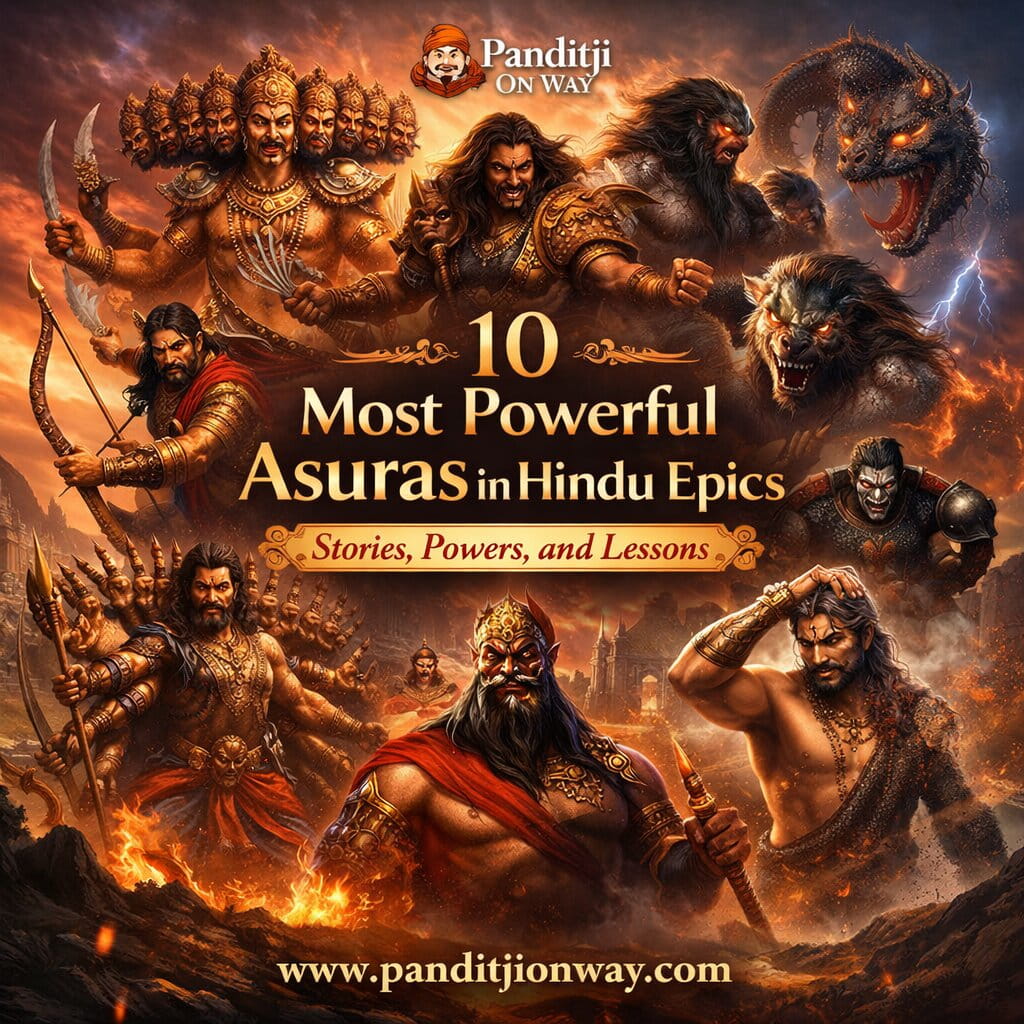
10 Most Powerful Asuras in Hindu Epics – Stories, Powers, and Lessons
The most powerful Asuras in Hindu mythology include Ravana, Hiranyakashipu, Indrajit, and Raktabija. While they possessed immense strength and knowledge, their downfall was caused by ego, misuse of power, and deviation from dharma. These stories symbolize the eternal battle between wisdom and ignorance.
Introduction
In Hindu cosmology, both Devas (gods) and Asuras (demons) originate from the same lineage—Prajapati Kashyapa. They share similar abilities, knowledge, and divine origins. However, what truly differentiates them is intent, actions, and choices.
While Devas represent order and harmony, Asuras often symbolize ambition, ego, and imbalance—yet many were highly intelligent, devoted, and powerful.
This article explores the 10 most powerful Asuras in Hindu epics, their stories, powers, and deeper meanings.
Quick Overview Table
| Asura Name | Special Power / Trait | Defeated By |
|---|---|---|
| Madhu & Kaitabha | Chose their death timing | Vishnu (Hayagriva) |
| Ravana | Scholar, musician, ruler | Rama |
| Vritra | Controlled water, drought embodiment | Indra |
| Indrajit | Conqueror of heaven, master of astras | Lakshmana |
| Hiranyakashipu | Near immortality | Narasimha |
| Raktabija | Blood creates clones | Kali |
| Rahu | Immortal head, eclipse creator | Vishnu (Mohini) |
| Hiranyaksha | Dragged Earth into ocean | Varaha |
| Banasura | Thousand arms, Shiva devotee | Krishna |
| Bhasmasura | Turn anyone into ashes | Vishnu (Mohini) |
1. Madhu and Kaitabha – The First Asuras of Creation
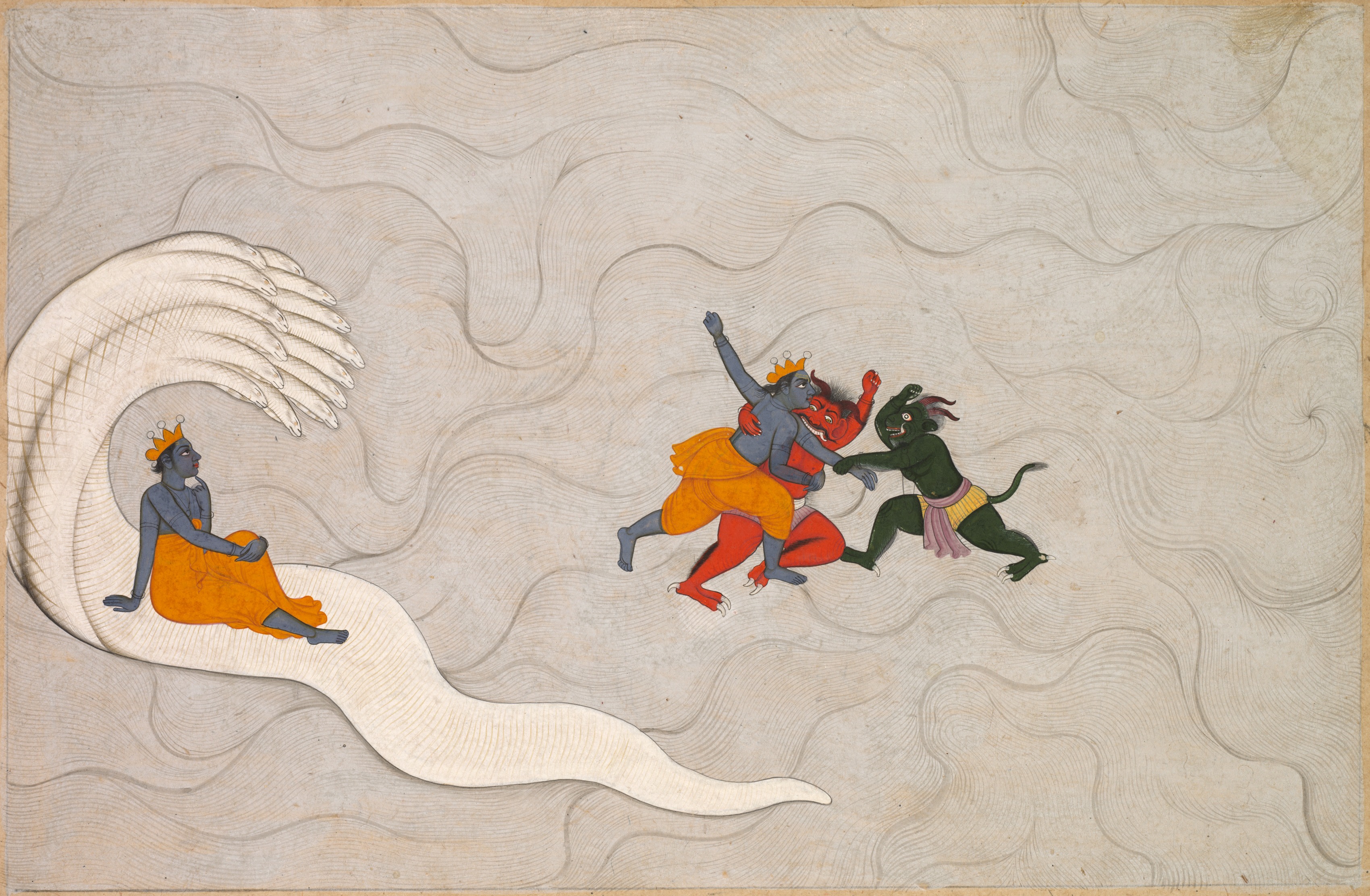
Madhu and Kaitabha are among the earliest Asuras described in Hindu cosmology, appearing at the very dawn of creation when the universe was still in its primal state.
Origin of Madhu and Kaitabha
According to the Puranas, when Lord Vishnu was in Yog Nidra (cosmic sleep) on the endless ocean (Kshira Sagar), two drops of earwax fell into the waters. From these emerged Madhu and Kaitabha, powerful beings born from the tamas (dark, inert energy) of creation.
At that time, Lord Brahma was seated on the lotus arising from Vishnu’s navel, preparing for creation. However, the presence of these newly born Asuras disrupted the cosmic balance.
Tapasya and the Boon
Despite their demonic origin, Madhu and Kaitabha were highly intelligent and spiritually aware. They performed intense penance (tapasya) to please the divine feminine energy, often identified as Mahamaya or Goddess Saraswati.
Impressed by their devotion, the goddess granted them a powerful boon:
- They could choose the time and manner of their own death
This boon made them nearly invincible, as no being could kill them without their consent.
Theft of the Vedas
With growing strength and arrogance, Madhu and Kaitabha attacked Brahma and stole the sacred Vedas, which contained the knowledge necessary for creation.
They hid the Vedas deep within the cosmic ocean, plunging the universe into darkness and ignorance, halting the process of creation itself.
Brahma, unable to retrieve them, prayed to Vishnu for help.
Vishnu’s Hayagriva Avatar
To restore cosmic order, Vishnu awakened and took the form of Hayagriva, a divine being with a horse’s head symbolizing supreme knowledge and wisdom.
A fierce battle followed between Vishnu and the two Asuras that lasted for thousands of years. Despite Vishnu’s power, the boon made them difficult to defeat.
The Strategy and Their Death
Recognizing their arrogance, Vishnu used intelligence over strength.
He praised Madhu and Kaitabha for their valor, which inflated their ego. Pleased, they offered Vishnu a boon in return.
Vishnu cleverly asked:
- “Grant me the boon that I may kill you.”
Bound by their own words, they agreed—but added a condition that they could only be killed in a place where there was no water.
Vishnu then lifted them onto his thighs (above the ocean) and killed them.
Cosmic Significance
Some interpretations suggest that their dismembered bodies formed parts of the Earth, symbolizing the transformation of chaos into structured creation.
Their story represents one of the earliest battles between:
- Knowledge vs Ignorance
- Order vs Chaos
- Divine wisdom vs Ego
Symbolism and Deeper Meaning
- Madhu and Kaitabha represent primal ignorance (Avidya)
- Their theft of the Vedas symbolizes how knowledge can be lost in chaos and ego
- Vishnu’s Hayagriva form represents divine intelligence restoring balance
- Their defeat shows that ego can be overcome through wisdom, not just power
Key Spiritual Lesson
Even the most powerful beings fall when ego blinds wisdom. True victory lies not in strength alone, but in clarity, humility, and higher intelligence.
2. Ravana – The Most Intelligent Yet Arrogant Asura King
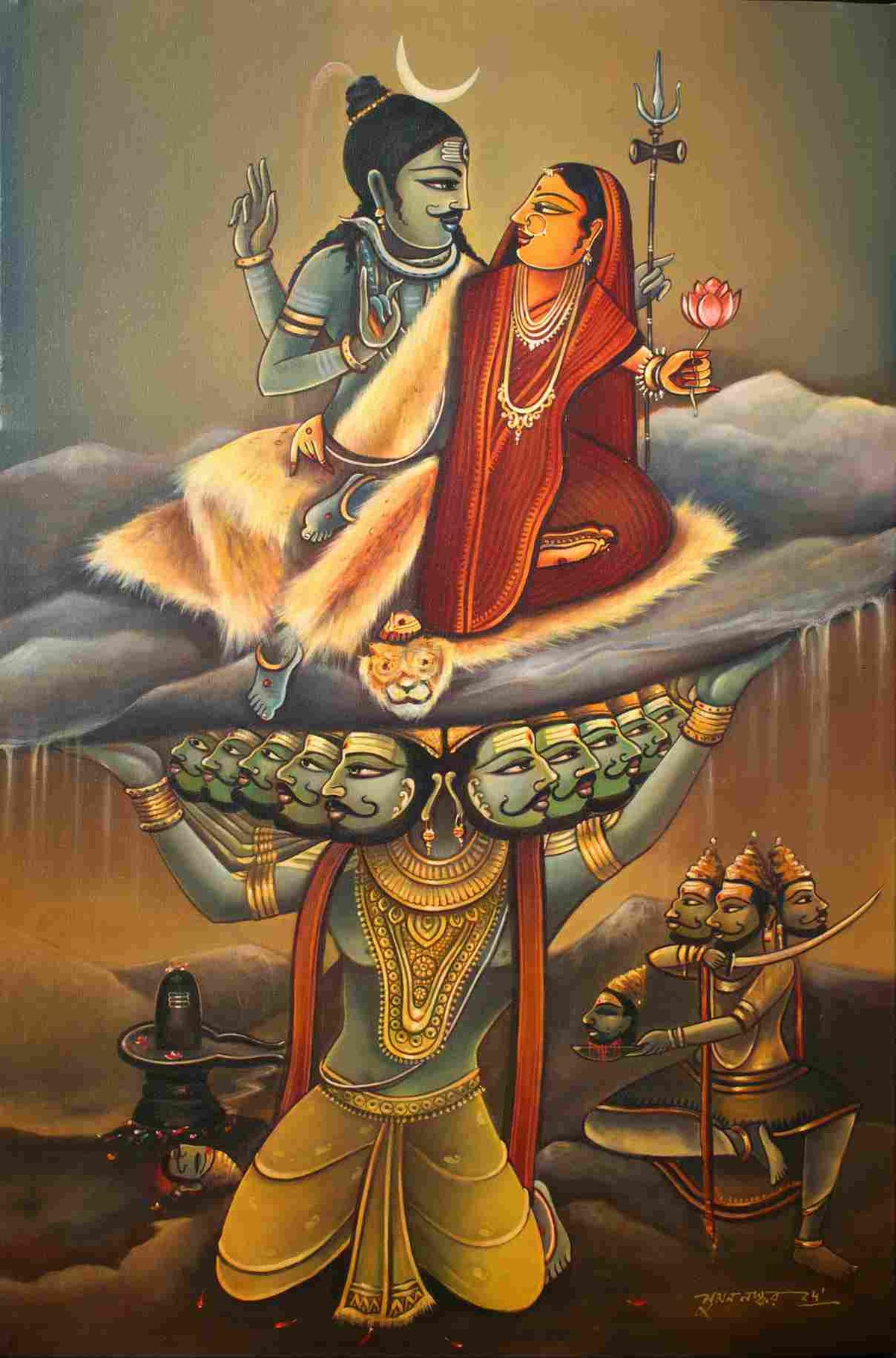
Ravana is one of the most powerful, complex, and intellectually advanced Asuras in Hindu mythology. Unlike typical portrayals of demons, Ravana was a scholar, strategist, musician, and devout follower of Lord Shiva, making him one of the most fascinating characters in the epic Ramayana.
Birth and Lineage
Ravana was born to:
- Sage Vishrava (a Brahmin)
- Demon princess Kaikesi
This unique lineage made him both:
- Brahmin (knowledge, wisdom)
- Asura (power, ambition)
His original name was Dashanana (ten-headed one), symbolizing vast intellect.
Why Did Ravana Have 10 Heads?
Ravana’s ten heads represent:
- The four Vedas
- The six Shastras
They also symbolize:
- Ego
- Anger
- Desire
- Pride
- Attachment
- Greed
- Lust
- Jealousy
- Mind
- Intellect
This makes Ravana not just a villain, but a symbol of human complexity.
Ravana’s Tapasya and Boons
Ravana performed intense penance to please Lord Shiva.
- He sacrificed his own heads one by one in devotion
- Shiva restored them and granted immense power
Boons received:
- Immunity from gods and celestial beings
- Extraordinary strength and longevity
- Mastery over divine weapons
However, Ravana ignored humans, which later became the cause of his downfall.
Ravana – The Scholar and Genius
Ravana was not just a warrior; he was a polymath:
- Expert in Vedas and astrology
- Author of Ravana Samhita (astrology text)
- Master of Ayurveda and medicine
- Skilled musician who played the Veena
- Composer of Shiva Tandava Stotram
Even Lord Rama acknowledged his wisdom.
King of Lanka – Golden Empire
Ravana ruled Lanka, described as:
- A city made of gold
- Highly advanced in architecture and governance
- Economically prosperous
He was known as:
- A just administrator
- A protector of his people
This highlights that Ravana was not entirely evil, but a flawed ruler.
The Turning Point – Ego and Sita Haran
Ravana’s downfall began with:
- His sister Shurpanakha’s humiliation
- His desire for revenge and pride
He abducted Sita, leading to the great war.
This act symbolized:
- Ego overpowering wisdom
- Desire leading to destruction
The Great War and Death
Ravana fought against Rama in one of the greatest battles in mythology.
Despite his immense strength:
- His ego clouded his judgment
- He ignored wise counsel (like Vibhishana)
He was ultimately killed by Rama, an incarnation of Vishnu.
Ravana’s Final Lesson
Before dying, Rama asked Lakshmana to learn from Ravana.
Ravana shared profound wisdom:
- Do not delay good deeds
- Do not rush bad actions
- Value time and decisions
Symbolism of Ravana
Ravana represents:
- Great knowledge without humility
- Power without control
- Devotion mixed with ego
He is a reminder that:
Even the most intelligent person can fall if ego dominates wisdom.
Key Spiritual Lessons
- Knowledge must be balanced with humility
- Ego is the biggest enemy of growth
- Dharma always triumphs over adharma
- Even villains can be teachers
3. Indrajit (Meghanada) – The Warrior Who Conquered Heaven
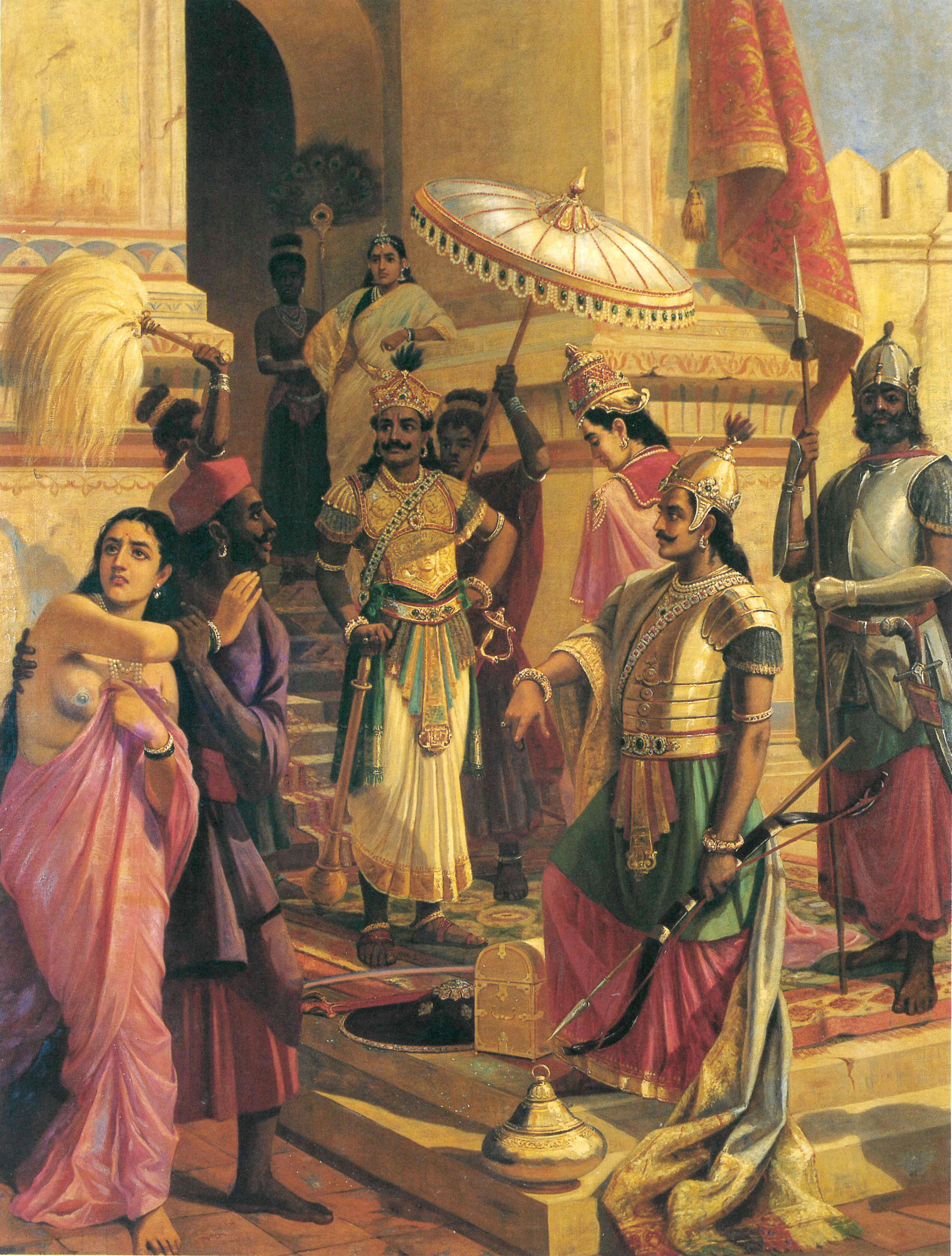
Indrajit, also known as Meghanada, was one of the most powerful and feared warriors in Hindu epics. The son of Ravana and Mandodari, he was not only a fierce fighter but also a master of illusion, celestial weapons, and advanced warfare techniques.
He earned the name Indrajit, meaning “the conqueror of Indra”, after defeating the king of gods, Indra.
Birth and Early Signs of Power
Indrajit was born under highly auspicious yet powerful cosmic conditions:
- Thunder roared at his birth (hence the name Meghanada – “sound of clouds”)
- He inherited both intellect and strength from Ravana
- Trained in warfare, tantra, and astras from a young age
He quickly became Lanka’s greatest warrior and military strategist.
How Did Indrajit Defeat Indra?
One of the most legendary feats of Indrajit was his victory over Indra:
- He launched a fierce attack on heaven (Swarga)
- Used divine weapons and illusion warfare
- Captured Indra and brought him to Lanka
This unprecedented victory shocked the Devas. Eventually, Brahma intervened and secured Indra’s release.
As a reward, Brahma granted Indrajit:
- The name Indrajit
- Access to powerful celestial weapons
- A special boon tied to a sacred ritual
The Secret of His Invincibility
Indrajit had a powerful advantage:
- If he completed a yajna (ritual) at Nikumbhila, he would become invincible in battle
This made him nearly impossible to defeat.
Additionally, he possessed:
- Brahmastra (ultimate weapon of Brahma)
- Nagapasha (serpent weapon that immobilizes enemies)
- Ability to become invisible during combat
Role in the Ramayana War
During the war between Rama and Ravana:
- Indrajit defeated many powerful warriors
- He used Nagapasha to capture Lord Rama and Lakshmana
- Created illusions to confuse the enemy army
He was considered more dangerous than Ravana himself on the battlefield.
The Turning Point – Nikumbhila Yajna
Knowing his secret, Rama’s army planned to stop him:
- Vibhishana revealed the importance of the yajna
- Lakshmana attacked before the ritual was completed
This prevented Indrajit from becoming invincible.
Final Battle and Death
A fierce battle followed between Indrajit and Lakshmana:
- Indrajit used his most powerful weapons
- Lakshmana countered with divine astras
Finally, Lakshmana used the Indrastra, severing Indrajit’s head and killing him.
Honor Even in Death
Despite being an enemy:
- Rama respected Indrajit’s bravery
- His body was returned to Lanka for proper last rites
This reflects the dharma of war and respect for warriors in Hindu tradition.
Symbolism of Indrajit
Indrajit represents:
- Peak warrior excellence and discipline
- Power combined with strategy and intelligence
- But also misalignment with dharma
He shows that:
Even the greatest warrior falls if fighting on the wrong side of righteousness.
Key Spiritual Lessons
- Skill and power must align with dharma
- Strategy alone cannot defeat truth
- Ego and loyalty to adharma lead to downfall
- Even enemies deserve respect if they uphold warrior ethics
4. Hiranyakashipu – The Tyrant Who Challenged God

Hiranyakashipu is one of the most powerful and symbolic Asuras in Hindu mythology. His story is not just about strength and arrogance, but also about devotion, faith, and the ultimate victory of divine justice.
He is best known as the father of Prahlada and the brother of Hiranyaksha, both central figures in cosmic balance narratives.
Birth and Background
Hiranyakashipu was born to:
- Sage Kashyapa
- Demon mother Diti
After his brother Hiranyaksha was killed by Varaha, Hiranyakashipu became consumed by revenge against Vishnu.
The Tapasya That Shook the Universe
To gain ultimate power, Hiranyakashipu performed severe penance:
- Stood motionless for thousands of years
- Endured extreme austerities
- His tapas generated intense cosmic heat
Finally, Lord Brahma appeared and granted him a boon.
The Boon of Near-Immortality
Hiranyakashipu cleverly framed his boon to avoid death:
He could not be killed:
- By man or animal
- Inside or outside
- During day or night
- By any weapon
- On الأرض (land) or in sky
This made him virtually indestructible.
Rise of Arrogance and Tyranny
With immense power, Hiranyakashipu:
- Declared himself God
- Ordered everyone to worship him
- Opposed all devotion toward Vishnu
His rule became oppressive and ego-driven.
Prahlada – The Devotee Son
Ironically, his own son, Prahlada, was a devoted follower of Vishnu.
Despite repeated attempts by Hiranyakashipu:
- Poisoning
- Throwing from heights
- Trampling by elephants
Prahlada remained unharmed due to his unwavering faith.
The Ultimate Challenge
One day, Hiranyakashipu asked Prahlada:
“Where is your Vishnu?”
Prahlada replied:
“He is everywhere.”
Enraged, Hiranyakashipu struck a pillar and asked if Vishnu was inside it.
Emergence of Narasimha Avatar
From the pillar emerged Narasimha, a fierce form of Vishnu.
Narasimha was:
- Neither man nor animal
- Appeared at twilight (neither day nor night)
- Killed Hiranyakashipu on a threshold (neither inside nor outside)
- Placed him on his lap (neither land nor sky)
- Used claws (not a weapon)
Thus, every condition of the boon was bypassed.
Death of Hiranyakashipu
Narasimha tore open Hiranyakashipu’s chest, ending his tyranny.
This event symbolizes:
- The inevitability of divine justice
- The limits of material power
Symbolism and Deeper Meaning
Hiranyakashipu represents:
- Ego (Ahankaar) at its peak
- Desire for control and immortality
- Rejection of divine truth
Prahlada represents:
- Pure devotion (Bhakti)
- Faith beyond fear
Narasimha represents:
- Divine intervention when dharma is threatened
Key Spiritual Lessons
- No boon can override cosmic law
- Ego always leads to downfall
- True devotion protects against all odds
- God exists beyond logic and limitations
5. Raktabija – The Demon Who Multiplied with Every Drop of Blood

Raktabija is one of the most terrifying and symbolically powerful Asuras described in the Devi Mahatmya (part of the Markandeya Purana). His story represents the uncontrollable multiplication of negativity and evil thoughts.
Meaning of the Name “Raktabija”
The name Raktabija is derived from:
- Rakta = Blood
- Bija = Seed
Meaning:
“The one whose every drop of blood becomes a seed of new life.”
This perfectly describes his terrifying power.
The Boon That Made Him Invincible
Raktabija received a unique boon:
- Every drop of his blood falling on the ground would create another Raktabija
- Each clone had the same strength and power as the original
This made him practically impossible to defeat in a conventional battle.
Role in the War of Shumbha and Nishumbha
Raktabija fought alongside:
- Shumbha
- Nishumbha
They challenged the supremacy of the gods and attacked the heavens.
To restore balance, the divine feminine power manifested as:
- Goddess Durga
The Problem – Every Attack Made Him Stronger
During the battle:
- Every wound inflicted on Raktabija created thousands of clones
- The battlefield quickly filled with countless identical demons
- The more he was attacked, the stronger he became
This created a crisis even for the gods.
Entry of Goddess Kali
To solve this impossible situation, Durga invoked:
- Goddess Kali
Kali appeared in her fierce form:
- Dark complexion
- Long tongue
- Garland of skulls
The Strategy That Ended Raktabija
Instead of attacking blindly, Kali used strategic intelligence:
- She spread her tongue across the battlefield
- Drank every drop of blood before it touched the ground
- Devoured all the clones instantly
As Durga attacked Raktabija:
- Kali consumed all his blood
Eventually, Raktabija was completely annihilated.
Symbolism of Raktabija
Raktabija represents:
- Negative thoughts that multiply when entertained
- Desires and addictions that grow stronger with indulgence
- Problems that worsen when handled incorrectly
Kali represents:
- Awareness and control
- Decisive action to stop negativity at its root
Deeper Spiritual Meaning
The story teaches:
- Some problems cannot be solved with force alone
- Awareness and control are more powerful than aggression
- If negativity is not contained early, it can multiply uncontrollably
Key Spiritual Lessons
- Control thoughts before they multiply
- Strategy is more important than brute strength
- Divine feminine energy represents ultimate power
- Inner discipline is the solution to chaos
6. Rahu – The Immortal Shadow Who Causes Eclipses
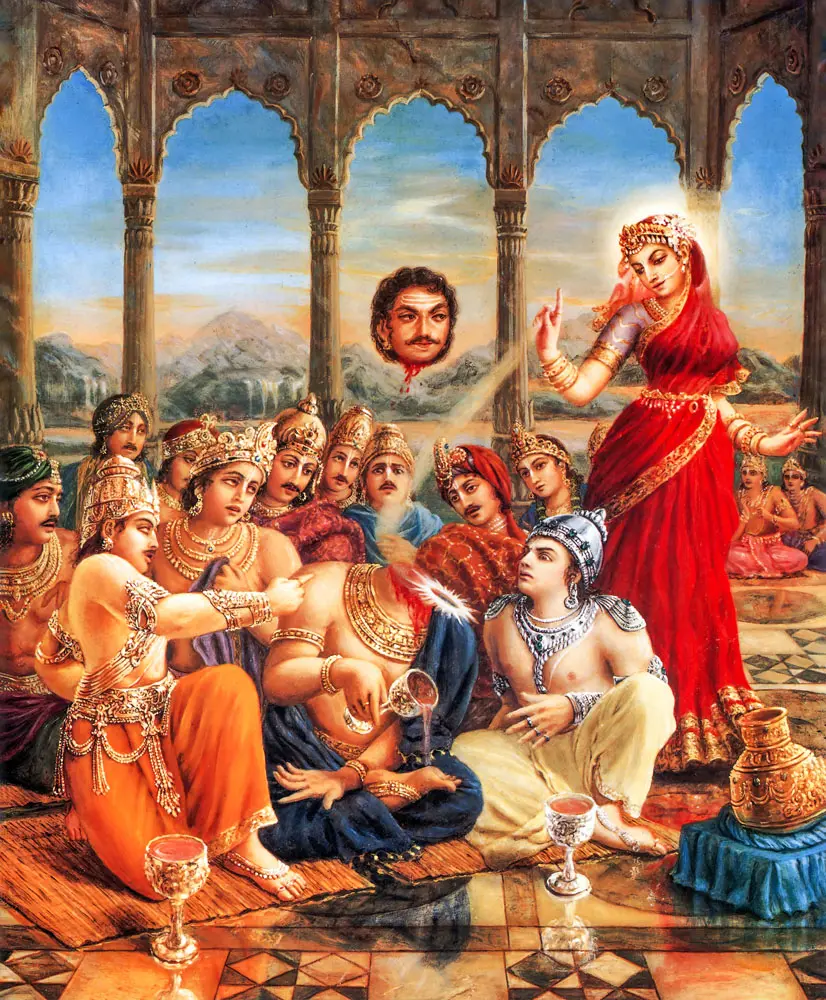
Rahu is one of the most mysterious and influential Asuras in Hindu mythology. Unlike other Asuras, Rahu was not destroyed—he became immortal and later transformed into a cosmic force governing eclipses and karma.
Origin of Rahu
Rahu was originally an Asura named Swarbhanu, born to:
- Sage Kashyapa
- Simhika (a powerful Asura mother)
He possessed:
- High intelligence
- Strategic thinking
- Desire for immortality
The Story of Samudra Manthan
The most important event in Rahu’s story is the Samudra Manthan (Churning of the Ocean).
- Devas and Asuras worked together to obtain Amrit (nectar of immortality)
- Lord Vishnu took the form of Mohini to distribute the nectar
However, Vishnu intended to give Amrit only to the Devas.
Rahu’s Clever Deception
Rahu disguised himself as a Deva and sat between:
- Surya
- Chandra
He successfully drank the nectar.
But Surya and Chandra recognized him and alerted Vishnu.
The Beheading of Rahu
Before the nectar passed through his body:
- Vishnu used the Sudarshan Chakra to cut off Rahu’s head
However:
- The nectar had already reached his throat
- He became immortal
Thus:
- His head became Rahu
- His body became Ketu
Why Rahu Causes Eclipses
According to mythology:
- Rahu seeks revenge on Surya and Chandra
- He periodically swallows them
This is believed to cause:
- Solar Eclipse (Surya Grahan)
- Lunar Eclipse (Chandra Grahan)
Since he has no body, the Sun and Moon reappear.
Rahu in Vedic Astrology
Rahu is not a physical planet but a shadow planet (Chhaya Graha).
It represents:
- Illusion (Maya)
- Obsession and desires
- Sudden success and confusion
- Foreign connections and unconventional paths
It is one of the most influential forces in a birth chart.
Symbolism of Rahu
Rahu represents:
- Uncontrolled desire and ambition
- Breaking rules to achieve goals
- Illusion and material attachment
Yet, it also symbolizes:
- Innovation
- Transformation
- Breaking limitations
Spiritual Meaning
Rahu teaches:
- Desire without discipline leads to chaos
- Illusion can overpower truth
- Karma always balances deception
Remedies for Rahu
To reduce negative effects of Rahu:
- Perform Rahu-Ketu Shanti Puja
- Chant Rahu Beej Mantra
- Worship Lord Shiva and Goddess Durga
- Consult expert pandits
👉 Book Puja: https://www.panditjionway.com
Key Spiritual Lessons
- Intelligence without ethics leads to downfall
- Karma cannot be escaped
- Illusion must be controlled through awareness
- Even negative forces have cosmic purpose
7. Vritra – The Dragon Who Stopped the Waters of Life

Vritra is one of the oldest and most powerful Asuras described in the Rig Veda, making him a central figure in early Hindu mythology. He is often depicted as a gigantic serpent or dragon who embodied drought, obstruction, and chaos.
Origin of Vritra
Vritra was created by the divine artisan:
- Tvashtri
He was born with a specific purpose:
- To avenge the death of Tvashtri’s son
- To challenge the supremacy of the Devas
Vritra quickly grew into a being of immense size and power.
The Power of Vritra
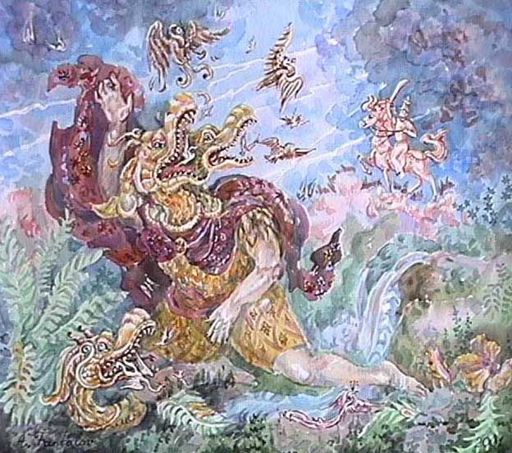
Vritra’s greatest strength was his control over water, the most essential element of life.
He:
- Blocked rivers and water sources
- Held back rain clouds
- Created widespread drought
This caused:
- Famine
- Suffering among humans and gods
- Cosmic imbalance
Why Vritra Was Nearly Invincible
Vritra was protected by powerful boons:
- No ordinary weapon could kill him
- His body was resistant to divine attacks
- He possessed immense physical strength
Even the Devas struggled to defeat him.
Indra vs Vritra – The Great Battle
To restore balance, the king of gods, Indra, stepped forward.
Indra was armed with:
- The Vajra (thunderbolt weapon), created from the bones of Sage Dadhichi
The battle between Indra and Vritra was:
- Long and intense
- Described in the Rig Veda as a cosmic war
The Fall of Vritra
During the battle:
- Vritra swallowed or blocked Indra’s attacks
- At one point, he even injured Indra
But eventually:
- Indra used the Vajra to strike Vritra
- Vritra was defeated and destroyed
Release of the Waters
After Vritra’s death:
- Rivers began to flow again
- Rain returned to Earth
- Life was restored
Indra earned the title:
- Vritrahan (Slayer of Vritra)
Symbolism of Vritra
Vritra represents:
- Obstruction and stagnation
- Drought (both physical and spiritual)
- Forces that block growth and progress
Indra represents:
- Energy, action, and courage
- The power to overcome obstacles
Deeper Meaning
The story symbolizes:
- The release of life-giving forces
- The triumph of effort over stagnation
- The importance of breaking barriers
Key Spiritual Lessons
- Obstacles are part of growth
- Courage and action are necessary for progress
- Even the strongest barriers can be broken
- Balance in nature must be maintained
8. Hiranyaksha – The Asura Who Dragged Earth into the Cosmic Ocean
Hiranyaksha was one of the most powerful Asuras in Hindu mythology, known for his immense strength and his audacious act of dragging the Earth (Bhudevi) into the cosmic ocean, threatening all creation.
Birth and Lineage
Hiranyaksha was born to:
- Sage Kashyapa
- Demon mother Diti
He was the younger brother of Hiranyakashipu.
Both brothers were powerful Daityas with a shared goal:
- To dominate the three worlds
- To challenge the authority of the Devas
Meaning of the Name Hiranyaksha
The name “Hiranyaksha” translates to:
- Hiranya = Gold
- Aksha = Eyes
Meaning:
“The golden-eyed one” or “one who is obsessed with wealth and material power”
Rise of Power and Arrogance
Hiranyaksha performed penance and gained immense strength.
He:
- Defeated many Devas
- Conquered the heavens
- Became nearly unstoppable
His arrogance grew to the point where he sought to challenge even the cosmic order.
The Kidnapping of Earth (Bhudevi)
In one of the most dramatic events in Hindu mythology:
- Hiranyaksha attacked the Earth
- Dragged Bhudevi into the depths of the cosmic ocean
This caused:
- Disruption of creation
- Imbalance in the universe
- Panic among gods and sages
Appeal to Vishnu
The Devas, unable to handle the crisis, prayed to:
- Lord Vishnu
To restore balance, Vishnu took the form of:
- Varaha
The Varaha Avatar – Divine Intervention
Varaha appeared as a gigantic cosmic boar:
- With immense strength
- Roaring with divine energy
He:
- Dived into the ocean
- Located Bhudevi
- Lifted her on his tusks
The Epic Battle – Varaha vs Hiranyaksha
As Varaha attempted to rescue Earth:
- Hiranyaksha blocked his path
- A massive battle began
The fight was:
- Fierce and prolonged
- Filled with divine and demonic power
Finally:
- Varaha struck Hiranyaksha
- The Asura was killed
Restoration of Earth
After defeating Hiranyaksha:
- Varaha lifted Earth out of the ocean
- Placed it back in its rightful position
This restored:
- Balance
- Life
- Cosmic order
Symbolism of Hiranyaksha
Hiranyaksha represents:
- Greed and material obsession
- Destructive misuse of power
- Forces that disturb natural balance
Varaha represents:
- Protection of Earth and nature
- Divine responsibility
- Restoration of harmony
Deeper Spiritual Meaning
The story teaches:
- Nature must be respected
- Greed leads to destruction
- Divine forces protect balance
Key Spiritual Lessons
- Material obsession can destroy harmony
- Power must be used responsibly
- Nature is sacred and must be preserved
- Dharma always restores balance
9. Banasura – The Thousand-Armed Devotee of Shiva
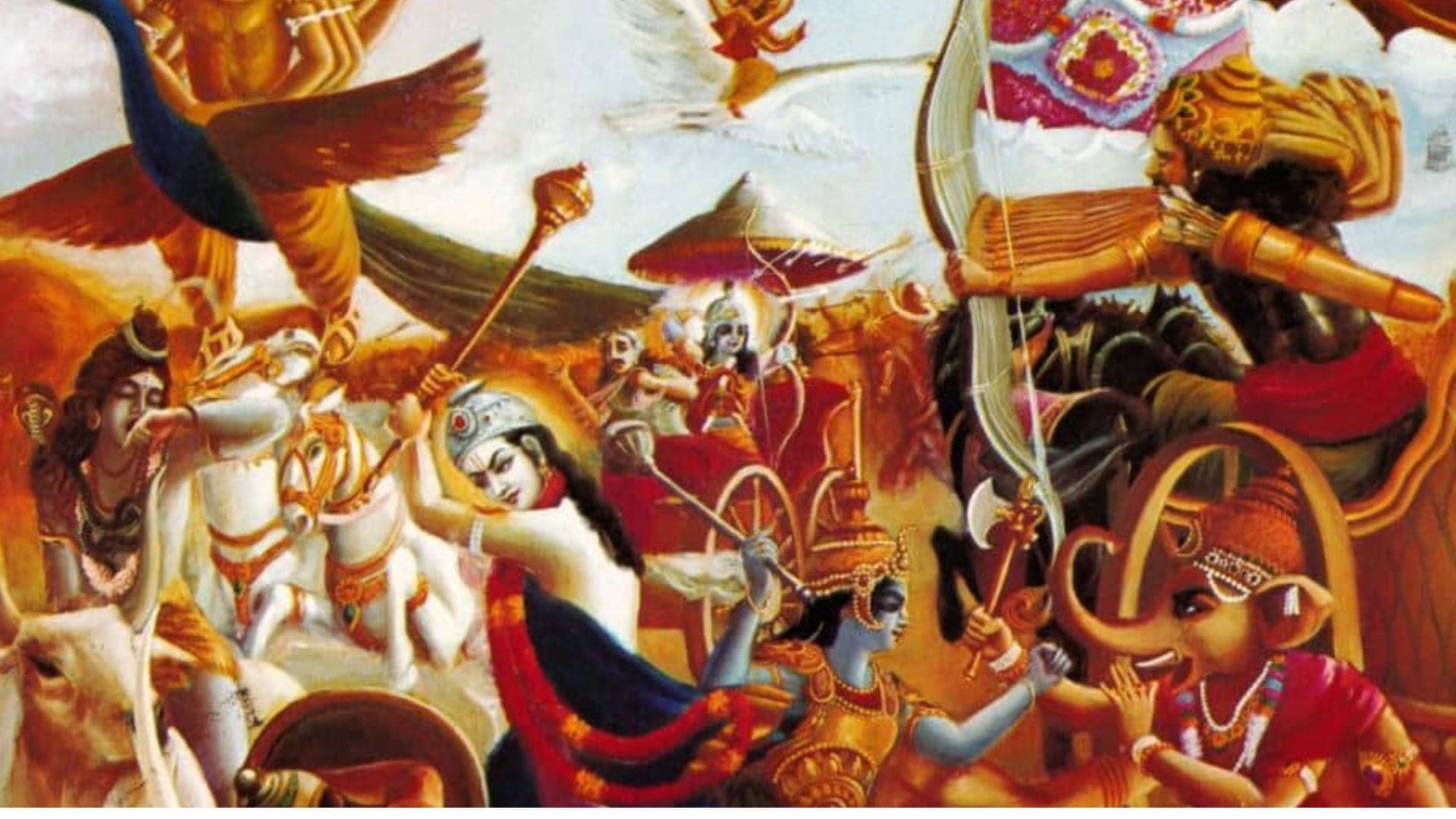 Banasura was one of the most powerful Asura kings, known for his immense strength, devotion to Lord Shiva, and eventual transformation through humility. He is prominently featured in the Bhagavata Purana and other Hindu texts.
Lineage and Kingdom
Banasura was:
- The son of Mahabali
- A descendant of a noble Asura lineage
He ruled over:
- The region believed to be present-day Assam
Despite being an Asura, he was:
- A devoted follower of Lord Shiva
- Known for discipline and strength
The Thousand Arms – Source of Power
Banasura possessed:
- 1000 arms, symbolizing unmatched strength and capability
With these arms, he:
- Played the mridanga (drum) during Shiva’s Tandava (cosmic dance)
- Earned Shiva’s blessings and protection
The Boon from Shiva
Pleased by his devotion, Shiva granted him a boon:
- Shiva himself would protect Banasura in times of danger
This made Banasura:
- Extremely powerful
- Fearless and nearly invincible
Rise of Arrogance
Over time, Banasura’s power led to:
- Pride and arrogance
- Desire for constant battle
He even complained to Shiva:
- That he had no worthy opponent
This marked the beginning of his downfall.
The Story of Usha and Aniruddha
Banasura had a daughter:
- Usha
She fell in love with:
- Aniruddha
Aniruddha was secretly brought to her palace.
When Banasura discovered this:
- He imprisoned Aniruddha
- This triggered a major conflict
Krishna vs Banasura – The Great Battle
To rescue Aniruddha:
- Lord Krishna attacked Banasura
A massive battle took place involving:
- Krishna
- Shiva (protecting Banasura)
- Multiple divine forces
At one point:
- Krishna subdued Shiva using divine power
The Defeat of Banasura
Krishna began:
- Cutting off Banasura’s thousand arms
He destroyed:
- 998 arms, leaving only two
As Banasura was about to be killed:
- Shiva intervened and requested mercy
Forgiveness and Transformation
Krishna spared Banasura’s life.
Banasura:
- Realized his mistakes
- Became humble
Aniruddha and Usha were united in marriage.
Symbolism of Banasura
Banasura represents:
- Power combined with devotion
- Devotion corrupted by ego
- Transformation through realization
Krishna represents:
- Justice with compassion
- Balance between शक्ति (power) and धर्म (righteousness)
Deeper Spiritual Meaning
The story teaches:
- Even devotees can fall due to ego
- True devotion requires humility
- Divine grace allows redemption
Key Spiritual Lessons
- Power must be balanced with humility
- Ego leads to downfall, even for devotees
- Forgiveness is a higher virtue than punishment
- Transformation is always possible
10. Bhasmasura – The Asura Destroyed by His Own Power
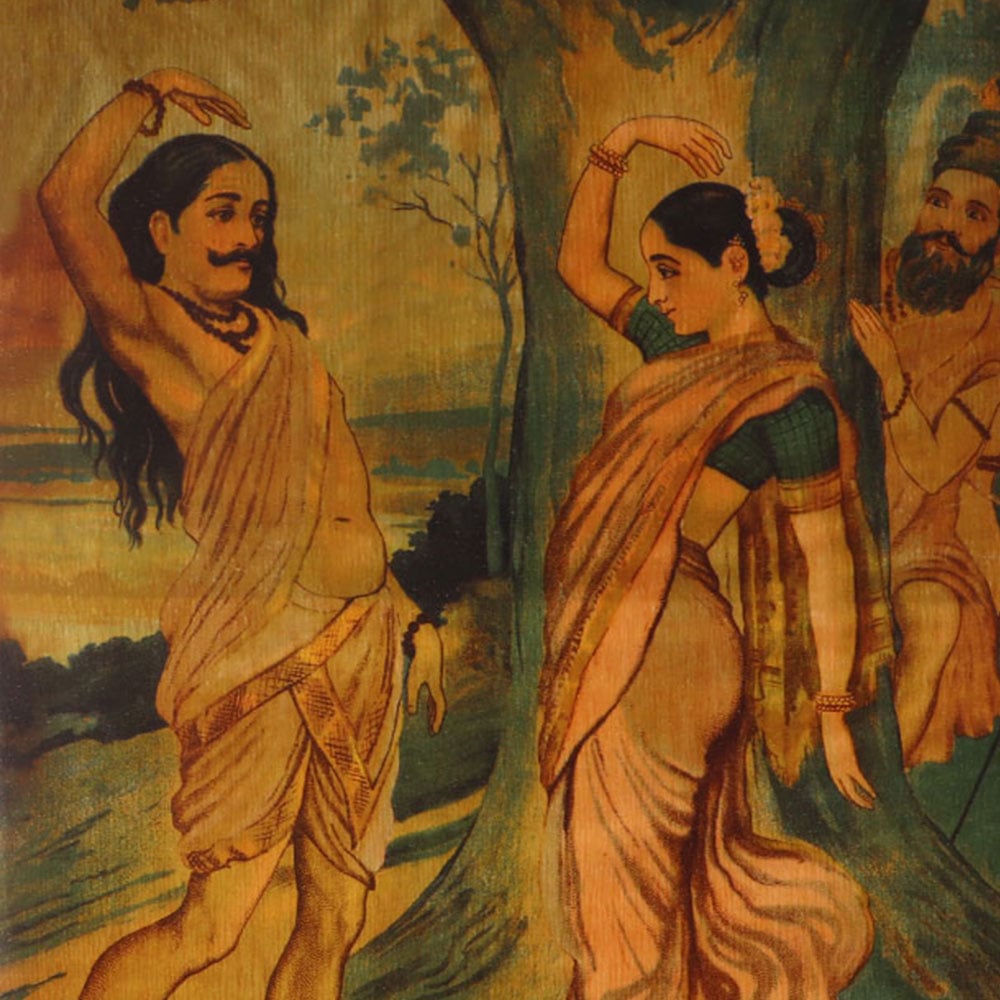
Bhasmasura is one of the most fascinating Asuras in Hindu mythology, known for receiving an extraordinary boon from Lord Shiva and then becoming a victim of his own power. His story is a powerful lesson on desire, misuse of power, and self-destruction.
Origin and Tapasya
Bhasmasura was an ambitious Asura who desired ultimate power.
To achieve this, he performed intense penance to please:
- Lord Shiva
Impressed by his devotion, Shiva appeared before him and offered a boon.
The Dangerous Boon
Bhasmasura asked for a terrifying power:
- Anyone whose head he touched would instantly turn into ashes (bhasma)
Without foreseeing the consequences, Shiva granted this boon.
Arrogance and Misuse of Power
Once empowered, Bhasmasura became arrogant.
- He wanted to test his power
- He even attempted to use it on Shiva himself
This forced Shiva to:
- Flee and seek help

Vishnu’s Mohini Avatar
To resolve the crisis, Lord Vishnu took the form of:
- Mohini
Mohini appeared as an extraordinarily beautiful woman.
The Dance of Illusion
Bhasmasura was instantly captivated and proposed marriage.
Mohini agreed on one condition:
- He must match her dance moves perfectly
During the dance:
- Mohini performed graceful and complex gestures
- Bhasmasura imitated every move
The Moment of Destruction
At the climax of the dance:
- Mohini placed her hand on her own head
Bhasmasura, blindly imitating her:
- Did the same
As a result:
- He turned into ashes instantly
Symbolism of Bhasmasura
Bhasmasura represents:
- Uncontrolled desire and greed
- Misuse of divine blessings
- Self-destruction through ignorance
Mohini represents:
- Divine intelligence and illusion (Maya)
- Strategic problem-solving
Deeper Spiritual Meaning
The story teaches:
- Power without wisdom is dangerous
- Blind imitation leads to downfall
- Desire must be controlled
Key Spiritual Lessons
- Not all desires should be fulfilled
- Intelligence is more powerful than strength
- Ego and lust lead to destruction
- Divine strategy overcomes brute force
Conclusion – What Do These Powerful Asuras Teach Us?
The stories of these 10 powerful Asuras reveal that:
- Power without wisdom leads to destruction
- Ego is the root of downfall
- Dharma always triumphs over adharma
- Even the strongest beings are bound by karma
These Asuras were not merely villains—they were:
- Scholars
- Devotees
- Warriors
But their choices defined their destiny.
Call to Action
For spiritual guidance, dosha remedies, and authentic Vedic rituals:
👉 Visit: https://www.panditjionway.com
India’s trusted platform for online puja booking, astrology consultation, and Vedic solutions.
- Rahu section → Rahu Ketu Puja
- Narasimha → Protection Puja
- Durga/Kali → Navratri Puja
- Shiva → Rudrabhishek booking
Book Pandit for Puja & Remedies
For Rahu-Ketu Shanti, Narasimha Puja, Rudrabhishek, or Durga Saptashati Path, visit:
👉 https://www.panditjionway.com (Panditji on way)
Panditji On Way is India’s trusted online puja booking platform for authentic Vedic rituals.
FAQs 10 Most Powerful Asuras in Hindu Epics
1. Who are Asuras in Hindu mythology?
Asuras are powerful beings in Hindu mythology born from Prajapati Kashyapa. They are often portrayed as opponents of Devas, representing ambition, ego, and material desires rather than evil by default.
2. What is the difference between Devas and Asuras?
The main difference lies in their actions and intentions. Devas follow dharma (righteousness), while Asuras often pursue power and dominance, despite sharing the same origin.
3. Who is the most powerful Asura in Hindu epics?
Ravana, Hiranyakashipu, and Indrajit are considered among the most powerful Asuras due to their intelligence, boons, and divine abilities.
4. Was Ravana a good person or a villain?
Ravana was both—a great scholar and devotee of Shiva, but his ego and actions made him the antagonist in the Ramayana.
5. Why did Vishnu kill Madhu and Kaitabha?
They stole the Vedas from Brahma, disrupting cosmic balance, so Vishnu killed them to restore knowledge and order.
6. What powers did Raktabija have?
Raktabija had the unique power that every drop of his blood created a clone of himself, making him nearly impossible to defeat.
7. How was Raktabija defeated?
Goddess Kali defeated him by drinking his blood before it touched the ground, preventing the creation of clones.
8. Who killed Hiranyakashipu?
Hiranyakashipu was killed by Narasimha, an avatar of Vishnu, who bypassed his boon conditions.
9. What is the story of Rahu and Ketu?
Rahu disguised himself to drink Amrit during Samudra Manthan. Vishnu beheaded him, creating Rahu (head) and Ketu (body), both immortal.
10. Why do eclipses happen according to Hindu mythology?
Eclipses occur when Rahu and Ketu swallow the Sun or Moon as revenge for revealing their deception.
11. Who was Indrajit and why was he powerful?
Indrajit, son of Ravana, was a warrior who defeated Indra and possessed divine weapons like Brahmastra, making him nearly invincible.
12. What lesson does the story of Bhasmasura teach?
It teaches that misuse of power and lack of wisdom can lead to self-destruction.
13. Who was Banasura in Hindu mythology?
Banasura was a thousand-armed Asura king and a devotee of Shiva, later defeated by Krishna.
14. Why are Asuras not considered completely evil?
Many Asuras were scholars, devotees, and rulers. Their downfall was due to arrogance and misuse of power, not inherent evil.
15. What is the significance of Vritra in the Vedas?
Vritra represents drought and chaos. His defeat by Indra symbolizes the release of water and restoration of life.
16. Who was Hiranyaksha and what did he do?
Hiranyaksha dragged Earth into the cosmic ocean and was killed by Vishnu’s Varaha avatar.
17. What are the moral lessons from Asura stories?
These stories teach control over ego, importance of dharma, and consequences of power misuse.
18. Are Asuras stronger than Devas?
In many cases, Asuras were physically stronger, but Devas prevailed through wisdom, strategy, and divine support.
19. What is Samudra Manthan and its importance?
Samudra Manthan was the churning of the ocean by Devas and Asuras to obtain Amrit (immortality nectar), symbolizing cooperation and conflict.
20. How can one reduce negative effects of Rahu and Ketu?
Performing Rahu-Ketu Shanti Puja, chanting mantras, and consulting expert pandits can help reduce their malefic effects.
👉 Book authentic puja services: https://www.panditjionway.com