

8 Types of Hindu Marriages (As Per Manusmriti) – Meaning, Significance & Modern Relevance
Learn the 8 types of Hindu marriages from Manusmriti including Brahma, Gandharva & Paishacha Vivaha. Detailed explanation, table, FAQs & modern relevance. The ancient Hindu text Manusmriti classifies eight types of marriages (Vivaha) based on social, ethical, and religious values. These classifications reflect the diversity of traditions in early Vedic society—from highly respected sacred unions to strictly condemned practices.
This comprehensive, optimized guide explains each type in detail, compares them in a table format, and highlights their relevance in modern times.
Overview Table: 8 Types of Hindu Marriages
| Type of Marriage | Nature | Description | Status in Scriptures |
|---|---|---|---|
| Brahma Vivaha | Arranged | Daughter given to a learned man | Most Ideal |
| Daiva Vivaha | Ritual-based | Daughter given to priest after yajna | Respected |
| Arsha Vivaha | Symbolic exchange | Cow & bull gifted | Acceptable |
| Prajapatya Vivaha | Duty-based | Marriage with shared responsibilities | Honorable |
| Gandharva Vivaha | Love marriage | Mutual consent | Accepted |
| Asura Vivaha | Transactional | Bride bought with wealth | Criticized |
| Rakshasa Vivaha | Forceful | Bride abducted | Condemned |
| Paishacha Vivaha | Deceitful | Exploitation of helpless woman | Most Sinful |

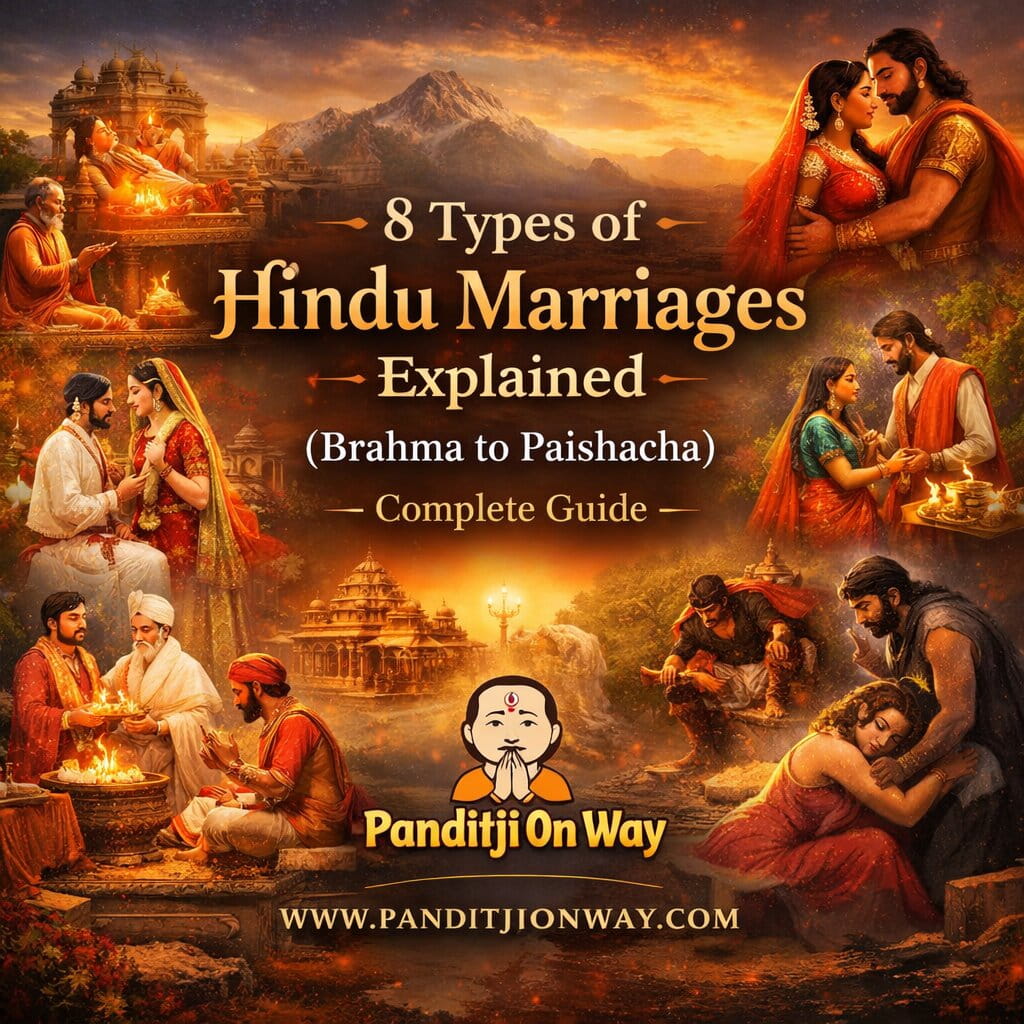
Detailed Explanation of Each Marriage Type
1. Brahma Vivaha (The Ideal Marriage)
- Considered the highest and purest form of marriage.
- The bride is given to a man of good character and education.
- No dowry or financial exchange involved.
- Aligns with modern arranged marriages with consent.
Insight: This is the most searched and widely accepted traditional Hindu marriage form.
2. Daiva Vivaha (Marriage through Ritual Offering)
- Daughter is married to a priest performing yajna (sacrifice).
- Often happens when parents cannot find a suitable groom.
- Considered a religious offering.
3. Arsha Vivaha (Marriage with Symbolic Gifts)
- Groom gives a cow and bull to the bride’s family.
- Not a purchase, but a symbol of gratitude and dharma.
- Practiced in ancient rural societies.
4. Prajapatya Vivaha (Marriage of Duty)
- Father gives daughter with blessings emphasizing:
- Dharma (duty)
- Grihastha life (householder responsibilities)
- Focus on partnership and shared responsibilities.
5. Gandharva Vivaha (Love Marriage)
- Based purely on mutual love and consent.
- No rituals or parental approval required.
- Commonly referenced in epics like:
- Mahabharata
- Ramayana
Modern Equivalent: Love marriages in today’s society.
6. Asura Vivaha (Marriage by Purchase)
- Groom offers money or wealth to bride’s family.
- Seen as treating marriage like a transaction.
- Strongly discouraged in scriptures.
7. Rakshasa Vivaha (Marriage by Abduction)
- Bride is kidnapped forcibly, often involving violence.
- Associated with warrior classes in ancient times.
- Ethically condemned in modern society.
8. Paishacha Vivaha (Most Condemned Form)
- Involves exploitation of a woman who is:
- Unconscious
- Intoxicated
- Helpless
- Considered the most sinful and criminal act.
Key Insights for Modern Readers
- The first four types (Brahma, Daiva, Arsha, Prajapatya) are considered Dharmic (righteous).
- Gandharva Vivaha is socially accepted today as love marriage.
- The last three types (Asura, Rakshasa, Paishacha) are ethically and legally unacceptable in modern India.
Key Takeaways
- “8 types of Hindu marriages explained”
- “Brahma Vivaha vs Gandharva Vivaha difference”
- “Types of Vivaha in Manusmriti”
- “Ancient Hindu marriage system meaning”
Importance in Hindu Culture
These classifications highlight:
- Evolution of marriage ethics
- Importance of consent and dharma
- Role of family and rituals
FAQs – 8 Types of Marriage in Hinduism (SEO Optimized)
20 SEO-Optimized FAQs & PAA (People Also Ask) – 8 Types of Hindu Marriages
1. What are the 8 types of marriages in Hinduism?
According to the Manusmriti, the eight types are Brahma, Daiva, Arsha, Prajapatya, Gandharva, Asura, Rakshasa, and Paishacha Vivaha. These range from highly respected to strictly condemned forms based on ethics and consent.
2. Which is the best type of marriage in Hinduism?
Brahma Vivaha is considered the best because it is based on virtue, education, and mutual compatibility without any financial exchange.
3. Is love marriage allowed in Hindu scriptures?
Yes, Gandharva Vivaha represents love marriage and is recognized in ancient texts as a union based on mutual attraction and consent.
4. Which type of marriage is considered sinful in Hinduism?
Paishacha Vivaha is the most sinful form as it involves exploitation of a woman without her consent.
5. What is Brahma Vivaha in simple terms?
Brahma Vivaha is an arranged marriage where the bride is given to a well-qualified groom without dowry, making it the most ideal form.
6. What is the difference between Brahma and Gandharva marriage?
Brahma Vivaha is arranged by families based on values, while Gandharva Vivaha is based on love and mutual consent without family involvement.
7. Is dowry mentioned in ancient Hindu marriage types?
Dowry is not part of ideal marriages like Brahma Vivaha, but Asura Vivaha involves giving wealth, which is discouraged.
8. What is Gandharva Vivaha in modern context?
Gandharva Vivaha is equivalent to modern love marriages where two individuals marry based on personal choice and emotional connection.
9. Are all 8 types of marriages acceptable today?
No, only Brahma, Prajapatya, and Gandharva forms are socially and legally acceptable today. Others like Rakshasa and Paishacha are illegal.
10. What is Rakshasa Vivaha?
Rakshasa Vivaha involves forceful abduction of the bride and is condemned in modern society.
11. Why were there different types of marriages in Hinduism?
Different types existed to reflect various social conditions, customs, and moral values in ancient Indian society.
12. What is Prajapatya Vivaha?
It is a marriage focused on duty where the couple is instructed to fulfill responsibilities together in a dharmic way.
13. What is Arsha Vivaha?
Arsha Vivaha involves symbolic gifting of a cow and bull by the groom to the bride’s family, representing gratitude rather than purchase.
14. What is Daiva Vivaha?
Daiva Vivaha occurs when a daughter is married to a priest who performs religious rituals, often seen as a sacrificial offering.
15. Which Hindu marriage type is closest to modern arranged marriage?
Brahma Vivaha is closest to modern arranged marriage with family involvement and compatibility checks.
16. What does Manusmriti say about forced marriages?
The Manusmriti condemns forced marriages like Rakshasa and Paishacha Vivaha as unethical.
17. Is Gandharva marriage legally valid in India?
Yes, if it follows legal procedures under the Hindu Marriage Act 1955, love marriages are fully valid.
18. Which marriage type involved bride price?
Asura Vivaha involved giving wealth to the bride’s family, which is considered improper.
19. What is the spiritual purpose of Hindu marriage?
Hindu marriage aims to fulfill Dharma (duty), Artha (prosperity), Kama (desire), and Moksha (liberation).
20. Are these 8 marriage types still practiced today?
Only a few like Brahma and Gandharva are practiced today, while others exist mainly as historical references.
High Authority External Resources
- Learn more about Hindu traditions on Encyclopaedia Britannica
- Scriptural insights available via Internet Sacred Text Archive
Conclusion
The eight types of Hindu marriages provide deep insight into the ethical, cultural, and spiritual framework of ancient Indian society. While some forms remain relevant today, others serve as historical lessons on the importance of consent, respect, and dharma in relationships.